Lerwick Cruise Port Guide
Just discovered why Lerwick’s cruise terminal is wildly different from typical ports—and you won’t believe what makes it special.
In this guide
Try one free personalised day plan — built around your ship’s actual arrival and departure times. Then get every port on your cruise done the same way from £7.99 (about $10).
Cruise Port Overview: What To Expect
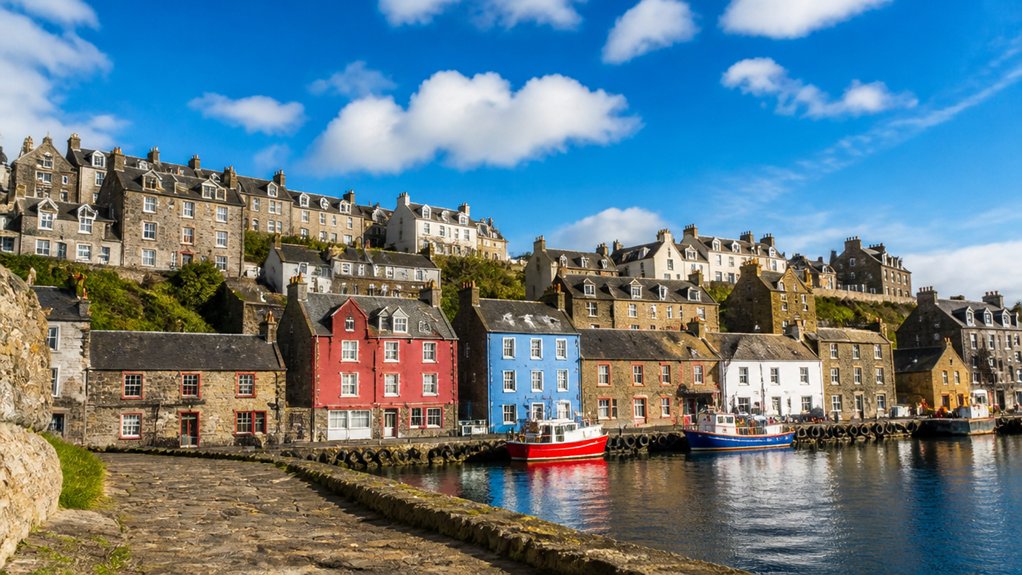
Smaller ships berth at Victoria Pier and larger ones either anchor and tender to the pontoons there or tie up at Holmsgarth or Mair’s Pier, about a mile north, with a free shuttle into town. Victoria Pier opens directly onto Commercial Street in the working heart of town, so you’re surrounded by actual harbour activity—ferries loading, fishing boats moving, locals going about their day—rather than a staged arrival zone. The pier area is small and efficient, which means you walk straight out into real Lerwick rather than being funnelled through purpose-built infrastructure. This works in your favour because the town hasn’t been repackaged for cruise passengers, so the streets and shops and cafes you see are genuinely where people spend their time.
Commercial Street runs along the waterfront and contains most things you’d want to access. When a large ship is in port, the narrow streets become congested, but the pressure eases noticeably once you move uphill or head into the residential areas north of the centre. The town layout isn’t complicated since everything stretches along the harbour rather than spreading inland, so navigation is straightforward and you won’t end up turned around.
Head north and the town quietens towards the museum and less touristy corners. Head south and you reach Fort Charlotte and open water views. Weather here is the serious variable—Shetland is far enough north that wind isn’t occasional, it’s a constant, and rain can arrive without warning. Bring proper waterproof layers regardless of which month you’re visiting because the conditions change fast.
Getting From the Port To Town
From Victoria Pier the walk into the centre is straightforward enough that you won’t get lost, which means you can skip taxis and buses if you’d rather keep your money for other things. Commercial Street takes you directly there, sloping gently uphill as you leave the water behind, so the buildings provide some shelter on Shetland’s windier or wetter days. The route is flat enough that most people manage it without difficulty.
Taxis do queue near the terminal if weather turns nasty or if walking isn’t practical for you. They charge moderate rates, though you’ll pay extra during the hours when cruise ships are in port. The town centre itself stays compact enough to cover on foot for most of the day, with residential areas spreading north and south but nothing worth seeing that’s far from the centre.
If you want to reach archaeological sites or quieter parts of the islands, independent tours are the only realistic option. These fill up fast during cruise season, so booking before you arrive matters—waiting until you’re at the terminal leaves you with either nothing available or whatever’s left over. Arranging in advance also means you’ll get recommendations from people who actually live here rather than whoever happens to have availability when you dock.
The Must-Do Experience: Start Here
Lerwick’s town centre shops and waterfront cafes won’t show you what actually matters about Shetland. The archaeology and moorland surrounding the town reveal how people genuinely lived here, but you need to plan ahead to reach it—nothing available through your ship’s desk will get you there properly.
Book an independent tour operator before you arrive. During cruise season the decent guides fill their slots weeks in advance, leaving you with either inflated day-of prices or mediocre options. Going direct online also undercuts what the ship charges for the privilege of collecting you from the terminal.
Find guides running small groups to Jarlshof, where Iron Age settlement remains dominate the archaeological record, or to Sumburgh Head where you can actually watch seabirds without queuing. A local guide who knows the place makes the difference between ticking boxes and understanding how communities functioned across centuries. These tours handle transport so you’re not scrambling for taxis or calculating departure times. When you book guided tours through independent operators, you gain access to expertise and experiences far beyond what standard ship excursions typically offer.
Spending your port day on Lerwick’s main streets means overpriced souvenirs and forgettable food while you could be standing on ancient stone or watching puffins.
History Culture and the Top Sights
Lerwick’s town centre will give you little sense of what Shetland actually is—the real substance lies in the archaeology spread across the islands, which your ship’s excursion desk has minimal motivation to help you access properly. The archaeology matters because it shows you how people actually survived here across different periods, not because it looks nice.
Start with Jarlshof if you want to understand settlement patterns across millennia. Iron Age broch structures, Viking longhouses, and medieval farmsteads occupy the same location, each layer representing different survival strategies on northern islands. Without a local guide, you’re examining old stones without context; with one, the site makes actual sense.
Book an independent tour operator before you arrive rather than relying on your ship. During cruise season, the competent guides schedule weeks ahead, and anything remaining available through the ship costs significantly more than direct booking. This saves you both money and the frustration of joining a rushed group with an indifferent guide.
Sumburgh Head combines well with Jarlshof as a second stop on the same excursion. You’ll see puffin, razorbill, and fulmar colonies without confronting the crowds that overwhelm more easily reached seabird locations. The headland’s exposure and harsh weather conditions mean something once you’re actually standing there experiencing them.
Scalloway Castle sits on Shetland’s opposite side and represents 17th-century architecture worth seeing if you have time. The surrounding town operates at lower intensity than Lerwick and charges less for food and services, though independent travel requires either taxi hire or car rental negotiation. A guided tour including both Jarlshof and Scalloway manages transport efficiently and keeps your limited shore time productive.
Beyond the Centre: Day Trips and Alternatives
The real problem with a day in Shetland isn’t lack of things to do—it’s weighing whether the ship’s guided tour offers better value than what you can arrange independently beforehand.
Your ship provides convenience at a markup, which counts when you have roughly six hours ashore. The excursion desk loads you onto a coach with forty others, hits the main sites in fixed sequence, and gets you back with buffer time before departure. You’ll see Jarlshof and Sumburgh Head without handling logistics yourself. The downside is following a script written for people wanting confirmation that Shetland exists rather than understanding how it actually functions.
Independent tour operators know the islands properly. Book directly with a local company weeks ahead and you’ll get a guide who answers questions accurately, adjusts the pace to what interests your group, and often visits places the ship tours skip. The cost runs well below what the ship charges, and the quality of experience differs entirely. Spots on popular tours fill during cruise season, so booking in advance matters more than comparing operators.
If you’re comfortable navigating alone, rent a car instead. This lets you choose where to eat and when to stop without following someone else’s schedule. The tradeoff is managing unfamiliar roads and changeable weather yourself, which loses appeal if visibility drops or you’re trying to reach both Jarlshof and Scalloway in one afternoon.
Decide on your approach before your ship arrives. Last-minute choices either saddle you with ship prices or leave you with nothing available.
Shore Excursion or Going It Alone
The ship’s excursion desk will frame their guided coach tour as your safest option, and there’s logic to that—but they’re charging you substantially more than independent operators while delivering less actual knowledge. The guides who work for the ship are transit professionals; the guides who live here know which parts of Jarlshof matter and which exist purely for photographs.
Book a local tour operator before your ship arrives. During cruise season, the operators worth booking fill up quickly, particularly those offering flexibility around weather or specialist interests like archaeology or distillery visits. You’ll pay considerably less than the ship’s price, get someone whose knowledge comes from actually living in the place, and have room to ask questions without feeling rushed.
The local operator handles transport reliably and builds in enough buffer to get you back well before departure, which gives you the security of an organised tour without the artificial efficiency the ship imposes. If you book independently, you also avoid the dynamic pricing that happens when the excursion desk knows you’re trapped and your options have narrowed. Consider purchasing a local eSIM data plan before arrival to stay connected during your independent exploration without incurring roaming charges.
If independent tours are fully booked by the time you check, the ship’s option becomes your fallback. That’s not ideal, but it’s manageable. What genuinely matters is not deciding on the day itself, because that’s when the excursion desk has maximum leverage and prices reflect that advantage.
Local Knowledge Worth Having Before You Dock
Weather shifts faster than forecasts suggest, and the Atlantic can deliver wind and rain with little warning. Waterproof layers matter more than any guidebook implies, so pack them regardless of what the cruise desk predicts. Lerwick rewards proper exploration beyond the streets where cruise groups gather for photographs.
The Shetland Museum & Archives charges no admission, which means you can spend hours there without the pressure that paid attractions create. The Viking material provides actual context for afternoon visits to places like Jarlshof, so starting here first makes those sites genuinely meaningful rather than just looking at old stones. This advantage costs nothing but fundamentally changes what you understand about what you’re seeing.
Fort Charlotte’s surrounding neighbourhood contains things worth your attention if you move through it without a schedule. The fortification itself carries real historical substance, and the quiet you’ll encounter there matters more than the harbour views—something most cruise passengers miss because they follow the same routes everyone else does.
The pier becomes crowded within the first couple of hours after tenders begin service, so if your tour starts later, use that early window to walk the town at your own pace instead. The Up Helly Aa Museum shows you something actually local rather than something packaged for visitors, and the entire town functions differently when you’re moving independently rather than with a guided group.
Your Port Day: A Sample Itinerary
Lerwick’s geography works against you—half your port day disappears into uphill walks and retracing steps, so the order of your activities matters more than most guides acknowledge.
Start at the Shetland Museum & Archives while the tender queues and organised groups still clog the pier. The place stays nearly empty during these early hours, and the Viking displays provide enough context to turn Jarlshof from rubble into coherent history. You’ll finish in less time than you’d spend waiting for a tour bus, and it costs nothing.
Commercial Street runs through town as the main spine, stocked with independent shops rather than chains. Eat lunch here instead of near the harbour, where the same sandwich costs significantly more. The town functions normally at midday, and you’ll notice details that organised groups simply walk past because you’re moving at your own rhythm.
Spend your afternoon on either Jarlshof or Fort Charlotte, depending on what interested you in the museum displays. If Bronze Age archaeology appeals to you, arrange an independent guide beforehand—these tours book solidly and deliver better value than cruise ship excursions while offering actual specialist insight rather than rushed commentary. Fort Charlotte works perfectly as a solo visit if you value moving at your own pace, and walking back through the neighbourhood afterwards shows you far more of the town than any viewpoint would. Consider booking guided excursions at ports worldwide in advance to secure the best specialists for less popular sites.
Leave enough time to return to the pier without rushing. Lerwick reveals itself when you’ve plotted the basic framework first, but wanders aimlessly when you haven’t.
Book your Lerwick day
Tours for this port, compare before you book
Getting around in port
✈️ Before you sail: eSIM, insurance, luggage, flight delays
Ships In Lerwick
Upcoming calls from our sailings tracker, updated regularly.
ms Rotterdam
Holland AmericaFri 16 Oct
⚓ 08:00–17:00
ms Nieuw Statendam
Holland AmericaThu 29 Oct
⚓ 08:00–17:00
ms Rotterdam
Holland AmericaFri 7 May
⚓ 08:00–17:00
Ambience
Ambassador Cruise LineWed 12 May
⚓ 08:00–18:00
Celebrity Eclipse
Celebrity CruisesSat 15 May
⚓ 07:00–18:00
MSC Preziosa
MSC CruisesTue 18 May
⚓ 09:00–17:00