Malmo Cruise Port Guide
Plan your perfect Malmö port day: skip the tourist traps, discover local design, and uncover secrets most cruise passengers miss.
In this guide
Try one free personalised day plan — built around your ship’s actual arrival and departure times. Then get every port on your cruise done the same way from £7.99 (about $10).
Cruise Port Overview: What To Expect
Malmö’s cruise terminal occupies a working harbour alongside container ships and ferries, which means the waterfront operates as a functional space rather than a themed environment designed for tourists. This arrangement works in your favour because the port feels like it belongs to the city, and the centre is within easy walking distance. The terminal building itself is utilitarian—you disembark into a modern structure with standard facilities. Most ships berth at the Frihamnen cruise quay north of the centre, while smaller ships can use the quay at Västra Hamnen, a former shipyard converted into galleries, restaurants and design studios.
The walk into the city centre is flat and straightforward, taking roughly twenty to thirty minutes depending on where you’re headed. Crowds tend to appear only when multiple ships are docked simultaneously, which occurs regularly enough that you should prepare for it. Even on those days, Malmö doesn’t experience the overwhelming passenger volumes that Mediterranean ports do, so the city remains navigable and retains its actual character rather than reverting to a performance of itself for visitors.
Your main choice is between booking a guided tour or navigating the city independently. Ship excursions carry significant markups compared to booking directly with local guides online, and popular independent tours fill quickly during busy seasons. Booking in advance guarantees your place and typically costs less, which matters if you want proper context about Swedish culture and the regional geography connecting Malmö and Copenhagen.
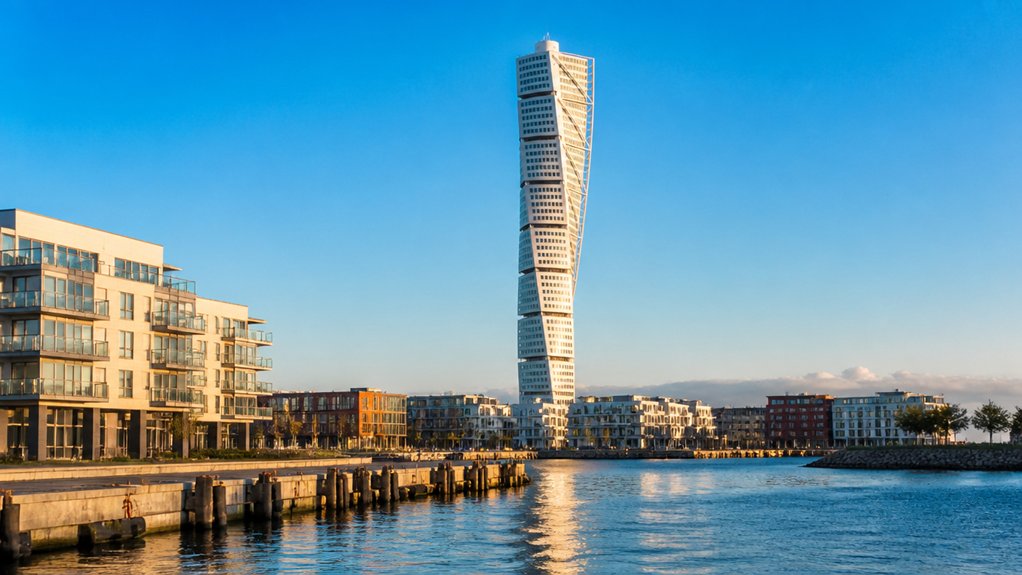
Turning Torso, the twisted residential skyscraper that dominates the harbour skyline, merits an hour of your time. The building’s value is in its exterior form—the twisted geometry and architectural audacity are best appreciated from street level where you can view it from multiple angles. There’s no practical reason to pay for entry to go inside; the design makes its impact from outside.
Getting From the Port To Town
The walk into town is straightforward enough that you’ll probably want to explore Västra Hamnen first—don’t, if your ship time is tight. The old shipyard has real things to do: design shops, galleries, and cafés in converted factory buildings, but it’s better saved for your return when you’ve already seen the city. Head east along the waterfront or cut through the residential streets inland; either way takes you to the old town within reasonable time.
Walking costs nothing and shows you how the place actually works rather than what tour operators want you to see. Renting a bicycle is practical given the flat ground, and rental shops sit near the terminal if you want to cover more distance. Taxis wait outside the terminal building but paying for a short ride into town makes no financial sense. For a more reliable option, you can book airport and port transfers with professional drivers in advance to ensure timely transport to your destination.
Ship excursions charge substantially more than booking independently, especially if you want to set your own schedule rather than follow a group. Local walking tours covering Swedish design, Scandinavian history, or the Copenhagen connection are worth booking online in advance—popular ones fill up during busy cruise seasons, and buying your spot early costs less than what the ship operator will charge. Arriving without a booking means waiting at the terminal for last-minute options, which wastes the time you could have already spent exploring.
The Must-Do Experience: Start Here
Malmö’s character exists in its squares and waterfront, not in the cruise terminal. Stortorget, the main square in the old town, contains the Renaissance town hall and functions as a genuine civic space rather than a performance for tourists. Locals actually use it—the café prices reflect this, and you won’t navigate around cruise groups.
Walk to Lilla Torg, a smaller square with restaurants and independent shops ringing original cobblestones. The light works well most of the day, and the food costs less than the obvious tourist strips charge. Grab lunch or coffee depending on your hunger level.
The Turning Torso—Malmö’s twisted white tower—fills the skyline. Photograph it from street level rather than paying to enter; the money and time are better spent elsewhere in the city.
Consider booking an independent walking tour focused on Swedish design or the city’s shift from industrial shipyard to modern centre if you prefer structured exploration over random wandering. Tours fill during cruise season, so secure your place online rather than hoping for last-minute terminal availability. You’ll spend less than the ship charges and actually retain information instead of following a packaged route.
History Culture and the Top Sights
Malmö’s industrial past shapes the city more than you might expect. The old Kockums shipyard dominated the waterfront for generations, and you’ll see its influence everywhere—converted warehouses, repurposed factory buildings, the structural DNA of the place itself. This working heritage gives Malmö a particular character that distinguishes it from other Scandinavian ports.
Malmöhus Castle anchors the city’s historical timeline as a Renaissance fortress built in the 1500s. The castle grounds are accessible without entry fees, and the harbour views from here actually serve a practical purpose—they help you orient yourself to the city’s layout. The museums inside require admission, but most cruise visitors find the exterior architecture and surrounding park provide enough material for several hours.
St. Peter’s Church occupies a central position in the old town, displaying Medieval Gothic architecture that reads clearly from the street. Entry requires a small fee, though the exterior alone conveys the structure’s age and significance. If you do enter, you’ll notice it functions as an active place of worship rather than a museum piece.
Understanding Malmö’s shift from industrial city to design hub requires more than casual observation. Independent walking tours focused on this transformation typically last around two hours and cost substantially less than organised ship excursions. The guides are residents rather than seasonal workers, which means the commentary reflects actual knowledge of the city’s evolution rather than rehearsed talking points. Book these tours online before arriving at the port, as they fill quickly during cruise season and may not have availability once you’ve disembarked.
Beyond the Centre: Day Trips and Alternatives
Most cruise visitors stay at the waterfront, leaving the neighbourhoods inland genuinely quiet on cruise days. Västra Hamnen, the western harbour district, is where Malmö’s contemporary design sector actually operates—galleries, design studios, and independent restaurants occupy converted industrial spaces. Walking there from the cruise terminal puts you in spaces residents use rather than tourist zones.
The Turning Torso, a twisted residential tower by Santiago Calatrava, defines this district’s skyline. It’s visible from the port, but examining it within the context of the surrounding regenerated waterfront gives you actual understanding of how Malmö has restructured itself. The building itself isn’t publicly accessible, though the promenade around it demonstrates Scandinavian urban design approaches without the crowds found in the medieval centre.
Ribersborg Beach sits further west and functions as Malmö’s primary outdoor space during decent weather. You’ll encounter considerably fewer cruise passengers here than elsewhere, and the cafés operate on a more modest scale than those in the tourist quarter. Whether the journey justifies your limited time ashore depends on your priorities and what else you plan to do.
Independent guides who specialise in contemporary Malmö design and urban regeneration book quickly during cruise season. You can book guided tours online before you arrive, as these guides typically explain the context of what you’re looking at rather than simply pointing things out. Their rates often compare more favourably than the ship’s standard packaged tours.
Shore Excursion or Going It Alone
The cruise desk will quote you prices built on the assumption that you cannot navigate independently. Walking from Malmö’s terminal to the centre takes the better part of twenty minutes if you head straight up Skeppsbron towards the main squares, and you’ll spend noticeably less money while controlling your own schedule. The medieval old town has shops and cafés, though their prices match what you’d pay through the ship operator, minus the convenience fee.
Local buses run regularly if you want to reach Västra Hamnen or Ribersborg Beach without walking further. Wayfinding apps function reliably here, so you won’t struggle with navigation if you’re comfortable checking your phone occasionally.
Independent guides demonstrate their value when you’re standing in front of Turning Torso and someone explains the city’s post-industrial redesign rather than simply positioning you for photographs. A locally-based guide specialising in contemporary architecture and urban regeneration will fill up quickly during cruise season, particularly if you’re travelling with a small group, and these guides typically cost substantially less than what the cruise desk charges. Reserve online before you arrive, since their knowledge actually justifies what they ask for.
Your decision depends on whether you want predictability and zero logistics or whether you prefer better value, genuine local perspective, and the chance to see how Malmö functions beyond the medieval quarter. If you want someone to handle everything, the ship excursion works. If you want to spend your time ashore with someone who actually lives here, book an independent guide in advance.
Malmo Notes the Excursion Desk Skips
Malmö’s harbour-side promenades get crowded between mid-morning and early afternoon when cruise passengers flood out, which means the medieval old town actually functions as a place where people live if you go early or after lunch when most visitors have returned to their ships. The streets around Stortorget and Lilla Torg are where locals eat and drink—not the tourist-facing cafés positioned near the terminal. Walking five minutes past where the coaches drop people off changes what you pay and what you eat; neighbourhood restaurants cost less and someone actually cares about the coffee.
Turning Torso appears on every postcard, but the building is residential and you can’t go inside. What matters is why it exists at all—Malmö transformed itself from shipyards into a cultural centre over decades, and this structure represents that entire shift. Spend your time in Västra Hamnen‘s public spaces instead, where the architecture itself explains urban regeneration in a way that actually tells you something.
Booking an independent guide who knows the city’s modern history and architectural development beforehand is genuinely the one thing that requires planning ahead. These specialists fill up quickly during cruise season and charge substantially less than the cruise desk while actually explaining what you’re looking at instead of just pointing at it. Understanding why something was built and what it replaced turns what you see from wallpaper into information you can think about.
Your Port Day: A Sample Itinerary
Most cruise passengers spend their first hour trapped in queues for organized excursions or hovering uncertainly near the terminal—by the time they escape, the morning is gone and they’ve lost the best light of the day to simple indecision.
Walk straight out of the terminal toward Västra Hamnen, the waterfront area where the buildings actually tell you something about how industrial spaces get converted into functioning neighbourhoods. Grab a coffee from somewhere that isn’t a chain and spend some time watching how the old factories and warehouses have been adapted. You’ll understand what Malmö is before the coach groups arrive and before you’ve made any decisions you regret.
Head into the old town and navigate toward Stortorget, where locals actually eat lunch rather than tourists eating lunch. Find a restaurant that sits five minutes’ walk away from where the bus tours deposit people—this simple distance saves you money and gets you edible food instead of marked-up portions. Eat without checking your watch. This is where you should slow down, not where you should rush.
If you’ve booked an independent architectural walking tour before arrival, you’re now positioned to spend your afternoon understanding what buildings replaced and why they were built, rather than just walking past facades. If you haven’t arranged this, spend your time in the Moderna Museet or walking through Gamla Väster, the neighbourhood where Malmö looks like itself. You’ll return to your ship having actually seen a place that functions for people who live there.
Book your Malmo day
Tours for this port, compare before you book
Getting around in port
✈️ Before you sail: eSIM, insurance, luggage, flight delays
Ships In Malmo
Upcoming calls from our sailings tracker, updated regularly.
Fred Olsen Bolette
Fred OlsenWed 15 Sep