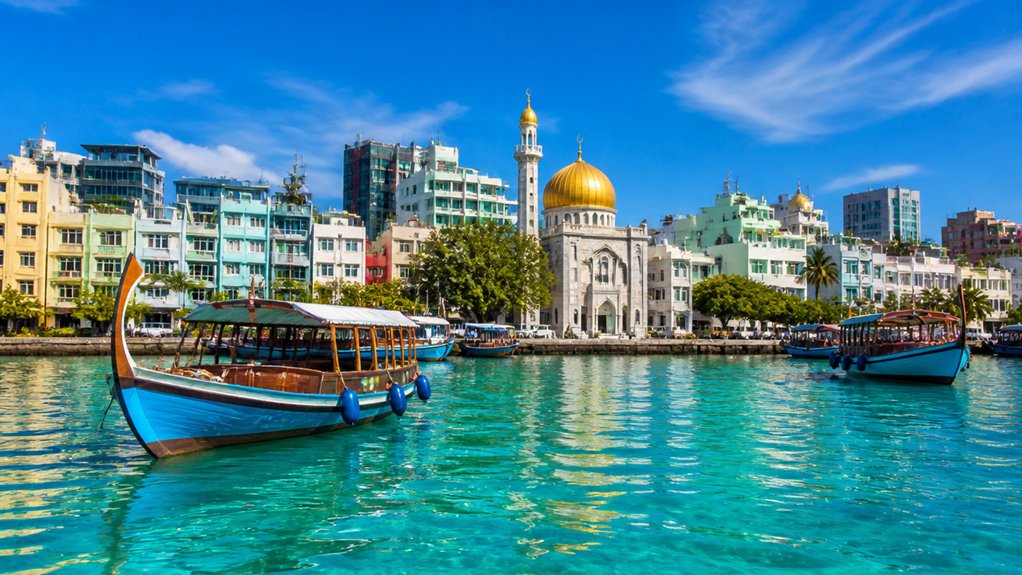
Male Cruise Port Guide
A comprehensive guide to navigating Male’s bustling cruise port, discovering hidden local gems, and avoiding tourist traps—but what’s the one mistake most visitors make?
In this guide
Try one free personalised day plan — built around your ship’s actual arrival and departure times. Then get every port on your cruise done the same way from £7.99 (about $10).
Cruise Port Overview: What To Expect
Male is straightforward to navigate on foot, which matters because the port operates like organised chaos—ships anchor offshore and tender passengers in to the Malé waterfront, which fills with tour operators, vendors, and passengers flowing in all directions simultaneously. The old city centre is close enough to reach walking, so you can skip shuttle buses and expensive taxis unless you’re heading somewhere distant.
What catches people off guard is the price jump the moment you step away from the immediate harbour zone. A coffee at the docks costs significantly more than anywhere else; walk back a few streets and you’ll pay sensible rates for food and drink. The narrow streets themselves warrant exploring—they’re genuinely interesting to walk—but they clog with cruise passengers during mid-morning through early afternoon.
Get ashore early, before the main group disembarks, and head straight for the quieter areas north of the old town. If you want a guided tour, book an independent operator online beforehand instead of through your ship—the better operators get booked out quickly by cruise passengers on limited time, and you’ll spend less while avoiding the group-herding experience. Even a half-day tour organised in advance feels like actual exploration rather than a rushed checkbox exercise. Consider exploring guided excursions at ports to discover curated experiences that go beyond typical cruise ship offerings.
Getting From the Port To Town
Getting from the port to town takes longer than expected because ships anchor offshore and you tender in to the waterfront, so allow for queues at the tender platform in both directions. Most visitors simply tag along with the crowd, which gets you where you’re going if you’re comfortable arriving with several hundred other people.
Walking remains your best practical choice. The old city is reachable on foot in a reasonable amount of time, and you avoid the inflated prices taxis charge for short journeys from the port. Taxis are available and legitimate, but they’re disproportionately expensive for this distance, and haggling over rates wastes time you could spend actually moving around.
Exit the port complex and head left along the waterfront, aiming generally north toward the old town. The streets are narrow and straightforward to navigate, and the island is small and flat, so you get oriented quickly. Walking lets you absorb how the place actually functions rather than arriving sealed in a vehicle.
Booking a walking tour in advance gives you structure without the guesswork. Independent guides can be arranged online before your voyage, and they’ll meet you either at the harbour or a predetermined spot. Popular operators get booked solid by cruise passengers, so reserving early guarantees availability and costs substantially less than buying tours at the port itself.
The Must-Do Experience: Start Here
The central square floods with cruise passengers by mid-morning, so the practical move is to arrive early and go directly to the Sultan Park, the old palace grounds, while it remains relatively clear. The architecture of the one surviving palace building and the National Museum beside it warrants close examination when you’re not competing for space, and you’ll understand the layout without the noise and crush of later arrivals. This timing advantage is real—you’ll photograph better, move faster, and actually absorb what you’re seeing.
From Sultan Park it is a short, flat walk to the Old Friday Mosque, with its minaret serving as an obvious navigation point. A coffee stop at one of the smaller cafés away from the main routes costs significantly less than the tourist-saturated squares, and the coffee itself tastes like actual coffee rather than the thin liquid the ship tours receive. This also gives you a break before the afternoon heat builds.
The waterfront road that runs around the island shows you how the city relates to its harbour, with ferries, fishing boats and speedboats coming and going, rather than the compressed perspective you get in the back streets. The walk is flat and easy, and it shows you the actual urban geography instead of just fragmented streetscapes. This matters more than it sounds for understanding how tightly the city is packed onto its small island.
Book a guided walk through the back streets with an independent operator before you leave home, as these tours use smaller groups and genuinely go where the cruise excursions don’t reach. Shore excursions booked through your cruise line often operate on fixed schedules that limit flexibility and exploration depth. The better guides fill their schedules weeks in advance during the busy season, so waiting until you dock means you’ll either get nothing or a poor option. Reserve online before departure and you’ll access parts of the city the general cruise crowds simply never see.
History Culture and the Top Sights
Male’s history is essentially a compressed version of Indian Ocean trade conflicts—sultanates, colonial powers, and merchant networks all fought over this small island, which means the architecture you see today is genuinely layered rather than pristine. The Sultan’s Palace itself is gone, with only one building of the royal compound left standing in Sultan Park, and much of what you see elsewhere is reconstruction rather than original. This somehow makes it more interesting than if everything were perfectly preserved.
The Friday Mosque near Sultan Park is where the actual historical weight sits. You can enter outside prayer times, and the interior decoration—carved wooden panels, coral stone work, the general craftsmanship—shows what wealth and skill actually produced in a trading hub. This isn’t tourist theatre; it’s the genuine article, which is precisely why the ship excursions hustle you through in forty minutes.
The National Centre and museums scattered through town fill in context that turns the old palace grounds into a coherent historical narrative. Rather than rushing through these alone, an independent guide who specialises in Maldivian history will connect the sultanate period to colonial occupation to independence in ways that make sense. These guides book quickly during cruise season, so arrange one in advance rather than hoping for availability at the dock, and you’ll spend considerably less than the ship’s history tour whilst actually learning something rather than just ticking boxes.
Beyond the Centre: Day Trips and Alternatives
The real problem with Malé isn’t the centre itself—it’s that most cruise passengers never venture beyond it, so you end up queuing behind the same couple of hundred people from your ship all day. The atoll has no dramatic landscapes to explore, no villages worth the effort, no waterfalls or jungle treks. What matters here is water, and that’s genuinely where your time is best spent.
Snorkelling trips to the house reef or nearby atolls are the only excursion worth leaving the ship for. You’ll actually see what draws people to the Maldives—coral, tropical fish, the reason visitors pay substantial sums to stay here—rather than shuffling through museums with your tour group. The cruise lines charge well above market rate and pack you onto boats with dozens of other passengers, which entirely defeats the purpose when you’re supposedly there for a quiet underwater experience.
Book an independent snorkel tour in advance rather than waiting until you’re at the dock. Popular operators book up quickly during cruise season, and booking independently costs considerably less whilst getting you picked up from the harbour in a smaller group. If you’re not a strong swimmer or prefer to stay dry, spend your morning with a private historian, then use the afternoon in the streets around the Friday Mosque—eat at a local restaurant instead of the tourist area, walk the backstreets where you can actually see how residents live, and move without rushing. Consider purchasing a local eSIM data plan before arrival to stay connected without incurring roaming charges while exploring at your own pace. Malé rewards a slower pace far more than it rewards hurrying.
Shore Excursion or Going It Alone
The ship’s excursion desk presents you with two options: pay inflated rates for a guided tour or navigate Malé by yourself without knowing what you’re looking at. Independent operators offer a cheaper third option that actually takes you somewhere worth going.
The cruise lines’ snorkelling packages prioritise the ship’s schedule over your experience. You’ll board a large catamaran with dozens of other passengers, spend a rushed hour at a reef, and return to the dock by lunchtime because your vessel needs to leave on time. Independent operators work with smaller groups, set their own pace, and aren’t watching the clock.
Book an independent snorkel trip online before arriving rather than deciding at the dock. The best guides and smallest boats fill up quickly during cruise season, and advance booking secures your spot at a fraction of what you’d pay through the ship. You’ll be collected from the harbour and returned at a time that suits the day’s actual rhythm.
If you’d rather stay in the city, hiring a private guide to the Friday Mosque neighbourhood costs little and shows you how the city actually functions beyond the tourist area. They’ll steer you toward local restaurants where your money goes further and where you’re not paying for proximity to the cruise terminal. The difference between a rushed afternoon and one where you can breathe usually comes down to booking independently rather than accepting what’s offered onboard.
What Most Male Guides Get Wrong
Harbour taxi drivers calculate their fares based on how long your ship stays in port, so always settle on a price before you get in the car. Ride-sharing apps cost more than local taxis but remove the negotiation entirely, and you’ll waste less time haggling than you might think. The real advantage comes from planning your route before you leave the ship—asking for directions once you’re on the street wastes what little time you have.
The Grand Friday Mosque is worth seeing, but the main entrance gets mobbed during cruise hours. Walk around to the side entrance where locals go, and you’ll often slip inside as one of a handful of visitors rather than standing outside with fifty others. Dress modestly everywhere you go—long trousers, covered shoulders, nothing in swimwear—and you’ll move through neighbourhoods without attracting unwanted attention.
The fish market near the harbour is intense and interesting, but you need to arrive early or you’ll find picked-over stalls and inflated prices designed for cruise passengers. The local restaurants tucked away in backstreets serve better food at half the cost of anywhere visibly touristy, so ask your guide or a shopkeeper where they eat breakfast, then go there for lunch instead.
Resist the urge to pack everything into your port day. You have a few hours, not a week, so choose one neighbourhood and spend real time there rather than rushing through several superficially. The difference between simply visiting Malé and actually knowing something about it comes down to that single choice.
Your Port Day: A Sample Itinerary
Most cruise passengers never leave the immediate waterfront area, which means the neighbourhoods where locals actually live and work stay completely separate from what you see. The real city exists beyond those ten minutes of walking, and you have to choose whether to go looking for it.
Start your morning at the fish market while it’s still operating. Get there early after your tender lands and ask a local shopkeeper for directions—you’ll find yourself among fishmongers and restaurant owners doing their actual shopping rather than performing for tourists. Grab a strong coffee at one of the small stalls and watch how the city functions on a normal day.
By late morning, head inland toward the Grand Friday Mosque using the side entrance that locals prefer. You’ll have time to look properly without tour groups blocking the main doors, and you should dress in long trousers and covered shoulders. Spend some time there, then drift through the surrounding neighbourhood on foot rather than rushing back to your ship.
For lunch, ask the shopkeeper from the market, a taxi driver, or anyone local where they actually eat, then go there instead of looking for restaurants near the waterfront. The difference in both cost and quality is substantial, and you’ll sit among Malé residents rather than other cruise passengers.
Your afternoon matters less than these three anchors. If you have energy remaining, wander a different neighbourhood or return to one that caught your attention. The point is choosing depth over distance.
Book your Male day
Tours for this port, compare before you book
Getting around in port
✈️ Before you sail: eSIM, insurance, luggage, flight delays
Ships In Male
Upcoming calls from our sailings tracker, updated regularly.
Costa Deliziosa
Costa CruisesThu 11 Mar
⚓ 08:00–18:00
Arcadia
P&O CruisesSat 8 Apr
⚓ 08:00–18:00