Colombo Cruise Port Guide
Navigate Colombo’s bustling cruise port like a local—discover hidden gems, authentic experiences, and insider tips that most tourists miss.
In this guide
Try one free personalised day plan — built around your ship’s actual arrival and departure times. Then get every port on your cruise done the same way from £7.99 (about $10).
Cruise Port Overview: What To Expect
Colombo’s port terminal operates with genuine efficiency rather than any sense of grandeur — corridors are straightforward, queuing is manageable, and the whole setup functions without unnecessary complication. Thousands of cruise passengers pass through daily, so expect crowds at peak times and a well-rehearsed crowd of touts working the gates with professional precision. The terminal sits close enough to the city centre that you can reach the main streets within a reasonable walk, cutting out the transport hassle that slows down port days elsewhere.
Standard security screening applies, and your cruise line will have covered documentation requirements in advance, so assume you’re prepared on that front. Heat and humidity define the climate, particularly during monsoon season, so lightweight clothing and water are non-negotiable practical considerations. Once outside the port gates, the environment becomes chaotic — tuk-tuk drivers compete loudly for fares, street vendors approach constantly, and the pavement rhythm differs sharply from what you’ll be used to, but none of this constitutes genuine danger.
Your actual advantage as a cruise passenger lies in the forced constraint of time, which pushes you toward smarter choices than tourists with unlimited days make. Book organised activities before arrival rather than hunting for last-minute options on the day, since tour operators allocate spaces to cruise groups first and independent bookings fill remaining slots. Tours covering the Fort district’s colonial buildings, inland Buddhist temples, or the beaches at Mount Lavinia sell out quickly to organised groups, so pre-booking guarantees your place and often costs less than paying on arrival.
Getting From the Port To Town
Getting from the port to town requires choosing between walking, tuk-tuk, official taxi, or pre-arranged transfer, each with genuine trade-offs. The walk takes longer than it should because the pavements are genuinely poor near the terminal and street vendors have mastered the art of blocking your path. Once you clear the outer neighbourhoods the conditions improve noticeably, but you’ll waste energy and time getting there.
Tuk-tuks cost significantly less than the official taxi rank and work well if you negotiate the fare before departure. Drivers expect haggling and will respect you more for standing your ground on price than accepting their first offer. The journey takes roughly the same time as walking but requires far less effort and exposes you to how the city actually functions rather than how it’s been sanitised for tourists.
Official taxis provide fixed pricing and remove negotiation entirely, which some prefer despite paying more for the privilege. Your cruise line’s pre-booked transfers offer certainty and air conditioning but lock you into their route and timing, which defeats much of the point of leaving the ship. Most passengers find the tuk-tuk strikes the right balance between cost, time, and getting a genuine sense of arrival rather than being ferried through town.
Walking remains possible if you travel without luggage and depart early before the heat becomes oppressive. Keep your phone charged with a local eSIM data plan, drink water continuously, and accept that you’ll navigate around obstacles and confusion that feel unnecessary until you reach the Fort district. The approach forces you to pay attention to where you are rather than sleepwalking through someone else’s itinerary.
The Must-Do Experience: Start Here
The Fort district is where Colombo actually becomes worth your time ashore, and most cruise passengers miss it entirely by treating the port as a transit point. Colonial architecture and the seafront here have genuine substance rather than the polished-for-tourists version of a place. A few focused hours yield more character than you’d reasonably expect from Sri Lanka’s capital.
Book an independent walking tour of the Fort before your ship arrives, as the established ones book solid weeks ahead and charge a fraction of what your cruise line quotes for identical routes. These tours take you through the old Parliament building, colonial hotels, and back streets where daily life proceeds without acknowledging cruise traffic—which is exactly what separates an actual experience from a choreographed one.
Walking the seafront yourself works if you prefer setting your own pace, with the Old Parliament Building accessible when open and the Colombo National Museum a short tuk-tuk ride inland in Cinnamon Gardens. The museum admission is minimal and actually contains pieces of Sri Lankan history rather than the sanitised version designed for passing tourists. You can also book guided excursions through established tour operators to explore specific cultural landmarks with expert insight. School groups and local visitors crowd the space during midday, so go early or accept that you’re experiencing it authentically alongside them rather than as a private viewing.
Colombo functions as a city where people live and work, not as entertainment arranged for arrivals. That absence of performance is precisely why leaving the ship matters.
History Culture and the Top Sights
Colombo’s museums and cultural sites operate without the usual passenger infrastructure, meaning fewer tour groups and less interpretation tailored to ship schedules. The Colombo National Museum holds genuine Sri Lankan artefacts alongside colonial acquisitions, and the mix of school groups and local visitors shows how residents actually engage with the city’s past rather than how it’s marketed. Going early sidesteps the midday crowds, though arriving with students offers a different perspective if you’re willing to observe rather than be observed.
The Old Parliament Building is visible from the seafront but opens irregularly, so check availability before planning around it. Standing outside to photograph the colonial façade requires no advance permission and takes only moments. The fort’s architecture spreads across multiple streets rather than clustering in one area, so planning a walking route between sites works better than treating each as an isolated stop.
Buddhist temples exist throughout the city beyond the Fort, but accessing the significant ones requires knowing where to go. A local walking guide who focuses on Colombo’s religious and cultural sites will navigate these spaces appropriately and explain their actual importance rather than directing you toward photogenic angles. These guides book quickly on cruise days, so reserving online in advance secures both availability and better rates than what your ship’s excursion desk offers.
Beyond the Centre: Day Trips and Alternatives
Most cruise passengers stay within the port boundaries because the port authority controls what information gets distributed, and your ship’s excursion desk has no incentive to direct you away from their own offerings. Colombo exists well beyond these colonial structures, but reaching places actually worth your time means either booking an independent tour operator or learning to use local transport systems yourself.
The Kelaniya Raja Maha Vihara temple lies inland from the port and attracts surprisingly few cruise visitors relative to its importance. A local guide who works regularly with Buddhist sites will explain why the temple matters to Sri Lankan culture rather than rushing you through photo opportunities, and booking directly with a specialist operator before departure costs substantially less than your ship’s package. These tours fill up quickly on cruise days as word travels among repeat visitors, so booking online before you leave home is practical advice.
If independence appeals to you, getting there requires local knowledge but becomes straightforward once you know which route to take. Either approach requires committing a half-day to the journey. The difference between the two options matters less than getting away from the places where every other passenger shoots the same photographs, and instead spending time in a space where local people actually live and worship rather than somewhere built for cruise ship visits.
Shore Excursion or Going It Alone
The choice between a ship excursion and going independently comes down to how much uncertainty you can tolerate. Ship excursions run on schedule with English-speaking guides, which matters if you worry about missing your departure or getting lost. Independent operators know the sites better and cost less, but they work on local time rather than ship time, so flexibility replaces guaranteed punctuality.
Booking an independent tour through a specialist operator before you sail costs a fraction of what the cruise desk charges and gets you a guide with actual knowledge of the place instead of someone reading notes. You’ll also avoid the crowds of cruise passengers, which changes how the experience feels. The trade-off is your guide may not return you at the exact moment your cruise director demands, though experienced operators build in buffer time because they know ship schedules are non-negotiable.
Going completely alone means navigating local buses and taxis, figuring out which routes actually serve your destination, and managing language barriers even where some younger people speak English. This works if you’re comfortable improvising, but it’s genuinely risky when your ship leaves in six hours and you’re still learning an unfamiliar transport system. The math changes if you have all day versus a tight window.
Book an independent tour through a specialist operator online before you sail. You get expertise, value for money, and certainty that you’ll make your departure—the practical combination that makes short shore time actually useful.
What the Cruise Desk Leaves Out About Colombo
The port authority has built a modern facility that works well for getting on and off ships, but the area immediately surrounding it isn’t where Colombo’s actual attractions are located. Colonial buildings, the National Museum, the Galle Face Hotel, and restaurants that don’t charge cruise-passenger rates all sit beyond what you can reasonably walk to from the terminal. This means transport isn’t optional if you want to see anything worthwhile.
Taxis queuing at the port rank will quote you prices substantially higher than what residents pay for identical routes. Booking transport through an operator before you sail costs less and removes the haggling entirely, or you can use ride-sharing apps once you’re off the ship. Either approach beats negotiating with touts who’ve identified you as someone with limited time and funds.
The shops inside the port terminal don’t offer competitive duty-free pricing, so spending your hours there is a practical waste. Independent guides who work Colombo regularly will meet you at the port entrance and take you directly to actual sights rather than letting you drift into negotiations with vendors operating just beyond the gates. Booking these guides online weeks in advance matters because the reliable ones fill their schedules quickly during cruise season, and you’ll lock in a return time that actually aligns with your ship’s departure rather than gambling everything works out on the day.
Your Port Day: A Sample Itinerary
The terminal itself offers nothing worth your time, so leave it immediately and get into the city instead. Book a taxi or ride-sharing app before you’ve finished clearing security, and head straight to the colonial quarter where anything resembling actual Colombo exists. The National Museum opens early and will take a solid hour of your morning; you’ll see Buddhist artefacts, royal regalia, and the sort of arranged history that provides useful context for what you’re looking at.
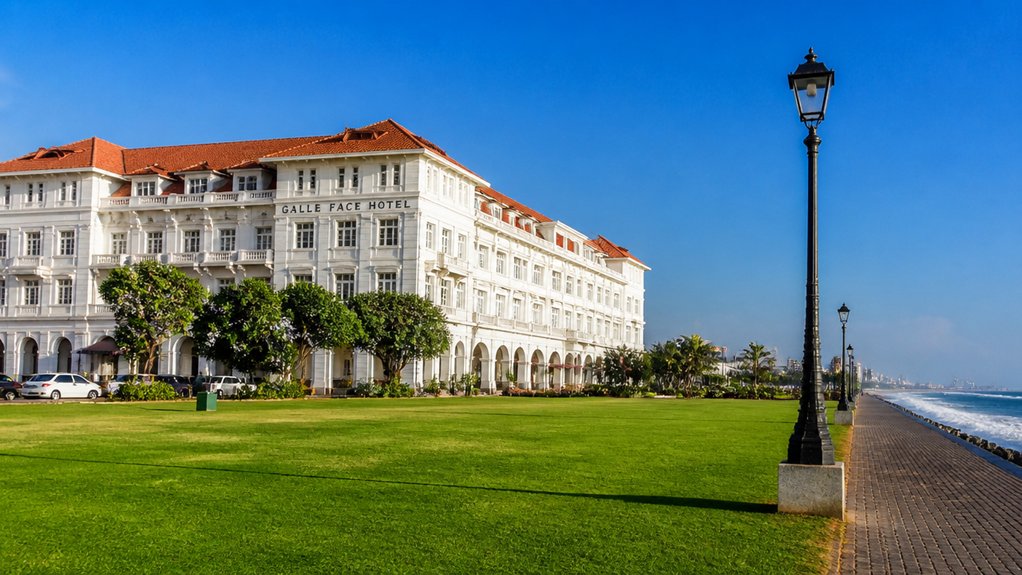
From the museum, walk to the Galle Face Hotel and order coffee or lunch while facing the Indian Ocean. This serves two purposes: you’ll eat better food than the terminal offers, and you’ll stop treating the day like a checklist to rush through. The shift from terminal mentality to actually being somewhere else happens here, not through constant movement.
By midday, move toward Fort, where independent guides can point out which buildings survived British occupation and which didn’t, noting architectural details you’d genuinely miss alone. Street food here costs substantially less than cruise-terminal restaurants, though stick to established spots rather than unmarked carts if your digestion is sensitive. Eat early to avoid both the worst heat and the crowds that peak in mid-afternoon.
The light near Galle Face works well for photography in the afternoon, and the streets are less congested than earlier. Book an independent guide online before you sail because the competent ones fill up during cruise season, and someone who knows the useful streets saves you the hours of wrong turns that waste limited time. Leave yourself enough buffer to return to the terminal without rushing—Colombo’s streets are worth exploring at an actual pace, but your ship operates on its own schedule.
Book your Colombo day
Tours for this port, compare before you book
Getting around in port
✈️ Before you sail: eSIM, insurance, luggage, flight delays
Ships In Colombo
Upcoming calls from our sailings tracker, updated regularly.
Costa Deliziosa
Costa CruisesTue 9 Mar
⚓ 10:00–19:00
Arcadia
P&O CruisesSun 21 Mar
⚓ 07:00–21:00
Arcadia
P&O CruisesThu 6 Apr
⚓ 07:00–21:00