Constanta Cruise Port Guide
Want to know why the Constanța cruise port terminal is just the beginning of an unforgettable Black Sea adventure?
In this guide
Try one free personalised day plan — built around your ship’s actual arrival and departure times. Then get every port on your cruise done the same way from £7.99 (about $10).
Cruise Port Overview: What To Expect
Constanța’s passenger terminal sits inside the port, about 1.5 km from the old town, so you can walk to the Casino and the old centre in around twenty minutes. The port itself is industrial and functional—container ships, cargo handling, concrete—so there’s nothing to see here that justifies lingering. The immediate waterfront offers only the standard port services: an information desk, overpriced cafés, and a taxi rank at the main port gate.
You don’t need transport to reach the old town, but if you plan to go further afield, book an independent driver or minibus in advance. Walking around the terminal area itself wastes time, so head straight for the port gate and on into town.
Constanța itself is worth the effort once you get there. The Casino, the seafront boulevard, and the archaeological museum are genuinely interesting, and they sit close together within walking distance of the port. Treating the terminal as simply a departure point rather than a destination of its own will let you actually see something rather than lingering by the ship.
Getting From the Port To Town
The taxi rank at the main port gate runs on trust rather than meters, so you need to negotiate a price before getting in the car. Expect to pay well above what locals pay for the same journey. Independent drivers cost less if you’ve arranged one beforehand, which is worth doing before you board.
A shared minibus will cost you significantly less than a private taxi and takes about the same amount of time to reach town, though you’ll be sharing the vehicle with other passengers and stopping at multiple drop-off points. Your best approach is booking a professional driver or small-group tour online before you arrive, which eliminates haggling, locks in a fixed price, and gets you into town without wasting time negotiating on the spot. The drive into the old town is short, so there’s no point overthinking your transport decision once you’ve made a choice.
Walking from the terminal to town takes about twenty minutes, much of it through the port to the main gate, so it is a realistic choice if you are steady on your feet. Book your return journey to the port before you head into town, since taxis are scattered throughout Constanța and you don’t want to be searching for one as your ship’s departure time creeps closer. A pre-booked driver lets you stay out later without that anxiety hanging over you.
The Must-Do Experience: Start Here
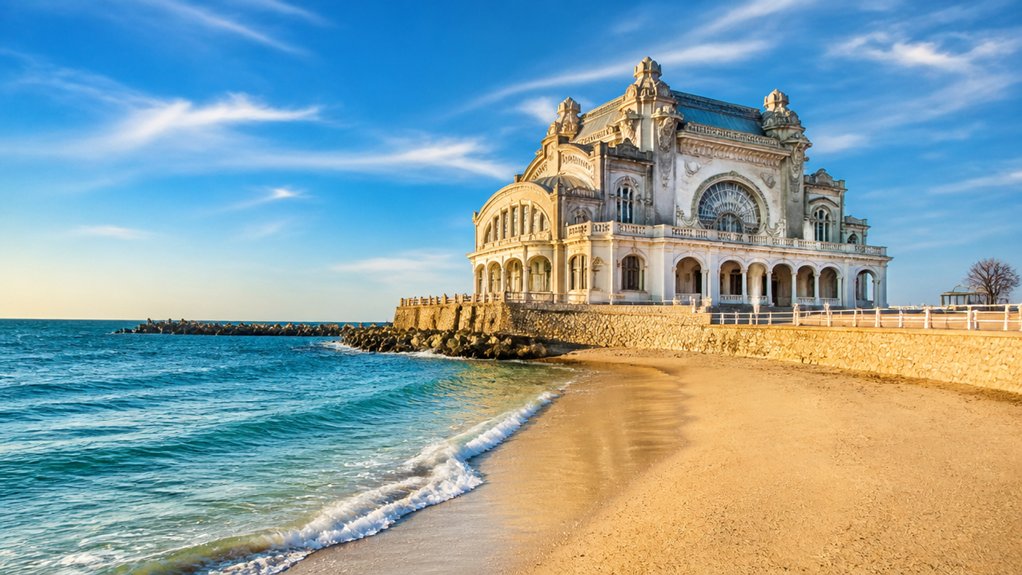
The old Casino stands apart from the crowded seafront precisely because most visitors never bother with it. Walk inside and you’re in an Art Nouveau building from 1910, restored after decades of neglect, with ornate ceilings and sea-facing rooms. The entry fee exists, but you’re paying to experience the building itself, not to gamble.
The Archaeological Museum contains actual Roman material from Tomis, the settlement that predates the modern city. The mosaics alone make the visit worthwhile, and the collection doesn’t overwhelm with hundreds of objects crammed into inadequate space. You’ll understand why these pieces matter rather than simply passing through rooms of artifacts arranged for maximum density.
The waterfront fills with cruise passengers, particularly where restaurants and shops cluster along the promenade, and prices climb accordingly while quality drops. One street inland, you’ll find better food and fairer costs. If your time ashore is limited, book an independent walking tour before you arrive rather than attempting to navigate alone, since the best guides fill their schedules quickly during cruise season and provide actual context about why the city’s layout and buildings developed as they did.
History Culture and the Top Sights
Constanța’s history extends far beyond what most cruise passengers encounter, which means the actual sites remain relatively clear of crowds. The city was founded as Tomis by Greek colonists, later served as a Roman port, and functioned for centuries as a waypoint between empires—a progression reflected in architecture that shifts abruptly from Ottoman structures to Soviet-era apartment blocks with little transition between them.
The Archaeological Museum warrants a visit because it operates at a human scale. Rather than exhausting you through endless galleries, it presents mosaics, sculptures and pottery that show how people actually lived two thousand years ago, with spacing that allows you to absorb context instead of merely walking past objects crammed together.
The old Casino building matters more as history than as a museum. That Art Nouveau structure from 1910 demonstrates Constanța’s earlier appeal as a fashionable destination, and walking through its restored interior teaches you more than any label could. The building itself is the primary document.
Booking an independent walking tour before you arrive makes practical sense if your schedule is tight. Local guides who know the area well explain why buildings face particular directions, how the port determined neighbourhood development, and which streets function mainly as tourist traps. This context transforms Constanța from a sequence of sights into a place where developments actually follow from circumstance rather than chance.
Beyond the Centre: Day Trips and Alternatives
Most cruise passengers spend half a day in Constanța and stay within sight of the ship, leaving the surrounding region largely free of the typical tour group crowds. The Danube Delta is close enough to reach and genuinely wild—you’ll watch pelicans, cormorants and water birds behaving as they actually do rather than reading about them in a visitor centre.
Going independently costs less than a ship excursion and involves ordinary local transport. You’ll travel alongside Romanian families instead of other cruise passengers in matching identification, which fundamentally changes what you experience. Small boat tours depart from the Delta’s edge and book up quickly when tourism peaks, so arranging this before you arrive gives you better choices and better rates than your ship offers.
The countryside around Mangalia works as an easier alternative if you’re short on time. Rural villages have functioning markets, active farmland, and restaurants where staff know their regulars—the kind of place cruise ports don’t typically connect you with. Getting there is simple and affordable, which means your money actually goes toward food rather than cruise line markups.
Both options require perhaps ten minutes of preparation before you leave the ship to book a small independent tour or check transport schedules. This small commitment turns an ordinary port day into something genuinely different from what most passengers experience.
Shore Excursion or Going It Alone
The ship excursion desk sells convenience, not value. You’ll pay significantly more for the same tour you could arrange yourself in minutes by searching online before arrival. Their guided tours to the Danube Delta or Mangalia typically involve a coach with thirty other passengers and scripted stops, whereas independent booking lets you choose group size, departure time, and a guide who isn’t watching the clock for the next group of ship passengers.
Arranging independently requires only a smartphone and willingness to do basic research. Search for operators offering Danube Delta or Mangalia tours, read recent reviews from other travellers, and contact them directly. You’ll typically pay a fraction of the ship’s price, and the tour runs on the operator’s schedule rather than your ship’s timeline—meaning you’re not herded back at an arbitrary hour because another group needs boarding.
The advantage extends beyond cost. A small operator living in the Delta knows where the birds actually gather or which farmland routes matter because they work there daily, not from a memorised briefing. You’ll eat lunch where locals do, not at a restaurant the company has a commercial arrangement with, and the entire experience becomes something you chose rather than something sold to you. Leave a good margin to get back, because the ship won’t wait for an independent tour.
Things Worth Knowing Before You Step Off in Constanta
The terminal sits inside the port about 1.5 km from the old town, so you don’t need to pay for transport to reach the seafront. Walk out through the main port gate and on to Casino Square and the Old Town in around twenty minutes, and you’ll pocket what others spend on taxis.
Restaurants with views of the terminal charge prices designed specifically for cruise passengers who have nowhere else to be. Walking inland past the casino puts you in neighbourhoods where local people actually eat, where grilled fish and mussels cost what they should. The markup on the seafront is substantial enough to affect what you spend on your holiday.
Book the Danube Delta tour through independent operators before you arrive, not from the ship’s excursion desk. Operators fill their boats quickly during cruise season and the best small-group tours sell out days in advance. Contacting them directly secures your place, costs considerably less, and means a guide familiar with the wetlands rather than someone reading from a script.
The difference between leaving at dawn with six people and arriving mid-morning with forty is the difference between seeing what’s actually there and seeing it from a coach window. Booking before you board your ship means you’ll have already committed to the early departure that makes the experience worthwhile. Waiting until the morning you arrive guarantees you’ll miss the operators who know what they’re doing.
Your Port Day: A Sample Itinerary
The Old Town offers better value than the seafront, where two thousand cruise passengers compete for table space and inflated prices. Walk inland from the terminal towards Casino Square and glance at the casino’s Belle Époque exterior if you want, then head into the narrow streets where Ottoman, Genoese, and Romanian buildings still occupy the same blocks they have for centuries. Wander without a plan—mosques, churches, and caravanserais announce themselves as you pass, and the absence of crowds here is precisely the point.
Eat lunch in one of the neighbourhood restaurants away from the water, where the food costs less and tastes better than anything ordered with a sea view. Grilled fish, mussels, and local bread represent actual value rather than the premium charged simply for proximity to the casino.
Spend your afternoon on the Danube Delta if you’ve arranged an independent early-morning tour, or visit Constanta’s archaeological museum to see Roman mosaics and sculpture that explain why this place warranted two thousand years of continuous habitation. Either option finishes well before the ship’s all-aboard time, leaving you with something substantive to show for crossing the Black Sea.
Book your Constanta day
Tours for this port, compare before you book
Getting around in port