Taormina Cruise Port Guide
Find insider tips for navigating Taormina’s challenging port terrain, avoiding tourist traps, and discovering hidden gems that cruise guides won’t tell you.
In this guide
Try one free personalised day plan — built around your ship’s actual arrival and departure times. Then get every port on your cruise done the same way from £7.99 (about $10).
Cruise Port Overview: What to Expect
Taormina’s cruise port sits at the bottom of a steep hill, and your ship won’t dock anywhere near the town itself—you’ll either tender ashore or dock at the industrial port in Messina across the strait, then travel overland. This geographical inconvenience is the single thing cruise passengers wish they’d known before arriving, because it fundamentally shapes how you’ll spend your day and what’s actually worth your time and money.
The tender situation, if it applies to your ship, creates queues both going ashore and returning, which eats into limited port time faster than you might expect. Weather can delay tenders unpredictably, so if rough seas hit mid-morning, you could find yourself stuck on the ship watching other passengers enjoy cappuccino in the piazza. Plan for this reality when deciding whether to go ashore.
If you’re docking in Messina instead, the journey to Taormina involves either a coach transfer organised by your cruise line or independent transport. The coach option costs more than it should, but it removes the navigation headache. Independent travel requires confident navigation and Italian language basics, though taxis and local buses work reasonably well if you’re organised.
Taormina itself is genuinely worth the effort, but only if you arrive early and book independent tours in advance. Popular tours to the Greek theatre and surrounding countryside fill up weeks ahead for cruise passengers. Consider booking guided shore excursions through your cruise line to guarantee availability and professional planning. Budget your time generously for transport and queuing, plan your activities before you leave the ship, and treat the port logistics as part of the day rather than an obstacle.
Getting From the Port to Town
The cable car runs between Mazzarò beach and the town, not from the port, so it won’t help you get up from the landing. Your actual choices narrow down to three: the shuttle bus run by your cruise line, a shared minibus operated by local drivers, or walking up a steep hill that will test your fitness and resolve.
The shuttle bus requires the least effort on your part. It’s air-conditioned, removes any navigation uncertainty, and operates on a fixed schedule that the crew coordinates with your ship’s departure time. The drawback is inflexibility—you’re bound to the timetable, which means you might find yourself watching the clock in town instead of following your own pace, though most people accept this trade-off as worthwhile for the reliability.
Local minibuses depart regularly from the port and cost substantially less than the official shuttle. You’ll need to ask port staff where they leave from, manage some basic Italian or creative gesturing, and accept a slower route with intermediate stops along the way. The minibus deposits you closer to the town centre rather than the cable car base, which actually works in your favour by giving you a different entry point into Taormina.
Walking is physically possible if you’re reasonably fit and travelling with minimal luggage. The climb demands real effort and takes longer than most people anticipate, and you’ll arrive at the top drenched in sweat. Cool mornings in April or September make this manageable for some passengers, but on a hot July afternoon you’ll spend your first hour recovering rather than exploring.
The Must-Do Experience: Start Here
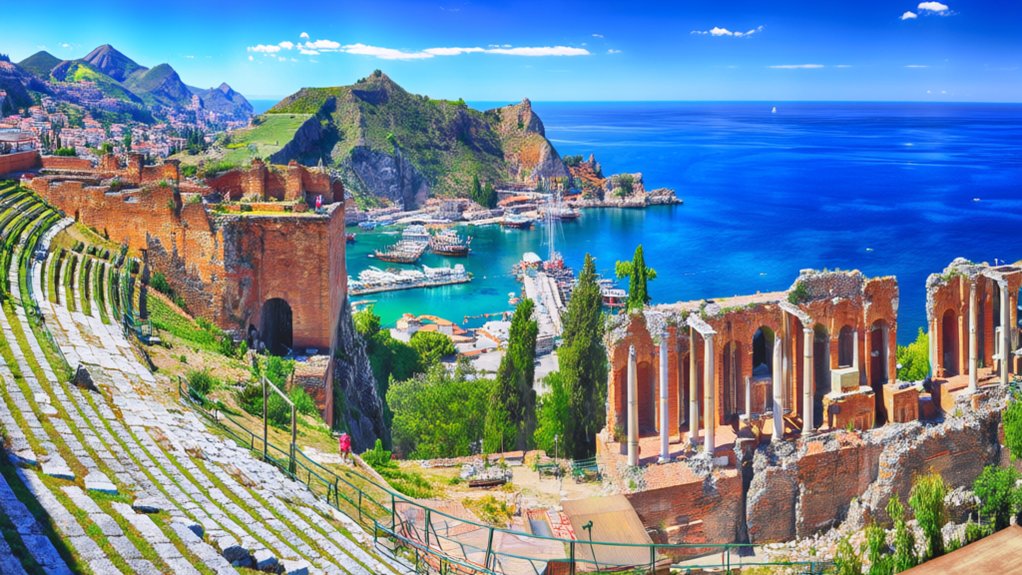
Most cruise passengers spend their first hour drifting through the lower town without purpose. Head straight to the Teatro Greco instead and work your way back down—the theatre justifies the climb because it actually offers something beyond the typical postcard view. You’re standing in a structure built to frame the Ionian Sea, and that geography matters to understanding why it was built here at all.
Arrive early, before the tour groups show up, and give yourself enough time to walk through the ancient seating and think about what happened in this theatre for two thousand years. The views aren’t the point because they’re pretty; they’re the point because they shaped how performances were staged and how audiences experienced them. You’re not paying to see a view—you’re paying to stand where people stood.
From the theatre, the town reveals itself naturally as you descend through the medieval streets toward Piazza IX Aprile. The route feels like moving through an actual neighbourhood rather than following a predetermined path, which is precisely why it works. You’ll encounter cafés, local shops, and churches without the sensation of ticking off a checklist.
Book a local walking tour operator in advance rather than relying on your ship’s excursion desk. Independent guides offer better value and fill quickly during cruise season, so secure your spot before your port day. A local guide explains the actual history of what you’re looking at instead of leaving you to squint at plaques or follow forty other people through a script.
🗺️ Tours & Experiences at This Port
Skip the ship’s overpriced excursions — browse top-rated independent tours trusted by thousands of cruise passengers.
History Culture and the Top Sights
Taormina’s churches are genuinely interesting, which is precisely why most cruise passengers skip them entirely in favour of souvenir shops. The Cathedral of San Nicolò sits on Piazza Duomo, a short walk along the main street from Piazza IX Aprile—you’ve probably already walked past it—and the interior tells you far more about the town’s medieval power structure than any guidebook will. The baroque decoration exists because the town actually was wealthy, and the Church made sure everyone knew it.
Santo Stefano, perched higher up in the old town, offers something rarer: actual quiet and a perspective on how ordinary residents lived away from the theatre and the main square. You’ll recognise the Norman architecture immediately if you’ve travelled anywhere in Sicily before, and you’ll understand why the Normans kept building in this style—it works in the heat and it lasts. The few cruise passengers who venture this far tend to be the ones having the best days ashore.
The Palazzo Corvaja, medieval and genuinely complicated in its architectural history, sits between the cathedral and the theatre. It’s been a convent, a noble residence, and now a museum—the building itself is the collection, which matters because you’re not paying to see objects in cases but to understand how space and power intertwined in a medieval port town. An afternoon moving between these three sites gives you the actual skeleton of how Taormina developed, rather than just the postcard version.
Beyond the Centre: Day Trips and Alternatives
The ship excursions to Mount Etna and the Alcantara Gorge cost more than they should for what you actually experience, and the independent operators worth booking fill their spots before cruise season even starts. Your cruise line will charge you considerably more than you’d pay booking directly online beforehand, and you’ll spend half your day in a coach with other passengers instead of actually seeing anything.
If Mount Etna interests you, book an independent tour before you arrive. The cost difference is significant, and you won’t be herded through a coach with forty other people. The gorge itself—dramatic volcanic rock with a river you can wade through—deserves better than a rushed stop and a gift shop you’re funnelled through.
Mazzarò beach, just below the town and linked to it by cable car, requires less planning. The water is warmer than expected, the beach stays mostly local because most cruise passengers don’t bother, and you can spend an afternoon there for a fraction of what formal excursions cost. You’ll need to sort your own transport down the hill, which takes a little more effort, but that’s precisely why most cruisers skip it entirely.
Skip the ship excursions here. Book your Etna or gorge tour online beforehand if those genuinely appeal to you, or take yourself to the beach like someone who values their port time.
Shore Excursion or Going It Alone
The cruise desk will tell you the town gets unbearably crowded by mid-morning, which is true, but they’ll conveniently fail to mention that most of those crowds vanish by early afternoon when tour groups are herded back to their coaches. The real move is timing your visit to miss the peak, not paying extra for a ship excursion that guarantees you’ll be stuck in it.
Getting off the ship within minutes of all-aboard gives you a genuine advantage. Most cruise passengers dawdle over breakfast or linger on deck, which means the first hour ashore is genuinely quiet. Head straight up to the Teatro Greco early and you’ll have the ancient amphitheatre largely to yourself—a stark difference from what you’ll experience if you arrive mid-morning with three hundred other people.
The steep cobbled streets look charming in photographs but are genuine ankle-twisters in reality, especially if you’re wearing anything less stable than proper walking shoes. Wear trainers, not sandals, despite what the weather suggests. You’ll regret it otherwise.
Currency matters more than you’d expect. Some smaller cafés and shops operate cash-only or charge noticeably more for card payments. Visit an ATM near the port entrance before heading uphill, and you’ll avoid the inflated prices at tourist-area money changers. The difference isn’t huge, but when every euro counts on a port day, it adds up. Consider booking guided excursions in advance if you prefer structured itineraries and want to guarantee access to popular attractions during peak times.
Local Knowledge Worth Having Before You Dock
The local bus system costs less than a taxi, though it operates on Sicilian time—meaning it departs whenever it decides to. If you’re heading to Castelmola for views across the Ionian Sea, booking an independent walking tour beforehand will be considerably cheaper than a ship excursion and spares you from queuing at the port desk while premium slots fill up.
The Teatro Greco ticket office charges roughly double what smaller attractions do, but the admission justifies it, as few ancient theatres anywhere convey their original purpose and setting so completely. Skip the overpriced water bottles sold near the top of the steps and carry your own from the port area instead.
Taormina’s expensive restaurant reputation is well-deserved, particularly along the main strip where menus cater to tourist spending rather than actual hunger. Wander one street back from the tourist zone and you’ll find trattorias where locals eat, serving identical food for half the price without the sea-view surcharge. Cash payments often reveal small discounts before you order.
Download offline maps before you dock, since mobile signal can be unreliable in the narrow streets. Getting temporarily lost is fine, but losing your bearings near the Teatro Greco when your all-aboard time approaches is considerably less amusing. The streets loop back on themselves constantly, so a basic sense of direction saves unnecessary backtracking.
🗺️ Tours & Experiences at This Port
Skip the ship’s overpriced excursions — browse top-rated independent tours trusted by thousands of cruise passengers.
Your Port Day: A Sample Itinerary
The Teatro Greco works best if you reach it before most other passengers wake up. The narrow streets up from the port funnel everyone in the same direction, so going early means you’ll actually move without bodies pressing against you from all sides. Download offline maps before you leave the ship and stick to the main route—it’s clearly marked, and you’ll reach the ticket office without much searching.
Spend your midday hours actually inside the theatre rather than rushing through it. Sit on the stone benches, look out across the landscape toward Calabria, and let the scale of the place become real to you. Bring water from the port because the climb up is hot and there’s nowhere to buy drinks once you’re inside.
The crowds thin noticeably after lunch when other cruise passengers head back to eat on their ships. This is when the space feels like something other than a crowd management exercise, and the views extend far enough that the time spent sitting there feels like time well used rather than obligatory tourism.
🗺️ Tours & Experiences at This Port
Skip the ship’s overpriced excursions — browse top-rated independent tours trusted by thousands of cruise passengers.
Book your Taormina day
Tours for this port, compare before you book
Getting around in port