Syracuse Cruise Port Guide
Know the insider secrets to maximizing your Syracuse cruise visit without breaking the bank—discover what most tourists miss.
In this guide
Try one free personalised day plan — built around your ship’s actual arrival and departure times. Then get every port on your cruise done the same way from £7.99 (about $10).
Cruise Port Overview: What to Expect
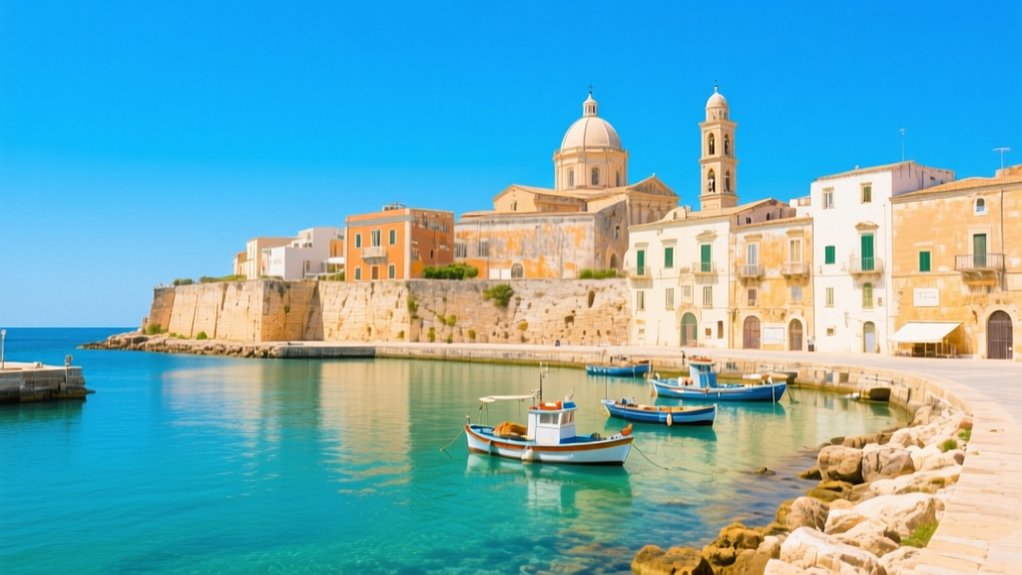
Syracuse’s cruise pier sits on the edge of Porto Grande, right beside the bridge onto Ortygia island, the historic heart of the city. Larger ships sometimes anchor in the bay and tender passengers ashore near the entrance to Ortygia. Either way the worthwhile parts are a short walk away, and crossing the bridge gets you into narrow streets where you’ll find the cathedral, neighbourhood restaurants, and actual local life rather than the tourist-filtered version. The archaeological museum and the Neapolis archaeological park are on the mainland, a short taxi ride away.
The port itself runs without fuss. Your ship won’t compete with dozens of others for space, and security queuing moves reasonably fast. Taxis and minibuses queue outside the terminal, though booking a driver independently through a local operator typically costs less and gives you better local knowledge. Renting a car works fine for getting into Syracuse, but parking in Ortygia is genuinely difficult—public transport or a guided tour makes more practical sense than circling for spaces.
Your real constraint is time rather than access. You’ve got limited hours to explore a place that warrants a full day, so book your activities and guided excursions before you arrive. The better independent tours fill with cruise passengers quickly, and securing your spot online beforehand saves you from wasting port time hunting for availability or standing in queues.
Getting From the Port to Town
Most cruise passengers waste money on taxis for a journey they could walk in minutes. The bridge from the pier onto Ortygia is straightforward to cross, and doing so on foot gets you into the old town without paying for transport that crawls through traffic.
If walking feels genuinely difficult because you’re carrying heavy luggage or managing mobility issues, taxis wait outside the terminal. Independent drivers charge less than official rank taxis and actually navigate the city streets without getting lost. Booking a driver beforehand through a local operator gives you fixed pricing and removes the uncertainty of street-side negotiation, though minibuses are unreliable for cruise schedules and will likely leave you standing around waiting.
Walking those few minutes matters more than skipping them. You transition directly from modern port infrastructure into centuries-old streets, and the light and atmosphere shift as you move through narrow passages into genuine neighbourhoods rather than tourist zones. This approach gets you into Ortygia ready to explore rather than irritated from sitting in a vehicle.
Once across the bridge, you’re actually in the old town where the cathedral, museums, and decent restaurants sit within reasonable walking distance. Everything worth your time is close enough that you don’t need transport once you’ve made this initial crossing.
The Must-Do Experience: Start Here
Syracuse’s advantage is straightforward: the best parts are accessible without paying for a guided tour or premium access fees. The Cathedral and Archaeological Museum sit close enough to walk between them, both cost little or nothing to enter, and both justify spending time there.
Start at the Cathedral in Piazza del Duomo because it’s obvious when you find it and worth going inside regardless of your beliefs. The building shows layers of different periods stacked on top of each other, and sunlight through the windows changes how the stone looks throughout the day. From there, walk to the Archaeological Museum, where the Greek and Roman objects from the region actually explain why this place mattered in history rather than just displaying old things behind glass.
If you want more context without paying the ship’s markup, book an independent walking tour through a local operator before you arrive. These tours fill quickly when cruise ships are in port, so arrange it in advance. A local guide costs less than what the cruise line charges and provides practical information—which streets get crowded at lunch, where locals actually eat—that turns a rushed port day into something that makes sense.
The neighbourhoods away from the main tourist areas are worth exploring on foot. You’ll find ordinary life in small squares and narrow streets where locals stop for coffee rather than tourists ordering overpriced cappuccino on the main strips. This is where you understand why people have chosen to live here for thousands of years.
🗺️ Tours & Experiences at This Port
Skip the ship’s overpriced excursions — browse top-rated independent tours trusted by thousands of cruise passengers.
History Culture and the Top Sights
Syracuse’s history actually predates Rome by centuries, yet most visitors only know the Roman period. You’re walking through 2,700 years of continuous habitation, and the physical layers of the city reveal far more about Mediterranean power shifts than any summary could convey.
The Cathedral proves this through its very structure. Inside you’re standing in what was originally a Greek temple to Athena from the fifth century BC, then a Byzantine church, then a Norman cathedral, then a baroque reconstruction after an earthquake destroyed much of the city. The columns from the original Greek temple still support the roof, so the building itself explains the history without needing interpretation.
The Archaeological Museum holds the Greek and Roman objects that matter because Syracuse was genuinely important to ancient powers, not because someone assembled pretty things. The marble Venus is there for a reason—as are the Greek sculptures and Roman mosaics that show why successive invaders wanted control of this place. The collection is selective rather than exhaustive, which means you can actually understand what you’re looking at.
Booking a guide before your ship arrives works better than waiting until you dock. Local operators fill their availability quickly when cruise ships arrive, and they charge considerably less than what the ship’s excursion desk quotes for the same tour. A morning walking tour covers the main sights with someone who knows their actual significance, leaving your afternoon free to explore areas where cruise passengers rarely venture.
Beyond the Centre: Day Trips and Alternatives
Ship excursion desks charge two or three times what independent operators ask for the same tours, and this markup applies before you’ve even cast off. The financial argument alone justifies booking tours online in advance rather than negotiating from the quay with your ship’s departure looming and your options narrowing.
Most cruise passengers stick to the Archaeological Museum and Cathedral because the ship’s schedule revolves around these two sites. This leaves entire neighbourhoods untouched—Ortygia’s residential streets, the working markets, the smaller baroque churches—largely free of the tourist apparatus. The food tastes better and costs less the moment you leave the main pedestrian street where restaurants factor in your eight-hour port window into their pricing.
Independent walking tours booked before you sail fill up quickly when multiple ships dock, so advance booking secures your spot and prevents the rushed herding through sites in set groups. A morning tour with a local guide costs substantially less than the ship’s equivalent, leaves your afternoon unscheduled, and separates you from the crowds following the official route. Afternoon wandering through Ortygia‘s limestone streets, sitting in smaller piazzas, and eating at a neighbourhood restaurant is where Syracuse stops performing for visitors and starts revealing how it actually functions.
Go solo if you navigate maps confidently and want complete flexibility over your route and timing. An independent tour works if you want local context without paying the ship’s premium. Either option beats queuing outside the gift shop while other passengers photograph themselves in novelty hats.
Shore Excursion or Going It Alone
The Archaeological Museum is on the mainland, a taxi ride from the pier, and closes on Mondays, so check your day before planning around it; cruise passengers often find this out too late. If Greek artefacts and mosaics interest you, get there first, ahead of the Cathedral or anything else, because only by operating independently of the ship’s schedule can you actually see what you want to see.
The Cathedral’s interior light shifts dramatically throughout the day. Morning means crowded conditions and backlighting that makes everything dim; late afternoon brings cooler air, fewer tour groups, and sunlight that properly shows off the baroque frescoes instead of bleaching them out. Plan your visit around when the light works, not around what the cruise desk suggests.
Carry more cash than feels necessary. The ATMs near the Archaeological Museum run out during cruise season peaks, and the neighbourhood restaurants away from the tourist areas—where the food genuinely warrants the walk—often don’t take cards. Cash also lets you tip local guides properly, which matters more than you might think when someone’s giving up their morning to show you around their city.
Water taxis across the harbour to Ortygia cost less than the ship’s shuttle and leave regularly. They’re quicker and far less frustrating than waiting in queues and following rigid cruise schedules. Ask the harbour information desk about them instead of assuming the ship’s transport is your only option; locals ride these ferries daily, which says everything about how well they work and what they’re actually worth.
🗺️ Tours & Experiences at This Port
Skip the ship’s overpriced excursions — browse top-rated independent tours trusted by thousands of cruise passengers.
Syracuse: The Details Nobody Mentions at the Port Talk
The Archaeological Museum staff genuinely couldn’t care less that your ship arrives at a particular time—they close on Mondays and keep shorter hours on public holidays regardless, and the cruise desk knows this perfectly well. What they won’t tell you is that arriving at the museum first thing, before anywhere else, is the only way to guarantee you’ll actually see the Greek mosaics and artefacts the guidebooks reference. Plan your port day around the museum’s schedule, not the other way around.
The Cathedral’s light changes dramatically depending on when you visit, and nobody from the ship mentions this. Morning sunlight comes in at an angle that washes out the baroque frescoes; late afternoon light actually illuminates them properly. Visit when the light works for you, not when the organised tour schedule dictates.
Carry considerably more cash than feels sensible. The ATMs near the museum empty out during cruise season, and the genuinely worthwhile neighbourhood restaurants—the ones locals actually eat in—often don’t accept cards. You’ll also want proper cash for tipping a local guide if you hire one independently, which costs a fraction of what the ship charges and gets you someone who actually knows their city.
The water taxi across the harbour to Ortygia costs less than the ship’s shuttle and runs constantly throughout the day. Locals use it because it works; your cruise desk won’t mention it because it’s outside their control. That’s precisely why it’s worth your time.
🗺️ Tours & Experiences at This Port
Skip the ship’s overpriced excursions — browse top-rated independent tours trusted by thousands of cruise passengers.
Your Port Day: A Sample Itinerary
Syracuse rewards the passenger who ignores the ship’s timetable and builds their own day around the Archaeological Museum.
Start at the museum before you do anything else. The Greek mosaics and terracotta figures won’t wait—it’s a taxi ride from Ortygia and closed on Mondays, and you cannot understand Syracuse without them. Spend real time here; the audio guide actually explains what you’re looking at rather than simply naming it.
From there, walk directly into the neighbourhood restaurants around Via Cavour, away from the Cathedral piazza where every menu is a laminated tourist trap. Order what locals are eating. Bring cash—proper cash, the amount that makes you slightly uncomfortable, because these places won’t take your card and they’re worth the inconvenience.
Catch the water taxi across the harbour to Ortygia when the afternoon is wearing on. The crossing itself is the point; locals use it constantly, which tells you everything about its reliability. Wander the narrow streets, find a bar, sit down—the Cathedral looks entirely different in the light at this hour.
Return via the same water taxi as the sun begins lowering. If you’ve timed it right, you’ll be back at your ship with an hour to spare, having genuinely seen Syracuse rather than a curated version of it. Book an independent walking tour of Ortygia in advance if archaeological detail matters to you, because the ship’s guides prioritise speed over knowledge, and the good independent guides fill quickly during cruise season.
If you prefer a guide to a map, what is available in Syracuse covers trips that fit a single day ashore in Syracuse.
🗺️ Tours & Experiences at This Port
Skip the ship’s overpriced excursions — browse top-rated independent tours trusted by thousands of cruise passengers.
Book your Syracuse day
Tours for this port, compare before you book
Getting around in port