Catania Cruise Port Guide
Avoid overpriced ship tours and discover how to explore Catania’s baroque treasures like a local—but first, know this critical mistake.
In this guide
Try one free personalised day plan — built around your ship’s actual arrival and departure times. Then get every port on your cruise done the same way from £7.99 (about $10).
Cruise Port Overview: What to Expect
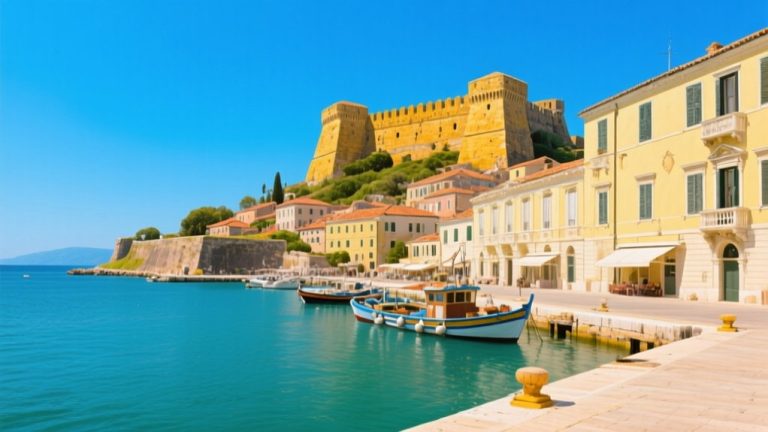
Catania’s cruise port is a working harbour where fishing boats and cargo vessels occupy the same space as your ship, which means you’re not entering a terminal built specifically for tourists. This authenticity has real trade-offs—no promenade, no duty-free shops, no soft introduction to what Sicily offers. You’ll be deposited directly into a city that functions according to its own needs, not yours.
Walking into the centre involves traversing flat but unremarkable streets for a reasonable distance through neighbourhoods with no particular tourist infrastructure. The lack of touts and aggressive vendors reflects this reality: Catania isn’t primarily designed around cruise passengers, so the usual port-area harassment simply doesn’t exist. Once you reach the old city, the baroque architecture and actual energy of the place make the slightly unglamorous approach feel worth it.
Exploring the city centre doesn’t require organized transport if you’re reasonably mobile, though summer heat can be genuinely difficult to manage. The neighbourhoods around the fish market offer far better food and value than anywhere catering to cruise passengers. Wear proper walking shoes, bring water, and accept that you’ll navigate chaotic traffic and tight streets where nothing has been flattened or widened for tourism.
The harbour itself offers little beyond photographs—your actual time matters once you’ve walked into the real city. This port doesn’t trap you in a managed zone, which means you’re genuinely free to see Catania properly if you leave the ship with a specific plan. Wandering without direction will waste hours that matter more in a city this size.
Getting From the Port to Town
The walk from ship to city centre is short but unremarkable, because the route passes through nothing—no shops, no cafés, no stops worth making. This absence is actually useful: you won’t be herded through tourist traps or sold transport you don’t need.
Walking to Piazza del Duomo takes around 15 to 25 minutes depending on your pace and the weather. The terrain is flat and simple enough that you can’t lose your way, though the pavements are broken and the streets become genuinely difficult once you enter the actual city. Wear shoes with decent grip because you’ll need them.
Taxis are overpriced for this distance and drivers rarely use the meter without argument first, so you lose any time advantage. Unless you’re carrying heavy luggage or walking is painful, your legs are the practical choice here.
The harbour itself offers almost no infrastructure, so expect no signs pointing inland or tourist desks. Look toward the baroque buildings visible in the distance—that’s the old city, and everything that matters is there. Head straight toward those rooflines and you won’t need directions or navigation apps.
If the heat is genuinely oppressive or you’re pressed for time, the organised walking tours departing from the ship often include transport that skips the flat monotonous section and drops you directly into the neighbourhoods worth your attention.
The Must-Do Experience: Start Here
Catania works because it isn’t built for tourists. The cruise terminals want you in sanitised zones, but the actual city operates elsewhere—in working neighbourhoods where your presence changes nothing about how people move through their day.
Start at the Cathedral in Piazza Duomo. The baroque façade is theatrical without excess, and the Fontana dell’Elefante—an elephant perched on an obelisk—functions as the city’s symbol for reasons both historical and absurd. An hour here teaches you what Catania‘s architecture is actually doing.
Walk into the streets around Via Etnea, which slopes upward in a grid that looks simple until you’re lost in it. This is where locals shop and eat lunch, not where cruise passengers congregate. Buy food from a street vendor instead of sitting at a café, and you’ll eat better for less money.
By midday the fish market near the harbour demands your attention if you have the stomach for it. The smell is genuine, the chaos is genuine, and the seafood is cheap when you eat at one of the trattorias serving arancini and pasta directly adjacent to the stalls. Consider booking a guided food tour to deepen your understanding of Sicilian culinary traditions.
Spend your afternoon at the Benedictine Monastery north of the centre, or simply walk through residential areas where nothing is arranged for outside consumption. This is how you actually see the place.
🗺️ Tours & Experiences at This Port
Skip the ship’s overpriced excursions — browse top-rated independent tours trusted by thousands of cruise passengers.
History Culture and the Top Sights
Catania’s history is a sequence of destructions that somehow generated architectural coherence. Earthquakes have levelled the city repeatedly, lava from Mount Etna has buried it, and each time it was rebuilt using the same dark stone. The result is a place where you can literally trace the layers of reconstruction in the buildings around you.
The Must-Do Experience: Start Here
The Cathedral is the logical starting point because its architecture tells you how the city thinks. First built in the 11th century on the remains of Roman baths and rebuilt after the 1693 earthquake, it demonstrates that baroque stonework here serves structural purpose rather than ornament. The elephant fountain outside dates from the 18th century and functions as Catania’s emblem, though it’s genuinely peculiar—an elephant of uncertain age carved from lava stone, carrying an Egyptian-style obelisk, put together as a fountain by the architect Vaccarini during the rebuilding. Nobody knows for certain who carved the elephant or when.
🗺️ Tours & Experiences at This Port
Skip the ship’s overpriced excursions — browse top-rated independent tours trusted by thousands of cruise passengers.
Walk the streets radiating from the Cathedral and you’ll see immediately why Catania feels visually unified despite its fractured history. The dark lava stone appears in every building because it was what was available after each destruction. Architects rebuilt with the same material, creating visual consistency that feels less like deliberate design and more like geological inevitability.
Shore Excursion or Going It Alone
The Benedictine Monastery north of the centre contains what most cruise passengers never encounter because they’re shepherded through the Cathedral and back to the ship. The cloisters offer genuine quiet, the staircases are genuinely monumental, and the rooftop views actually show you how Catania extends beyond its baroque centre. Spend your time here rather than in the crowded cathedral if you want to understand how the city functions rather than how it appears.
🗺️ Tours & Experiences at This Port
Skip the ship’s overpriced excursions — browse top-rated independent tours trusted by thousands of cruise passengers.
Mount Etna excursions sold through the ship are overpriced and run in groups large enough that you’ll spend half the time waiting for other passengers. Booking an independent guide beforehand gives you better value, smaller numbers, and access to narratives the standardised tours omit. Most reputable operators fill their schedules quickly when cruise ships arrive, so arrange this before you dock.
🗺️ Tours & Experiences at This Port
Skip the ship’s overpriced excursions — browse top-rated independent tours trusted by thousands of cruise passengers.
Beyond the Centre: Day Trips and Alternatives
The day trips worth your time from Catania require either a rental car or advance booking with a guide, because the ship’s Mount Etna tours operate on schedules built around logistics rather than what you’ll actually see. Your cheapest independent option is arranging a small-group guide before docking—these book out quickly when cruise ships arrive and cost considerably less than the ship’s equivalent.
If you’re travelling with others, splitting a car rental makes financial sense. Drive south to Syracuse, where the Greek ruins genuinely compete with anything in Greece itself, minus the tourist congestion that defines Athens. The Theatre functions as an active performance venue rather than a static museum, which fundamentally changes how you experience the space.
Spend your morning in the archaeological park, eat lunch at one of the family-run trattorias in Ortigia, then return to the ship by early afternoon. This fits within a standard port day without rushing.
Mount Etna itself requires more time than most cruise schedules provide, which explains why the standardised tours disappoint. You’ll either reach only the lower slopes or spend half your day on a coach. If the volcano genuinely interests you, book an independent guide for an early start—they collect from the port and work at your pace rather than holding back for the slowest person.
The coastal villages north of Catania offer swimming and local restaurants where you won’t face automatic tourist markups. These are accessible by local transport and require minimal planning, though they lack Syracuse’s historical significance. Choose based on whether you want archaeology or simply decent food by the water.
Shore Excursion or Going It Alone
The ship’s shore excursions to Mount Etna cost roughly three times what an independent guide charges, and you’ll spend more time stuck on a coach than actually on the volcano. This is the uncomfortable truth the cruise desk glosses over, but it’s worth knowing before you hand over your money.
Book an independent guide online before you arrive, and you’ll pay considerably less while controlling your own schedule. Popular operators fill quickly when multiple cruise ships dock, so securing your spot weeks ahead isn’t paranoia—it’s common sense. You’ll collect from the port and work at a pace that suits you, stopping when something interests you rather than when the tour operator decides it’s time to move on.
For Syracuse, the same logic applies. Ship excursions bundle you into an organised group with a fixed itinerary that often feels rushed. Independent guides offer flexibility and cost a fraction of the price, and the archaeological park deserves proper time rather than the hurried experience you get when logistics dictate your schedule.
Going solo works perfectly if you’re comfortable with local transport and navigation. The upside is complete freedom and minimal cost; the downside is accepting some risk—language barriers, wrong buses, a closed restaurant you’d counted on. Most cruise passengers split the difference: book one independent guide for a complicated day trip like Etna, then explore coastal villages or Syracuse’s lower sections independently using local buses.
🗺️ Tours & Experiences at This Port
Skip the ship’s overpriced excursions — browse top-rated independent tours trusted by thousands of cruise passengers.
Before You Leave the Ship: Catania Practicalities
The cruise terminal sits close enough to Catania’s old town that paying for a port shuttle makes no financial sense. Most passengers queue at the desk for transport they could walk in less time than it takes to board the coach, effectively paying to waste their morning.
Your mobile phone signal matters more here than anywhere else in Sicily because the narrow streets in old Catania confuse GPS systems regularly. Without reliable navigation, you’ll spend hours asking for directions in halting Italian while increasingly frustrated, so sort out either a local SIM card or functional roaming before you step off the ship.
The archaeological museum actually warrants the time you spend there, unlike most cruise port attractions that exist primarily to occupy your afternoon. The air conditioning alone makes it preferable to the crowded streets outside, and the Greek artefacts displayed here come with proper context rather than serving as mere photography backdrops.
Restaurant pricing in Catania follows a simple geographic rule: establishments facing Piazza del Duomo charge roughly three times what you’ll pay one street over. The quality degrades proportionally with the price increase, so eating where locals eat means walking past the obvious options toward the side streets branching away from the square.
Book your independent Etna guide weeks in advance rather than assuming you’ll sort it out once the ship docks. Popular operators working multiple cruise ships exhaust their available slots quickly, and discovering your preferred guide fully booked mid-morning creates unnecessary frustration when you should be exploring.
🗺️ Tours & Experiences at This Port
Skip the ship’s overpriced excursions — browse top-rated independent tours trusted by thousands of cruise passengers.
Your Port Day: A Sample Itinerary
Most cruise passengers spend their first hour ashore queuing for a shuttle bus, which immediately puts them behind schedule for everything else. Walk straight out of the terminal toward the old town instead—you’ll be ordering your first espresso while others are still waiting at the coach desk. This simple choice saves you an hour and genuine frustration.
Start your morning at the archaeological museum while it’s cool and relatively quiet. You’ll need a couple of hours here to see the Greek artefacts properly, and the air conditioning provides genuine relief from the streets outside. By late morning, you’ll have accomplished something substantial rather than just taking photographs of crowded squares.
Head toward Piazza del Duomo for lunch, but skip the restaurants facing the square directly. Walk one street over into the side streets where locals eat—your food costs a fraction of what you’d pay at the obvious options and actually tastes like someone prepared it with care rather than tourist resignation. A simple pasta and a beer here costs considerably less than anywhere near the cathedral.
Spend your afternoon on Mount Etna itself rather than viewing it from a distance like everyone else on the ship. Book your independent guide weeks in advance through a specialist operator—the popular guides working multiple cruise ships fill their slots quickly, and you’ll save significant money compared to the ship’s excursion pricing. Your guide will take you to accessible volcanic landscapes where you can actually understand what you’re looking at, rather than following a crowd through a gift shop.
Booking ahead gives you a choice of trips rather than whatever is left on the day. the tours running in Catania is a good place to start.
🗺️ Tours & Experiences at This Port
Skip the ship’s overpriced excursions — browse top-rated independent tours trusted by thousands of cruise passengers.
Book your Catania day
Tours for this port, compare before you book
Getting around in port
✈️ Before you sail: eSIM, insurance, luggage, flight delays
Ships In Catania
Upcoming calls from our sailings tracker, updated regularly.
Norwegian Epic
Norwegian Cruise LineTue 13 Oct
⚓ 08:00–19:00
Norwegian Gem
Norwegian Cruise LineTue 20 Oct
⚓ 07:00–16:00
Norwegian Epic
Norwegian Cruise LineTue 27 Oct
⚓ 08:00–19:00
MSC Orchestra
MSC CruisesWed 28 Oct
⚓ 13:30–19:00
Norwegian Sun
Norwegian Cruise LineTue 4 May
⚓ 07:00–16:00
Norwegian Epic
Norwegian Cruise LineTue 11 May
⚓ 08:00–19:00