Salvador Cruise Port Guide
Pelourinho’s colonial streets hold secrets that cruise lines don’t want you to know—discover the authentic Salvador beyond the terminal.
In this guide
Try one free personalised day plan — built around your ship’s actual arrival and departure times. Then get every port on your cruise done the same way from £7.99 (about $10).
Cruise Port Overview: What To Expect
The terminal is modern and orderly, but the streets outside don’t follow the same rules. You’ll be approached by vendors, unofficial guides, and people selling everything from drinks to fake merchandise within moments of leaving the building.
Move with purpose and avoid looking lost or distracted. A visible camera and confused expression will draw attention you don’t want, so navigate as though you know where you’re going even if you don’t. The neighbourhood is worth exploring, but solo travel here carries genuine risk.
Daylight hours on the main commercial streets are reasonably safe, especially once you head uphill towards Pelourinho. Taxis queue outside the terminal, though agreeing on a fare beforehand prevents argument; ride-sharing apps function reliably as an alternative. The walk to decent restaurants takes longer than you’d prefer if you’re carrying bags, so plan accordingly. Consider booking guided tours through established operators to maximize your time and minimize navigation challenges.
What separates Salvador from other Brazilian ports is its actual historical significance. You’re moving through the former colonial capital, not just sightseeing past generic attractions—the buildings, food, and street energy carry real weight. Book independent guides in advance rather than relying on ship excursions, as worthwhile operators fill up quickly and organised tours tend to move too slowly through the parts of the city that matter.
Getting From the Port To Town
The taxi queue outside the terminal moves faster than you’d expect, which is exactly why you should avoid it. Ride-sharing apps lock in a fixed fare before you travel, eliminating the negotiation that comes with hailing a cab, and their drivers navigate these routes more reliably than most official taxis. You’ll reach the centre without the uncertainty that comes with street-side haggling.
If you do take a taxi, agree on the price before entering the vehicle—this isn’t a suggestion but a requirement. Walking from the terminal is perfectly possible, though: Pelourinho is only about a kilometre away. Mercado Modelo sits right by the port, and the Elevador Lacerda lifts you from the lower town up to the old centre in moments. Keep your wits about you on the lower streets, which have a rough reputation.
For a more reliable option, consider booking airport and port transfers with professional drivers in advance, which eliminates the stress of negotiating transport upon arrival. Head directly uphill towards Pelourinho once you’ve reached the centre, as the colonial quarter is where anything meaningful happens. The lower commercial streets turn aggressively tourist-focused within minutes, stacked with restaurants designed to extract money from passengers with limited time rather than deliver actual quality. Get your driver to drop you at the base of the climb and walk upward from there—this ascent is the part of the day that actually matters.
The Must-Do Experience: Start Here
Pelourinho functions as Salvador’s colonial centre, and it’s genuinely the only area of the port worth your effort. The problem is that most cruise passengers bunch up at the same handful of spots, so you’ll need to think about your approach or lose hours to queuing.
Go to the top of the neighbourhood first, not the bottom. Nearly everyone walks uphill from the commercial streets, which means fighting crowds the entire way. Head straight to the upper reaches where you can actually see the azulejo tiles and painted shutters without someone blocking your view, and where the streets still function as actual neighbourhoods rather than performance spaces.
Work your way down through the morning, stopping when something interests you rather than chasing a predetermined route. Igreja de São Francisco warrants the visit—the interior genuinely overwhelms with gold leaf and carved detail, and it gives you a concrete sense of what colonial wealth actually meant to the people who built it. The entrance fee is reasonable for what you’re seeing.
History Culture and the Top Sights
Salvador’s colonial wealth came from sugar and enslaved labour, a reality the Igreja de São Francisco forces you to confront. Those gold-leaf interiors aren’t decoration—they’re the material form of human suffering, which is precisely why seeing it matters more than looking away. The church won’t comfort you, and that’s the point.
The Museu Afro-Brasileiro sits near Pelourinho and treats the Atlantic slave trade as history rather than sentiment. Most cruise passengers skip it entirely, which means you’ll actually have space to read the exhibits and think. Spending time here before wandering the neighbourhood changes what you see around you.
The Casa de Jorge Amado functions as a literary shrine rather than a conventional museum. If you care about how Brazilian identity got shaped by 20th-century fiction, it’s worth an hour. Otherwise, it’s a minor detour.
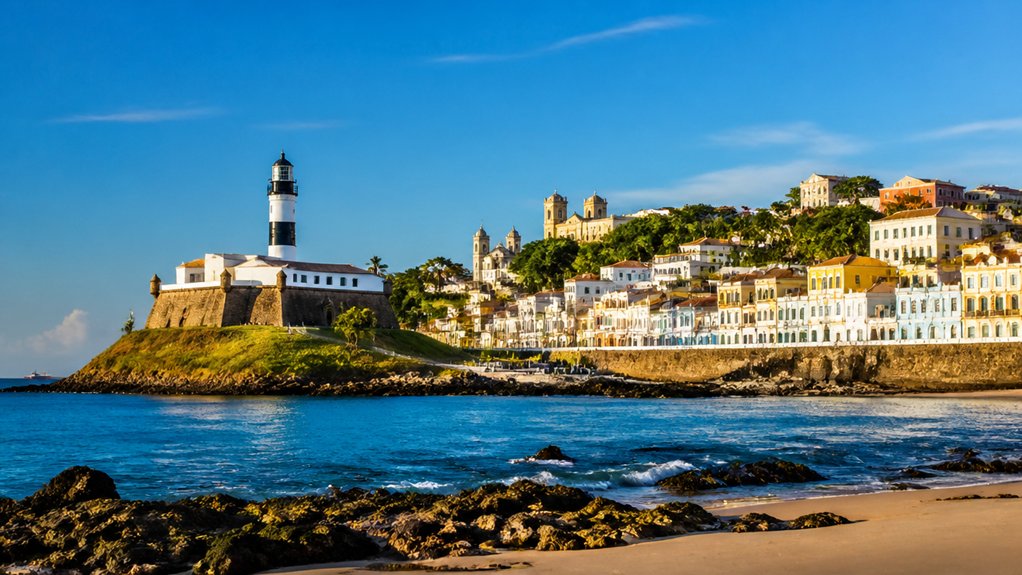
Forte de Santo Antônio da Barra requires leaving Pelourinho, but the views across the bay justify the taxi ride there, as it sits a few miles south in Barra. The lighthouse appears on tourism materials constantly, but the fort’s small collection and actual cannons connect the scenery to the place’s strategic history. The seafront around it matters as much as the fort itself.
Walking tours booked independently before arrival cost less than cruise ship excursions and come with guides who actually know the neighbourhood’s layers. Ship-based tours move quickly and hit the obvious spots; independent guides take time with context and complexity. Book ahead if you want a guide at all.
Beyond the Centre: Day Trips and Alternatives
Most cruise ports arrange day trips through a filter of safety and convenience. Salvador works differently if you’re willing to step away from the organized routes.
The Recôncavo region spreads inland from the coast, agricultural land that once generated the wealth flowing through Salvador’s streets. Rum distilleries operate here, tobacco and sugar cane are still grown on working farms, and towns exist on their own terms rather than for visiting cruise passengers. The practical consequence is that you forfeit guided transit and scheduled stops, but you encounter how people actually work and live when no one is performing for outsiders.
Maragojipe sits on the Paraguaçu River within reach but distant enough that cruise schedules don’t route passengers through it. The waterfront shows genuine deterioration from its colonial sugar-trading period, which means you’re observing Portuguese architecture in its actual state rather than as a curated historical site. This decay communicates truths about Brazilian economic patterns that preserved museum environments cannot.
The northern beach suburbs beyond Salvador’s central districts attract local weekenders rather than tour groups. The food costs less, tastes better, and you might actually have a conversation where someone isn’t calculating commission. The beaches lack the polished appearance of commercial postcards, which is partly why they function as actual gathering places.
Independent guides working the Recôncavo or peripheral neighbourhoods can be contacted before you arrive and typically charge substantially less than organized cruise excursions. Booking ahead during busy seasons ensures your preferred guide doesn’t fill with other passengers and allows you to move according to your own rhythm rather than a predetermined schedule. This pace permits actual comprehension of what you’re observing.
Shore Excursion or Going It Alone
The cruise line’s excursion desk quotes prices that seem fair until you compare them with what independent operators charge for the same activities. You’re paying for a middleman layer, then another layer for the vessel itself, which means less of your money reaches the people actually providing the service. The markup compounds quickly.
Whether this matters depends on how comfortable you are navigating somewhere new without a safety net. Solo travel in unfamiliar places where you don’t speak the language creates real problems—transport logistics, timing, coordination—and a cruise excursion genuinely solves these. You show up at the dock, board at a predetermined time, and return when scheduled. Someone else handles the variables.
Independent guides booked weeks ahead through travel forums or direct email cost substantially less for identical experiences. They work flexibly, adjust their approach based on what actually interests you rather than a fixed schedule, and maintain better rates when you commit early. Peak season fills their availability quickly, so early contact secures a spot.
The compromise approach involves hiring a taxi driver for the day, which remains informal but functional in most ports. You visit museums, markets, or residential areas without structured guidance, accepting some uncertainty in exchange for lower costs and genuine control over your route. Conversation happens or doesn’t depending on the driver’s English or willingness to engage.
Your choice reflects whether you prefer paying for logistical convenience or paying less for independence on any given port day.
Small Things That Make a Difference in Salvador
The cruise terminal opens directly onto Salvador’s commercial zone, which means tour operators descend on you the moment you exit the secure area. Most work on commission and will push activities that pad their own pockets rather than suit your interests. The ones worth considering book their clients before arrival and charge less than what you’ll pay on the dock, partly because they’ve eliminated the middle layer of aggressive selling.
Heat becomes genuinely difficult during midday hours, which is why local guides with any sense schedule work in early morning or late afternoon. Ask any guide whether they shift their schedule with the season—the experienced ones do, while poor operators simply repeat whatever their website promises regardless of conditions. Fighting the midday sun while trudging through streets leaves you miserable and exhausted, so structure your day around the cooler parts instead.
Afro-Brazilian cultural tours flood the market but range dramatically in what they actually deliver. Some provide genuine historical context about the neighbourhoods you’re walking through; others amount to a rushed stroll followed by enforced shopping time. Focus on guides who live and work locally year-round rather than seasonal operators, and prioritise recent visitor reviews over marketing language when making your choice.
Exchange rates at the cruise terminal will punish you with poor conversion rates and heavy margins. Use an ATM inside the terminal if one exists, or find one in a shopping centre away from the port area—either approach saves you significantly more money than the exchange booths near the gangway, and the rates stay more reasonable throughout your day.
Your Port Day: A Sample Itinerary
Most cruise passengers spend their first hour drifting around the terminal while the heat builds, then return to the ship knackered before midday meals even start. Head straight inland to Pelourinho on foot or by local taxi instead—the route takes you through actual neighbourhoods rather than staged tourist areas. You’ll see how the city functions outside the cruise port bubble.
Spend your morning walking the cobbled streets and looking at the colonial buildings before the afternoon heat makes it unbearable. The light works better in early hours, and the architecture genuinely rewards close attention. Stop for coffee at a local café away from the main square where prices reflect what locals pay and you’ll see how Salvadorans actually start their day.
Make your way back down to the waterfront by early afternoon and eat lunch on a side street one block inland from the commercial zone. Restaurant owners there charge less because they’re not betting on passing cruise trade, and you’ll eat better for it. Sit down properly rather than grabbing something to eat standing up—your energy matters more in the afternoon than it does early on.
Arrange an independent Afro-Brazilian cultural tour before your port day since the worthwhile guides book up through personal recommendations rather than walk-ins. Afternoon tours give you genuine historical context about parts of the city most cruise itineraries ignore entirely. You’ll spend less than you would booking through the ship and actually leave with real knowledge instead of just sunburn.
Book your Salvador day
Tours for this port, compare before you book
Getting around in port
✈️ Before you sail: eSIM, insurance, luggage, flight delays
Ships In Salvador
Upcoming calls from our sailings tracker, updated regularly.
MSC Divina
MSC CruisesThu 12 Nov
⚓ 08:00–18:00
Costa Diadema
Costa CruisesFri 20 Nov
⚓ 07:00–13:00
MSC Virtuosa
MSC CruisesSat 28 Nov
⚓ 08:00–18:00
Celebrity Equinox
Celebrity CruisesSun 29 Nov
⚓ 09:00–17:00
MSC Virtuosa
MSC CruisesTue 8 Dec
⚓ 08:00–17:00
MSC Virtuosa
MSC CruisesTue 15 Dec
⚓ 08:00–17:00