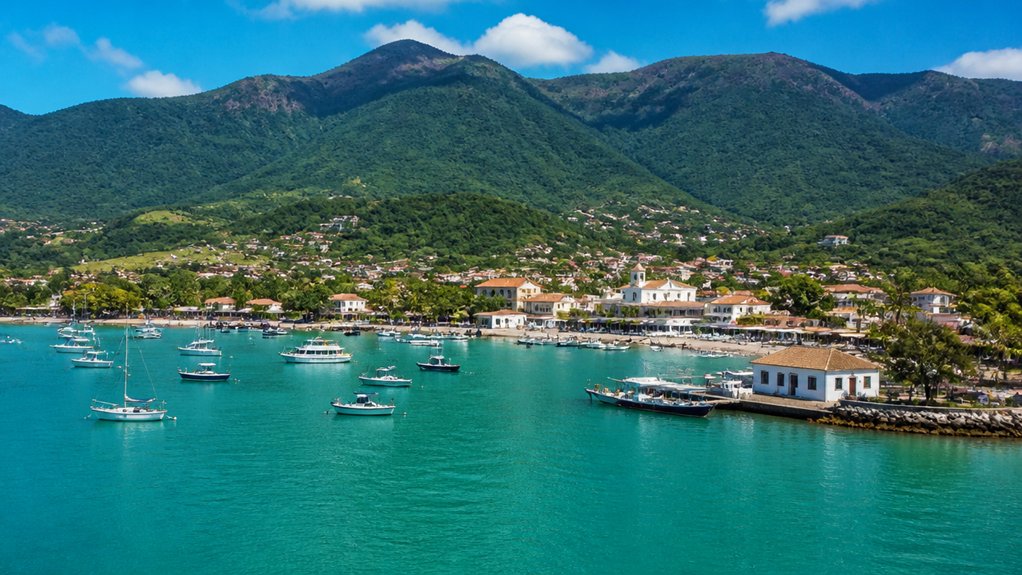
Ilhabela Cruise Port Guide
Cruise to Ilhabela and discover why most visitors miss the island’s true attractions—but you won’t.
In this guide
Try one free personalised day plan — built around your ship’s actual arrival and departure times. Then get every port on your cruise done the same way from £7.99 (about $10).
Cruise Port Overview: What To Expect
Ilhabela doesn’t perform for cruise passengers the way most ports do. It’s a functioning island where fishing matters more than tourism, and the infrastructure reflects that practical reality rather than any attempt to smooth your arrival into a polished experience.
The port layout works in your favour because it’s compact and straightforward. Your ship anchors in the channel and tenders you into Vila, the main town, and the places worth your time are accessible on foot or by catching a local bus—though you should note that the waterfront gets congested when ships are in, then empties out quickly once you venture inland.
Understand this upfront: Ilhabela wasn’t built for cruise passengers, which means the organised tours offered onboard tend to be uninspired and overpriced. The beaches and rainforest trails that justify visiting require independent exploration, and you should book any activity you want in advance because the decent operators fill up with other cruise passengers who face the same time constraints you do. English outside the port area is limited, though people are patient and willing to help with directions or simple exchanges.
What actually makes the island worth a port day is straightforward—there are protected beaches, jungle paths to walk, and a pace of life that feels removed from the typical cruise port circuit. If you plan before arriving, you can spend your day here doing something that bears no resemblance to the standard port experience.
Getting From the Port To Town
The tender pier sits right in Vila, so you can reach the town centre on foot without any transport. However, you’ll need to arrange something if you want to reach the beaches or walking trails that are actually worth your time ashore.
Local buses run throughout the day at a reasonable cost, though you shouldn’t expect punctuality or clear schedules. Ask at the port entrance or in Vila itself—locals are accustomed to cruise passengers and will give you straightforward directions. Taxis exist but charge more than buses for short journeys, making them poor value unless you’re in a group.
Book transport with an independent operator before your ship arrives if you plan to spend the day at a beach or in the rainforest. These operators collect passengers directly from the port, cost less than onboard excursions, and let you control your own itinerary. Popular operators get booked out during cruise season, so securing your spot online in advance guarantees availability and usually brings the price down. You can explore shore excursions and experiences offered by various tour providers to compare options and find the best fit for your interests.
Vila itself is easy to navigate on foot, and walking the waterfront and main streets inland shows you fishing boats, local restaurants, and ordinary daily life rather than anything staged for tourists. The downside is that the best beaches and rainforest walks lie beyond walking distance, so you’ll need transport to reach them. Sticking to the centre means fewer options but zero logistical hassle; heading further afield requires planning but delivers more substantial experiences.
The Must-Do Experience: Start Here
Most cruise passengers stay in Vila, which means the actual reasons people choose to live on Ilhabela—rather than simply visit it—remain largely unseen. The rainforest walks and beaches that justify the journey inland require transport, but reaching them is straightforward, and once there you understand the difference between tourism and place. Skipping the ship’s packaged excursion means booking an independent guide online before arrival, which costs considerably less and gives you genuine control over your day rather than moving through predetermined stops on a schedule built for average walking speeds.
Book your independent operator well in advance because cruise season fills available slots quickly and the capable guides warrant the forward planning. You’ll get collected from the port, head into the interior, and spend your hours where your interests take you rather than where the cruise line has negotiated payments. The alternative is spending six hours in Vila’s souvenir shops and overpriced tourist restaurants—pleasant enough as a wander, but not the reason you’re here.
Your port day amounts to a simple choice: follow what everyone else does, or arrange transport and actually see the island. The gap between those two options is the gap between a port stop and something that matters.
History Culture and the Top Sights
Ilhabela’s history barely registers in Vila’s commercial setup, which reveals how cruise schedules determine what visitors actually encounter. The island served as a pirate base in the 17th century, then operated as a slave-trading port, then became a fishing settlement—layers now largely obscured by beach bars and retail shops. Historical traces survive in fragments: the Igreja Matriz in Vila was built between the late 1600s and early 1700s, and deteriorating stone structures remain visible in residential streets if you venture past the main commercial area.
The actual cultural substance comes from recognising that Ilhabela functions as a functioning community before it functions as a tourist stop. Locals cast nets from the beaches, repair boats in daylight hours, and work in restaurants without performing for transient visitors. This absence of staged interaction is precisely what gives the place credibility rather than the feeling of watching a constructed show.
For genuine understanding rather than surface observation, hire an independent guide with actual knowledge of the island’s real history and geography. These operators run half-day walks through residential neighbourhoods where you encounter ordinary local life instead of tourist theatre, and they know which cafes and restaurants serve locals rather than cruise passengers. Book these operators through established local agencies online before you arrive, as qualified guides become fully booked during cruise season, and the cost runs substantially below what the ship charges for equivalent tours.
Beyond the Centre: Day Trips and Alternatives
Most cruise passengers stick to the Vila waterfront, so the quieter beaches and coastal walks beyond the commercial area stay relatively empty during port days. A local bus or taxi heads south along the coast to Praia do Curral, where fishing boats still operate and the water clarity beats the main beach. This is where snorkelling actually makes sense rather than paying what cruise lines charge for reef tours.
You can rent mask and fins locally for less than the ship’s price, then walk straight into the water to see fish without the speedboat setup. Confident swimmers reach the reef independently since it sits close enough to shore, though a small group tour through a local operator gives you better instruction and reliable information about what conditions are like at different times of year. The difference in cost versus the cruise desk’s pricing is substantial.
Praia Castelhanos on the eastern side offers genuine distance from port infrastructure if you’re prepared to travel further. Arrange transport beforehand through your accommodation or a local operator you can verify, and bring your own food since there’s almost nothing available there. You’ll spend considerably less than waterfront restaurants while actually seeing how the island functions beyond tourism infrastructure.
Shore Excursion or Going It Alone
The cruise desk’s prices exist because they’re selling convenience, not quality. Independent tours through local operators cost significantly less and typically involve smaller groups with genuine knowledge of the area, rather than someone managing fifty people through identical stops. Book your tour online before arriving at port, since the best operators fill quickly and you’ll regret gambling on last-minute availability when your time ashore is limited.
Going completely solo only makes sense if you speak Portuguese fluently, can arrange reliable transport on the spot, and know which areas are genuinely safe and accessible within a few hours. Most cruise passengers find the practical middle ground by booking a small-group tour through local operators before your port day arrives. You’ll pay less, get to see what actually interests you rather than a standardized itinerary, and still have someone handling the logistics so you can focus on the experience itself. For the best selection of these tours, explore guided excursions at ports worldwide to compare your options and read reviews from other travelers.
Small Things That Make a Difference in Ilhabela
The ferry from São Sebastião on the mainland to Ilhabela gets overwhelmed on weekends, with queues that move according to local administrative rhythms rather than any sense of urgency. Getting there before the morning surge clears the worst of the congestion while cruise passengers are still disembarking. Once aboard, the crossing is straightforward enough.
Taxi drivers at the tender pier will quote rates that sound plausible until you compare them against what locals actually pay. Your phone’s ride-sharing app works if you have Brazilian coverage, otherwise ask your tour operator to arrange collection, which undercuts pier taxi fares considerably and eliminates haggling. Consider purchasing a local eSIM data plan to maintain connectivity for your ride-sharing app and avoid roaming charges during your port visit. The restaurants clustered near the waterfront operate on tourist pricing that bears little relation to value.
Walking away from the harbour within your first hour ashore takes you to family-run establishments where food quality improves and your bill stays reasonable. This single choice determines whether your port day becomes an expensive blur or something where you eat properly and see how the island actually functions. The character here exists beyond the immediate tourist perimeter, though it requires intentional movement to reach rather than passive wandering.
Your Port Day: A Sample Itinerary
Ilhabela works or doesn’t depending on whether you leave the tender pier within the first hour. The difference between a useful day and a wasted one comes down to moving away from where the ships dock.
Get on an early tender before the queues form. Walk inland from the waterfront and find where locals actually eat—a family café will give you coffee and breakfast that costs less and tastes better than anything near the pier. This gives you a sense of how the island functions rather than how it’s been arranged for visitors.
If you want to swim, the southern beaches like Praia do Curral and Praia Grande require no tour operator and no premium ship excursion fees. The bus or taxi ride there follows the coast road away from the polished section near the pier. If beaches don’t appeal, spend the middle of your day walking through the town centre where the colonial buildings are, or ducking into shops that sell things locals actually buy rather than the identical souvenirs repeated in every port.
Book your Ilhabela day
Tours for this port, compare before you book
Getting around in port
✈️ Before you sail: eSIM, insurance, luggage, flight delays
Ships In Ilhabela
Upcoming calls from our sailings tracker, updated regularly.
MSC Musica
MSC CruisesThu 19 Nov
⚓ 08:00–19:00
Costa Diadema
Costa CruisesMon 30 Nov
⚓ 07:00–20:00
Costa Diadema
Costa CruisesMon 7 Dec
⚓ 07:00–20:00
Costa Diadema
Costa CruisesMon 14 Dec
⚓ 07:00–20:00
MSC Musica
MSC CruisesMon 21 Dec
⚓ 09:00–18:00
MSC Divina
MSC CruisesFri 25 Dec
⚓ 07:00–19:00