Santos Cruise Port Guide
Overlooking the chaotic Brazilian waterfront, discover how authentic Santos experiences hide beyond the tourist traps—but where exactly?
In this guide
Try one free personalised day plan — built around your ship’s actual arrival and departure times. Then get every port on your cruise done the same way from £7.99 (about $10).
Cruise Port Overview: What to Expect
Santos hits you as chaotic the moment your ship pulls in, which surprises most cruise passengers. The port sprawls across an active industrial waterfront without the tidy, enclosed terminal setup you might be used to, so orientation takes a few minutes. This sprawl actually works in your favour once you understand it: crowds disperse quickly as soon as you leave the immediate dock area.
Your berth location depends on which cruise line you’re with, and the distance to the actual city varies as a result. Some berths sit closer to the historic centre; others mean you’ll need a short taxi or bus journey to reach anything worth your time. Before you leave the ship, ask your crew which berth you’re docked at and whether walking into the city is realistic from where you are.
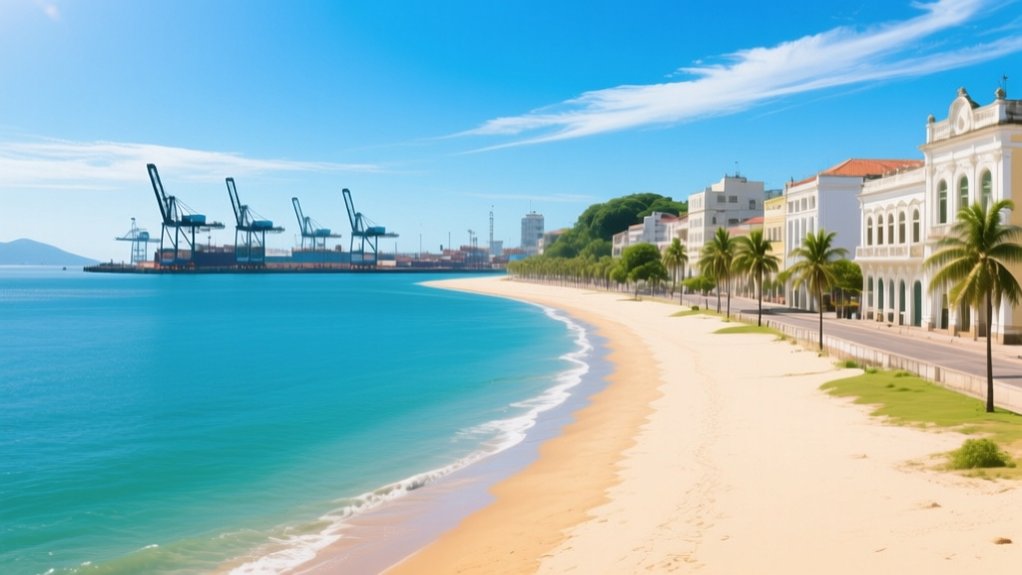
The port itself is working and functional, not designed for aesthetics. You’ll see container ships, cargo operations, and industrial machinery as standard features of the landscape. Santos lacks the polished infrastructure of purpose-built cruise destinations, which means you’re entering a genuine Brazilian city rather than a tourism-focused version of one. Consider booking guided excursions and tours to maximize your time exploring the region’s attractions and culture.
Safety and basic navigation are straightforward once you’ve oriented yourself to the area. The dock zone proper has adequate staffing and poses no concerns for cruise passengers moving through it. Beyond that immediate zone, you’re in ordinary urban Brazil, which is safe enough with standard city awareness, but noticeably less controlled than ports designed primarily for cruise traffic.
Getting From the Port to Town
The distance from your berth to the city centre varies considerably, so you need to confirm your exact mooring location before choosing how to travel. The port area itself isn’t a place to walk through, so walking makes sense only once you reach the old centre; from the dock, transport becomes necessary if you want to use your time efficiently. Your crew will give you a straight answer about whether walking is practical—take their word for it rather than guessing.
Taxis queue at the port exit and charge reasonable rates for short journeys into the city. The problem is that most drivers will steer you toward tourist spots unless you tell them specifically where you want to go. Ride-sharing apps often cost less and work reliably here, though the queue at the dock can back up during peak disembarkation times. Either option beats the ship-organised shuttle, which moves slowly and wastes the limited hours you have ashore.
If your berth is genuinely walkable, navigation into town is straightforward once you clear the dock itself. Head away from the water along the main avenue and you’ll reach the older neighbourhoods where actual life happens. The waterfront is industrial and dull, so your strategy should be moving through it quickly rather than spending time there.
Public buses run frequently and cost much less than taxis, but they pack with passengers during morning hours and their routes require you to know what you’re doing. Use the bus for your return to the ship once you’ve got your bearings, not as your first journey off the vessel. Getting into the city quickly matters more than pinching pennies on transport.
The Must-Do Experience: Start Here
Santos works best when you abandon the beach strip entirely. The seafront draws cruise passengers by the thousand, queues form quickly at restaurants serving mediocre food at inflated prices, and you’ll waste hours achieving very little.
The actual city sits inland in the historic centre and older commercial districts. This is where you find proper cafés, working markets, and architecture that wasn’t built with tourists in mind—the prices reflect local incomes rather than cruise-ship economics.
Leave the dock area with purpose and head into the neighbourhoods. Ask your crew or other passengers which way to go, then spend your time walking through older squares and side streets, stopping for coffee at a café where locals are sitting, and browsing whatever markets you find. This approach delivers far more genuine experience than any packaged tour.
Arrange independent walking tours or specialist guides well before your cruise date because quality guides book up fast. A local who knows the city properly will steer you toward places worth seeing and away from tourist traps, saving you the frustration of trial and error. The cost is modest and justified by better recommendations and actual access to useful spots.
🗺️ Tours & Experiences at This Port
Skip the ship’s overpriced excursions — browse top-rated independent tours trusted by thousands of cruise passengers.
History Culture and the Top Sights
Santos’ cultural character lives in its older commercial streets rather than inside museums. Portuguese colonial architecture sits alongside early twentieth-century Brazilian modernism, and walking through these neighbourhoods tells you more about the city’s history as a coffee trading hub than any formal presentation could.
The Pinacoteca Benedicto Calixto, in an early twentieth-century mansion on the seafront, holds the city’s best-known art collection and keeps a reasonable size, which matters because you won’t lose your entire port day navigating it. What will interest you more in the old centre is the surrounding architecture—the palaces and commercial buildings that shaped Santos when the coffee trade ran everything through here. This context makes the neighbourhood itself more valuable than any single museum’s contents.
The Bolsa do Café building on Rua XV de Novembro is open to visitors as the Coffee Museum, with a café inside. Santos’ entire economy historically moved through this structure, so the atmosphere carries real weight if you’ve already committed to exploring inland. Skip this as a sole destination, but include it if you’re already moving through the area.
The lighthouse and orchid garden attract cruise passengers reliably and reward them modestly. Your time works better observing actual port operations, walking colonial-era streets, and watching how locals navigate their city between stops. Hiring a local guide before your cruise pays off because they steer you toward genuine streets and conversations rather than the expensive versions designed for transient tourists.
Beyond the Centre: Day Trips and Alternatives
Most cruise passengers leave Santos without realizing the city extends well beyond the waterfront, and what actually warrants your attention lies inland where coffee money shaped the architecture into something genuinely interesting to study. The real problem isn’t scarcity of activity—it’s distinguishing between tours that keep you corralled in predictable spaces and experiences that let you actually understand how the place functions.
Your approach should match two practical realities: how comfortable you are navigating streets you don’t know and how long you’re actually ashore. With several hours to spare, moving independently costs substantially less than anything your cruise line offers and lets you control your own rhythm through the colonial areas of the historic centre. A local guide booked online before your ship arrives gives you competent routing and legitimate insight without the tourist surcharge, and these guides fill up quickly once vessels dock.
If you prefer structure without navigating yourself, independent operators—not cruise-line excursions—deliver better economics and smaller groups than the ship’s offerings. These fill rapidly when multiple ships arrive simultaneously, so booking weeks earlier rather than days before your visit matters considerably. You’ll spend a reasonable amount but get someone whose knowledge actually reflects the city rather than recycled narratives designed for every cruise group that passes through.
The working docks and active waterfront offer your cheapest and most truthful vantage point for understanding Santos. Walk around, watch what actually happens there, and use that as your baseline for deciding whether to venture into other areas. Hours spent observing the port itself often teach you more than any formal guided experience can manage.
Shore Excursion or Going It Alone
Most cruise passengers book their excursion within hours of boarding, which is precisely when they have the least information and the highest prices. The ship’s desk counts on this urgency, and their markup reflects it—you’re paying substantially more for convenience than for quality or local knowledge.
The genuine choice isn’t between a tour and nothing; it’s between overpaying for a standardised experience and booking an independent operator weeks before you arrive. Local guides operating through platforms designed for cruise visitors cost considerably less and actually know Santos rather than following a script. These operators fill quickly once multiple ships dock, so waiting until your sea day to decide fundamentally guarantees either premium pricing or unavailable slots.
Going entirely alone works if you’re comfortable with urban navigation and don’t mind potentially backtracking. You’ll spend a fraction of what any tour costs and move at your own pace, but you lose the contextual information that transforms observation into understanding. The waterfront and nearby colonial neighbourhoods are navigable on foot, though the city’s layout rewards someone who’s thought through their route beforehand.
The practical middle ground is booking an independent guide or small-group operator online a month before departure. You’ll pay a moderate cost instead of the ship’s inflated rate, travel with fewer people than the cruise excursion masses, and actually learn something that sticks. This approach requires minimal advance planning—fundamentally choosing and paying online—and removes the pressure to decide whilst jet-lagged on embarkation day.
🗺️ Tours & Experiences at This Port
Skip the ship’s overpriced excursions — browse top-rated independent tours trusted by thousands of cruise passengers.
Santos Notes the Excursion Desk Skips
The ship’s information packet directs you toward expensive restaurants in the corporate waterfront district while ignoring the neighbourhood cafés where locals actually eat. Santos functions differently depending on whether you’re following cruise-approved signage or walking where residents do.
Your advantage lies in timing your port day around the ship’s peak excursion departure window. Once the organised groups leave, the colonial quarter becomes navigable, queues at decent restaurants shorten, and you see how the city actually functions rather than observing it through a tour bus window. This requires resisting the urge to leave immediately—spend your first hour on the ship with coffee, planning your route while crowds disperse.
The waterfront development looks polished and inviting, but it’s designed for cruise budgets and cruise timescales. Food costs substantially more than it should, and you’ll be eating alongside hundreds of other passengers. Walk inland toward Rua XV de Novembro instead, the main commercial street where prices normalise and you’re genuinely exploring rather than consuming a staged experience.
Taxis from the port operate on fixed rates to major destinations, which beats negotiating with drivers who’ve perfected the art of overcharging tourists. Establish the fare before entering, or use a ride-sharing app if you’re comfortable with the interface. The port area isn’t one to walk through, so take a taxi to the historic centre, where most worthwhile spots are walkable if you’re wearing comfortable shoes and have mapped your priorities beforehand.
🗺️ Tours & Experiences at This Port
Skip the ship’s overpriced excursions — browse top-rated independent tours trusted by thousands of cruise passengers.
Your Port Day: A Sample Itinerary
Santos rewards the passenger who skips the scheduled tour entirely and walks through the city alone while everyone else boards coaches. Spend your first hour after breakfast on the ship plotting a route rather than joining the pier rush, then head inland once the excursion groups have left.
Rua XV de Novembro is the main commercial street and your anchor point—everything worth seeing branches from here, and you can navigate it without transport. Walk this street and eat breakfast at a café where locals actually sit, not where cruise passengers are expected. Your money stretches further away from the waterfront, and you’ll see how the city actually operates rather than how it performs for visitors.
If architecture interests you, head toward the colonial quarter in mid-morning, or detour to the markets where you’ll see what locals eat rather than what’s been adapted for tourists. A gallery exists nearby if art matters to you, though the building itself is as significant as any collection inside. Eating lunch on Rua XV de Novembro keeps costs down and puts you among people living their ordinary day.
Wander without a plan in the afternoon, which seems wasteful when time is limited but actually serves you better. Santos doesn’t concentrate its value into obvious spots; instead, its worth emerges from noticing how it functions. Walk for an hour, stop when something catches your attention, then return to the port with enough time before departure.
Before you sail, spend ten minutes on the Santos excursion listings so you know what is possible from Santos.
🗺️ Tours & Experiences at This Port
Skip the ship’s overpriced excursions — browse top-rated independent tours trusted by thousands of cruise passengers.
Book your Santos day
Tours for this port, compare before you book
Getting around in port
✈️ Before you sail: eSIM, insurance, luggage, flight delays
Ships In Santos
Upcoming calls from our sailings tracker, updated regularly.
MSC Divina
MSC CruisesMon 16 Nov
⚓ arrives 08:00
MSC Musica
MSC CruisesMon 16 Nov
⚓ departs 18:00
MSC Musica
MSC CruisesFri 20 Nov
⚓ 08:00–18:00
Costa Diadema
Costa CruisesMon 23 Nov
⚓ 08:00–17:00
MSC Musica
MSC CruisesMon 23 Nov
⚓ 09:00–18:00
Costa Diadema
Costa CruisesThu 26 Nov
⚓ 08:00–17:00