Devil’s Island Cruise Port Guide
Master the art of experiencing Devil’s Island beyond cruise ship crowds—discover secrets even your tour guide won’t reveal.
In this guide
Try one free personalised day plan — built around your ship’s actual arrival and departure times. Then get every port on your cruise done the same way from £7.99 (about $10).
Cruise Port Overview: What To Expect
Devil’s Island isn’t technically a cruise port at all — your ship anchors offshore and tenders you to Île Royale, home of the penal colony museum, which means you’re working against the clock from the moment you step ashore. The landing itself gets chaotic during peak season, with tender queues forming early and the site filling quickly with organised groups all competing for space in the same cells and exercise yards. Devil’s Island itself is closed to visitors and seen from across the channel, and Royale is small, so you won’t waste half your day simply moving between locations.
What catches most visitors off guard is how little of the original penal system actually remains standing. The famous solitary confinement blocks are partly ruined, and the museum interpretation, while adequate, doesn’t demand a full day’s engagement. Many passengers overestimate how long they need here and end up either sitting idle or rushing through what’s available.
Your best approach is to arrive early on the tender and head straight to the museum building rather than lingering on the landing jetty. Pick up one of the self-guided tour leaflets at the entrance and work methodically through the exhibition rather than drifting randomly. If you want a guide to explain the convict system, join the ship’s own tour; otherwise you’re free to explore at your own pace.
Once you’ve finished the ruins, you’ll likely have time remaining, so walk the shaded paths around Île Royale, look across the channel to Devil’s Island, or eat at the island’s inn rather than joining the tender queue early.
Getting From the Port To Town
The tender dock on Île Royale lands you at a small jetty with no commercial waterfront, traffic or noise around it. Most cruise passengers explore the island and look out to Devil’s Island on the ship’s organised excursion or on their own, and independent exploration simply means walking, as there are no taxis, no cars for hire and no town.
Walking the island is easy to follow but hilly, with paths climbing from the jetty to the plateau where the old penal buildings stand. The paths are uneven in places and exposed in parts, so take your time, carry water and wear shoes with proper grip rather than rushing.
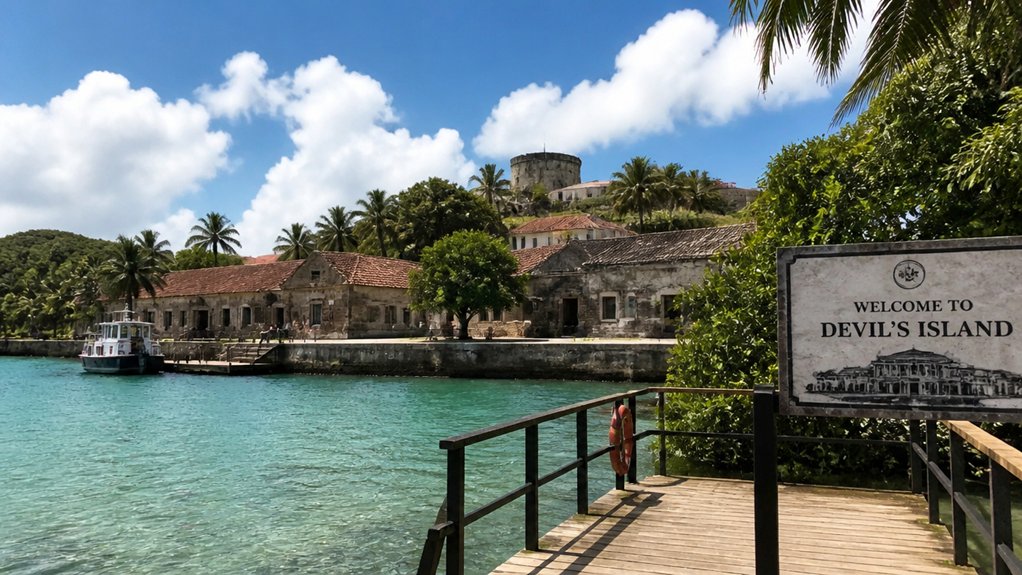
Île Royale’s older buildings sit on the plateau above the jetty and include the chapel with murals painted by a convict, the director’s house and the old cell blocks. The chapel and colonial structures around it warrant a slow walk if you have time before your return tender. The inn is the island’s restaurant, so bring snacks and water if you don’t want a sit-down lunch.
There’s no need to book anything before your cruise. The ship’s tender brings you straight to Île Royale, where you can explore on your own, or join the ship’s tour if you’d like a guide.
The Must-Do Experience: Start Here
Devil’s Island draws most visitors to this part of French Guiana because of its penal colony history, which remains genuinely disturbing in ways that haven’t been smoothed over by tourist infrastructure, though you’ll contend with heavy crowds during cruise ship hours. The actual structures—former cells, solitary blocks, and the commandant’s residence—matter less than the documented cases of prisoners held there, and your guide will connect these stories to what you’re looking at rather than leaving you to photograph empty buildings.
Your ship’s tenders bring you to Île Royale, and from there you can walk everywhere yourself or stay with the ship’s guided tour, which moves in larger groups. The paths to and through the island structures are uneven and exposed to direct sun, so bring water and wear shoes with proper grip.
The visit itself runs long enough to fill a reasonable half-day, leaving you time to either explore the rest of Île Royale at your own pace or sit down for lunch at the island’s inn.
History Culture and the Top Sights
The guards’ quarters and cemetery at the penal colony tell you more about how people actually lived there than the cells do, yet most cruise passengers ignore them entirely because the official tour dwells on prisoner stories. The numbered graves in particular matter—they’re stark in a way the commandant’s residence simply isn’t, and you need to see both to understand what the place was really like. Skipping these areas means you’re only getting half the story.
Cayenne, the capital, is on the mainland and there’s no practical way to reach it from the anchorage on a cruise call, so don’t plan your day around its old quarter or colonial buildings. Spend the spare hours on Royale instead, where the shaded paths, the view across to Devil’s Island and the peacocks and agoutis that roam the grounds are far more rewarding than heading back to the ship early.
The Îles du Salut archipelago, which includes Devil’s Island, is also visited by independent boat operators from Kourou, but those trips start and finish on the mainland and are set up for land-based visitors, not for passengers whose ship is already anchored off the islands. Your ship’s tender lands you on Île Royale, and Devil’s Island itself is off limits to everyone because of dangerous currents, so the real choice is how you divide your time on Royale, not which boat to book.
Beyond the Centre: Day Trips and Alternatives
The ship excursion desk will pitch you their Devil’s Island tour before you’ve unpacked, but on a call here the tender already takes you to Île Royale, so you can explore on your own if you’d rather control when you go. Boat trips from Kourou start and end on the mainland, so they don’t fit a cruise call at anchor, and there’s no point trying to arrange your own crossing. If you do want a guide on the island, the ship’s tour is the one to join, and remember that no one can land you on Devil’s Island itself.
The organised tours from Kourou cover Royale and Saint-Joseph and pass Devil’s Island without landing, but they run from the mainland, so they don’t work for a cruise call. On your port day your time on Royale runs to the ship’s tender schedule, and you retain actual control by walking the island at your own pace rather than joining a group. This works well if the penal colony history interests you, since the whole island is effectively an open-air museum.
There’s no option to skip the islands and spend your day in Cayenne instead: the capital is on the mainland, well out of reach from the anchorage, and Île Royale is the only place the tenders go. That makes the choice simple. The fundamental decision is how you use your hours on the island, and most cruise passengers try to see everything at speed, which satisfies no one. Commit to one plan, whether that’s the ruins, the paths round the coast or a long lunch at the inn, and move deliberately.
Shore Excursion or Going It Alone
Here the choice is simpler than at most ports. The tender lands you on Île Royale either way, so the question is only whether you want a guide with you: the ship’s tour gives you one, and going alone lets you set your own pace.
Going it alone means nothing more than stepping off the tender and walking. The island is small, the main buildings are close together, and you can linger wherever you like. For lunch there’s the island’s inn, or bring a snack.
The ship excursion does offer one legitimate advantage: if something goes wrong, they sort it. If your independent boat breaks down or the operator cancels, you’re managing the problem yourself ashore with limited recourse. This is rare, but worth acknowledging.
Whichever you choose, plan your day around the tender times, carry water, and decide early whether you want the prison ruins, a slow walk round the island, or both, so you’re not rushing back to the landing at the end.
Local Knowledge Worth Having Before You Dock
Tender landings here depend on the sea state, so in rough Atlantic swells the call can be cancelled at short notice, with ship’s tours cancelled too. Keep your plans loose and treat a landing as a bonus rather than a certainty.
Cayenne and its market are on the mainland and out of reach on a cruise call here, so any tour promising you a leisurely browse there is not something you can fit in. Head up to the ruins before midday instead, when the paths are cooler and the colonial buildings are easier to enjoy, because the afternoon heat on the exposed stretches is hard work.
Bring cash in Euros, because card payments on the islands themselves are patchy at best and you can’t count on finding a cash machine. Your tour operator will likely accept cards, but the inn and any small purchases may not. Running out of money while genuinely hungry on an island named after the devil feels like tempting fate.
Your Port Day: A Sample Itinerary
Most cruise passengers spend their first hour waiting at the tour desk or in the tender queue while the early risers are already up at the ruins, before the light on the colonial buildings has gone flat and harsh.
Aim for an early tender if you can, then walk straight up from the jetty to the plateau rather than lingering at the landing. There are no waterfront cafés here, just the island’s inn, so sort out any guide or local operator before you come ashore rather than hoping to find one on the day.
By mid-morning you should be up among the penal colony buildings on your own or with a small group instead of forty people crammed on a ship tour. The ruins are worth seeing, and you’ll actually hear what your guide is saying instead of shouting over other tourists.
Eat lunch at the inn on the plateau or bring snacks from the ship and find a shaded bench. Don’t expect an actual neighbourhood or local people going about daily life, as Royale is a former prison island, not a town. Before you depart, consider purchasing a local eSIM data plan to stay connected without roaming fees while exploring the island.
Spend your afternoon drifting back towards the ship, perhaps stopping for a last look across at Devil’s Island if you still have energy. By late afternoon you’ll be back aboard tired and satisfied rather than herded and worn out, which is the actual difference between a port day and something worth doing.
Book your Devil’s Island day
Tours for this port, compare before you book
Getting around in port