Sihanoukville Cruise Port Guide
Discover the insider secrets to maximizing your Sihanoukville cruise day—but here’s what most travelers get wrong.
In this guide
- Cruise Port Overview: What to Expect
- Getting From the Port to Town
- The Must-Do Experience: Start Here
- History Culture and the Top Sights
- Beyond the Centre: Day Trips and Alternatives
- Shore Excursion or Going It Alone
- Sihanoukville: The Details Nobody Mentions at the Port Talk
- Your Port Day: A Sample Itinerary
Try one free personalised day plan — built around your ship’s actual arrival and departure times. Then get every port on your cruise done the same way from £7.99 (about $10).
Cruise Port Overview: What to Expect
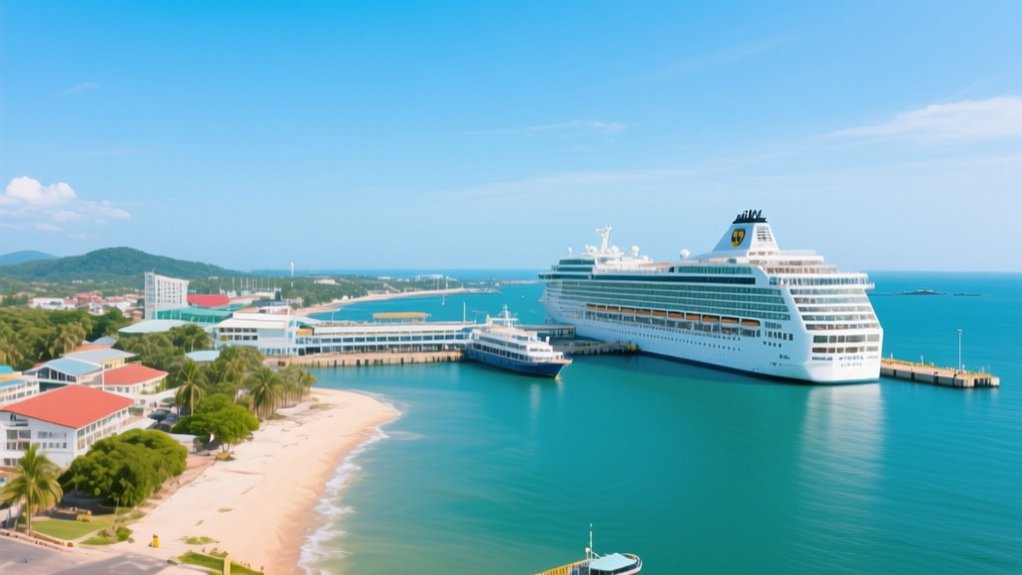
Sihanoukville port runs with casual efficiency that surprises most first-timers—the setup is simple, but the town itself lacks the polish of other Southeast Asian ports, which actually works to your advantage if you arrive prepared. The port is compact and well-organised, with taxis and tuk-tuks stationed outside the gate, though your real choice starts the moment you leave: venture into town or head straight to the beaches and islands that make this stop worthwhile.
The town centre holds little reason to visit as a cruise passenger—it’s purely functional, and wandering around wastes hours you don’t have. Beach and island excursions, whether to local beaches or Koh Rong and Koh Rong Sanloem, give you far better value from your time ashore, but the best independent tours book out fast for cruise passengers, so arranging something online before arrival beats trying to sort it at the port. Your real constraint is deciding on your plan before the ship docks, because waiting until you’re ashore will cost you both time and money.
Getting around from the port is simple and cheap—tuk-tuks are standard and plentiful. If you’ve booked an independent tour operator, they handle your pickup, which removes any navigation headache. You can explore guided excursions at ports worldwide to find curated options that match your interests and timeline. The difference between a wasted port day and a good one comes down to committing to what you want before you arrive, because improvising on the day itself rarely works out well.
Getting From the Port to Town
Tuk-tuks swarm the port exit, and their drivers will approach you directly—this is normal practice, not aggression, but you need to know where you’re going before you walk through the gate. If you’ve arranged a tour operator pickup in advance, they handle transport and you skip the haggling entirely, which means you’re already moving while others are still negotiating fares.
If you’re arranging your own transport, tuk-tuks work well and won’t break your budget, but you must settle on a price before getting in. Cruise passengers are easy targets for inflated quotes because drivers know your time is limited and you might not push back on the number. State your destination clearly, ask the fare upfront, and most drivers will quote something reasonable once they realise you’re not bluffing. Taxis operate from the port too and cost slightly more, but they offer no real advantage over tuk-tuks unless you genuinely dislike them.
The port is a working industrial area and the town is too far to walk, so plan on a tuk-tuk from the gate. The town centre isn’t worth your limited hours ashore. The actual payoff for your day is the beaches and islands within reach by tuk-tuk, not wandering around shops. Get purposeful about your transport—loitering at the port or drifting into town burns hours you should spend on the water or on a boat.
The Must-Do Experience: Start Here
Island hopping is the reason to stop in Sihanoukville; everything else is secondary. Your ship pulls into a working port with water access on all sides, yet most cruise passengers waste their day shopping in town or drinking at beach bars while the actual appeal sits on the islands themselves—Koh Rong, Koh Rong Sanloem, or the smaller limestone outcrops nearby. The beaches on these islands genuinely warrant your attention, and boat operators run departures throughout the day at reasonable cost.
Booking your island tour online before you arrive at port beats the alternative of scrambling once you’ve docked. Popular operators fill with cruise passengers quickly, and confirming your spot in advance means you’re not standing idle at the pier while your morning disappears. Most tours include transport to the boat, the journey to the island, and a few hours there with access to snorkelling gear, though you may pay extra for equipment rental.
You’ll spend considerably less booking independently than paying through your ship’s desk, and you’ll control your own schedule more effectively. The choice comes down to a full boat with quick turnover and lower costs versus a smaller group that reaches better swimming spots with fewer people around—the latter costs more but delivers if water time is your priority. Consider purchasing a local eSIM data plan before your excursion to stay connected without incurring roaming charges while coordinating with your tour operator or sharing updates with family back home. Pack your own sun protection rather than buying it on the island, where you’ll pay inflated prices for basics. Your day works best when you’re on a boat heading out or already in the water by mid-morning, not haggling with tuk-tuk drivers or browsing the port market.
History Culture and the Top Sights
Sihanoukville’s cultural attractions matter less than the time window your ship schedule creates. The town carries little historical weight, and rushing through the Independence Monument or local temples won’t change that assessment. What actually informs your experience is watching how the port functions—fishing boats unloading catch, seafood markets operating without tourism scaffolding, family operations that existed long before cruise ships arrived.
These sites are a short tuk-tuk ride from the port rather than a walk, and the architecture itself won’t reward close inspection. What’s worth your attention instead is understanding that these islands you’re visiting exist specifically because they offer distance from this working reality. The context matters because it explains why the water-based itinerary makes practical sense.
If Khmer culture genuinely interests you, Ream National Park or a floating fishing village tour shows actual daily life rather than sites arranged for visitors. Local operators offer these tours at substantially lower rates than your ship’s desk, and they adjust schedules to fit around your other commitments. Phnom Penh, reachable by transport, contains Cambodia’s significant historical sites—which is exactly why staying port-focused and water-based remains the sensible choice for a cruise day.
Your strongest option plays directly to what this location offers: access to islands and marine environments that function outside the tourism economy. Spending your afternoon on the water beats spending it in town. The port’s value lies entirely in what lies beyond it.
Beyond the Centre: Day Trips and Alternatives
Island tours follow an odd pattern on cruise days. They pack the morning slots and discount the afternoon departures to fill empty seats. This timing works to your advantage if you book strategically.
Your cruise line’s excursion desk charges substantially more than independent operators for the same routes. They’re betting on convenience and the promise that you’ll make it back before the ship leaves, which matters, but doesn’t require paying their markup. Local tour companies know your ship’s schedule as well as the cruise director does and they have their own reason to get you back on time—their business depends on repeat customers. Booking directly online before you sail saves real money, and the better operators fill their morning slots weeks in advance during busy season.
Going completely alone works if you’re willing to negotiate with tuk-tuk drivers at the port entrance. They’ll take you around at low rates, but you’re responsible for timing yourself and you lose the safety of having a guide. The cost difference between haggling solo and booking a pre-arranged independent tour is usually small enough that it doesn’t justify the extra risk when you’re racing a ship departure.
Your best option is booking a mid-sized operator’s tour in advance and choosing a morning departure. You lock in your spot, keep costs reasonable, and leave your afternoon open to return slowly or eat by the water before boarding. The operator makes money by delivering clients back safely, so your schedule is their schedule, and you’ve paid considerably less than the cruise desk would charge.
Shore Excursion or Going It Alone
The port entrance is where operators and drivers position themselves deliberately, knowing you’re unfamiliar with the area, worried about missing your ship, and inclined to accept inflated quotes for peace of mind. This concentration of opportunistic pricing exists because the dynamics favour them—your anxiety is their advantage.
Pre-booking an established tour operator removes the core problem of solo negotiation: you transfer your schedule anxiety to someone whose reputation depends on your safe return. The operator’s business model requires getting cruise passengers back on time, which means your interests align with theirs in a way they never do with a casual tuk-tuk driver. You stop checking your phone obsessively and actually experience the place rather than calculating risk.
Going completely independent does save money, but only if you’re comfortable treating time as a tradeable commodity. A driver with no accountability to cruise ship schedules is simply a driver; an operator who builds their business on repeat bookings from cruise passengers has genuine incentive to deliver you back safely. The question isn’t really cost versus convenience—it’s whether you value simplicity enough to pay for it.
Booking an independent tour online before departure, particularly for a morning slot, locks in significantly lower rates than the cruise desk charges while ensuring your guide understands the schedule pressure. You avoid the last-minute premium rates that apply when you need rapid return transport, and you can move back toward port slowly in the afternoon without rushing. Shore excursions booked in advance through established platforms remove the uncertainty that creates premium pricing in the first place. The entire advantage rests on taking control of timing before you step off the ship.
Sihanoukville: The Details Nobody Mentions at the Port Talk
Sihanoukville’s waterfront has genuinely improved in recent years, but the cruise port itself remains deliberately isolated from the town centre—a setup that makes independent exploration feel riskier than it actually is. Your ship’s excursion desk capitalises on this by quoting rates that assume you’ll pay for certainty rather than invest effort researching alternatives. The reality is simpler: the town is navigable, drivers are accustomed to foreign visitors, and booking a tuk-tuk through a reputable local operator costs substantially less than what you’ll pay through the ship.
The central market remains where locals actually shop and eat, but cruise passengers rarely see it because port operators prefer steering you toward beachfront restaurants where markups are substantial. If you venture inland on your own, you’ll pay considerably less for food and gain genuine insight into how locals actually spend their day. The trade-off is time spent finding your way, which is why pre-booking a guide through an independent tour operator makes practical sense here—they know which spots deliver good value and won’t dawdle on commission-based recommendations.
Sihanoukville is small enough that getting lost is genuinely difficult, but the perception of risk keeps many cruise passengers confined to tour buses. A morning independent exploration, supported by offline maps downloaded before arrival, costs almost nothing and reveals the port far more honestly than a structured itinerary. Your confidence matters more than prior knowledge, and a few hours walking around validates that the effort was worthwhile.
🗺️ Tours & Experiences at This Port
Skip the ship’s overpriced excursions — browse top-rated independent tours trusted by thousands of cruise passengers.
Your Port Day: A Sample Itinerary
Booking your transport the evening before means a tuk-tuk collects you directly from the port gate rather than leaving you negotiating on the dock. Local operators charge less than the cruise desk and you’ll start moving immediately. Confirm whether the driver will wait or return at a set time.
Head to the central market on your first morning. This shows you how the port actually operates—vendors selling produce, locals eating at food stalls, prices that have nothing to do with beachfront restaurants. Spend an hour absorbing the rhythm, eat something straightforward, then move on.
Otres Beach lies south of the main tourist zone and reaches you faster than you’d expect. The water is swimmable and the seafood restaurants charge less because they serve foot traffic rather than tour groups. Eat lunch without rushing, swim if you want, and let the afternoon unfold rather than chasing a schedule.
Spend your final hours in town before taking a tuk-tuk back to the port. Stop at Independence Monument or sit at a local café and let time move at its own pace. The port doesn’t reward tight itineraries—it works better when you accept the slower rhythm instead of trying to pack every hour with activity.
🗺️ Tours & Experiences at This Port
Skip the ship’s overpriced excursions — browse top-rated independent tours trusted by thousands of cruise passengers.
Book your Sihanoukville day
Tours for this port, compare before you book
Getting around in port
✈️ Before you sail: eSIM, insurance, luggage, flight delays
Ships In Sihanoukville
Upcoming calls from our sailings tracker, updated regularly.
ms Westerdam
Holland AmericaTue 1 Dec
⚓ 07:00–20:00
ms Westerdam
Holland AmericaFri 11 Dec
⚓ 08:00–21:00
ms Westerdam
Holland AmericaTue 29 Dec
⚓ 07:00–20:00
Sapphire Princess
Princess CruisesThu 31 Dec
⚓ 09:00–18:00
ms Westerdam
Holland AmericaFri 5 Feb
⚓ 08:00–21:00
Sapphire Princess
Princess CruisesThu 11 Feb
⚓ 07:00–21:00