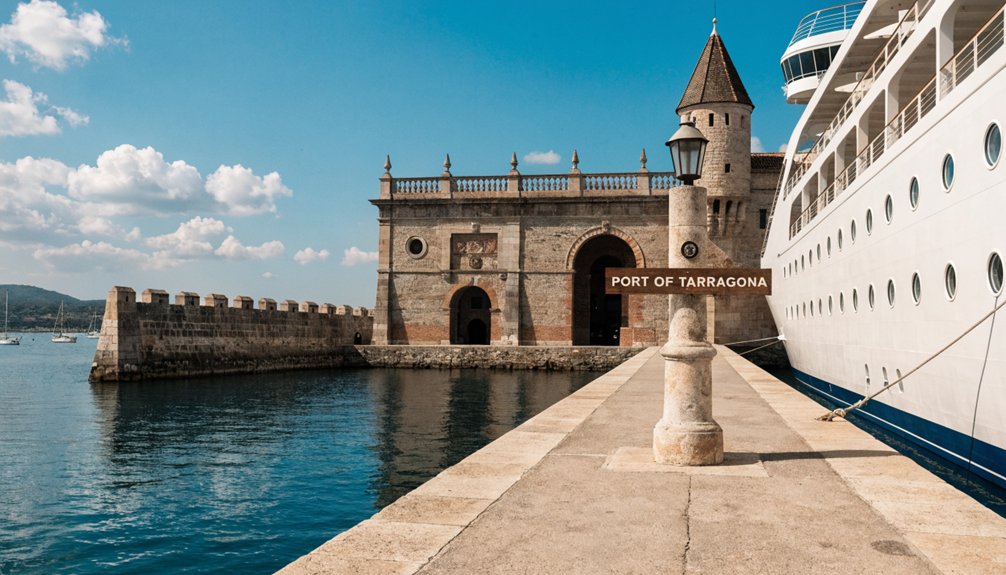
Tarragona Cruise Port Guide
Discover hidden Roman treasures and medieval charm awaiting cruise passengers in Tarragona’s walkable old town.
In this guide
Try one free personalised day plan — built around your ship’s actual arrival and departure times. Then get every port on your cruise done the same way from £7.99 (about $10).
Cruise Port Overview: What to Expect
Tarragona’s cruise terminal sits out in the commercial port, about 2 km from the city centre, and a shuttle bus usually runs you into town, so you reach the old town without much effort. The catch is that thousands of other passengers will have the same idea, though most either head to the beaches or book ship excursions, which actually works in your favour if you time things sensibly. The Roman remains and cathedral stay relatively uncrowded if you’re not wandering around mid-morning when the crowds peak.
The port infrastructure is efficient and straightforward. You’ll disembark in the commercial port, and after a short shuttle ride you’ll be navigating proper Tarragona without passing through cordoned-off tourist areas or facing any compulsory fees just to leave the terminal. The city processes cruise traffic as routine business, so everything functions without unnecessary complications.
Independent exploration serves you better here than booking coach tours. The Roman amphitheatre, cathedral, and archaeological museum are all within walking distance of where the shuttle drops you in town, and you’ll actually understand the place by moving through it at your own pace rather than being herded through a predetermined route. If you want to reach the Cistercian monastery at Poblet or the wine country inland, book an independent tour before arrival—these sell out during cruise season and cost significantly less than what the ship charges, plus you’ll have genuine flexibility with timing and what you actually see. Consider arranging professional drivers in advance to ensure reliable transportation for any excursions beyond the city centre.
Wear proper walking shoes. The cobblestone streets are original medieval work and genuinely rough underfoot, so your feet will feel the impact if you’re covering any real distance exploring.
Getting From the Port to Town
Once you’re in town, walking beats paying for transport. The old city sits a straightforward walk from the shuttle drop-off, and the Rambla functions as the main route through the centre. The berth itself is too far out in the port to walk from, so use the shuttle, a taxi or bus for that first stretch, then let your feet do the rest.
Taxis queue near the terminal but charge accordingly—they know cruise passengers won’t haggle. The bus network works well enough, but the cruise shuttle is simpler, and once you’re in town walking saves you money and mental effort.
The walk itself teaches you how the place actually functions. You’ll pass through where locals genuinely spend time rather than where restaurants cater exclusively to ship passengers. You’ll arrive at the cathedral having navigated the city yourself instead of being herded as part of a group. Consider booking shore excursions in advance if you prefer guided exploration of specific landmarks.
Your legs work as the best tool for understanding any compact city layout. Wear proper walking shoes before you disembark—the cobblestones are genuinely brutal after five centuries of use. Comfortable feet mean you’ll actually explore rather than retreating to the ship after an hour of discomfort.
The Must-Do Experience: Start Here
Tarragona’s actual significance lies in its status as one of Rome’s most important colonies outside Italy, yet most cruise passengers never register this fact. The Roman walls, amphitheatre, and scattered ruins function as living infrastructure—garden walls, car parks, neighbourhood shortcuts—rather than sealed-off museum exhibits. This integration means you’re experiencing genuine Roman urban planning rather than a reconstructed version of it.
Start at the Cathedral on the old town’s highest point, where an hour spent properly explores the space. The climb up the Rambla from the port leads you there naturally, and the cathedral’s cloisters alone warrant the entry fee through their Romanesque columns and courtyards that actually provide shelter from the cruise-ship crowds. Most passengers skip this and head straight for the amphitheatre instead, which is a tactical error.
From the Cathedral, walk downhill toward the Amphitheatre, which overlooks the Mediterranean from a dramatic vantage point. This is the actual arena where gladiators fought two thousand years ago—half-buried in soil but genuinely atmospheric rather than reconstructed. Walking the tiered seating gives you something a museum display fundamentally cannot: spatial awareness of the event that happened there.
The National Archeological Museum warrants an hour if you have genuine interest in Roman history, and your knees can manage stairs. The mosaics and statuary provide context for the ruins scattered throughout town, which makes sense of what you’ve already seen. Independent walking tours covering the Roman sites book quickly with cruise passengers, so arrange one online in advance for expert information without paying the inflated ship excursion markup.
🗺️ Tours & Experiences at This Port
Skip the ship’s overpriced excursions — browse top-rated independent tours trusted by thousands of cruise passengers.
History Culture and the Top Sights
Tarragona’s history is dominated by Roman rule, yet what you actually encounter walking the streets belongs to the medieval period. The Gothic Cathedral, narrow lanes, and defensive urban layout all originate from the 12th century onwards, which matters because understanding this context transforms how you read the city’s physical form.
The city walls encircle the old town and function as genuine neighbourhood infrastructure rather than cordoned heritage attractions. Locals cut through them regularly and laundry hangs from adjacent windows, so you’re observing real urban life compressed into stone rather than a preserved stage set. Walking these walls gives you accurate perspective on how the city was defended, from its Roman origins onwards.
The Passeig Arqueològic runs parallel to the walls with explanatory plaques that make considerably more sense once you’ve already seen the amphitheatre and cathedral context. Most cruise passengers skip this walk entirely, meaning you’ll encounter minimal crowds even during peak season. The Mediterranean views from the pathway result from geography rather than curation, and your photographs benefit accordingly.
For substantive engagement with Roman history beyond what independent walking reveals, book a guided tour online before arrival rather than through the ship. Popular tours fill quickly once cruise schedules publish, but you’ll pay less than the ship’s equivalent excursion and gain access to actual archaeologists rather than tour operators reading scripts.
Beyond the Centre: Day Trips and Alternatives
Most cruise passengers stay within walking distance of the port, which means they miss the worthwhile excursions that require only minimal planning to reach independently. The surrounding region contains medieval monasteries, wine country, and coastal villages worth leaving the centre for—but only if you organise transport sensibly and book ahead.
Montblanc sits inland and works as a half-day visit if you want medieval architecture without the cruise-ship crowds that overwhelm Tarragona’s old town. The village remains largely untouched by tourism infrastructure, so you’ll eat at restaurants where locals eat and pay modest prices accordingly. Independent minibus tours depart regularly from the port area and cost considerably less than equivalent ship excursions while letting you wander at your own pace.
The Poblet Monastery demonstrates Cistercian architecture in its most austere form—far more affecting than standard cathedral tourism because the scale and emptiness communicate something genuine about monastic life. Book a guided tour online before arrival, as these fill quickly once cruise schedules circulate and the ship’s excursion sells out. You’ll secure better value through independent operators and gain access to guides who specialise in medieval religious history rather than generalised port commentary.
Wine tours operate year-round from independent operators based near the harbour, offering tastings at working vineyards with views across the Tarragona countryside. These require advance booking but deliver genuine value—you’ll pay a fraction of ship prices and actually speak with winemakers rather than pass through a tourist circuit. The experience remains straightforward to arrange and worth the small effort required.
Shore Excursion or Going It Alone
The ship’s excursion desk charges two or three times what independent operators ask for the same experience, yet delivers you to identical destinations. Booking independently through local operators online before you sail gives you actual control over your day instead of a fixed itinerary designed to squeeze you back onto the ship with minutes to spare. You can stay as long as you want at Poblet Monastery or order a second glass at a vineyard without worrying about holding up forty other passengers.
Popular tours fill quickly once cruise schedules go public, so book within a week or two of your sailing date if you have something specific in mind. Most reputable operators accept online bookings and publish their cancellation terms upfront, which protects you if your ship arrives late. Your main risk is missing availability for a genuinely good operator if you wait too long.
Tarragona’s old town is walkable and costs nothing to explore, and the beaches need no guide. The best restaurants sit just beyond where most cruise passengers wander, and you’ll eat better by taking a taxi somewhere else and spending your saved excursion fee on actual food rather than following the ship’s routes through overcrowded tapas bars designed for groups.
🗺️ Tours & Experiences at This Port
Skip the ship’s overpriced excursions — browse top-rated independent tours trusted by thousands of cruise passengers.
Local Knowledge Worth Having Before You Dock
The port sits far enough from the town centre that you’ll need to factor in transport time unless you’re prepared to walk uphill in unsuitable shoes. Taxis from the rank cost less than you’d anticipate, so accept this as a necessary expense rather than trying to economise your way into an exhausting trek. Getting into town efficiently means you preserve actual time for doing things once you arrive.
The old town shuts down earlier than you expect, especially outside peak season, and restaurants often delay dinner service until later in the evening. Check opening hours for anywhere specific before leaving the ship so you don’t end up wandering empty streets in the late afternoon with nowhere to eat. This matters particularly if you’re after the Cathedral or any of the smaller museums.
Your phone signal works once you step ashore, so navigating without downloaded maps is possible, though saving an offline version makes sense because you’ll want to avoid data charges when looking up restaurant reviews. The narrow streets genuinely confuse people regardless of navigation tools; you will take a wrong turn, and this reflects the medieval layout rather than any failing on your part. Accept it as part of how the place functions.
Euros matter more than you’d assume once you leave the main commercial streets. Family-run restaurants and wine bars scattered through residential areas often don’t accept cards reliably, yet these places serve far better food than anything the cruise excursion brochure lists. Withdraw cash at the port before heading into town.
🗺️ Tours & Experiences at This Port
Skip the ship’s overpriced excursions — browse top-rated independent tours trusted by thousands of cruise passengers.
Your Port Day: A Sample Itinerary
Most cruise passengers waste their first hour wandering between the port and town centre when they could already be having breakfast with a view of the Mediterranean. Head straight from the ship towards the harbour front rather than into the old town initially—this keeps you orientated and lets you grab coffee at one of the cafés facing the water before the mid-morning crush arrives.
Spend your morning properly exploring the Cathedral and the Amphitheatre. Both sit within walking distance of each other through the medieval streets, and tackling them early means fewer tour groups cluttering the spaces. The Amphitheatre especially deserves unhurried attention; it’s genuinely exceptional Roman remains, not merely adequate.
Break for lunch around midday at one of the family-run places tucked into residential streets rather than the tourist-facing restaurants near the Cathedral. You’ll eat considerably better food for a fraction of the price, though remember you’ll need cash. These neighbourhood spots rarely accept cards, but this minor inconvenience rewards you with authentic local cooking rather than standardised cruise port fare.
Dedicate your afternoon to the old town walls. Walk the length of them if energy permits; the views across the coast justify the effort. If your ship excursion lists a guided tour here, skip it and book an independent walking tour through a local operator instead—popular options sell out quickly with cruise passengers, so arrange this before you arrive.
Head back to the harbour with enough time to spare for a final drink before boarding. You’ve seen the essential Tarragona, and that’s considerably more than most.
🗺️ Tours & Experiences at This Port
Skip the ship’s overpriced excursions — browse top-rated independent tours trusted by thousands of cruise passengers.
Book your Tarragona day
Tours for this port, compare before you book
Getting around in port
✈️ Before you sail: eSIM, insurance, luggage, flight delays
Ships In Tarragona
Upcoming calls from our sailings tracker, updated regularly.
MSC Orchestra
MSC CruisesFri 9 Oct
⚓ 09:00–18:00
MSC Orchestra
MSC CruisesFri 16 Oct
⚓ 09:00–18:00
MSC Orchestra
MSC CruisesFri 23 Oct
⚓ 09:00–18:00
MSC Magnifica
MSC CruisesSat 31 Oct
⚓ 08:00–18:00
MSC Sinfonia
MSC CruisesSun 1 Nov
⚓ 08:00–17:00
MSC Divina
MSC CruisesMon 2 Nov
⚓ 08:00–18:00