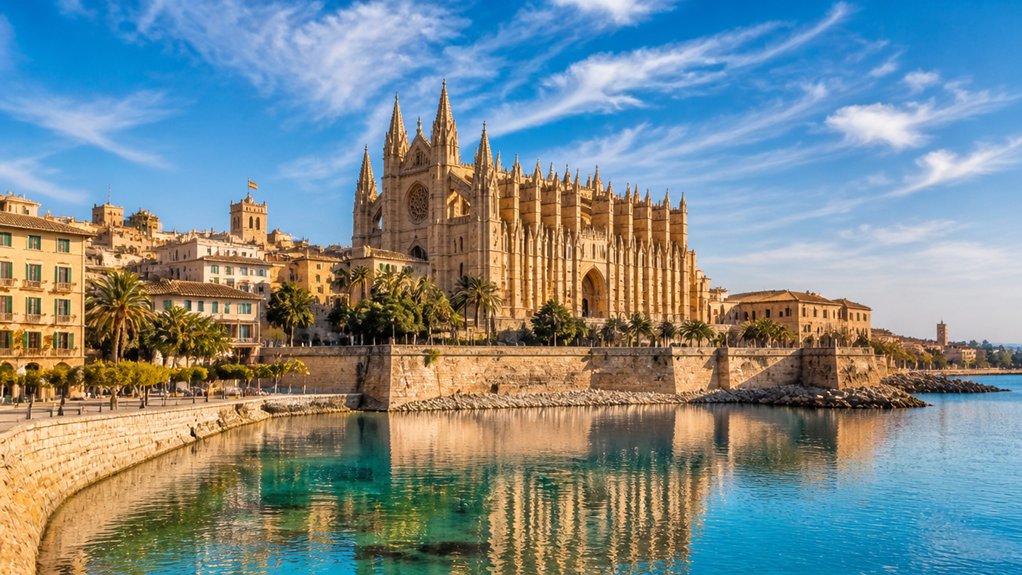
Palma De Mallorca Cruise Port Guide
How to escape Palma’s tourist traps and discover what cruise guides won’t tell you about this Mediterranean port.
In this guide
- Cruise Port Overview: What To Expect
- Getting From the Port To Town
- The Must-Do Experience: Start Here
- History Culture and the Top Sights
- Beyond the Centre: Day Trips and Alternatives
- Shore Excursion or Going It Alone
- The Mistakes Cruise Passengers Make in Palma De Mallorca
- Your Port Day: A Sample Itinerary
Try one free personalised day plan — built around your ship’s actual arrival and departure times. Then get every port on your cruise done the same way from £7.99 (about $10).
Cruise Port Overview: What To Expect
Palma’s main cruise berths sit around 4 km from the old town, so most passengers take the official shuttle, a city bus or a taxi rather than hanging around the expensive cafés near the terminal. Walking along the seafront is possible but it’s a long way, and the signs don’t help much, so download an offline map before you leave the ship. This matters because you’re arriving at one of Spain’s busiest cruise ports, and during peak season the Cathedral, old town, and waterfront can feel suffocatingly packed.
Your ship docks at one of two terminals, though the facilities differ less than you’d think and make no real difference to what you actually do ashore. If your vessel arrives mid-morning alongside five others, expect genuine crowds everywhere obvious. The real advantage of understanding this is planning accordingly—most passengers follow the same predictable route: Cathedral, Paseo Marítimo seafront, then the main shopping street.
One street back from this circuit, the crowds thin considerably and restaurant prices drop sharply because locals eat there instead of tourists. The harbour itself is a decent walk, and the Cathedral is worth seeing up close if the queue doesn’t stretch halfway around the block. If it does, skip it and head inland instead toward the narrow streets where people actually live and work—that’s where your time becomes something other than just time away from the ship.
Getting From the Port To Town
The terminal sits well out from Palma‘s centre, and the walk to the Cathedral along the seafront is around 4 km, so allow plenty of time or use the shuttle. The old town lies just behind the Cathedral, and the larger buildings make the route obvious once you’re on the promenade. Turn inland one street over where prices normalise and you’re actually among residents rather than the port fringe.
Taxis cluster outside the terminal and are worth the fare for this distance, especially if you’re managing young children or have mobility limitations. The city bus system also runs along the seafront into the centre and costs far less than the ship’s shuttle.
The practical choice is the shuttle, a city bus or a taxi into town, then walk once you’re in the centre. Download an offline map before docking so you’re not distracted trying to navigate on your phone whilst sidestepping tour groups. The harbour front is reasonably pleasant to move through, and you’ll see actual working fishing boats rather than pure tourist theatre. The Cathedral dominates the skyline and serves as your permanent navigation reference if you need it.
The real saving isn’t the shuttle fare itself but avoiding the inflated prices at the cafés immediately around the port entrance.
The Must-Do Experience: Start Here
The Cathedral works best as your first stop because the early morning genuinely changes what you experience—the space feels manageable before the group tours arrive mid-morning and turn it into a bottleneck. The architecture itself is worth the trip: the vaults are high enough to be properly impressive, and light comes through the windows in ways that make the space feel open rather than packed. Go straight there when you arrive in town, before the chaos builds up.
Once you’ve finished at the Cathedral, move into the narrow streets of the old town where actual residents live and work. Head away from the main shopping street toward the smaller plazas where you’ll see people having coffee and kids playing—this is where you find functional bars that serve decent food at prices that don’t assume you’re on holiday. The area around Plaza Santa Eulalia repays wandering slowly because the contrast between this and what’s near the port is stark enough to understand why the place hasn’t entirely sold itself off.
If your cruise line offers a guided walking tour, book independently with a local tour provider instead of taking their version. The ship’s tours move too fast, pack in too many people, and cost more than what you’d pay dealing with someone directly—plus better guides actually know when to stop and let you look at something properly. Reserve this before you arrive during busy seasons because the decent operators fill up well in advance.
Spend at least a couple of hours exploring this area. You’ll see why some people actually live here year-round rather than just passing through, which sets Palma apart from most Mediterranean ports.
History Culture and the Top Sights
Palma’s built environment is essentially a record of conquest. The Cathedral stands on the site of the old main mosque, which the Christians replaced after they took the island in 1229. This pattern repeats across the city because Mediterranean ports accumulate rather than replace—what matters is understanding that nothing here belongs to a single era.
The Royal Palace deserves your time if you want actual architecture rather than photo opportunities. Medieval kings built it, later rulers rebuilt it substantially, and the courtyards have genuine quiet because they’re not designed to process crowds. The gardens work as functional breathing room if the port feels suffocating.
The Arab Baths are genuinely worth seeing because they’re old enough—tenth century—that you can mentally reconstruct daily life rather than just stare at stone. The neighbourhood around them hasn’t been consumed by retail, so you get an actual sense of how the old quarter operates when tourists aren’t the primary concern. Scale matters here; they’re small enough that you won’t feel managed.
A local guide working independently moves at a pace where information actually stays with you, and the cost typically undercuts the ship’s offering. Book in advance because serious operators fill during season. The difference between wandering and understanding is usually just someone who knows what they’re looking at.
Beyond the Centre: Day Trips and Alternatives
Most day trips from Palma encourage you to leave the island altogether, but better value comes from going somewhere the organized groups have already cleared out by mid-afternoon. Valldemossa’s countryside operates on a different rhythm than the capital, and the restaurants there serve actual locals rather than processing tour groups in rotation.
Independent travel costs less than a ship excursion and frees you from the fixed timeline that drags you back to port with half your day remaining. A rental car offers real flexibility, though public transport works fine if you accept a less predictable schedule. You can reach the village with enough time to settle somewhere before the coached parties arrive.
The monastery sitting above the village is the obvious focal point—you’ve probably seen photographs of it. The surrounding streets have adequate cafés where coffee costs what it should, and the views across the Serra de Tramuntana actually justify the journey. If a quiet mountain village doesn’t appeal, Deià on the coast provides similar advantages with decent swimming if you’re willing to walk down to the beach.
Book your transport beforehand online, as reliable operators with reasonable flexibility get booked out during peak season. The actual difference between a rushed tour and a proper afternoon away amounts to controlling your own departure time rather than following the ship’s schedule.
Shore Excursion or Going It Alone
The cruise line’s excursion desk will quote you prices that make independent travel seem absurdly cheap, yet these packaged tours still fill up. You’re not paying for better quality—you’re paying for someone else to handle the logistics and decision-making. That convenience costs substantially more than it should, and you’ll spend half your port time waiting on a coach between predetermined stops.
Going it alone works well here because the shuttle and city buses put you within easy reach of everything without needing a guide or fixed schedule. The cathedral is a short ride away, the old town cafés branch out naturally from there, and reaching countryside or coastal villages requires only local transport without the cruise line markup. You’re not sacrificing what you get to see—you’re simply removing the middleman taking a large commission on top of what you’ve already paid for your ticket.
Local independent operators charge significantly less than the cruise line while delivering comparable or superior experiences. For specific activities like boat trips, mountain biking, or wine tastings, independent operators run better schedules and work with smaller groups. Book these directly through their websites before boarding, as the reputable ones fill quickly during cruise season, and you’ll gain both better value and genuine flexibility without subsidising a company that’s already profited from your berth fee.
The Mistakes Cruise Passengers Make in Palma De Mallorca
The port becomes congested within a couple of hours after the first ship arrives, so your realistic window for exploring Palma without constant crowds is quite short. The cathedral and old town are where most people head, which means the specific route you choose matters less than when you go. Most visitors spend their opening hour walking to the right starting point, so knowing where the quieter cafés and less-photographed areas are actually situated gives you a genuine advantage.
The waterfront pedestrian zone presents itself as tourist-friendly until you look at what things cost—a coffee runs nearly double the price you’d pay a few blocks further inland. Skip the harborside restaurants and walk uphill into the neighbourhood streets where local people actually eat. The food is better, the service more genuine, and the prices don’t feel like you’re being taken advantage of.
Your entire day hinges on one choice: staying within walking distance of the ship or heading further afield. The cathedral, Paseo Marítimo, and old town are worth seeing if you time your visit around the coach tour arrivals in mid-morning. If you want to avoid crowds altogether, independent operators run half-day trips to mountain villages, coastal towns, and countryside estates that book up quickly during cruise season, and reserving online in advance secures your place and gets you better rates than what the cruise desk can provide.
Your Port Day: A Sample Itinerary
Most cruise passengers waste their first hour figuring out where to go, which means you’ll be confused when the tour groups start arriving. Leave the ship quickly, get coffee from a café in the backstreets rather than the waterfront, and head to the cathedral while the light is good and fewer people are there.
Spend your morning in the old town and cathedral area. Walk uphill from the port into the narrow streets where actual residents live, stop at plazas that interest you, and save the cathedral for mid-morning once you’ve already explored the neighbourhood around it. You’ll understand the architecture better when you see how it fits into the city rather than viewing it as something separate.
By midday, consider leaving the centre entirely. If you’ve booked an independent tour to the Tramuntana mountains or a coastal village beforehand, this is when that advance planning pays off—coach tours fill quickly and independent operators typically offer better value than the cruise desk. Countryside estates and mountain towns get far fewer cruise visitors than Palma itself, and booking online before your port day guarantees your place and usually costs less than last-minute options.
If you’re staying near the port for your afternoon, walk the Paseo Marítimo waterfront as the sun gets lower. Eat dinner away from the harbour, where restaurants serve what local people actually eat rather than what cruise companies think tourists want.
Book your Palma De Mallorca day
Tours for this port, compare before you book
Getting around in port