Lisbon Cruise Port Guide
Forget overpriced tourist traps—discover insider secrets to maximize your Lisbon cruise port experience.
In this guide
Try one free personalised day plan — built around your ship’s actual arrival and departure times. Then get every port on your cruise done the same way from £7.99 (about $10).
Staying in Lisbon before or after your cruise? Answer a few quick questions and we’ll point you to the best part of town for you, including flat, step-free options, then show hotels that fit.
Cruise Port Overview: What to Expect
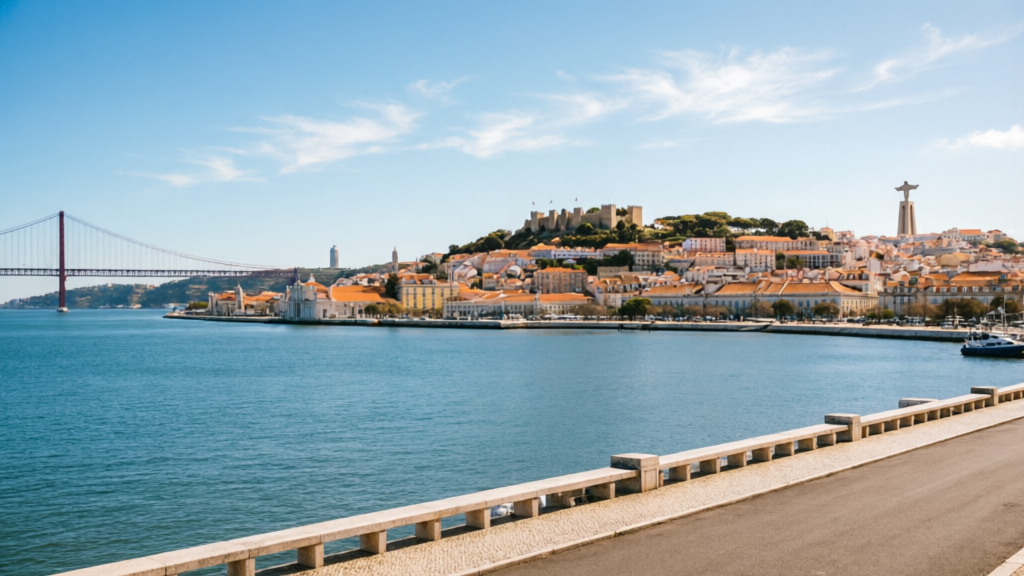
Lisbon’s cruise terminal sits at Santa Apolónia on the river beside Alfama, about ten minutes on foot from Terreiro do Paço and the Baixa, so the city centre is close enough to walk. The port itself is purely functional—modern infrastructure and efficient processing rather than anything with character—but this actually works in your favour because it pushes you toward the city quickly rather than tempting you to linger.
Disembarkation is orderly with clear signage, and the terminal has what you need without extras that would waste time. Currency and phone coverage are sorted (Euro and decent signal), so those logistics won’t hold you back. The real skill is understanding that Lisbon punishes wandering and rewards speed.
People who drift around the terminal hoping to stumble into something worthwhile usually end up in overpriced tourist restaurants and shops clustered near the port entrances. The food costs more than identical meals in the city, and the experience is as generic as they come. You need to commit to getting into Lisbon within minutes of leaving the ship.
Your transport options are straightforward: metro, bus, taxi, or pre-booked private transport. The metro is cheap and direct, though Portuguese signage requires actual attention if you’re not used to it. Taxis are viable if you negotiate the rate before getting in, and pre-booking a small-group walking tour or private driver removes both the expense of winging it and the mental friction of figuring out logistics when you’re tired.
The difference between a rushed, expensive day and a genuinely good one comes down to spending ten minutes now booking your transport or tour before you arrive. Lisbon itself is absolutely worth that small effort.
Getting From the Port to Town
The metro costs a fraction of a taxi fare, which explains why most passengers use it instead of getting overcharged at the port. The ticket machines are confusing if you don’t speak Portuguese, so your practical move is buying a rechargeable Viva card at the ticket window where staff speak English and the whole thing takes a couple of minutes.
Follow the blue metro signs from the terminal with single-minded focus. The walk feels longer than it actually is, but you’re moving straight toward the city centre without any need to second-guess yourself or make decisions.
The metro is clean, efficient and full of other cruise passengers heading the same direction. You’ll know your stop because everyone else will get off there too. The journey gets you near Baixa, the central neighbourhood where the city actually functions.
If the metro sounds too stressful, a pre-booked private driver costs less than negotiating with taxi drivers at the port and removes the uncertainty entirely. This makes sense if you’re with elderly relatives or anyone who finds unfamiliar transport systems genuinely difficult.
Taking a taxi without agreeing the fare beforehand is the option to avoid. Drivers know you’re catching a ship and will price accordingly. If you do take a taxi, confirm the fare with the driver before getting in the car, and walk away if it sounds inflated.
The Must-Do Experience: Start Here
Most cruise passengers squander their first hour in Baixa wandering without direction, which means they miss the one practical thing that actually makes the day work: getting up high to see the city’s layout before you get lost in the streets. Head straight for Elevador de Santa Justa, the wrought-iron lift that rises through the city centre. The queue moves faster than expected, and the lift itself serves a genuine purpose rather than existing purely for the experience—it deposits you at Carmo Square where the grid of Baixa’s streets suddenly becomes legible.
From Carmo Square you can see where you’ve come from and where you’re going, which prevents the disorientation that catches most visitors. Walk downhill through the narrow streets toward the river, moving toward Terreiro do Paço, the grand riverfront plaza rebuilt after the 1755 earthquake. The descent is gentle and you’ll pass cafés and shops without aggressive tourist machinery trying to extract money from you at every turn.
Spend your remaining time along the waterfront or exploring the neighbourhoods just inland—São Jorge district rewards wandering, and the castle ruins provide actual shade on hot days. Book any walking tour well in advance online since the good ones sell out fast for cruise passengers, and independent guides charge considerably less than what the ship charges. By midday you’ll want lunch near the water rather than in the gridlocked tourist strip, where portions are larger and prices considerably less inflated.
🗺️ Tours & Experiences at This Port
Skip the ship’s overpriced excursions — browse top-rated independent tours trusted by thousands of cruise passengers.
History Culture and the Top Sights
Lisbon’s museums are world-class, which is exactly why you shouldn’t spend your cruise time queuing for them. The National Tile Museum and Maritime Museum have worthwhile collections, but you’ll stand in line for two hours to see one hour of exhibits—poor value when the harbour is accessible and neighbourhoods reveal themselves only to people walking through them.
Understanding Lisbon’s history works better through the streets themselves. The Carmo Convent stands in ruins deliberately—the 1755 earthquake destroyed it and it was left that way as a memorial, which tells you how the city processes catastrophe and carries on. The cathedral, on the slope between Baixa and Alfama, dates from the twelfth century and looks austere because it was built as a fortress-church, with twin towers and battlements. Walking through these spaces costs nothing and teaches you more than any guided tour.
If museums genuinely interest you, book a timed entry slot online in advance for the National Tile Museum or the Gulbenkian—smaller collections have shorter queues and the tile work deserves your attention. Ship excursion prices for museum visits run considerably higher than independent visits, so arrange your own transport and tickets ahead of time. The actual cultural payoff comes from walking through Alfama, where the street layout follows medieval patterns and locals conduct their ordinary lives rather than performing for tourists. That costs nothing and shows you how the city actually functions.
Beyond the Centre: Day Trips and Alternatives
The ship excursion to Sintra costs roughly three times what you’d pay booking independently, yet somehow manages to cram you onto a coach with forty other passengers for the privilege. This isn’t a supply-and-demand situation—it’s simply how cruise lines operate, banking on your fear of missing the ship and your understandable reluctance to navigate unfamiliar territory alone.
Sintra works brilliantly on your own terms. Book your train ticket and palace entry online before you arrive, and you’ve already saved both money and queue time. The train journey from Lisbon drops you directly into town, where the Pena Palace and Quinta da Regaleira are both walkable, and you control your pace—you can spend hours exploring the initiatic wells and grottoes, or move quickly through both sites and grab decent lunch in the town centre instead of eating whatever the coach deposits you beside.
Popular independent tours combining Sintra with Cascais and the Cabo da Roca cliffside fill quickly during cruise season, so book several days ahead online. When you book guided tours independently, you gain the flexibility to customize your itinerary while avoiding the markup costs of ship-operated excursions. These tours cost considerably less than ship excursions and include actual guides rather than megaphone commentary from a moving vehicle. You’ll have a far better day than you would on the official ship tour, spend less money, and actually see the places rather than photograph them from a coach window.
Shore Excursion or Going It Alone
The cruise terminal is close to the city centre: Alfama is right behind it and Terreiro do Paço is about ten minutes’ walk along the river. If your line runs a shuttle bus, it’s worth taking rather than hunting for a taxi when you’re unfamiliar with the place, and Santa Apolónia metro station is beside the terminal. Either way you’ll arrive knowing exactly where you are instead of wondering if the driver is taking you somewhere genuinely useful or somewhere that benefits him more.
Most cruise passengers head straight to the Baixa and get exactly what they deserve: overcrowded tourist restaurants, inflated prices, and the sense of being herded. Instead, get off one stop earlier and walk into the Príncipe Real neighbourhood, where locals actually eat lunch. The restaurants here charge reasonable prices for proper food, the queues are manageable, and you’ll recognise actual Portuguese life happening around you.
The metro is your friend for reaching further afield, though it’s worth buying a contactless card at the station rather than struggling with individual tickets each time. One genuinely useful tip that nobody mentions: Sunday afternoons are when the Baixa empties out. If your ship schedules an evening departure, you can explore the main sights then without battling crowds—the Terreiro do Paço and Rua Augusta are almost pleasant when they’re not choked with tour groups.
Book independent tours for Sintra or the Tagus Valley several days before you arrive, as the best guides disappear quickly during cruise season. You’ll pay considerably less than the ship charges and actually have time to think instead of just tick boxes.
🗺️ Tours & Experiences at This Port
Skip the ship’s overpriced excursions — browse top-rated independent tours trusted by thousands of cruise passengers.
Local Knowledge Worth Having Before You Dock
Coffee near the cruise terminal costs roughly double what it does a few blocks inland, and where you drink your first cup genuinely shapes your morning. Most cruise passengers stay clustered in the tourist cafés around Terreiro do Paço, but if you walk into the neighbourhoods where local office workers queue, you’ll pay a fraction of that price and drink something actually worth the trip. Places like Príncipe Real and Chiado operate on a different economy entirely, one that rewards you simply for being willing to leave the obvious route.
The hills are steeper than the port map suggests, and the cobblestones will punish your feet if you’ve packed anything other than proper trainers. Leather shoes, even broken-in ones, become instruments of regret by afternoon. Most people only realise this when they’re hobbling back to the ship, having learned a lesson they could have avoided.
Portuguese is what people speak here, and English won’t reliably get you far outside the tourist zones. Learning obrigado, por favor, and desculpe takes seconds and costs nothing, but it changes how shopkeepers and restaurant staff treat you. The effort itself—not your money—is what actually opens doors.
🗺️ Tours & Experiences at This Port
Skip the ship’s overpriced excursions — browse top-rated independent tours trusted by thousands of cruise passengers.
Your Port Day: A Sample Itinerary
Most cruise passengers spend their first hour queuing for mediocre coffee at the terminal, which means leaving the ship within twenty minutes of docking gives you a genuine advantage. Head straight uphill toward Príncipe Real, where locals actually eat and work, and find a proper café serving better coffee at a fraction of terminal prices. By mid-morning you’ll have explored the vintage shops and azulejo tiles that justify the climb, and you’ll have already stepped outside the cruise-passenger circuit entirely.
Spend midday in Chiado, the literary neighbourhood with actual character and considerably better value than waterfront restaurants. Walk through the vintage bookshop, grab lunch at a place where office workers queue rather than tour groups dominate, and let the afternoon develop without rushing. This is where you taste Lisbon rather than the tourist approximation of it.
Return to lower ground by early afternoon, as the cobblestones and hills will punish your feet more severely than expected, and spend your final hours at the Museu de Arte Decorativa or walking the small streets around the Cathedral. Book an independent walking tour in advance rather than relying on ship excursions, since the worthwhile ones sell out weeks ahead and offer better value with smaller groups. You’ll be back at the ship with feet only moderately destroyed and actual stories worth telling, which is genuinely all a port day can deliver.
🗺️ Tours & Experiences at This Port
Skip the ship’s overpriced excursions — browse top-rated independent tours trusted by thousands of cruise passengers.
Book your Lisbon day
Tours for this port, compare before you book
Getting around in port
✈️ Before you sail: eSIM, insurance, luggage, flight delays
Ships In Lisbon
Upcoming calls from our sailings tracker, updated regularly.
Celebrity Apex
Celebrity CruisesSat 10 Oct
⚓ 08:00–17:00
Queen Victoria
CunardMon 12 Oct
⚓ 08:00–17:00
Iona
P&O CruisesMon 12 Oct
ms Nieuw Statendam
Holland AmericaTue 13 Oct
⚓ 08:00–17:00
Fred Olsen Borealis
Fred OlsenTue 13 Oct
Ventura
P&O CruisesWed 14 Oct