Crete Cruise Port Guide
What if you could skip the crowded tours and discover Crete’s hidden gems like a local—but there’s a catch?
In this guide
Try one free personalised day plan — built around your ship’s actual arrival and departure times. Then get every port on your cruise done the same way from £7.99 (about $10).
Cruise Port Overview: What To Expect
Heraklion and Rethymno will be packed with tour coaches as soon as your ship ties up, which is standard for half the Mediterranean ports. The key is that passenger density drops substantially once you walk beyond the immediate waterfront area within the first hour of disembarkation.
You’re entering a functioning port rather than a sanitised visitor zone. The facilities are practical and unglamorous, which works in your favour because it means the local economy hasn’t fully oriented itself around cruise passengers. Restaurants tucked away from the immediate tourist strip charge what locals pay, and you can eat actual food at reasonable rates instead of the inflated plates designed for people with limited shore time.
The waterfront will undoubtedly feel crowded with other cruise passengers, but Crete is large enough that you won’t spend your entire day navigating around them if you make one deliberate choice at the start. Decide before arrival whether you want to stay within the port town or travel inland to see something different. If you’re venturing further afield, book an independent guided tour in advance because the popular ones fill up quickly with cruise passengers, and you’ll save money compared to the ship’s excursion desk while gaining more control over your schedule.
If you’re staying local, there are worthwhile options available: the Archaeological Museum in Heraklion justifies an hour or two, the Venetian architecture is scattered throughout the town and rewards exploration, and the food genuinely offers value once you’ve moved away from the harbour. Moving inland within your first hour fundamentally changes what your day will look like.
Getting From the Port To Town
Ships berth inside the working port, and a shuttle runs from the quay to the passenger terminal, from where the old town is a 20 to 25 minute walk along the seafront. Most cruise passengers use the official port taxis, which charge a moderate fare for the short journey, but you can save money by walking past the port gates and hailing a regular street taxi instead — the difference in price is significant because the port taxis operate on a captive-market system.
The town centre is close enough to walk to without much trouble, though you’ll pass through ordinary streets that lack any particular character. Whether you walk or take a taxi depends entirely on your energy levels and how much you value the savings. Either option gets you into town fairly quickly.
If you want to reach places inland like Knossos Palace or the villages deeper into Crete, book a minibus tour through an independent operator before you leave your home port. These tours fill up with cruise passengers fast, and booking online in advance means you secure your place at lower prices than the ship’s excursion desk charges. You’ll also have more control over when you return and won’t be forced back to the ship on someone else’s schedule.
The Must-Do Experience: Start Here
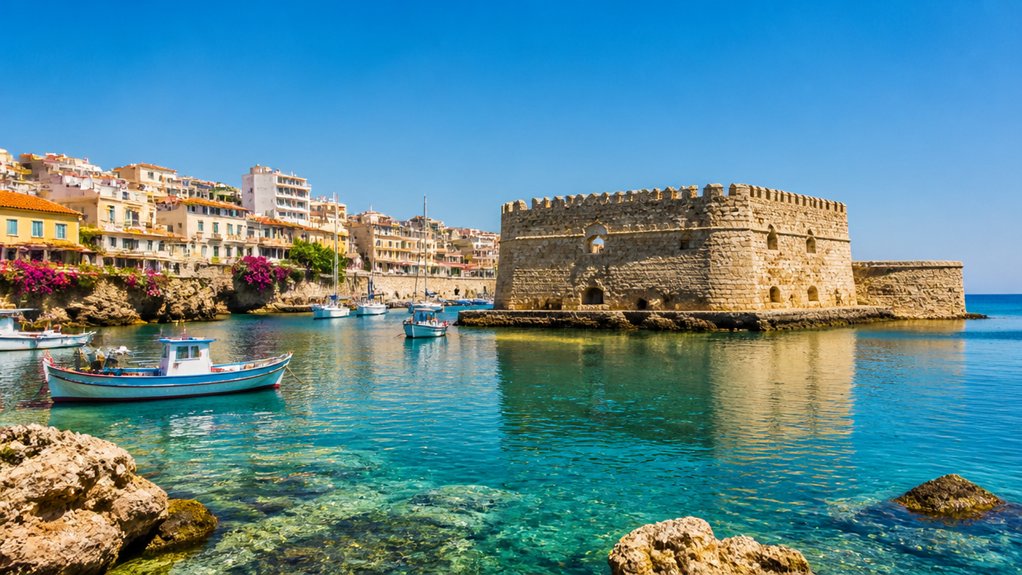
The waterfront is where you should start, simply because Crete’s actual relationship with the sea—not the tourist version of it—tells you more than anything packaged. Walk east past the fishing boats and you’ll leave the crowds behind quickly. The local restaurants here charge what locals pay and serve food people actually eat.
Spend your first hour walking at whatever pace suits you, watching the fishermen work and how light moves across the water. You’ll pay nothing and understand how the place actually functions before committing to anything else.
If you want Knossos Palace or the mountain villages, book an independent minibus tour before your port day. The ship’s excursion desk charges substantially more for identical tours, and independent operators let you choose your own return time—critical when your ship doesn’t wait. During busy seasons, popular tours fill quickly, so booking online beforehand means a full day exploring rather than an afternoon in port shops.
A half-day option works well: walk the waterfront, then lunch at a neighbourhood taverna. You’ll get a genuine sense of how things work here and return to your ship without the stress of timing, which matters more than rushing back.
History Culture and the Top Sights
Knossos Palace dominates Crete’s historical narrative because the Bronze Age structure genuinely mattered—it functioned as a significant administrative and religious centre—but what you’ll actually see depends on timing and how you arrange access. The site charges an entry fee, whereas the ship’s excursion desk charges substantially more for a guided walk through identical ruins, typically shepherding forty passengers in matching lanyards through the same route.
Book a minibus tour independently through a local operator before your port day arrives, as these fill during cruise season. You’ll pay less than the ship charges, your guide will have actual archaeological knowledge rather than a prepared script, and you retain control over pacing—lingering at courtyards or skipping the retail section entirely.
The palace itself warrants straightforward appraisal: it’s perpetually crowded, the reconstructed sections remain contested among experts, and the terrain offers minimal shelter. The location itself matters significantly though. You’re standing where a functioning civilisation operated three millennia ago, and that reality shifts the experience from a checkbox task into something substantive. Bring sufficient water, position yourself to arrive early if your tour permits, and overlook the reconstructions in favour of studying the original stone foundations and what they indicate about daily existence.
The Archaeological Museum in town contains the smaller artefacts and provides the fuller narrative without overwhelming numbers. It receives far less attention than the palace site, which means you can examine objects without fighting crowds. If your tour schedule allows a museum stop during the return journey to port, make that choice.
Beyond the Centre: Day Trips and Alternatives
The cruise excursion desk will steer you toward Knossos because it’s convenient for them to organize, which is exactly why going independently makes financial sense and leaves you with actual space to move around. The island’s interior has Minoan villages, gorges and coastal settlements that operate without the crush of bodies you’ll encounter at the palace. You get better value simply by avoiding what the ship packages.
Samaria Gorge pulls in serious walkers, but the trek books out well ahead and requires transport coordination that rarely fits cruise schedules. Imbros Gorge works better—you can arrange a guided hike independently before your port day, these operate throughout the year, cost substantially less than ship excursions, and give you the same dramatic limestone without the logistical friction. Local operators fill quickly during cruise season, so booking online in advance matters practically.
Matala and Agia Galini on the south coast offer something different entirely: fishing harbours, tavernas where the food beats anything near the tourist zone, and beaches without resort infrastructure. You can reach either by hiring a minibus with other passengers or organizing a driver through your accommodation before you leave. The route itself shows you working farmland and olive groves instead of managed heritage spaces.
If archaeology still appeals but you want room to breathe, Gortyn presents a Roman alternative. The ruins scatter across fields outside the main settlement, far fewer tour groups venture out here, and entry costs are minimal. You’re walking through stones centuries younger than Knossos, but the setting feels like an actual place rather than a constructed attraction.
Shore Excursion or Going It Alone
The ship charges a premium for excursions because most passengers won’t arrange anything themselves, and cruise lines exploit that convenience factor heavily. You’ll spend significantly more for a guided coach ride and a hurried stop than you would pay booking the same tour independently weeks in advance.
Independent booking demands upfront effort, but the financial difference is substantial and you control your own pace instead of following the cruise director’s schedule. You can spend an hour examining the Roman ruins at Gortyn without glancing at your watch, or sit properly in a Matala taverna instead of eating a sandwich on a moving coach. Local operators run these tours year-round and fill their spots quickly when ships arrive, so booking online ahead of time isn’t a suggestion—it’s how you get qualified guides and avoid being turned away on your port day.
The independent route offers practical advantages beyond lower costs. You travel in smaller groups, typically five or six people rather than fifty passengers from your ship, which fundamentally changes what you experience and how you interact with it. Your guide can actually answer questions and will stop somewhere off the standard route if you ask, because these people live here rather than recite the same commentary to different ships every week. Consider using a local eSIM data plan to stay connected while booking tours and navigating independently on your port day.
The only legitimate reason to book through the ship is if you’re traveling alone and want the reassurance of organized group logistics. Otherwise, independent booking beats ship excursions on cost, schedule flexibility, group size and how genuinely local the experience feels. Plan your tours three weeks before your port day if you want access to the operators you actually want.
What Most Crete Guides Get Wrong
The Cretan coast becomes genuinely quiet once you move away from the ferry terminal, where souvenir stalls stock identical worry beads and olive oil bottles at inflated prices. Walk inland and the neighbourhood shops where locals actually shop offer better selection, lower costs, and staff who treat transactions as routine rather than performance. This approach gives you actual goods at actual rates instead of paying for convenience and tourism markup.
Heraklion’s archaeological museum deserves more than the standard port-visit squeeze between meals and your ship’s departure time. The Minoan artefacts here document Europe’s first advanced civilisation with genuine historical weight, not sanitised narrative. Booking a private guided visit through a local operator weeks in advance costs substantially less than the ship’s official excursion and provides real context instead of facts delivered from laminated cards.
The road south to Gortyn and Matala rewards a full day far more than a standard three-hour coach tour with dozens of other passengers. Booking an independent minivan in advance matters because these fill when ships arrive and spots disappear quickly. You’ll move through Roman ruins at your own pace, swim at Matala beach where the seventies traveller encampment actually existed, and spend enough time in a waterfront taverna to experience how the food actually tastes rather than what you can consume between scheduled stops.
Your Port Day: A Sample Itinerary
Most cruise passengers queue at the archaeological museum with two hundred others from their ship, then leave having seen almost nothing. Walk inland from the harbour before nine in the morning instead, when the neighbourhood bakeries are still warm and the streets belong to locals. Grab coffee and something fresh, then head to the museum once the initial crush has thinned—you’ll notice the difference immediately.
Spend your late morning and early afternoon at the Heraklion Archaeological Museum at a proper pace. The Minoan collection repays close attention to individual pieces rather than speed-walking past them, and you’ll absorb far more detail than any rushed ship excursion allows. Budget enough time here that you’re not watching the clock; this genuinely justifies your port day.
By early afternoon, head to one of the neighbourhood tavernas south of the ferry terminal rather than the waterfront places near the ships, where costs climb steeply and quality drops. Eat what locals eat, sit longer than feels necessary, and let the afternoon drift a bit. This is when you stop behaving like you’re on a schedule.
Use your final hours before departure to walk the old town’s backstreets without purpose. You’ll find small museums, genuine shops, and the sort of unplanned discoveries that actually stick with you far longer than anything boxed into a three-hour tour. Head back to the harbour with enough margin that you’re not running—arriving breathless defeats the entire point of having taken time seriously.
Book your Crete day
Tours for this port, compare before you book
Getting around in port