Santorini Cruise Port Guide
Insider secrets reveal how cruise passengers can avoid overpriced excursions and experience authentic Santorini—but here’s what the cruise desk won’t tell you.
In this guide
Try one free personalised day plan — built around your ship’s actual arrival and departure times. Then get every port on your cruise done the same way from £7.99 (about $10).
Cruise Port Overview: What to Expect
Your ship anchors offshore in the caldera and tenders bring you to the old port below Fira, known as Skala. From there you go up and back down by cable car, a journey of a few minutes that’s genuinely steep and offers clear views of the volcanic landscape. If heights bother you, donkeys make the same ascent or descent, though they’re slower, more expensive, and arguably just as unsettling. The cable car queues on port days can be substantial, so expect delays during peak boarding times.
The old port below Fira is a small tender landing lined with souvenir stalls, jewellery shops, and restaurant staff actively recruiting customers. It’s functional and crowded rather than picturesque, which is simply the reality of how thousands of cruise passengers move through a small space in a single day. Fira’s central square sits at the top of the cliff, reached by cable car, donkey or a zigzag path of several hundred steps, and the caldera views are genuine rather than inflated by marketing.
Fira itself is steep, narrow-laned, and overwhelmingly full of cruise passengers for most daylight hours. This isn’t a reason to stay on the ship—it’s a scheduling problem you solve by planning when to explore and what to do. The town works better if you accept the crowds as a constant and move accordingly.
Independent tour operators selling tickets from harbour stalls typically offer better value and more flexibility than ship-organised excursions. Book any excursion you want before arriving, since volcanic island trips and wine tastings sell out quickly when multiple ships dock on the same day. You can explore guided excursions at ports worldwide to compare options and secure your preferred activities in advance. Waiting until you arrive means risking either no availability or settling for whatever remains.
Getting From the Port to Town
The cable car fills quickly after passengers disembark, and the wait becomes substantial if you delay even an hour. The descent is genuinely steep, which matters if heights or balance concern you—donkeys are available as an alternative, though they cost more and won’t solve the nerve problem. Accept the crowds as unavoidable rather than treating them as reason enough to skip the town entirely.
Fira’s main square opens onto narrow lanes that channel thousands of cruise passengers through identical routes on port days. Everything worth seeing sits within walking distance, and you’ll notice far fewer people once you leave the principal pedestrian routes. The layout means you can cover substantial ground without much effort, provided you’re willing to navigate on foot.
Book volcano tours and wine tastings independently well before your port day arrives. When multiple ships dock together, the better operators fill their slots by mid-morning, leaving you with mediocre options or nothing. Independent guides typically cost less than ship-organised excursions and let you stay longer in places rather than adhering to a fixed schedule that prioritises getting you back to the tender.
The walk back down to the harbour requires genuine time management, as cable car queues swell dramatically near the ship’s departure deadline. Missing your tender from a Greek island means substantial expense and genuine inconvenience that you’ll regret for years. Build in buffer time before the all-aboard call so you’re not forced to rush.
The Must-Do Experience: Start Here
The caldera view from Fira’s western edge works because the light actually justifies the effort, not because it’s picturesque. You’ll see why people specifically travel to Santorini rather than slot it into a cruise itinerary once you’ve stood there, though the crowds during port days are genuine—thick enough that you’ll struggle to find a spot without someone else in frame.
Go to the viewpoint first, before Fira’s main streets fill with passengers. The morning light is cleaner and the rim less congested, giving you space to take in what you’re actually looking at: a collapsed volcanic crater that’s still geologically active beneath your feet. The narrow lanes running parallel to the rim have local tavernas and small shops where prices haven’t tripled for cruise traffic, and the walk between them takes as long as you want it to.
Book a volcano and hot springs tour directly with local operators rather than through your ship. These run regularly enough that you’ll get a spot, and you spend actual time swimming in the thermal water and walking the volcanic landscape instead of being rushed through a compressed version designed around ship turnaround times. Most include wine tasting at a family vineyard, which transforms the afternoon from functional tourism into something you’ll actually remember doing.
By late afternoon you’ll be walking back toward the cable car anyway, so use the remaining hours in the neighbourhood above Fira if the main sights are covered. The lanes here are quiet, local people are living their actual lives, and the coffee shops are run by people who aren’t tracking how long you’re sitting down.
🗺️ Tours & Experiences at This Port
Skip the ship’s overpriced excursions — browse top-rated independent tours trusted by thousands of cruise passengers.
History Culture and the Top Sights
Santorini’s history gets cleaned up in most cruise guides — yes, the Minoans built something extraordinary here, but a volcanic explosion around 1600 BCE obliterated most of it, and what remains is genuinely fragmentary rather than grand. The archaeological museum in Fira holds what survived: pottery, frescoes, and artefacts that tell the story of settlement and catastrophe without requiring you to imagine too much. Understanding the eruption context matters more than the objects themselves.
The real history is underneath your feet. That collapsed caldera wasn’t some gentle geological process — it was violent enough to reshape the Mediterranean, and the island you’re standing on is fundamentally the crater rim. The pumice and ash layers visible in the cliffs aren’t decorative; they’re the physical record of what happened.
You’re literally walking across volcanic debris that’s thousands of years old. Understanding that the water filling the caldera now is up to roughly 400 metres deep gives you a proper sense of the violence involved. Standing on the rim itself teaches you far more than any museum display.
If you’re genuinely interested in Minoan culture, visit the archaeological museum independently rather than booking expensive tours through your ship. The collection is manageable in a couple of hours, the admission is moderate, and you’ll understand the eruption context far better than any rushed group explanation provides. The trade-off is worth making if you have the time.
The Orthodox cathedral in Fira is worth stepping into for five minutes if you’re passing. It’s a working church rather than a museum piece, which changes how it feels compared to the archaeological sites. No crowds, no entry fee, just local worship happening in the space where it’s happened for centuries.
Beyond the Centre: Day Trips and Alternatives
The ship excursion to the caldera charges substantially more than booking independently would cost, yet delivers nothing beyond standard logistics. Your cruise line’s operator handles the mechanics of getting you there, but their primary function is extracting margin rather than enhancing your experience.
Booking a caldera boat tour through a local operator before arrival gives you better pricing and smaller groups than waiting at the dock. These tours run throughout the day and typically include stops at Nea Kameni for a volcanic walk, Palea Kameni for thermal springs, and a winery on Thirasia. You’ll pay less, avoid crowds of cruise passengers, and control when you return to the ship.
If boats don’t appeal, stay ashore and explore settlements away from the main tourist zones. Pyrgos sits inland from the caldera edge and functions as an actual town rather than a performance for visitors—you can walk unmarked streets, eat lunch at a local taverna without inflated pricing, and see how Santorini operates without the tour-bus presence. The Orthodox fortress church at the top provides views across the island without the visual fatigue of Fira.
Akrotiri holds genuine archaeological value that a rushed ship-organised slot cannot accommodate. The Minoan frescoes and multi-storey Bronze Age structures require sustained attention to justify the visit, so booking independently allows you to linger properly. You take the bus or a taxi back to Fira when you’re ready rather than when the tour guide’s schedule dictates.
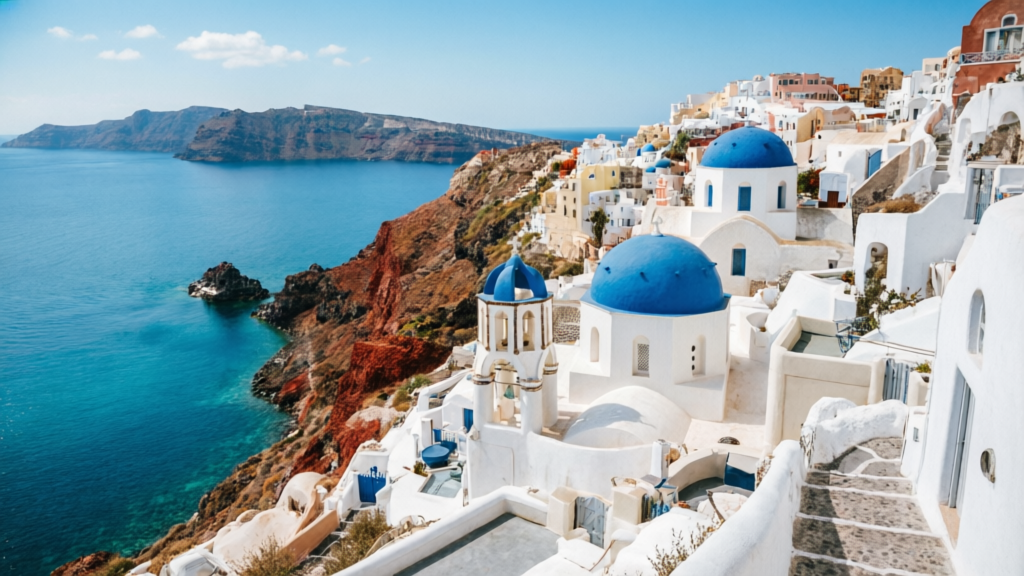
Oia sits at the northern tip of the island and is worth the effort to reach independently. It’s the village most people picture when they think of Santorini — blue-domed churches, whitewashed cliffs, and views over the caldera that are genuinely as good as the photographs suggest. Most cruise passengers never make it there, which means the streets are quieter than Fira and the experience is considerably more rewarding. It’s a bus or taxi ride from Fira, so allow enough time to get there and back comfortably — it’s not a quick detour.
Shore Excursion or Going It Alone
The cruise desk will tell you that independence costs time you don’t have. What they won’t mention is that their excursion markup funds their commission structure, not your experience.
Going it alone requires advance booking, but the reward is substantial savings and the freedom to move at your own pace. You’re not tethered to a group departing at precisely the moment your ship needs you back, which transforms a rushed tourist tick-box into something resembling an actual day in Santorini.
If you book a private caldera tour independently before arrival, you’ll spend considerably less than the ship’s organised alternative and join groups of perhaps eight to twelve rather than fifty. Popular operators fill quickly during cruise season, so securing your spot online beforehand removes the anxiety of arriving at the dock to find nothing available. You control the return time—if the volcanic walk interests you, you stay longer; if you’ve had enough, you head back.
The trade-off is logistical responsibility. You navigate from the port to the tour departure point, confirm your booking upon arrival, and guarantee you’re back aboard before departure. For most cruise passengers, this represents a manageable level of organisation that yields genuine value.
Akrotiri functions similarly—book your independent entry ticket online and arrive early, before the tour groups descend. An hour alone among Bronze Age frescoes beats two hours of commentary and elbows. Buses and taxis from Fira make the trip straightforward, so you needn’t rush, and independent entry costs a fraction of the price the ship demands for the same site with considerably less time to absorb it.
🗺️ Tours & Experiences at This Port
Skip the ship’s overpriced excursions — browse top-rated independent tours trusted by thousands of cruise passengers.
What Most Santorini Guides Get Wrong
The cruise port authority deliberately makes the return-to-ship process vague so you’ll book their excursions instead of exploring independently. You won’t find clear signage about tender times or walking times back to the port—they’re counting on your anxiety.
Tenders shuttle between your ship and the Old Port below Fira, and the cable car links the Old Port with Fira at the top of the cliff. Check the tender times in your ship’s daily programme before you go ashore; it removes the guesswork entirely. You have more flexibility than you might think, provided you leave time for the cable car queue.
The black sand beaches at Kamari and Perivolos, on the east side of the island and a bus or taxi ride from Fira, are crowded during cruise season but genuinely worthwhile if you ignore the tavernas directly on the sand and walk inland where locals eat. Prices there run at perhaps half what beachfront establishments demand for identical food. Early morning is your advantage; catch an early tender ashore and you’ll have the volcanic beaches largely to yourself before the tour groups arrive.
Your ship’s tender operates on a strict return schedule that’s displayed onboard, and the last tender back is your real deadline, not the ship’s departure time. Leave a good margin for the cable car queue so you’re not left clock-watching at the end of the day.
🗺️ Tours & Experiences at This Port
Skip the ship’s overpriced excursions — browse top-rated independent tours trusted by thousands of cruise passengers.
Your Port Day: A Sample Itinerary
Most cruise passengers lose their first hour ashore queuing for the cable car up the cliff, so take one of the earliest tenders to the Old Port and head straight up. You’ll arrive before the mid-morning rush and have the town largely to yourself while others are still waiting in cable car queues.
Once in Fira, resist the immediate pull of the main square’s souvenir shops and head instead to the archaeological museum or one of the lesser-known churches with actual views rather than crowds. Grab coffee and a proper breakfast at any café away from the caldera edge; the difference in price and peace of mind is considerable. By late morning, you’ve avoided the worst of the throng and eaten like a local rather than a tourist.
For midday, book an independent wine tour or volcanic beach excursion in advance—the best operators fill quickly with cruise passengers, and you’ll save money compared to the ship’s offerings. These tours operate on flexible schedules that work around tender times, so you’re not locked into the cruise desk’s rigid return windows.
Spend your afternoon either on the volcanic beaches near Kamari or exploring the quieter villages inland—Megalochori and Akrotiri have genuine character without the Old Town’s theatrical chaos. Take the cable car back down to the Old Port with enough buffer time before the last tender, but without the anxiety the cruise line manufactures. You’ll have seen Santorini as it actually is, not as a branded experience.
If you would rather have the day arranged, have a look at what is available in Santorini before you sail rather than leaving it to the excursion desk.
🗺️ Tours & Experiences at This Port
Skip the ship’s overpriced excursions — browse top-rated independent tours trusted by thousands of cruise passengers.
Book your Santorini day
Tours for this port, compare before you book
Getting around in port
✈️ Before you sail: eSIM, insurance, luggage, flight delays
Ships In Santorini
Upcoming calls from our sailings tracker, updated regularly.
ms Oosterdam
Holland AmericaSat 10 Oct
⚓ 08:00–17:00
Norwegian Pearl
Norwegian Cruise LineSat 10 Oct
⚓ 07:00–21:00
Brilliance Of The Seas
Royal CaribbeanSat 10 Oct
⚓ 07:00–22:00
Celebrity Eclipse
Celebrity CruisesSun 11 Oct
⚓ 07:00–22:00
Celebrity Infinity
Celebrity CruisesMon 12 Oct
⚓ 07:00–22:00
MSC Sinfonia
MSC CruisesMon 12 Oct
⚓ 08:00–18:00