Portimão Cruise Port Guide
Discover how independent travelers maximize their Portimão cruise day while avoiding tourist traps—but there’s one critical mistake most cruisers make.
In this guide
Try one free personalised day plan — built around your ship’s actual arrival and departure times. Then get every port on your cruise done the same way from £7.99 (about $10).
Cruise Port Overview: What to Expect
Portimão’s cruise terminal sits inland, a solid walk from anything worthwhile, so you’ll lose time getting into town unless you plan ahead. The distance keeps most day-trippers compressed near the port, which leaves the actual working fishing harbour and old town centre relatively quiet. The terminal itself is purely functional—there are cafés and shops, but nothing that justifies spending time there.
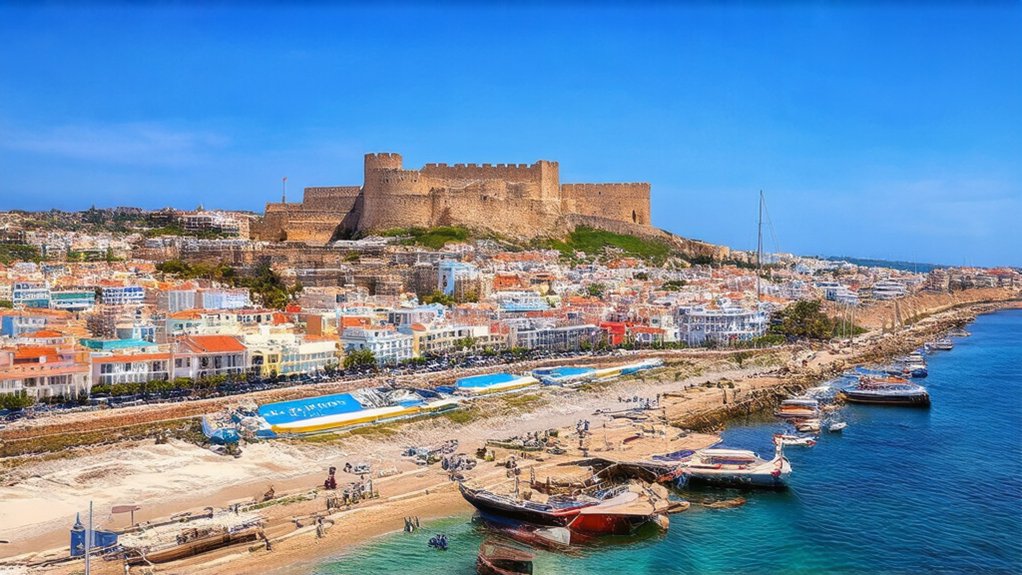
Head directly to the harbour front once you clear the gates. This is where the town actually exists. The riverside promenade stretches far enough to be useful, lined with restaurants where prices vary wildly—walk past the obvious tourist spots and you’ll find places locals eat at. The narrow streets connecting the harbour to the old town follow a logical pattern, so you won’t get lost, and most cruise passengers who had flat days here simply didn’t venture beyond the terminal area or booked expensive coach tours.
Your real advantage is arriving early. Get coffee on the promenade while the light is still low, then move into the streets before lunch crowds arrive. By early afternoon you’ll see why people actually choose to live here rather than just working seasonal jobs. Consider booking guided tours and shore excursions in advance to maximize your time at this cruise port. Book any water-based activities or kayak tours online before you arrive—the best operators book out fast with cruise passengers, and independent booking costs considerably less than paying the ship.
Getting From the Port to Town
The walk into town will take longer than you expect, but this works in your favour. Most cruise passengers abandon the journey and cluster near the terminal, so the town centre remains relatively uncrowded once you arrive.
Taxis line up outside the terminal and drivers know the route. The distance hardly justifies the fare if you’re able to walk comfortably, and walking also shows you how the town is actually laid out rather than just the tourist corridor. Leave the port complex by following the main road away from the terminals, and the geography sorts itself out—there’s only one sensible direction to go.
The promenade appears suddenly once you round the bend, and this marks the moment you can stop focusing on navigation. You’ve left the industrial port zone behind entirely. This is where the town begins in any meaningful sense, and you should spend your first interval here with coffee or a pastry, getting a sense of what’s actually around you.
If you’re travelling with someone who moves slowly or you’re managing heavy bags, taking a taxi makes practical sense. Walking, though, delivers you to the actual town rather than a designated tourist drop-off, which fundamentally changes what you can do with your time. The promenade runs in both directions, and from this point most worthwhile activities lie within straightforward walking distance.
The Must-Do Experience: Start Here
Portimão’s real value comes from accepting that time spent here pays dividends through slowness and genuine curiosity rather than ticking boxes. Most visitors end up at the promenade, which makes sense, but they often watch it rather than exist in it—treating the waterfront as backdrop instead of a place where actual work happens. Start your morning there with coffee and a pastry, sitting long enough to watch how the boats move and how the light changes, because this is a functioning fishing town that happens to have tourists, not the reverse.
The Igreja de Nossa Senhora da Conceição sits above the promenade and requires only a short walk uphill. The climb gives you real spatial understanding of how Portimão arranges itself between the river and the surrounding hills. It’s a parish church with its own character, not a monument demanding hours of devotion, so you get the cultural grounding without the machinery that usually surrounds such places.
For lunch, walk away from the water into the streets where local restaurants actually operate. You’ll pay less and eat what residents eat rather than what cruise operators think visitors should eat. The gap between these two things is substantial in both cost and actual flavour.
Independent walking tours booked ahead of time offer considerably better insight than organised excursions and they tend to fill up during cruise season. Whether you choose to wander on your own or hire a guide depends on whether you want the pleasure of finding things yourself or the education of understanding why they matter to the place. Either works, but you need to book early if you want that second option. Consider exploring guided excursions at ports to discover curated experiences that balance independent discovery with expert knowledge about Portimão’s cultural significance.
History Culture and the Top Sights
Portimão’s history sits mostly underwater, which is why the town doesn’t perform its past the way other Portuguese ports do. The Arade River generated wealth through fishing and cork trading rather than colonial conquest, so what exists here is genuinely functional architecture instead of monuments designed to impress empires. This distinction matters because Portimão reads as a place where people genuinely live and work, not as a space curated for consumption.
Igreja de Nossa Senhora da Conceição functions as the old town’s parish church without treating visitors as an audience. It’s where locals actually pray, not a ticketed venue, and this is precisely why it’s worth your time. The azulejo tiles document Portuguese faith without the bureaucratic machinery that typically surrounds such things, and you can spend twenty minutes here absorbing legitimate cultural context rather than queuing through a crowded basilica.
The riverside teaches you more about Portimão than any written source. Fishing boats still operate from here—you’re observing working practice, not heritage theatre. The promenade holds cafés where locals and visitors share space without friction, and the light on the water shifts throughout the day in ways that change how the place feels.
Moving inland from the waterfront takes you through streets where ordinary commerce actually happens. Butchers, fishmongers, small restaurants and bakeries serve residents rather than cruise passengers, and this reveals how the town functions as a functioning place. Walking these streets costs nothing except time and a willingness to navigate without a predetermined route.
Beyond the Centre: Day Trips and Alternatives
The ship excursion to Benagil Cave costs substantially more than booking independently, and you’ll arrive alongside three hundred other cruise passengers at the same moment. The cave’s appeal depends entirely on light entering through the natural skylight, which disappears when you’re standing in a queue.
Book a boat tour directly from Portimão’s harbour the evening before your port day. Independent operators charge less, run smaller groups, and fill their spaces quickly during cruise season. Departing early means you avoid the midday crowd and actually see the cave instead of photographing strangers’ shoulders. The route passes ochre cliffs and fishing villages where you observe how the Algarve functions outside the cruise terminal.
Cork forests around São Brás de Alportel offer something genuinely different from typical Mediterranean ports. The landscape feels inland because it is, and local guides can arrange small-group walks explaining how cork harvesting keeps the region’s economy functioning. Your money reaches actual communities rather than tourism corporations.
The beach at Praia da Rocha, a couple of kilometres south of the terminal, is reachable by local bus or a reasonable taxi fare, and it has fewer people than beaches near Lagos. Go early, swim, eat lunch at a local café where the menu prices reflect what locals actually pay, then return with enough time before your ship departs.
Going independently means you control what pace you move at and sidestep the processed feeling of most cruise excursions. You spend an actual day in the Algarve instead of following a pre-planned itinerary designed for large groups.
Shore Excursion or Going It Alone
The cruise desk will tell you that going independent saves money. What they won’t tell you is that it also saves your sanity.
Most ship excursions from Portimão operate on a schedule designed around the ship’s departure time, not around when you’ll actually enjoy yourself. You’ll be herded through Benagil Cave or a cork forest with a group that’s too large, then rushed back to the terminal because the tour operator builds in a buffer for stragglers. Independent operators don’t have this constraint—they run smaller groups, depart when it makes sense for the experience, and stay longer if conditions are right.
Portimão’s waterfront has genuine boat operators who’ve been running tours for years, not franchise operations. Book directly with them the evening before your port day, or arrange it online in advance, because popular tours do fill up during cruise season and booking ahead guarantees your spot. You’ll pay considerably less than the ship charges and actually see what you came for instead of managing logistics.
If you’re uncomfortable operating independently, that’s legitimate. Some people prefer the security of an organised group, and that’s a genuine choice. What matters is understanding the trade-off: you’re paying for convenience and removing decision-making burden, not necessarily for a better experience.
The Algarve works perfectly well for independent travellers with basic planning. Local buses run regularly, taxi drivers know where tourists actually want to go, and signage is adequate. The real advantage of going alone isn’t complexity—it’s control over your own day.
🗺️ Tours & Experiences at This Port
Skip the ship’s overpriced excursions — browse top-rated independent tours trusted by thousands of cruise passengers.
The Practical Details That Change Your Day in Portimão
The cruise terminal sits far enough from anything worthwhile that your first problem isn’t deciding what to do—it’s figuring out how to reach it without sacrificing half your port day to travel.
Local buses cost almost nothing and run fairly reliably, but they follow their own schedule rather than yours. You’ll stand waiting for one to arrive, then wedge yourself among schoolchildren and retirees all heading the same direction. Taxis are available, though drivers often name prices to tourists that differ substantially from what locals pay. The practical option is arranging a shared shuttle through an independent operator before you disembark—you’ll split the cost with other passengers, leave shortly after the tender finishes, and actually have daylight when you arrive in town.
Restaurants clustered near the terminal depend on captive customers who think they have no alternatives. Their prices reflect exactly this assumption, which happens to be wrong. Walking inland for fifteen minutes gets you to neighbourhood places where lunch costs roughly half as much, where actual locals eat, and where the food tastes considerably better.
Portimão doesn’t demand a full eight hours ashore. Four or five hours gives you more than you can reasonably cover anyway, which actually works in your favour. This means you’re not trapped into paying for expensive ship excursions just to occupy your time—you can do one thing properly, whether that’s Benagil Cave, a cork forest, or simply sitting with coffee while other passengers rush about.
🗺️ Tours & Experiences at This Port
Skip the ship’s overpriced excursions — browse top-rated independent tours trusted by thousands of cruise passengers.
Your Port Day: A Sample Itinerary
Most cruise passengers spend their entire port day in Portimão without ever seeing the river, which is rather like visiting Oxford and staying in the car park.
Your morning starts with transport sorted before you even leave the ship. Book a shared shuttle through an independent operator the night before—it’s cheaper than a taxi and you’ll arrive in the Old Town with actual daylight remaining. Once there, head straight to the riverfront promenade. Sit with coffee and watch the fishing boats and local life happen around you—this beats anything near the terminal.
One proper experience works better than skimming three mediocre ones. Benagil Cave is genuinely worth the journey, so book a boat tour in advance online since the popular operators fill quickly with cruise passengers. The cave itself delivers on expectations in ways most port activities don’t, or alternatively a cork forest tour offers something you cannot do at home, and independent operators charge considerably less than what the ship quotes.
Lunch happens inland, away from the restaurant strip that charges tourist prices for tourist food. Walk from the riverfront and you’ll find neighbourhood places where locals eat proper meals at proper prices.
Your afternoon either continues your main activity or winds down with more riverfront time before heading back to the terminal. Portimão rewards slow exploration far more than rushed ticking-off. You’ll return to the ship satisfied rather than exhausted, which is precisely how a port day should feel.
🗺️ Tours & Experiences at This Port
Skip the ship’s overpriced excursions — browse top-rated independent tours trusted by thousands of cruise passengers.
Book your Portimão day
Tours for this port, compare before you book
Getting around in port
✈️ Before you sail: eSIM, insurance, luggage, flight delays
Ships In Portimão
Upcoming calls from our sailings tracker, updated regularly.
Norwegian Dawn
Norwegian Cruise LineSat 17 Oct
⚓ 07:00–18:00
Norwegian Star
Norwegian Cruise LineMon 19 Oct
⚓ 07:00–19:00
Norwegian Dawn
Norwegian Cruise LineSat 31 Oct
⚓ 07:00–18:00
Ambition
MSC CruisesSun 27 Dec
⚓ 08:00–18:00
Ambition
MSC CruisesWed 3 Mar
⚓ 09:00–18:00
Norwegian Dawn
Norwegian Cruise LineSun 18 Apr
⚓ 07:00–17:00