Toulon Cruise Port Guide
Toulon’s cruise port holds naval secrets and authentic Provençal charm—but most passengers miss them entirely.
In this guide
Try one free personalised day plan — built around your ship’s actual arrival and departure times. Then get every port on your cruise done the same way from £7.99 (about $10).
Cruise Port Overview: What To Expect
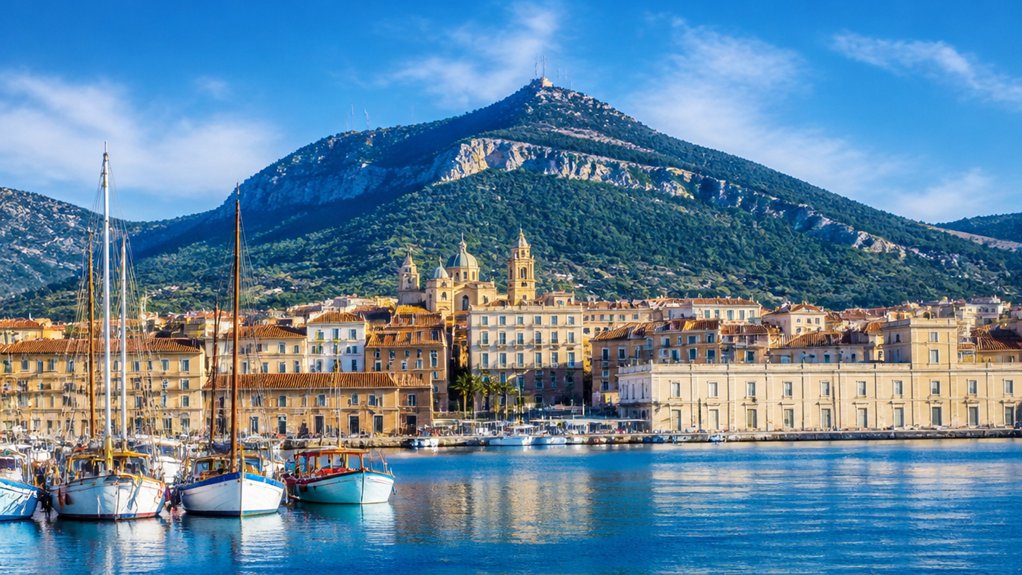
Smaller ships berth at Toulon’s ferry port, a short walk from the old town centre, but larger ships use the cruise terminal at La Seyne-sur-Mer across the bay, so check which one your ship uses before you plan your day. The port is a working naval harbour with container ships and ferries—functional but not photogenic.
Your immediate choice is transport versus walking. From La Seyne, walking takes longer than your schedule allows and taxis are expensive, though shuttle boats and buses cross to Toulon, and the local bus network requires advance ticket booking to avoid queuing at unfamiliar machines. Sort this out in your first fifteen minutes at the terminal.
The industrial area directly around the port isn’t worth your time. Real Toulon sits across the harbour in the Vieille Ville, where you’ll find actual French life instead of cruise-port versions of things. Peak cruise days mean packed seafront restaurants where you’ll compete with thousands of other passengers for a table, so eating at off-peak hours makes a real difference. Consider booking guided excursions and tours in advance to maximize your time exploring the city’s authentic attractions.
The straightforward approach: move away from the terminal quickly, secure your transport, and spend your morning in the medieval streets. You’ll have access to a functioning French city rather than a carefully curated perimeter.
Getting From the Port To Town
The taxi queue outside the terminal moves with glacial slowness. Booking a private transfer online before you arrive costs less than a metered taxi and removes the uncertainty of waiting around. This is the option that actually saves you time.
The local bus network functions adequately if you can navigate an unfamiliar ticket machine under pressure. It’s cheap and reaches the old town, but most cruise passengers lack the patience for working out which route goes where. A shared shuttle booked in advance offers better value than taxis without the logistical friction.
If you’re at La Seyne, walking round to Toulon wastes your limited shore time. The route crosses an industrial area with nothing worth seeing, and the shuttle boat across the harbour is far quicker. You’d arrive exhausted before properly exploring anything.
Sort out your transport within your first ten minutes ashore. Once you’re moving towards the old town, the day’s main problem is solved. The old town itself is genuinely walkable, and arriving when restaurants transition from breakfast to lunch service means you’ll explore medieval streets without fighting crowds of other cruise passengers arriving hours later.
The Must-Do Experience: Start Here
The old town’s main square empties early if you arrive before ten o’clock, which matters because the cafés along Rue d’Alger operate without the chaos that builds later. Coffee costs normal prices at Place d’Armes rather than the inflated rates you’ll pay near the water, and you’ll have space to sit without queuing. This early window is practical rather than romantic—you simply get more done with fewer people around.
The medieval streets reward aimless walking more than any specific route would. The Cathedral of Sainte-Marie-Majeure occupies the centre of the old town, and spending ten minutes inside tells you something about local history without requiring you to process elaborate architecture. The value lies in noticing why this neighbourhood was defensible: the narrow passages, the building density, the way sight lines work.
Book an independent Arsenal tour before you arrive at the port rather than joining the ship excursions that move slowly and cost more for the same experience. Popular tours fill up quickly during cruise season, so confirming your spot in advance means you won’t find yourself turned away. You’ll also have a flexible schedule instead of being locked to a ship departure time.
Eat lunch one street back from the harbour where locals actually sit down to eat. The restaurants directly on the water charge more for identical food, and the presence of people ordering in the local language is your most reliable quality indicator. By early afternoon you’ve accomplished the main things and can either continue uphill into the quieter residential streets or head back to your ship without rushing.
History Culture and the Top Sights
Toulon’s history sits uncomfortably between grandeur and hardship. The city was heavily bombed in World War II, which explains why you won’t find the postcard-perfect medieval core you might expect from a French port town. What remains tells a clearer story than prettier alternatives because the gaps in the architecture make you actually think about what happened here.
The Arsenal Maritime is the real draw if you want to understand how this city became a naval power. The museum sits within the working dockyard itself, which means you’re seeing where things actually happened rather than a sanitised recreation. You’ll need to book an independent guided tour well before your ship arrives—the popular slots with knowledgeable local guides fill rapidly during cruise season and offer considerably better value than the ship-run versions that shuffle groups through at a frustrating pace.
A good guide will explain the strategic importance without drowning you in dates, and you’ll grasp why Toulon mattered to France in ways that matter to understanding the Mediterranean. The Cathedral of Sainte-Marie-Majeure is worth a look if you’re in the old town anyway, though it’s more functional than ornate. Spend a brief period inside rather than queuing for hours at some grander cathedral elsewhere—you’ll absorb the essentials and move on productively.
Walk the narrow streets without a specific destination. Notice how the layout was designed for defence rather than commerce, and how modern Toulon grew around rather than replacing this medieval skeleton. That observation alone makes the history feel real instead of abstract.
Beyond the Centre: Day Trips and Alternatives
Most cruise passengers treat Toulon as a box to tick rather than a place to actually spend time, which means the best experiences happen when you ignore the obvious circuit entirely. The surrounding Provence countryside and smaller coastal towns offer far more character than anything within walking distance of the docks, but you’ll need to be strategic about logistics since your ship window is fixed.
The Lavender Route towns of the Luberon Valley—Lourmarin and Ménerbes among them—are within reasonable reach if you book an independent guided tour in advance. These villages have retained their authenticity precisely because cruise groups rarely venture beyond the harbour, and a local guide who speaks English will navigate you past the tourist-trap restaurants and into places where locals actually eat. Booking independently ahead of time saves you money and gets you considerably better access than the slow-moving ship excursions that move through regions with large groups.
If mountains appeal more than countryside, the Îles d’Hyères—a small archipelago visible from the coast—offers boat day trips that feel genuinely removed from port tourism. The water is cleaner than the harbour, the food prices less offensive, and the afternoon light across the islands genuinely worth your time. These trips fill quickly during cruise season, so arrange your spot online before you arrive rather than hoping for availability on the day.
The reality is that Toulon’s immediate surroundings matter more than Toulon itself. Plan accordingly.
Shore Excursion or Going It Alone
The ship’s excursion desk will sell you their curated tours as though nothing else exists, and you’ll pay a substantial premium for the convenience of moving through Toulon in an organised group. Going independently works if you can manage basic navigation and don’t mind arranging your own transport—you’ll spend considerably less and set your own pace through the city. The harbour is compact enough that most attractions are reachable without major difficulty, though summer heat makes spending time in the centre genuinely uncomfortable rather than pleasant.
If you’re planning to visit the Luberon villages or take island day trips, you’ll need to book these independently well ahead of your arrival. Popular guided tours from Toulon sell out quickly during cruise season, and attempting these journeys alone without local knowledge wastes the limited time your port day allows. The reality of independent travel is that it requires more upfront planning but costs less and gives you actual control over what you see.
Ship excursions offer convenience and minimal risk but charge you for both. Booking a private guide through a local operator before you arrive solves the real problem—you secure your spot when availability exists, avoid the cruise line’s markup, and gain access to someone who knows which restaurants won’t overcharge tourists. The difference between an adequate afternoon and one you’ll think about afterwards often comes down to whether you took control of these details yourself.
Before You Leave the Ship: Toulon Practicalities
Toulon’s old town gets swamped with cruise passengers between mid-morning and early afternoon, turning the narrow streets into a bottleneck where every café near the waterfront charges premium rates. Move inland past the obvious harbour loop and you’ll find where locals actually eat—proper restaurants, working markets, and ordinary cafés tucked into the neighbourhoods north of Cours Lafayette. The cruise desk skips these places because they’re not on any tour route and don’t generate commissions.
The Naval Museum near the harbour warrants a visit if naval history interests you, but timing matters because queues build quickly and a rushed visit becomes pointless. If you want a guided experience without paying the ship’s markup, book a private guide through a local operator before you arrive—they’ll know which museums justify the detour and which waste your limited time. They’ll also steer you toward lunch spots where you won’t feel overcharged.
The beach at Mourillon is popular with locals and genuinely pleasant, and it’s only a short bus ride or a half-hour coastal walk from the centre, so it fits into a port day if you want a swim. Just allow for the trip back to your ship, especially if you’re berthed at La Seyne.
Your Port Day: A Sample Itinerary
Toulon works better if you treat it as a functioning town rather than a beach destination. The old quarter, the markets, and the residential streets where locals actually live are what justify your time here.
Get into the old town the moment you leave the ship, before other cruise passengers clog the narrow streets. The covered market near Place Puget is where you’ll see how the port actually operates—fishmongers calling out prices, fruit vendors arranging displays, the ordinary rhythm of a Mediterranean market. Sit at one of the cafés and watch people buying groceries instead of watching other tourists.
By mid-morning, walk inland toward Cours Lafayette and the streets beyond. This is where restaurant prices drop and the food improves because you’re eating where local workers eat lunch. Pick a place that’s busy with people in work clothes, order without checking your phone, and expect to pay less than half what the harbour-front places charge.
Your afternoon depends on what actually interests you. If naval history appeals, book a private local guide before you arrive rather than joining the ship’s organised tour—they’ll tell you honestly whether the collections are worth your time and can navigate around the queues. If military museums sound like wasted hours, spend the afternoon in the neighbourhood streets north of the old town instead, where you’ll find ordinary cafés, used bookshops, and the kind of everyday French life that cruise passengers typically miss.
Book your Toulon day
Tours for this port, compare before you book
Getting around in port
✈️ Before you sail: eSIM, insurance, luggage, flight delays
Ships In Toulon
Upcoming calls from our sailings tracker, updated regularly.
Marella Explorer
Marella CruisesWed 14 Oct
⚓ 09:00–18:00
Arvia
P&O CruisesSat 17 Oct
Marella Explorer
Marella CruisesWed 28 Oct
⚓ 09:00–18:00
Costa Fascinosa
Costa CruisesSat 27 Mar
⚓ 08:00–17:00
Costa Fascinosa
Costa CruisesSat 3 Apr
⚓ 08:00–17:00
Marella Discovery
Marella CruisesSat 3 Apr
⚓ 09:00–18:00