Arrecife Cruise Port Guide
Overlooked by many cruise passengers, Arrecife hides volcanic wonders and authentic experiences—but most visitors never discover them.
In this guide
Try one free personalised day plan — built around your ship’s actual arrival and departure times. Then get every port on your cruise done the same way from £7.99 (about $10).
Cruise Port Overview: What to Expect
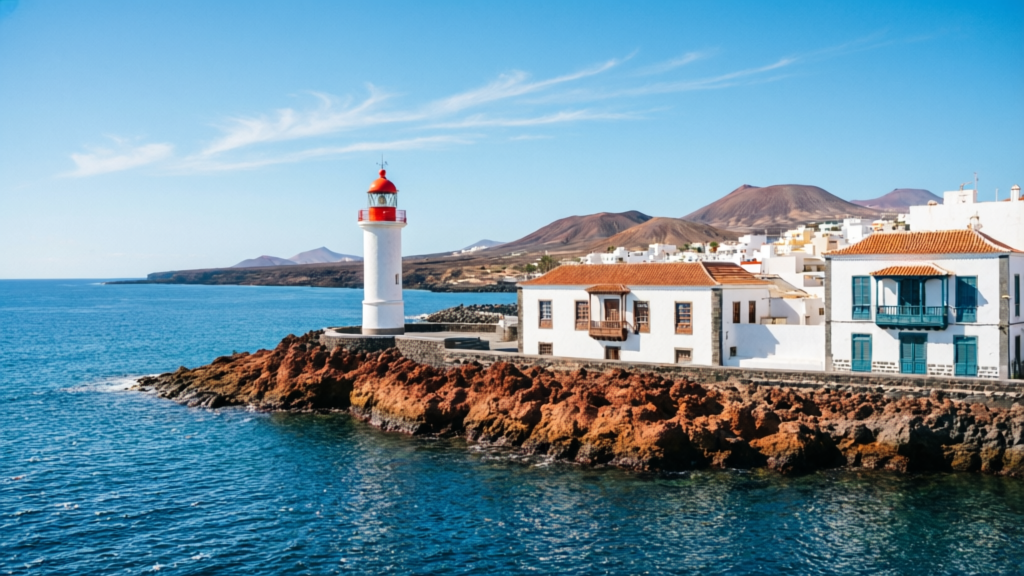
Arrecife’s cruise port operates on a modest scale, which means you won’t jostle through crowds but also won’t find entertainment laid on at the terminal. Larger ships usually berth at Los Mármoles, a few kilometres from the old town, while smaller ships can tie up closer in, so leaving the ship doesn’t deposit you directly into tourist traps—you’ll need to take the shuttle, walk the waterfront path or arrange transport to reach anything of substance. This arrangement either suits you or doesn’t, depending on whether you prefer convenience or authenticity.
The harbour itself is purely functional. You’ll see working fishing boats, active commercial operations, and port infrastructure designed for actual use rather than aesthetic appeal. This isn’t a port constructed primarily for cruise passengers, so there’s no sprawling retail zone waiting to extract your spending money. That absence of development means local shopkeepers haven’t yet inflated their prices to catch ship-day traffic.
Walking to the centre takes a reasonable amount of time at a normal pace. Taxis are available near the terminal if you’d rather not walk or need to cover ground quickly. Some passengers opt to hire cars or scooters for exploring beyond the immediate area, which makes sense if you want to venture into Lanzarote’s interior or reach the quieter stretches of coastline. Consider booking guided shore excursions to maximize your time and gain deeper insight into the region’s attractions.
Arrecife doesn’t present itself to you—you have to actually engage with it. That’s the reason it remains genuinely local rather than a commercialised recreation of a Spanish port town. What you take from your time here depends entirely on what you’re willing to seek out.
Getting From the Port to Town
The walk from terminal to town centre is entirely manageable, but only if you’re prepared for a fairly exposed seafront boulevard with minimal shade. Most passengers either walk the route or catch a taxi, and there’s no shame in choosing the latter if you’re travelling with children or arrive when the sun is particularly fierce.
If you’re walking, head left from the terminal building and follow the waterfront promenade. You’ll pass the marina and working harbour, which is genuinely interesting to observe, though the route itself is utterly functional rather than charming. The pedestrian path is clear and straightforward, and you’ll reach the old town’s edge after a reasonable walk.
Taxis queue near the port exit and respond quickly during cruise days. The journey to the centre is brief, and fares remain reasonable because this isn’t a port where drivers expect to overcharge arriving tourists. If you’re planning to explore beyond the immediate town—visiting the volcanic interior or heading to coastal villages—hiring a car or scooter offers considerably more freedom than relying on taxis or the limited public transport options.
The key is deciding what you want from your time ashore before you step off the ship. That choice determines whether you walk, take a taxi, or arrange independent transport. Either way, you’re simply getting yourself from A to B on your own terms, without battling shuttle queues or navigating port infrastructure designed primarily for moving cruise passengers.
The Must-Do Experience: Start Here
Most cruise passengers squander their morning in Arrecife’s old town, missing what actually distinguishes the island: the volcanic landscape that defines it. The beaches and harbour offer a pleasant walk if that’s what you want, but they won’t explain why Lanzarote feels fundamentally different from other Mediterranean ports. The interior—with its volcanic slopes and crater lakes—is where the island’s character becomes clear, and you can’t grasp it from hints glimpsed while strolling the seafront.
Book an independent tour covering Timanfaya volcanic national park or the Famara cliffs before you arrive. Ship excursions exist, but independent operators provide better value, smaller groups, and actual time to look at things rather than moving through a set schedule. Tours fill quickly during cruise season, so booking online beforehand secures your spot and gives you a better rate than negotiating at the port.
If volcanic terrain doesn’t appeal, the Castillo de San José fortress sits overlooking the Puerto Naos harbour and houses a modern art museum, with views across the working port and out to sea. The fort itself is modest, but the visit is genuinely worthwhile. Either approach—a morning tour inland or staying close to town at the fortress—builds an actual day ashore instead of wandering the waterfront wondering why you’re there.
🗺️ Tours & Experiences at This Port
Skip the ship’s overpriced excursions — browse top-rated independent tours trusted by thousands of cruise passengers.
History Culture and the Top Sights
Arrecife’s history is fundamentally a story of destruction and rebuilding. Pirates razed the town repeatedly, and each reconstruction made it smaller, so what stands today is mostly twentieth-century work without the archaeological layers you’d find in older Mediterranean ports. This matters because wandering the streets hoping to find something ancient will leave you disappointed.
The Iglesia de San Ginés occupies the town centre as a whitewashed parish church that’s been rebuilt so many times it barely remembers its original form. The interior is sparse and ordinary, but the plaza around it is where locals actually spend time rather than tourists, which is the real reason to visit. The church museum holds occasional artefacts if you’re interested in local material culture, though opening times shift with seasons.
The Castro Library hosts rotating exhibitions about island life and Lanzarote’s volcanic past. What’s on display during your visit is genuinely unpredictable, and the exhibitions draw far fewer people than the fortress while offering actual information about how communities adapted to an island shaped by eruptions. You’re better off checking what’s scheduled before you arrive rather than showing up hoping something will be open.
For real historical understanding, hire an independent tour guide before you get there—the reliable ones book out during cruise season. A guide who knows the island’s geology and settlement patterns can explain why people chose to live here by pointing at the landscape itself, turning volcanic rock from scenic geology into a comprehensible narrative about survival. This context transforms how you see the island rather than leaving you looking at pretty stones.
Beyond the Centre: Day Trips and Alternatives
Most cruise passengers stay in the port area, which means the island is relatively quiet once you venture beyond the immediate waterfront. The ship excursions offered here charge considerably more than independent alternatives for what amounts to a standard volcanic landscape tour, and you’ll be sharing a bus with dozens of other passengers.
Booking a private or small-group tour with a local operator before you arrive gives you the best chance of getting what you want. The reliable guides fill up during cruise season, so arranging something from home avoids paying premium rates or settling for whatever tours remain available when you dock. Geological tours of Timanfaya or wine region visits inland fill fastest and actually justify their cost, particularly if you split expenses across a small group.
If you’d rather explore independently, hire a car and drive north toward Famara or west toward Yaiza. The roads are straightforward and the landscape shifts dramatically once you’re away from the coast, revealing far more about why Lanzarote matters than any waterfront shopping street can explain. Restaurant prices inland won’t produce the sticker shock you’ll encounter eating near the docks.
The practical reality is this: book a decent independent tour well before your arrival and you’ll have a genuinely worthwhile day. Ignore this and you’ll either overpay the cruise line substantially or spend your hours trying to make sense of terrain that nobody’s bothered to explain.
Shore Excursion or Going It Alone
The ship excursion desk will tell you that independent exploration is risky; what they mean is that it cuts into their commission. The truth is far simpler: you’ll spend considerably less money, see more of actual Lanzarote, and avoid spending your entire port day on a coach with sixty other cruise passengers.
The cruise line’s standard geological tour costs substantially more than booking the same experience directly with a local operator before you arrive. You’re not paying for better access or superior knowledge—you’re paying the middleman’s markup. The guides themselves are often identical; the only difference is the profit margin.
Tours filling the fastest are those with genuine local expertise: small-group volcanic landscape walks, wine tastings in family-run bodegas, or visits to working farms inland where someone will actually answer your questions rather than point vaguely at the horizon. These operators know their subject because they live it, and that shows in the quality of what they offer compared to scripted cruise desk alternatives.
The best independent operators arrange collection from the port itself, so you’re not scrambling to find transport or negotiating with taxi drivers. This matters enormously when you’re working within a tight timeframe. Booking online a few weeks before departure secures your spot with reputable guides who fill quickly during cruise season.
You’ll pay a fraction of the price and reclaim several hours that the ship excursion would have consumed sitting in traffic. The practical choice isn’t between the cruise desk and chaos. It’s between paying premium rates for a standardised experience or arranging something genuinely worthwhile from home, which requires five minutes online rather than accepting whatever remains available when you dock.
🗺️ Tours & Experiences at This Port
Skip the ship’s overpriced excursions — browse top-rated independent tours trusted by thousands of cruise passengers.
Before You Leave the Ship: Arrecife Practicalities
The terminal sits far enough from anything worthwhile that getting into town requires transport—there’s no realistic alternative. The walk into Arrecife’s centre crosses industrial roads for longer than you’d want to spend on a port day, and you’ll regret choosing it over actually going somewhere interesting.
The port runs with genuine efficiency, which means ships dock and clear without the crushing queues you’d face at bigger Mediterranean terminals. This efficiency works against you once you’re inside though, because the terminal itself has nothing to justify staying: the coffee is forgettable, the shopping is thin, and lingering accomplishes nothing.
Currency matters more than you’d think. The Euro is what works here, yet people regularly arrive unprepared and burn port time hunting down ATMs or queuing at exchange desks. Sort your cash before you step off the ship.
Booking transport ahead is the single most practical thing you can do. A reliable driver waiting at the terminal saves you from negotiating with taxi touts and means someone actually knows where cruise passengers need to go instead of taking the scenic route.
🗺️ Tours & Experiences at This Port
Skip the ship’s overpriced excursions — browse top-rated independent tours trusted by thousands of cruise passengers.
Weather changes without warning regardless of what forecasts promise. Take a light layer with you even when conditions look settled, and wear proper shoes instead of flip-flops because the volcanic ground around the island’s worthwhile spots genuinely tears through casual footwear.
Your Port Day: A Sample Itinerary
Arrecife functions as a port facility rather than a destination worth your time, so the practical approach is to leave immediately and head inland to the volcanic landscape. Arrange your transport before arriving—this means booking weeks ahead rather than hoping something works out at the terminal.
Drive straight to Timanfaya National Park, where the volcanic terrain represents the only scenery that justifies a port day on this island. Inside the park you can’t explore freely on foot or by car, so the core volcanic area is seen from the park’s own coach tour, though booking with an operator outside the cruise line gives you better flexibility and lets you move at your own pace without group constraints.
Find lunch at a local restaurant somewhere away from the park’s tourist restaurants once you’ve spent your morning there. The food costs more than inland prices, but eating something straightforward and regional beats searching for familiar chains.
Spend your afternoon at either the Jameos del Agua lava caves or wandering Arrecife‘s waterfront if time permits, though the waterfront offers little beyond adequate coffee and adequate views. Build in buffer time before heading back to the terminal so you’re not rushing—cruise ships operate on fixed schedules, and the stress of cutting it close costs more than whatever you might manage to squeeze in during the final minutes.
🗺️ Tours & Experiences at This Port
Skip the ship’s overpriced excursions — browse top-rated independent tours trusted by thousands of cruise passengers.
Book your Arrecife day
Tours for this port, compare before you book
Getting around in port
✈️ Before you sail: eSIM, insurance, luggage, flight delays
Ships In Arrecife
Upcoming calls from our sailings tracker, updated regularly.
Iona
P&O CruisesSat 10 Oct
ms Nieuw Statendam
Holland AmericaSun 11 Oct
⚓ 08:00–17:00
MSC Virtuosa
MSC CruisesSun 11 Oct
⚓ 07:00–14:00
Azura
P&O CruisesThu 15 Oct
⚓ 08:00–16:30
Norwegian Star
Norwegian Cruise LineFri 23 Oct
⚓ 07:00–17:00
Britannia
P&O CruisesSat 24 Oct
⚓ 08:00–18:00