Sydney Cruise Port Guide
Just discovered how cruise passengers can dodge tourist traps and save hundreds exploring Sydney independently—but there’s one critical mistake.
In this guide
Try one free personalised day plan — built around your ship’s actual arrival and departure times. Then get every port on your cruise done the same way from £7.99 (about $10).
Cruise Port Overview: What to Expect
Sydney’s main cruise terminal, the Overseas Passenger Terminal, isn’t tucked away in a dedicated port zone—it’s plonked right on Circular Quay, which means you’re genuinely in the middle of Sydney rather than isolated somewhere convenient. Ships small enough to fit under the Harbour Bridge sometimes use the White Bay terminal instead, a short taxi ride west of the centre. This has real advantages and real drawbacks that you need to understand before you arrive.
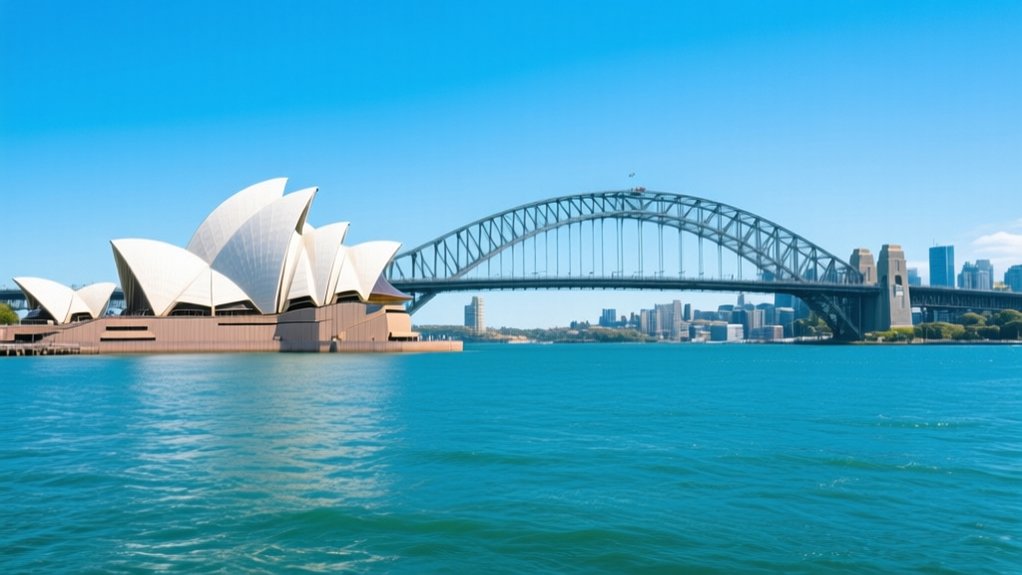
The terminal moves people through efficiently, so you won’t linger unnecessarily, but space gets tight when several ships dock at once and queues back up. Customs and immigration staff work steadily, though you’ll face delays if you’re among the early disembarkers pushing to get ashore. The actual payoff comes when you exit straight onto one of Australia’s most recognisable public spaces, with the Opera House and Harbour Bridge visible immediately—and that’s genuinely worth something.
Circular Quay itself is a working harbour where ferries, water taxis, tour boats, and cruise passengers all compete for the same space. The atmosphere feels chaotic rather than controlled, which is the honest reality of sharing a public working space with thousands of tourists daily. This is exactly why it’s worth experiencing, but you should accept upfront that you’re not getting a calm, purpose-built cruise experience.
The shops and cafés clustered near the terminal are adequate and expensive—that’s the standard near any waterfront. Anything worth your time lies beyond the immediate tourist crush, and fortunately public transport works well and costs reasonably. You can book guided excursions at ports to explore Sydney’s attractions with expert insight and structured itineraries. Most worthwhile activities are reachable on foot or via a short journey, so the location itself is your greatest asset and your greatest source of friction simultaneously.
Getting From the Port to Town
The ferry system outperforms ship excursions on every practical measure: it costs less, operates more frequently, and gives you actual control over your day. You’re already positioned at Circular Quay, which functions as Sydney’s transport spine, so using it like a resident makes far more sense than boarding a coach with fifty other passengers.
Most places worth your time are within walking distance from the terminal. The Opera House sits a reasonable walk away, the Royal Botanic Garden slightly further, and the Rocks—an older neighbourhood with actual character—requires no effort to reach. The ferry network extends to Taronga Zoo, Manly Beach, and Watsons Bay without complication, while light rail and buses connect you to inner-city areas where locals actually spend their time rather than where tour operators concentrate their groups.
Independent walking tours booked in advance beat ship excursions because established guides fill their spots quickly and you’ll work with someone genuinely engaged with the city rather than delivering rehearsed commentary to a large group. Neighbourhoods like Glebe and Newtown show you how people actually inhabit Sydney, and the cost bears no comparison to what cruise lines charge for equivalent experiences. You’re better served by leaving the terminal immediately and navigating by instinct—Sydney responds far more generously to genuine exploration than to following predetermined routes.
The Must-Do Experience: Start Here
The Opera House photograph you’ve seen repeatedly bears little resemblance to the actual building, which is why experiencing it in person matters more than you’d expect. Walking from Circular Quay toward the forecourt forces you through crowds, but the structure announces itself gradually as you move closer, and by the time you reach the broad steps, you understand why the city bothers with it at all. The interior requires a fee and moves fast; the exterior costs nothing and rewards close attention regardless.
Spend your time on the steps and forecourt, take your photographs, then clear out before cruise groups turn the space into a pen. The Royal Botanic Garden sits nearby and functions as genuine relief after the Opera House congestion. The harbour views from within the gardens actually surpass what you see from the foreshore, and you’ll notice you’re surrounded by people moving through the space for themselves rather than following a guide with a coloured umbrella.
🗺️ Tours & Experiences at This Port
Skip the ship’s overpriced excursions — browse top-rated independent tours trusted by thousands of cruise passengers.
History Culture and the Top Sights
Sydney’s museums are genuinely good, which means they’re also genuinely crowded, and your available time ashore needs careful planning. The Art Gallery of New South Wales and the Australian Museum both sit within walking distance of Circular Quay, but treating them as quick visits will waste your time and leave you queuing instead of looking.
The smarter approach is to choose one museum properly rather than rush through both poorly. The Art Gallery rewards an hour of real attention far more than a hurried circuit, and you’ll notice the collection tilts heavily toward Australian artists—something worth understanding before you arrive. The Australian Museum focuses on natural history and Indigenous culture, and if First Nations perspectives matter to you, book a guided tour in advance through independent providers rather than attempting the galleries solo. These tours sell out quickly for cruise passengers and offer far better value than ship-organised options.
If museums don’t appeal, the Hyde Park area provides calmer history than the foreshore. The sandstone buildings surrounding the park—St. Mary’s Cathedral, the Queen Victoria Building—reward wandering without requiring entry fees or timed tickets. The history here is genuinely layered rather than superficial, and you’ll see fewer cruise passengers simply because there’s no obvious reason to be there.
The key realisation is this: Sydney’s cultural attractions are real rather than theatrical, which means they require genuine engagement rather than passive consumption. Choose your focus, book tours ahead if they matter, and avoid the temptation to see everything.
Beyond the Centre: Day Trips and Alternatives
The Blue Mountains and Hunter Valley both work as day trips from Sydney, but the cruise line’s packaged tours cost substantially more than arranging your own travel. You’ll spend half your time on a coach seat rather than actually experiencing either location, which makes paying premium prices difficult to justify.
Sydney’s genuinely worthwhile day trips demand either a rental car or confidence using public transport—neither comes naturally to many cruise passengers. The economics favour independent travel: you’ll pay a fraction of what the cruise line charges, control your own schedule, and avoid being herded through experiences designed for large groups.
The Blue Mountains require a full day to make the journey worthwhile. Book an independent tour operator well before you sail, as popular options fill rapidly with cruise passengers and online booking secures your spot far better than hoping for availability when you arrive at port. A proper allocation of time lets you walk the trails rather than rushing through a scenic lookout and gift shop before returning to the ship.
Hunter Valley wineries need a full day, since the drive is just over two hours each way, so they only suit a long port call. Independent small-group tours again sell out weeks in advance and deliver substantially better value than cruise-line alternatives. You’ll travel in smaller numbers, spend actual time at worthwhile properties, and taste wine properly rather than endure a rushed commercial experience.
The reality is straightforward: independent travel requires booking before you leave home. Attempting to arrange things at the port leaves you either paying inflated prices or finding all decent options already claimed by earlier arrivals.
Shore Excursion or Going It Alone
The cruise desk will mark up shore excursions roughly triple what you’d pay booking independently, relying on most passengers not bothering to check alternatives. It’s not deception—it’s simply how cruise lines operate. They negotiate volume discounts with tour operators, layer on their margins, and pocket the difference.
What they won’t tell you is that decent independent operators fill their small-group slots weeks before your ship arrives. This isn’t something you can fix at the port; you need to handle it before you’ve even booked your cabin. Popular tours to the Blue Mountains, Hunter Valley, and coastal walks sell out entirely among cruise passengers, leaving latecomers with either the cruise line’s expensive package or nothing.
Booking ahead independently gives you practical advantages beyond just saving money. You’ll get a departure time that actually aligns with your ship’s schedule instead of taking whatever slot remains. You’ll travel with a smaller group of people genuinely interested in the activity rather than a coachload of those who couldn’t get their preferred cruise excursion.
The reality is straightforward: yes, the cruise desk is convenient. But that convenience costs you substantially here. Spend twenty minutes researching and booking an independent tour operator before you sail, and your port day will work better—and your wallet will thank you.
🗺️ Tours & Experiences at This Port
Skip the ship’s overpriced excursions — browse top-rated independent tours trusted by thousands of cruise passengers.
The Mistakes Cruise Passengers Make in Sydney
The cruise desk sells guided tours at three times what you’d pay independently, yet somehow omits mentioning that the Opera House becomes significantly less crowded if you arrive before the ship empties.
Sydney Harbour follows predictable patterns that most cruise passengers never learn. Office workers dominate the morning until mid-morning clears them out, lunch crowds swell around noon, and by mid-afternoon locals outnumber tourists considerably. The Opera House and Circular Quay don’t change, but what you actually experience there depends entirely on when you show up. Early arrival means you see the building rather than photograph strangers’ backs.
The practical benefits go beyond comfort. Independent walking tours from Circular Quay cost substantially less than cruise line versions and operate with groups of eight to twelve instead of forty-five. These operators know where to find proper coffee instead of tourist-marked-up espresso, which angles give you clear sightlines, and which side streets let you move between spots without standing in queues.
Book your independent tour before you sail, not after you dock. Popular operators fill their early slots weeks in advance, especially those covering the Rocks, coastal walks toward Bondi, or specialist areas like Aboriginal history. Arriving at port hoping for a last-minute booking means hoping someone cancels, which amounts to planning to fail.
How your port day actually unfolds comes down to what you arrange before leaving home, not decisions made once you’re ashore.
🗺️ Tours & Experiences at This Port
Skip the ship’s overpriced excursions — browse top-rated independent tours trusted by thousands of cruise passengers.
Your Port Day: A Sample Itinerary
Most cruise passengers waste their best hours standing in a queue at the Opera House when they could be halfway through a coastal walk toward Bondi with a proper coffee in hand.
Start your morning at Circular Quay before 7am. Book an independent walking tour the evening before—the early slots fill quickly and operators limit groups to twelve people instead of the forty-five you’d get through the ship. Spend two hours exploring the Rocks with someone who actually knows which laneways avoid the crush. These guides show you where locals eat breakfast, not where cruise passengers queue for overpriced meals.
By mid-morning, head inland toward the Sydney Tower or the Royal Botanic Garden depending on your energy level. The garden is genuinely free and considerably less crowded than Circular Quay once the main tourist wave moves through. If you’ve booked a coastal walk tour starting around midday, use this gap to rest and eat something substantial away from the tourist strip.
Afternoon is your window for the Opera House itself. Arrive after 2pm when most organised tours have cleared through. The building photographs better in afternoon light anyway, and you’ll actually see the architecture rather than navigate around tour groups. If the interior appeals to you, book a performance rather than a backstage tour—you get the space to yourself rather than shuffling through corridors with thirty others.
The principle here is straightforward: reverse what everyone else does and you’ll have a genuinely good day.
Planning to go beyond Sydney? You can compare options at what is on offer in Sydney before you board.
🗺️ Tours & Experiences at This Port
Skip the ship’s overpriced excursions — browse top-rated independent tours trusted by thousands of cruise passengers.
Book your Sydney day
Tours for this port, compare before you book
Getting around in port
✈️ Before you sail: eSIM, insurance, luggage, flight delays
Ships In Sydney
Upcoming calls from our sailings tracker, updated regularly.
Carnival Adventure
CarnivalThu 8 Oct
⚓ 06:30–15:30
Carnival Splendor
CarnivalFri 9 Oct
⚓ 06:30–15:30
Carnival Splendor
CarnivalMon 12 Oct
⚓ 06:30–15:30
Carnival Adventure
CarnivalMon 12 Oct
⚓ 06:30–16:30
Carnival Adventure
CarnivalFri 16 Oct
⚓ 06:30–15:30
Celebrity Edge
Celebrity CruisesSat 17 Oct
⚓ 06:30–16:30