Tauranga Cruise Port Guide
Cruise into Tauranga and discover hidden local gems, scenic views, and insider tips that beat typical tourist traps—but where exactly should you go first?
In this guide
Try one free personalised day plan — built around your ship’s actual arrival and departure times. Then get every port on your cruise done the same way from £7.99 (about $10).
Cruise Port Overview: What To Expect
Ships berth at Mount Maunganui, close enough to walk into the Mount’s town centre and beach without arranging transport, which is genuinely convenient compared to most ports in New Zealand. Tauranga’s own city centre is across the harbour bridge. The waterfront facilities are functional and modern, but the actual character of Tauranga exists beyond the terminal gates rather than inside the port itself.
You’re arriving at a functioning harbour town, not a constructed tourist space. The shops and cafés immediately around the terminal cater to cruise passengers and charge accordingly—a coffee or sandwich will cost more than it should for what you get. Walking into town takes you to independent cafés and restaurants where the food is better and the prices reflect actual value rather than captive-market rates.
The town layout follows a straightforward grid that runs along the waterfront and inland, making it genuinely difficult to get lost even without navigation tools. Main shopping streets, dining options, beaches and local attractions are all within walking range, and nothing requires complicated logistics to reach. If you prefer not to walk, the local bus network is affordable and frequent enough that getting around is never an issue.
Tauranga tends toward warm weather year-round, though the summer months bring heavy cruise ship traffic and crowding at popular spots. If you’re planning to book any independent activities or tours, advance booking during peak season is the practical choice rather than hoping to find availability on the day.
Getting From the Port To Town
The terminal sits close enough to town that walking takes less effort than queuing for a shuttle bus. Most cruise passengers pay for transport they don’t need when their legs work fine, so consider whether you’re actually saving time or just following the crowd. Head straight out and follow the waterfront promenade into town—the route is obvious and flat, and you’ll watch working harbour traffic instead of staring out a coach window.
The local bus network runs regularly from stops near the terminal and costs very little. Taxis queue at the terminal rank if you’re carrying heavy bags or simply don’t want to walk. Once you’re in the town centre, which is compact, walking remains your most practical option anyway.
Skip the organised coach tours your ship’s excursions desk will push on you—they cost considerably more than booking independent operators directly online, and you’ll typically get better value and smaller groups. The real advantage of booking before you arrive is avoiding the disappointment of finding everything full by mid-morning during peak season. Popular activities fill quickly, so planning ahead actually gives you access to things that won’t be available if you wait until after disembarkation. Keep a local eSIM data plan on your phone to stay connected while exploring without incurring expensive roaming charges.
The Must-Do Experience: Start Here
Tauranga works because the town centre itself is the point—you won’t need coaches or manufactured activities designed to fill a few hours. The waterfront is genuinely where things happen, and wandering it slowly on foot reveals far more than any structured tour.
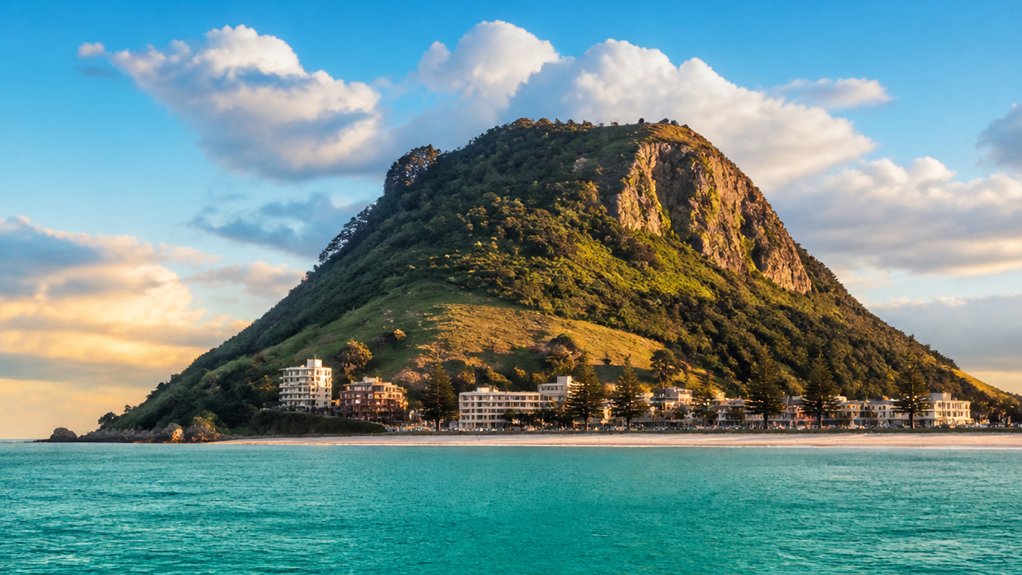
The Mount dominates your view from anywhere near the water. Climbing it takes a reasonable effort but the outlook across the bay and back to the port makes physical sense of why it matters locally. If climbing isn’t feasible, the base still gives you enough perspective to understand the place.
Midday, move into the waterfront precinct where cafés and bars charge roughly what they’d cost elsewhere in town rather than the inflated rates near the cruise terminal. Eating at a table facing the harbour feels like an actual destination rather than somewhere designed for passing foot traffic. The quality and pricing make this the smarter choice for lunch.
The Bay of Plenty genuinely has marine life, so booking a scenic cruise or dolphin-watching tour directly with independent operators makes sense. These outfits fill their boats before the cruise terminal’s packaged tours sell out and typically charge half what the ship excursions cost. Finding them online in advance takes minutes and guarantees your space.
History Culture and the Top Sights
Tauranga’s colonial past exists matter-of-factly alongside its present. The town doesn’t rely on museums to tell its story—what historical sites do exist carry genuine weight precisely because they’re sparse. Architecture and location reveal the past more effectively than interpretive panels ever could.
The Elms is a mission house completed in the 1840s that functions as a legitimate record of early European settlement. Walking through its rooms and grounds shows you why this specific harbour was worth settling permanently, and it’s a short walk from Tauranga’s city waterfront, across the harbour bridge from the berth. The building itself explains how people lived rather than filtering that information through a curator’s lens.
St George’s Church stands at Gate Pā, on Cameron Road south of the city centre, and was built as a memorial to the battle fought there. The original building was lost to fire and rebuilt, so it isn’t largely unchanged, but the battle site beside it still tells you concrete things about daily life and conflict in that era. You’re looking at actual evidence rather than someone’s interpretation of what that evidence means.
The Tauranga Domain provides open space if you need respite from waterfront congestion. It’s a genuinely local space rather than a choreographed attraction, so you’ll see how residents actually use the town.
Contact local historical guides directly before you arrive rather than booking through your ship. Independent operators provide context and specific stories that terminal excursions bypass, and the cost is considerably lower. Guides who know their material fill spots quickly when cruise ships dock, so securing your place online guarantees both availability and better rates.
Beyond the Centre: Day Trips and Alternatives
Most cruise passengers stay at the waterfront, which leaves the genuinely worthwhile parts of the Bay of Plenty relatively uncrowded. Rotorua sits inland and offers geothermal activity that Tauranga cannot—mud pools, hot springs, and Māori cultural sites that operate as actual places rather than tour group theatres.
The drive passes through farmland and native forest, showing you what the North Island actually comprises beyond the port. You’re swapping harbour views for landscapes most tourists skip entirely, and that trade-off matters because it changes what you actually see.
Booking an independent Rotorua tour online before arrival costs less than the ship’s version, delivers smaller groups, and means guides focus on geothermal geology and Māori history rather than gift shop rotations. Popular operators book solid when cruise ships dock, so online booking secures both spots and better rates than terminal negotiating yields. This approach gives you control over your schedule instead of watching the clock for a ship departure.
Staying near Tauranga, the Athenree Gorge walk delivers forest without the Domain’s foot traffic. The track cuts through native bush and stream crossings—it’s local and costs nothing. Harbour kayaking offers a water-level perspective on the coastline that land-based cafés and shops never quite provide.
Shore Excursion or Going It Alone
The ship excursion desk charges substantially more than independent operators for the same activities, and their itineraries move at the pace of the slowest person in your group rather than according to what actually interests you. If your guide encounters something worth spending time on, the schedule won’t adjust—you’ll move on regardless. The real cost isn’t just money but the hours lost standing in queues for tours that may not have availability anyway.
Booking your own activities ahead works better than showing up at the terminal hoping for spots. Download maps beforehand, identify what you want to see, and arrange your own transport before disembarking. This requires some planning, but it’s genuinely less stressful than joining the excursion queue and accepting whatever remains available.
Walking tours of the central business district run regularly and cost far less than the cruise desk’s equivalent offerings, with guides who actually work in the area rather than reciting prepared commentary. For anything requiring coordination—geothermal tours, kayaking, forest walks—book online before you sail. Popular operators get booked solid the moment cruise ships dock, so early reservations guarantee your spot and usually come with better rates than negotiating at the terminal.
A reasonable compromise is hiring a local driver through a ride-share app to take you around at your own pace. This costs more than public transport but substantially less than the cruise line’s guided tours, and you retain complete control over where you go and how long you stay. Professional drivers offer seamless transfers that let you explore independently while maintaining reliability. Either approach beats the excursion queue—your time and money deserve better use than subsidising their markup.
What Experienced Cruisers Know About Tauranga
Tauranga city centre is across the harbour bridge from the berth, so if you want to go there you’ll need to sort transport before leaving the ship, or you’ll lose precious hours figuring it out. The Mount’s own shops and beach are an easy walk, but plenty of cruise passengers assume the city’s main shops are too and learn otherwise at the dock entrance. Your best option depends on what you value: public transport is cheap but requires you to download the local app while ship WiFi still works, whereas ride-share costs more but removes the navigation puzzle entirely.
Check whether the central business district shuts early on Sundays and public holidays, because a full day of shopping or eating becomes pointless if everything closes mid-afternoon. If you’re booking geothermal tours or adventure sports, do it online before you sail—the popular operators genuinely fill up within hours of ships docking, and advance booking protects both your money and your time. Waiting until you’re at the terminal only guarantees disappointment and scrambling for inferior alternatives.
Tauranga businesses are organised for cruise passengers, which also means prices are pitched accordingly. Eating where locals eat rather than at waterfront restaurants designed for tourists gives you better food and better value without requiring effort to find. The neighbourhood just beyond the obvious tourist strip operates at normal prices and serves actual meals instead of tourist compromises.
Your Port Day: A Sample Itinerary
Most cruise passengers spend their first hour in Tauranga queuing at the terminal, so your actual day doesn’t begin until mid-morning. You’ll gain several hours by booking your transport and main activity before you dock, which also guarantees you a spot on the popular operators running geothermal tours to Rotorua or boat trips around the Bay of Plenty—these fill their early slots within hours, leaving late bookers with poor options or nothing at all.
Start with breakfast at a local café beyond The Strand rather than at the waterfront, where you’ll pay more for worse food and actually see where Taurangans eat in the morning. This also gives you time to shake off the ship while your already-booked tour operator collects their early passengers and heads out. By the time you’re back in town around midday, you’ve avoided the crush of two thousand other cruise passengers competing for the same experiences.
Mount Maunganui, right by the berth, works well as your midday stop if you want a coastal walk with genuine landscape rather than the postcard versions, and the beach neighbourhood has decent cafés without inflated prices. If you’d rather head into Tauranga city across the harbour bridge, Cameron Road has shops and galleries worth exploring properly, though you should check local opening hours beforehand since Sunday and public holiday closures will waste your afternoon otherwise.
Spend your final hours before returning to the ship at a proper coffee place or one of the local craft breweries, which actually function as neighbourhoods rather than venues built specifically for cruise passengers. This approach keeps your day grounded in how Tauranga operates rather than how it performs for visitors on a schedule.
Book your Tauranga day
Tours for this port, compare before you book
Getting around in port
✈️ Before you sail: eSIM, insurance, luggage, flight delays
Ships In Tauranga
Upcoming calls from our sailings tracker, updated regularly.
Celebrity Edge
Celebrity CruisesTue 13 Oct
⚓ 06:15–17:15
Carnival Splendor
CarnivalSat 17 Oct
⚓ 09:15–20:15
Celebrity Solstice
Celebrity CruisesWed 21 Oct
⚓ 06:00–17:15
Celebrity Edge
Celebrity CruisesSat 24 Oct
⚓ 06:45–19:45
Anthem of the Seas
Royal CaribbeanMon 26 Oct
⚓ 08:45–19:45
Celebrity Edge
Celebrity CruisesWed 4 Nov
⚓ 05:45–17:00