Svalbard Cruise Port Guide
Know the insider secrets to navigating Svalbard’s Arctic port without overspending—but what most cruise passengers miss entirely?
In this guide
Try one free personalised day plan — built around your ship’s actual arrival and departure times. Then get every port on your cruise done the same way from £7.99 (about $10).
Cruise Port Overview: What To Expect
Svalbard hits differently than typical cruise ports because you’re entering genuine Arctic terrain, not a sanitised tourist zone. Your ship docks at Longyearbyen’s working harbour with permafrost, mountains and actual polar bears beyond the settlement—this is a functioning town that accepts cruise visitors rather than a destination built around them. That distinction shapes everything about what you can realistically do in a day.
The town centre is walkable and manageable, but the substance of your visit lies in the landscape beyond it. Ship-organised excursions focus on snowmobiling, dog sledding and glacier tours, which are legitimate activities but sell out weeks in advance and charge accordingly. Book independent Arctic operators online before your voyage; you’ll access better value and smaller groups that let you absorb what’s actually around you instead of moving through a scheduled blur.
Frontier conditions define the experience rather than polished Nordic aesthetics. Shops are expensive because stock arrives by import, and cafés price everything accordingly. Move through town efficiently for supplies and coffee, then direct your energy toward the wilderness where your budget stretches further and your time matters more. Weather shifts without notice regardless of forecasts, so pack in layers across all seasons, and bring a card: shops prefer cards, and there’s no bank or cash machine on Svalbard.
Getting From the Port To Town
The walk from Longyearbyen’s harbour to town centre is straightforward and flat. Ships that dock use the Bykaia pier, about 1.5 km from the centre, around 20 minutes on foot along the road with adequate signposting; bigger ships anchor in the fjord and tender you to a pontoon. You can walk freely inside the town, but never go beyond the town limits without an armed guide, because of polar bears.
Local taxis wait near the terminal if weather is poor or you’re pressed for time, though expect to pay significantly more than the distance seems to warrant. The harbour staff know cruise passengers and will direct you without confusion. Skip the ship’s shuttle unless you have mobility restrictions—it’s mainly a way to charge people who feel uncertain about navigating independently.
Walking uphill, you’ll pass the Governor’s office, the main shopping street, and the Coal Miners’ Monument before reaching the café district. By the time you reach the top, you’ll understand how Longyearbyen is arranged and can decide where to spend your hours. Using your own legs costs nothing, saves time, and leaves you genuinely oriented rather than dependent on someone else’s route.
The Must-Do Experience: Start Here
Most cruise passengers treat Svalbard as a box to tick rather than a place to understand, and that’s a genuine shame because a few deliberate hours here shift how you see the Arctic entirely.
Don’t plan on walking to the Global Seed Vault. There’s no visitor centre, the vault is closed to the public, and it sits out beyond the airport, outside the town limits where polar bear rules apply. If you want to see why this Norwegian repository matters — it’s humanity’s backup plan, holding genetic diversity against catastrophe — take a guided tour or taxi that stops outside the entrance for photos, then spend your walking time in the neighbourhoods where locals actually live, away from the harbour.
You’ll see how people live at 78 degrees north, and that matters more than any staged sight. The everyday details—how buildings are constructed, what shops stock, how streets are maintained—tell you more about Arctic life than any official presentation could. This is where your understanding actually begins.
From there, head to the Coal Miners’ Monument and spend proper time reading the plaques. Longyearbyen exists because of coal, and that industrial heritage explains everything about this place—why it’s here, why it’s harsh, why it feels different from everywhere else. It stands in the town centre, so it’s easy to fit into your walk.
Finish your core experience at one of the local cafés in the upper town with coffee and something warm. You’ve now done what most cruise passengers skip: you’ve actually understood Longyearbyen rather than simply visited it. That understanding shapes everything that follows and makes your remaining hours infinitely more purposeful.
History Culture and the Top Sights
Svalbard’s history is inseparable from coal, and once you understand that, the cultural landscape makes immediate sense. The Global Seed Vault dominates international conversation, but locals would tell you—if you asked—that the mining heritage runs deeper through this place than any vault ever could.
The Coal Miners’ Monument functions as the spine of Longyearbyen’s identity. The plaques detail the human cost of extraction in the Arctic, and they’re worth reading properly rather than photographing quickly. You get the settlement’s geography and its reasoning in one standing moment, which beats any guided tour for actual comprehension.
The Svalbard Museum sits beside the University Centre and handles the broader narrative efficiently. It covers 400 years of whaling, trapping and hunting (Svalbard never had an indigenous population), early exploration, the Russian settlement across the bay at Barentsburg, and the shift from mining to tourism—the last bit being particularly relevant since you’re witnessing that change in real time as a cruise visitor. The visit takes roughly an hour, which fits cruise schedules without feeling rushed.
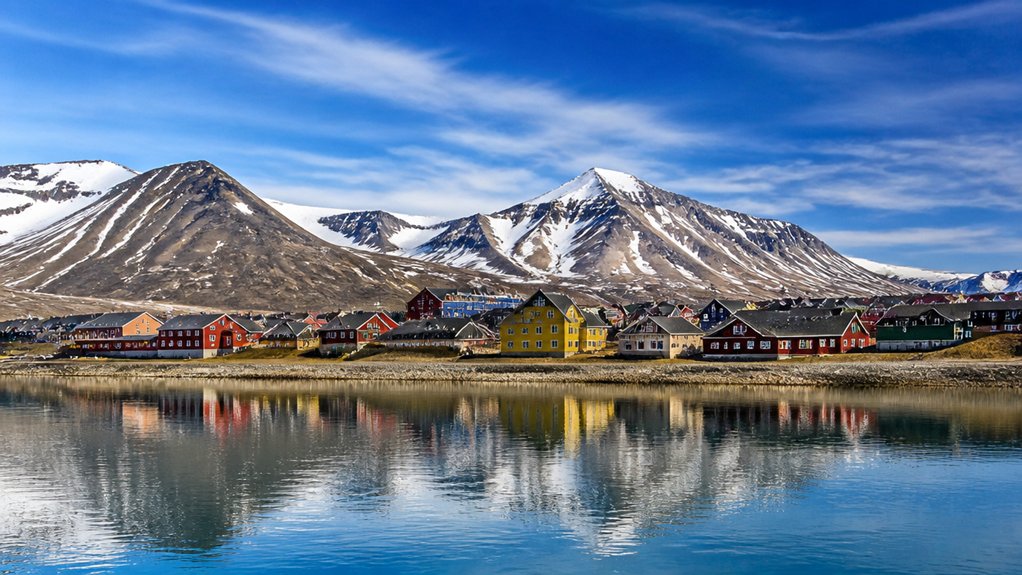
The harbour area itself tells a story through its architecture. The colourful wooden buildings aren’t accidents; they reflect both Scandinavian tradition and practical Arctic construction. Walk the waterfront deliberately rather than hurrying past it, and you’ll notice how buildings are elevated on stilts because the permafrost won’t support traditional foundations. That detail—that one practical fact—reveals more about living here than any official history panel.
Beyond the Centre: Day Trips and Alternatives
Most cruise passengers stay at the waterfront, so the residential areas uphill remain relatively quiet. The effort of walking up is minimal, and the practical benefit is clear: the best views of Longyearbyen exist only from higher elevation.
From the harbour, head uphill through the neighbourhoods where people actually live and work. You’ll pass the Svalbard Museum, which takes roughly an hour to walk through, and continue toward the viewpoint overlooking the settlement. Your perspective changes entirely once you’re looking down at the town rather than standing within it, and you can see why the mining operation made sense geographically before the industry failed.
Private boat operators run trips into the surrounding fjords to watch seabirds, seals, and occasionally polar bears, though wildlife sightings vary by season. These trips cost less than ship-organised excursions and keep groups small with people who actually care about what they’re seeing rather than ticking boxes. You’ll need to book online beforehand because spots fill up quickly with other cruise passengers.
Staying in the harbour to shop guarantees you’ll leave with the same items as everyone else and a vague sense that you’ve wasted the opportunity. The walk uphill takes minimal effort and fundamentally changes what you understand about the place.
Shore Excursion or Going It Alone
Ship excursion desks quote prices that seem fair until you find independent operators offering the same tour for substantially less. Your cruise line builds in a profit margin, so you’re paying for convenience rather than value, and the groups are often too large to move efficiently.
For wildlife trips into the fjords, contact local boat operators directly before your ship arrives rather than booking through the excursion desk. Popular tours fill with cruise passengers quickly, so reserving online beforehand secures better pricing and smaller groups where the guide actually pauses long enough for you to observe something worthwhile. The savings are substantial enough to cover a proper meal ashore.
Walking independently uphill requires only your time and effort, both of which you have available. You set your own pace, stop at anything that interests you, and reach the viewpoint without waiting for slower members of the group to catch up. The Svalbard Museum warrants an hour if Arctic history appeals to you, though admission costs money and won’t significantly deepen your knowledge of the region.
Book a ship excursion only if anxiety about managing alone genuinely troubles you, in which case the reassurance might justify the cost. Otherwise, do the research online now, secure your place on a private tour, and spend your time ashore on something that actually justifies the effort of coming to Svalbard rather than following the same routine as two hundred other passengers.
What Most Svalbard Guides Get Wrong
The Svalbard Museum gift shop charges noticeably more for postcards and Arctic fox items than the supermarket on Store Strandgata stocks them for, yet cruise passengers buy anyway because the shop sits right there. You’re essentially paying a convenience premium based on the assumption you won’t walk far from the ship—a fair bet for some travellers, but an unnecessary expense if you’re prepared to venture inland for five minutes.
Weather shifts rapidly regardless of what the forecast promised, and locals dress in layers year-round for a reason. Bring clothing you can add or remove quickly rather than packing only heavy Arctic gear, since conditions change faster than you’d expect and a fog bank can reduce visibility to nothing in minutes. This matters if you’re navigating independently, so account for sudden changes when you plan your route.
The pier is about 1.5 km from the town centre on a flat road, so taxis and shuttle buses aren’t essential for most people. The walk takes around 20 minutes, and the only genuine exception is if you have mobility difficulties or your ship tenders, in which case check what transport it arranges.
The three restaurants nearest the terminal attract every cruise passenger simultaneously, which drives both prices and waiting times up considerably. Ask your ship’s information desk which restaurants locals actually use instead—this costs nothing and points you toward better food at fairer rates. Alternatively, buy food from a supermarket and eat while looking out over the harbour, which costs far less and avoids the crowds altogether.
Your Port Day: A Sample Itinerary
Svalbard gives you a limited window that actually matters, so you can’t afford to drift between mediocre activities. Leave the terminal and walk straight into town, heading for the Svalbard Museum before the main cruise groups arrive. You’ll move through Arctic history without fighting crowds, which is the only real advantage you have today.
Spend time on Store Strandgata and the surrounding streets, going into local shops and the cafés where residents actually eat. This shows you how Svalbard functions as a place rather than just as a port stop. Grab food from a supermarket instead of queueing at the terminal restaurant, where you’ll pay more for the same sandwich.
Pick one substantial activity rather than collecting several weak ones. Book a guided Arctic wildlife or geology tour before you arrive, since independent operators run smaller groups at better rates than the ship offers. Alternatively, take a boat into the fjord to understand the landscape beyond the streets.
Book your Svalbard day
Tours for this port, compare before you book
Getting around in port