Santa Catalina Island California Cruise Port Guide
Avoid overpriced cruise excursions at Santa Catalina Island—discover how locals save money and experience authentic adventures instead.
In this guide
- Cruise Port Overview: What to Expect
- Getting From the Port to Town
- The Must-Do Experience: Start Here
- History Culture and the Top Sights
- Beyond the Centre: Day Trips and Alternatives
- Shore Excursion or Going It Alone
- What Experienced Cruisers Know About Santa Catalina Island California
- Your Port Day: A Sample Itinerary
Try one free personalised day plan — built around your ship’s actual arrival and departure times. Then get every port on your cruise done the same way from £7.99 (about $10).
Cruise Port Overview: What to Expect
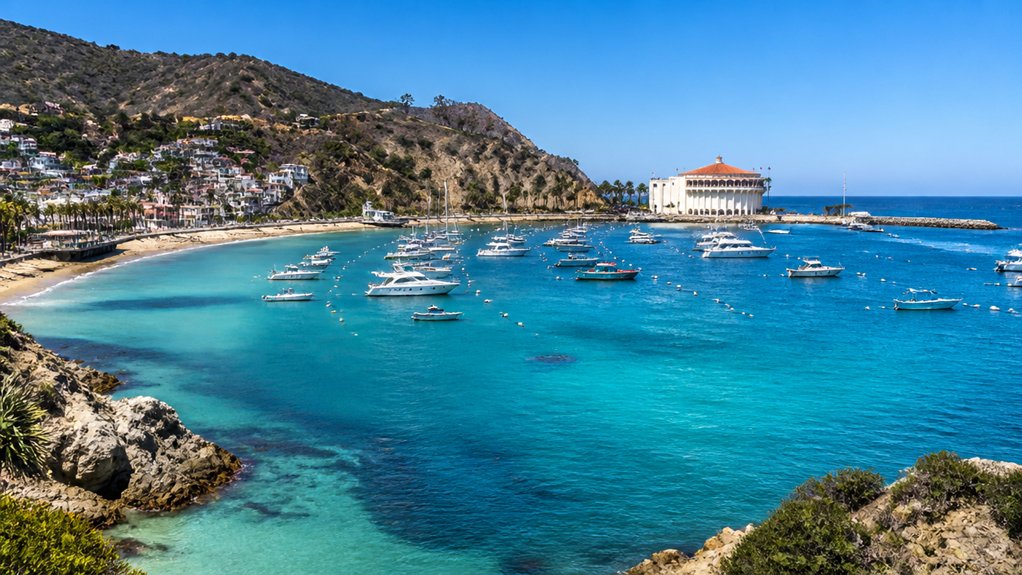
Santa Catalina Island’s pier serves a small resort town rather than a big cruise hub, which means you get either refreshing authenticity or mild letdown depending on your assumptions. Avalon Harbour is the island’s only real town, and your ship will tender you directly onto the pier—no terminal building, no infrastructure designed around cruise passengers. What happens next is straightforward: a few hours ashore on a small Californian island that has no particular reason to cater to you.
The harbour front is compact and walkable, so book independent tours directly rather than through your cruise line. Interior tours sell out well in advance, so arrange these before you arrive, while the Wrigley Memorial Botanical Garden is self-guided and needs no booking. You can explore guided excursions at the island to maximize your limited time ashore and secure spots at popular attractions. Prices charged by tour operators online are noticeably lower than what the cruise desk will quote you, and with limited time ashore, missing popular tours isn’t recoverable.
The town itself stays deliberately low-key, which means you’ll avoid the overwhelming crowds and inflated prices found at other Southern California ports. Waterfront restaurants charge moderate prices rather than bargain rates, and shopkeepers know their customers are time-limited and captive. Head inland from the pier and prices drop considerably, along with the tourist density—this is where you’ll see how the island actually functions for people who live here.
Getting From the Port to Town
The tender pier puts you straight at the Avalon waterfront, which means you’re already in town before you’ve finished your coffee. This skips the usual buses or taxis, but it also concentrates every cruise passenger at one spot, so the harbourfront gets visibly crowded in the first hour after tenders start running.
The walk from the pier into Avalon proper is straightforward, and there’s genuinely nowhere else you need transport to reach. The waterfront promenade runs along the bay, and everything worth doing branches off from there or sits within easy walking distance. If you’ve booked an inland tour or the Wrigley Memorial expedition, your operator will either collect you from the pier or provide clear directions—ask for pickup times when you book, because the last thing you want is chasing down your tour group after taking a wrong turn.
Renting a golf cart or small vehicle costs more than it should for what you actually get, and you’ll spend more time finding parking than you would simply walking. Stay on foot and you’ll cover every essential corner of town without stress. The island’s layout works in your favour here—straightforward geography, no neighbourhoods requiring special transport. Your time is too short to waste it organising logistics that aren’t necessary.
The Must-Do Experience: Start Here
Most first-time cruise passengers end up in the same bottlenecks as everyone else, waiting in line for attractions that aren’t actually worth the time. Your advantage is simple: arrive early and go somewhere else.
Head straight to the Casino building before most people have cleared the tender dock. The 1920s Art Deco and Mediterranean Revival architecture is structurally interesting and worth seeing in person, and you’ll have relative quiet to actually look at it. From there, walk inland to the Wrigley Memorial and Botanical Garden, which sits far enough from the waterfront that it avoids the worst clustering. The garden is self-guided and sits about 1.7 miles up Avalon Canyon Road, so walk it or take the shuttle from the Trailhead Visitor Center.
If you prefer staying close to town, the Catalina Island Museum sits a short walk back from the waterfront and covers the island’s actual history: mining, tourism, and the complicated reality of settlement. It’s considerably less crowded than you’d expect for such a convenient location, and you can see the whole thing properly in under an hour.
The restaurants and shops facing the tender pier exist to extract money from passengers with no alternatives. Walk two streets inland on any side street and prices drop substantially while the food actually improves. This is where locals go, and your money buys real value.
History Culture and the Top Sights
Santa Catalina’s actual history sits underneath the postcard stands selling identical images found in every California port town. What happened here—the mining operations, the wealthy enclave period, the current managed resort status—exists in the details that tour operators and gift shops leave out.
The Catalina Island Museum functions as museums ought to: it explains what occurred rather than what sells tickets. You learn about the Tongva people who inhabited the island for centuries, the silver and lead miners who worked its hills, and how William Wrigley Jr. repackaged it as an exclusive destination. The exhibits contain period photographs, mining equipment, and documentation of how the island’s economy shifted toward tourism, information you won’t find on postcards or in retail spaces.
The Wrigley Memorial is built largely from Catalina’s own stone and tile, placed against scrubland in a way that reads as deliberate artifice, but the botanical garden surrounding it makes the walk inland worth your time. The garden is self-guided, so go early to avoid the peak hours when cruise passengers crowd the paths.
Beyond the Centre: Day Trips and Alternatives
Most cruise passengers stay in Avalon, leaving the island’s interior quiet while the waterfront fills with identical souvenirs from five previous ports. Santa Catalina’s actual value lies in reaching somewhere different within an hour if you bypass the ship’s marked-up excursion rates. You can make this happen without specialist knowledge.
The Wrigley Memorial and its botanical garden warrant the effort. The garden is self-guided, so no booking is needed, and going early keeps you ahead of the peak crowds. The memorial’s island-made tile and stone connect it to early-twentieth-century California ambition rather than pure vanity.
Interior roads toward Two Harbors deliver genuine quiet and views that postcards fail to capture, though the terrain is hilly and the sun intense. You’ll see far fewer people than downtown Avalon, which means you can actually think clearly and photograph without dozens of cruise passengers filling your frame. The trade-off is simple: no food vendors, no facilities, and no shade once you leave the centre.
Bring adequate water, apply sunscreen generously, and eat a proper meal before heading inland. Solitude comes at the cost of infrastructure, but if peace matters more to you than organised sightseeing, the walk justifies itself.
Shore Excursion or Going It Alone
The ship’s shore excursion desk will charge you substantially more than independent operators for what is fundamentally a guided walk you could arrange yourself. You’re paying for the convenience of having your boarding passes managed and the security of not worrying about timing, but this convenience carries a significant markup—often several times what you’d pay booking directly with a local operator beforehand, which requires minimal effort online and typically delivers better value with smaller groups.
Local guides understand how the island actually functions throughout the day, whereas cruise staff cycle through ports without developing real familiarity. They’ll route you away from the obvious clusters that form around official excursions, so you’ll experience a less congested version of popular destinations. Booking several weeks in advance ensures availability for high-demand tours; trying to secure a spot on your departure day usually means accepting whatever remains unsold or nothing at all.
Your financial calculation changes only if independent travel genuinely unsettles you or if you have mobility requirements that genuinely demand professional coordination. Even in these situations, contact independent operators directly first—most provide accessibility support and will still cost considerably less than the cruise line’s offering. Your phone receives service on the island, navigation apps function normally, and locals regularly help cruise passengers find their way around, so the practical obstacles are minimal.
The real barrier is whether you’ll spend thirty minutes arranging something yourself instead of defaulting to the ship’s premium package. That half hour of planning typically frees up enough money for a proper meal at a place locals actually eat.
What Experienced Cruisers Know About Santa Catalina Island California
The Avalon Casino dominates the harborfront and fills with cruise passengers by mid-morning, though this happens because it’s conspicuous rather than worthwhile. Your actual reason to arrive early isn’t the casino itself—which has never been a gambling venue and holds a cinema and a ballroom—but the window of time before the inland streets become congested and the small restaurants start serving microwaved meals to queuing visitors. By late morning, the advantage disappears entirely.
A walk of just over half a mile along the waterfront, past the Casino, takes you to Descanso Beach, where locals actually swim and relax instead of positioning themselves for photographs. Walking inland from the main pier moves you through the neighbourhood where residents live and work, which is where you’ll encounter decent coffee and proper food rather than the marked-up offerings near the dock. The difference between this approach and staying dockside is substantial enough to matter.
The ferry service to Long Beach runs regularly without requiring advance booking, giving you a practical option if the island becomes too crowded—which it typically does by afternoon. Independent snorkelling and kayaking operators are more useful than anything the ship arranges because they depart early and return before the afternoon surge, which means better water conditions and smaller group sizes. These tours fill several weeks ahead during peak season, so booking late leaves you either reassigned to a larger group or scrambling for cancellations.
Your Port Day: A Sample Itinerary
Getting on an early tender matters more than you’d expect, since being ashore within twenty minutes of the tenders starting beats waiting in the tender queue with everyone else. Walk inland from the pier into the neighbourhood streets and skip the casino, which exists to separate you from money and time. Find actual coffee somewhere away from the waterfront before the crowds show up, then book an independent snorkelling or kayaking tour that leaves within the hour.
The operators working outside the ship’s system start early enough to avoid the afternoon crush and take smaller groups, which makes a real difference when conditions are decent. Get to Descanso Beach by water taxi if your morning tour finishes early, or eat lunch at one of the small restaurants where locals actually go instead of the overpriced waterfront places. The food costs less and tastes like it was cooked for people rather than processed for volume.
Spend your remaining time on the beach, walking through the neighbourhoods without a plan, or catching the ferry to Long Beach if you want a change without booking another activity. The single thing that matters is getting back to the pier with enough time to board without rushing, because missing your ship creates problems nobody wants to solve.
Book your Santa Catalina Island California day
Tours for this port, compare before you book
Getting around in port