Punta Arenas Cruise Port Guide
Uncover hidden gems beyond Punta Arenas’ cruise port facade—discover why locals’ secrets beat expensive tours.
In this guide
Try one free personalised day plan — built around your ship’s actual arrival and departure times. Then get every port on your cruise done the same way from £7.99 (about $10).
Cruise Port Overview: What to Expect
Punta Arenas operates on a smaller scale than major cruise ports, which works in your favour if you’re prepared to walk beyond the obvious tourist zone. The town centre sits within reasonable walking distance from where you disembark, and because most cruise passengers cluster near the waterfront, the local economy and everyday life remain largely unaffected by tourism. This means better value and more authentic interactions if you venture inland.
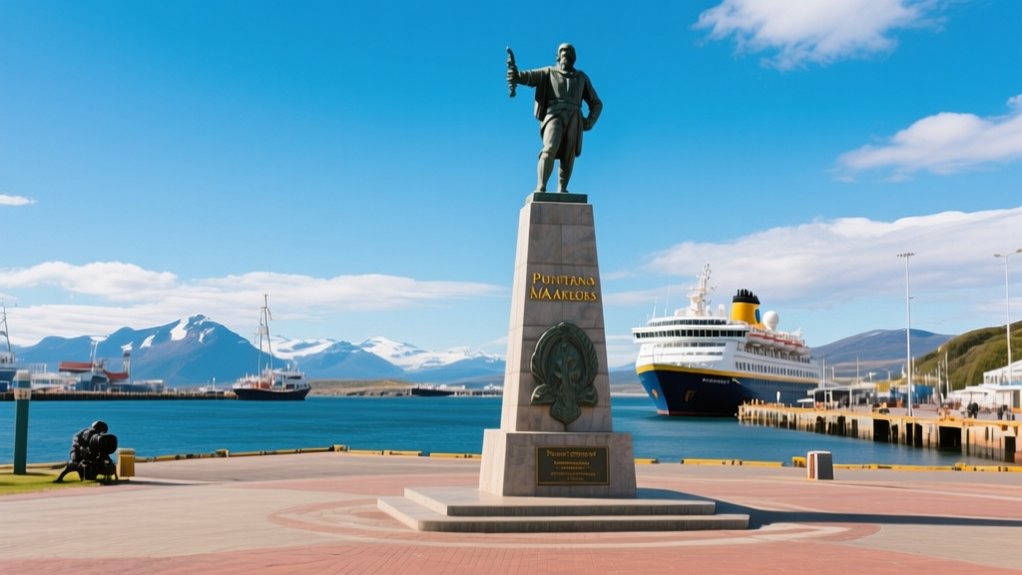
The port layout is straightforward enough. You’ll walk directly into town rather than pass through a dedicated cruise terminal, and the main plaza with its Magellan monument serves as your reference point. From there, restaurants, shops, and the market spread out logically without requiring much navigation.
Pricing here reflects local economics rather than cruise port inflation. Restaurants facing the water charge more, but moving one block inland brings costs back to normal. The market offers solid value for both food and souvenirs, and shopkeepers generally quote reasonable rates rather than test your budget. Limited English means casual tourists move through quickly, leaving the better spots to those willing to stay longer.
Your real choice is whether to book an excursion into Patagonia or spend your time on the town itself. Beyond the port itself, you can explore guided excursions at ports throughout the region to maximize your experience. Port time here tends to be longer than Caribbean stops allow, so there’s no pressure to rush or cram in activities. A slower approach actually suits this place.
Getting From the Port to Town
The port sits closer to town than it first appears. Larger ships often anchor offshore and tender passengers to the pier in the town centre, from where you walk straight into the street, and the main plaza with its Magellan monument gives you an immediate bearing. Walking takes far less effort than arranging a taxi would consume.
A taxi makes sense only if you’re arriving near the end of your port day or have mobility issues. Drivers know where things are and will take you precisely where you need to go, though you should settle on the fare beforehand since ride-sharing apps don’t function reliably here. Most drivers speak minimal English, so writing your destination on your phone eliminates any miscommunication.
Head inland from the waterfront and you move past the restaurants catering to cruise passengers into where locals actually spend money. The market is the most useful starting point—prices here reflect what people actually pay, and you get a sense of how the town actually operates whilst eating something. The main streets branch in logical ways from there, and if you take a wrong turn, doubling back costs nothing.
The Must-Do Experience: Start Here
Most visitors treat Punta Arenas as a transit point to penguin colonies rather than somewhere worth staying, which means the town centre operates at a relaxed pace regardless of what ships are docked. Start by walking without a plan—the grid becomes obvious within an hour, and you’ll quickly spot where locals actually gather instead of where tour operators have planted their signs.
The Magellan Monument in the main plaza serves a practical function: it helps you orient yourself, and you’ll use it as a mental anchor when you’re unsure which street leads where. The cemetery on the outskirts contains genuine records of Patagonian settlement if that history interests you, though reaching it on foot requires purpose and some physical effort. The waterfront museum is worth skipping unless you have considerable time to spare; the collection is modest and the entry cost doesn’t match what’s actually there.
What matters is getting a sense of how this place functions. The waterfront promenade offers a straightforward walk with views across the strait, while the residential streets inland show you genuine daily life rather than the version the port presents to visitors. Find a café where locals queue, order something, and sit for a while watching how things actually work in this town—that single choice shifts the experience from forgettable to something that stays with you.
🗺️ Tours & Experiences at This Port
Skip the ship’s overpriced excursions — browse top-rated independent tours trusted by thousands of cruise passengers.
History Culture and the Top Sights
Punta Arenas reveals itself more through what shaped it than through museums—and understanding that distinction saves you from wasting precious port time on curated collections. The town’s genuine story lies in the people who stayed, not the exhibits about them, which is why the cemetery matters far more than any indoor museum. Walking among the graves of early settlers, seal hunters, and wealthy merchants tells you how this place actually functioned as a working frontier town rather than a tourist destination retrofitted with cultural narratives.
The Magellan Monument remains worth a stop, though more for practical reasons than historical ones. It anchors your bearings and the surrounding plaza is where you’ll find yourself returning naturally throughout the day. The real cultural experience happens in conversation—ask locals at a café why certain streets developed the way they did, or what the waterfront looked like before tourism became organised. These conversations cost nothing and provide context that no paid tour can replicate.
If history genuinely interests you and you have time to spare, the residential streets inland hold more character than any official site. Victorian-era architecture from the wool boom period still stands in everyday use, and you’re seeing it as locals do rather than as a preserved heritage walk. The waterfront promenade itself carries the story of trade and settlement through its physical layout—the positioning of buildings, the working port still functioning alongside tourist infrastructure, and the way the town turns its back to the inland mountains tells you everything about survival economics in Patagonia.
Beyond the Centre: Day Trips and Alternatives
Most organised excursions from Punta Arenas depart shortly after your ship docks, so you’re either following the cruise company’s schedule or navigating independently—compromises are rare. Ship-operated tours manage logistics smoothly but cost substantially more than arranging the same activity directly, and since Punta Arenas is small enough to walk without assistance, you’re primarily paying for the convenience of having someone else handle the details rather than gaining access to places you couldn’t otherwise reach.
Independent exploration works here because the town centre is genuinely walkable and port authorities don’t restrict how you move around. Your real choice comes down to whether you want to go beyond the centre at all, and that depends on what interests you and how many hours you actually have. If penguins are your priority, book a tour with an independent operator well ahead of your cruise—the established companies attract cruise passengers quickly and advance booking costs significantly less than arranging something at the last minute through your ship.
Penguin tours run only during the southern summer breeding season, and what you’ll see depends heavily on timing within it, so checking conditions beforehand stops you from showing up expecting something that isn’t happening. The cemetery, waterfront, and residential streets require nothing but your own feet and time, and they cost nothing. The straightforward trade-off is this: excursions ensure you see particular things within a set timeframe, while going alone means you might miss popular sites but you’ll see how the place actually works rather than how a tour company has arranged it.
Shore Excursion or Going It Alone
The ship’s excursion desk will frame independent exploration as risky, but what they’re really protecting is their commission—Punta Arenas has no hidden dangers for cruise passengers moving around sensibly. Street vendors and tour operators near the dock know exactly when ships arrive and price accordingly, so your first advantage is simply walking inland before stopping anywhere to eat or book anything. If you decide against a formal tour, the waterfront and cemetery are genuinely worthwhile and free, but wandering aimlessly in port time is how hours disappear without producing much.
The key difference between going it alone and taking a tour comes down to intention. Tours lock you into seeing specific things on a fixed schedule, which guarantees you won’t miss the penguin colonies if that’s your aim, but also means you’re committed regardless of whether conditions are good or the guide’s pace suits you. Independence gives you flexibility to spend longer in places that genuinely interest you—the restored colonial houses, the museum, conversation with locals—without the feeling of being herded toward the next photo stop.
Neither approach is wrong, but muddling between them is where time gets wasted. Before deciding, ask yourself whether you’re after a particular experience or simply a sense of the place. That answer determines whether booking an independent penguin tour in advance is worth the planning, or whether a few hours walking the centre and docks will satisfy you.
Either way, commit to the choice rather than spending your port day deliberating between options.
🗺️ Tours & Experiences at This Port
Skip the ship’s overpriced excursions — browse top-rated independent tours trusted by thousands of cruise passengers.
Punta Arenas: Practical Details Worth Reading Twice
Punta Arenas works better once you stop treating it as a cruise port and start paying attention to how locals actually live. The cemetery contains genuinely useful information about the region’s history—far more substantive than the typical tourist museum—and the dock sits close enough to the centre that walking takes mere minutes, which means you avoid paying the inflated transport fees the ship’s operators quote.
Prices drop dramatically away from the waterfront. Local restaurants serve actual food at costs that make the vendor markup near the ship obvious, and the colonial buildings along Calle Magallanes require no admission and reward wandering at your own speed.
The museum justifies the entry fee because the exhibits address regional history rather than assembling objects for passing visitors. Arriving early in your port day means fewer crowds and quicker progress through the collection, which lets you understand Punta Arenas‘ importance without wasting time.
The town centre lacks obvious tourist signage, which is precisely why it functions better than the cruise dock. Spanish dominates conversations, but a translation app and patience with shopkeepers usually reveal which small restaurants actually serve well rather than relying on guidebook recommendations designed for cruise passengers. Weather shifts unpredictably here, so check conditions before leaving the ship and dress layered; poor visibility can scrap outdoor plans, but the town itself remains worthwhile regardless.
🗺️ Tours & Experiences at This Port
Skip the ship’s overpriced excursions — browse top-rated independent tours trusted by thousands of cruise passengers.
Your Port Day: A Sample Itinerary
Most cruise passengers waste their Punta Arenas morning waiting for organised excursions when walking the town centre alone is far more practical. Start from the dock heading directly to Calle Magallanes—the colonial architecture demands attention before crowds gather and wind conditions worsen. Spend your first hour on these streets observing how locals actually move through the town rather than following packaged routes.
Find a local café for coffee at prices that reflect reality rather than ship-adjacent markup. The regional museum justifies entry because it explains Punta Arenas’ actual historical function, which makes sense only when you understand the regional context instead of moving through exhibits designed for quick processing. Whether you visit depends entirely on weather conditions and your energy level.
Your final hours work better at the cemetery than most people expect when they actually go there. The walk is straightforward, and you’ll see the physical record of settlement, trade, and survival across generations written into the landscape. If weather deteriorates, return to Calle Magallanes for a proper meal at a local restaurant where costs reflect genuine value, then board with a practical understanding of why this port functioned as it did.
Tours with limited places can sell out before the ship arrives in Punta Arenas. Check what runs in Punta Arenas ahead of time.
🗺️ Tours & Experiences at This Port
Skip the ship’s overpriced excursions — browse top-rated independent tours trusted by thousands of cruise passengers.
Book your Punta Arenas day
Tours for this port, compare before you book
Getting around in port
✈️ Before you sail: eSIM, insurance, luggage, flight delays
Ships In Punta Arenas
Upcoming calls from our sailings tracker, updated regularly.
ms Oosterdam
Holland AmericaFri 11 Dec
⚓ 06:00–18:00
Costa Serena
Costa CruisesMon 14 Dec
⚓ 08:00–18:00
Celebrity Equinox
Celebrity CruisesMon 14 Dec
⚓ 07:00–15:00
Majestic Princess
Princess CruisesThu 17 Dec
⚓ 07:00–19:00
Majestic Princess
Princess CruisesSun 27 Dec
⚓ 07:00–19:00
Celebrity Equinox
Celebrity CruisesMon 28 Dec
⚓ 07:00–15:00