Santiago De Chile Cruise Port Guide
Optimize your Santiago cruise port experience by discovering insider tips for authentic exploration, but here’s what most travelers miss.
In this guide
- Cruise Port Overview: What To Expect
- Getting From the Port To Town
- The Must-Do Experience: Start Here
- History Culture and the Top Sights
- Beyond the Centre: Day Trips and Alternatives
- Shore Excursion or Going It Alone
- The Practical Details That Change Your Day in Santiago De Chile
- Your Port Day: A Sample Itinerary
Try one free personalised day plan — built around your ship’s actual arrival and departure times. Then get every port on your cruise done the same way from £7.99 (about $10).
Cruise Port Overview: What To Expect
Santiago has no port of its own, so its cruise terminal is at San Antonio, a container port on the coast about 110 km away, not a purpose-built tourist facility, which means you disembark into active harbour infrastructure rather than a controlled environment designed for passengers. This actually works in your favour because the port immediately pushes you away from inflated cruise-ship pricing and the typical tourist bubble. San Antonio, where most ships dock, is industrial and functional—there’s nothing quaint about it, but that’s precisely the point.
The port itself is small and easy to navigate once you’re off the ship. Taxis and ride-sharing apps operate from the moment you exit the terminal, so ignore any suggestion to wait for an official port shuttle. Getting into central Santiago requires planning ahead, but the journey is straightforward enough if you’re willing to travel independently rather than book an organised transfer.
Most cruise passengers either join a guided coach tour or stay within the immediate port area, which means you’ll encounter significantly fewer people from your ship if you head into the city centre. The catch is that your time ashore is finite, so casual wandering won’t work—you need to decide what you’re doing before you leave the ship. Carry cash because not all businesses take cards, and have at least a rough sense of your destination ready.
Port operations here are efficient and orderly. You’re not navigating chaos; you’re simply starting your day in a working harbour that happens to be your entry point to Santiago.
Getting From the Port To Town
Taxis queue outside the terminal at a reasonable pace, but ride-sharing apps genuinely work better because drivers actually know the routes and have no incentive to add unnecessary kilometres to your fare. Most organised coach tours run on fixed schedules that depart shortly after your ship docks, which means you either commit immediately or arrange your own transport—there’s no flexible middle option if your time ashore is limited.
Santiago lies inland from San Antonio, and getting there requires either pre-arranging transport through an app or booking a ship excursion. If you go the independent route, sort your transport before disembarkation rather than gambling on finding something reliable dockside; app-based services work well enough, though peak cruise days bring surge pricing that makes the cost harder to justify. A driver will take you straight to wherever you need to go without deviation, and you’ll pay considerably less than the ship’s excursion rates for the same journey.
You can stay near the port in San Antonio itself, which has restaurants and a small shopping area, but the capital is worth reaching if you have enough time ashore. The journey into the city centre is straightforward enough that solo travellers handle it without fuss, and you’ll find better food, genuine cultural activity and actual value than anything in the port neighbourhood. Consider booking shore excursions and experiences through your cruise line if you prefer guided access to Santiago’s main attractions and local insights.
The Must-Do Experience: Start Here
Most cruise passengers either wander San Antonio’s waterfront or pay premium rates for a ship excursion to Santiago—but booking your own transport gives you actual flexibility. A pre-booked ride-sharing app lets you control when you leave and return instead of following a coach timetable that consumes half your day just getting there and back.
Start at La Moneda Palace in the city centre and walk the surrounding streets to understand how Santiago’s civic core actually functions. The building houses the president’s offices and you can only go inside on a guided visit booked in advance, but the plaza and neighbourhood streets give you a genuine read on the city within a reasonable timeframe. The architecture and street layout tell you more than any formal tour would.
Head toward the Lastarria neighbourhood afterward, which operates as a working part of the city rather than a zone built specifically for tourists. Locals eat lunch here, galleries sit alongside regular shops, and the street life rewards actual wandering. Eating a proper meal in this area costs less than tourist-strip options and gives you better food.
If you have daylight remaining, take a ride-sharing journey to Cerro San Cristóbal, the hilltop park that overlooks the city and the Andes. Getting yourself there rather than joining a tour group means the summit stays relatively uncrowded, and you decide how long to stay. Booking a professional driver in advance ensures reliable transportation to this viewpoint, allowing you to maximize your time enjoying the panoramic vistas. The views work whether you spend five minutes or an hour up there.
This approach costs considerably less than a ship excursion, operates on your schedule, and leaves you with the sense of actually having visited Chile rather than simply checking off a box.
History Culture and the Top Sights
Santiago’s city centre reflects the awkward coexistence of colonial infrastructure and contemporary politics, which means exploring on foot reveals more than any structured tour. Government buildings operate alongside working cafés where Santiaguinos actually spend their time, and the jarring contrast between old and new architecture shows you something genuine about Chile’s development rather than a polished narrative.
The Palacio de La Moneda anchors the central plaza, though you can only see the interior on a guided visit booked in advance. The streets surrounding it contain neoclassical government buildings, modest colonial houses squeezed between modern office developments, and scattered street art that gives you an honest picture of how the city functions. The Chilean Museum of Pre-Columbian Art operates nearby and holds one of the continent’s most substantial collections of pre-Columbian objects—you will encounter fewer tourists here than expected, and the pieces justify the visit if your schedule allows.
Lastarria is where you observe how actual residents live rather than how the city markets itself to outsiders. Independent galleries, used bookshops, and smaller restaurants operate throughout the neighbourhood, and the food costs less while tasting considerably better than establishments in more touristy areas. Walking without a fixed route, stopping in small museums if something interests you, and eating where locals queue gives you a functional understanding of the place rather than relying on curated recommendations.
Beyond the Centre: Day Trips and Alternatives
Most cruise passengers stay in the port area, which works against you. The worthwhile trips—the ones showing actual Chile rather than choreographed tours—rarely fill up because cruise passengers don’t book them. The Andes foothills are close enough to reach, wine valleys run throughout the year, and Valparaíso sits on the coast without demanding a full day of your time.
Book an independent tour online before your ship arrives. Ship excursions cost significantly more than booking directly with local operators, and smaller groups mean less standing around. Popular tours combining wine valleys with lunch fill quickly during cruise season, so advance booking matters.
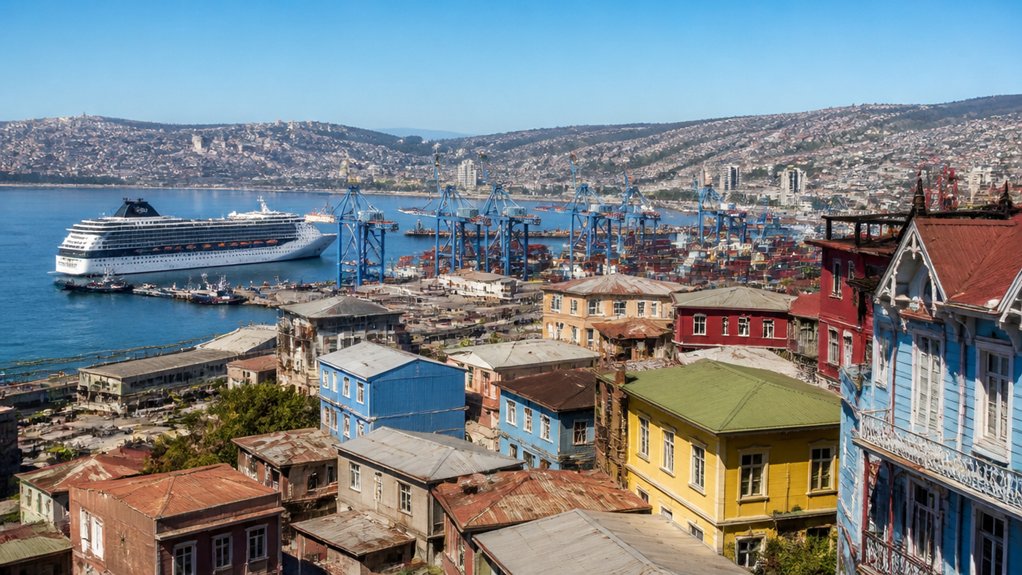
Valparaíso works as a half-day trip if you’re pressed for time. The port city rises steeply from the water with painted buildings that actually look like they do in photographs, and the streets feel ordinary rather than arranged for visitors. You can walk through neighbourhood galleries, eat cheaply in restaurants away from the waterfront, and see how people in Chile actually live outside of Santiago’s managed centre.
A full day lets you reach the Andes, which gives you context the city cannot. Combining a mountain trek or horseback ride with a winery visit shows you the actual landscape that shapes the wine region. Book these trips independently before you sail—your money goes further, you avoid the ship’s premium, and you’ll travel with people genuinely interested in the area rather than following a set schedule.
Shore Excursion or Going It Alone
The ship’s excursion desk quotes prices that exist partly to make independent booking look sensible by comparison. You pay for convenience and the guarantee that someone will get you back before departure, a safety net that only matters if you genuinely fear losing track of time—something you shouldn’t, since you control when you leave port.
Going alone requires one thing: planning before you sail. Booking through a local operator weeks ahead costs substantially less than the ship’s markup and puts you in contact with someone actually familiar with the region rather than reading talking points. The best tours fill quickly once cruise season starts, so booking onboard typically means joining a packed group of forty passengers on a standardised route.
Your choice comes down to confidence and available time. If you speak workable Spanish and want to navigate Valparaíso or Santiago’s neighbourhoods at your own pace, skip the organised tour entirely—you’ll cover more ground and spend far less. For wine valleys or the Andes, book with a local operator before sailing; you’ll travel with someone who actually knows the area, eat proper food rather than inflated tourist pricing, and understand how Chilean wine production actually works instead of sampling it in a warehouse setting.
Ship excursions make sense only if you’re uncomfortable going alone and willing to pay substantially for reassurance. Otherwise, your budget stretches further when you book directly. Popular independent operators sell out fast during cruise season, so commit to your choice weeks in advance.
The Practical Details That Change Your Day in Santiago De Chile
Most cruise passengers assume Santiago requires a full day’s travel inland, which is why they book the ship’s excursion at inflated rates—but although the city centre is around an hour and a half to two hours by road from the port, getting there independently is straightforward once you understand the transport system.
Once a coach or pre-booked transfer has brought you into the city, the metro is your lifeline, not taxis. Taxis are convenient but cost considerably more than they should, and drivers banking on tourist confusion will happily take the scenic route. Buy a rechargeable metro card at any station and you’ve cracked the city; locals use it constantly, it’s reliable, and your money stretches further. The network runs efficiently, though it does get crowded during peak hours, so travel mid-morning if you want breathing room.
Weather matters more than the cruise literature suggests. Santiago’s summers are hot and dry, winters cool but pleasant—but the city sits in a basin that traps smog on windless days, particularly in the cooler months. Check conditions before you sail; a smoggy day changes what’s worth seeing. The Andes views that make the city worth visiting simply disappear.
Don’t eat lunch on the Lastarria tourist strip unless your budget is genuinely unlimited. The neighbourhood is charming and worth exploring, but restaurants ten blocks away serve better food for half the price. Walk past the obvious spots, ask locals where they eat, and you’ll find proper Chilean cooking rather than inflated tourist fare designed for passengers with three hours ashore.
Your Port Day: A Sample Itinerary
Santiago works in your favour if you treat it as a practical problem rather than a tourist box to tick. You have limited hours ashore, which is genuinely enough to navigate the city properly—provided you bypass the port-side attractions and head straight into the city and its metro system.
Start in La Moneda. The metro takes you there quickly, and your first hour should be spent walking the presidential palace district and its adjoining streets. The point isn’t architectural appreciation but learning how Santiago actually functions as a city; this bearings-setting prevents the disorientation that wastes most port days. Find a neighbourhood café—not somewhere aimed at visitors—and ask where locals eat lunch.
Lastarria comes next, and yes, it attracts crowds, but that’s precisely why you should go. The neighbourhood justifies its popularity, and you’ll see immediately why residents spend time there. Walk through the galleries and antique shops without committing to overpriced purchases, then deliberately head away from the main plaza toward side streets where restaurants serve actual food. Eating properly in Lastarria costs far less than the tourist-strip equivalent and the meals are straightforward and filling.
Your afternoon hinges on the smog forecast you should have checked before departure. When visibility is acceptable, the metro to Cerro San Cristóbal gives you Andes views worth the extra time investment. When the city basin sits under haze, stay in the centre and explore Barrio Brasil instead; it has genuine character and provides visual interest regardless of weather conditions.
Leave port with buffer time rather than rushing. Santiago doesn’t demand expensive ship tours or snap decisions made under time pressure. It simply requires that you move with clear intention and avoid lingering where ships direct passengers.
Book your Santiago De Chile day
Tours for this port, compare before you book
Getting around in port