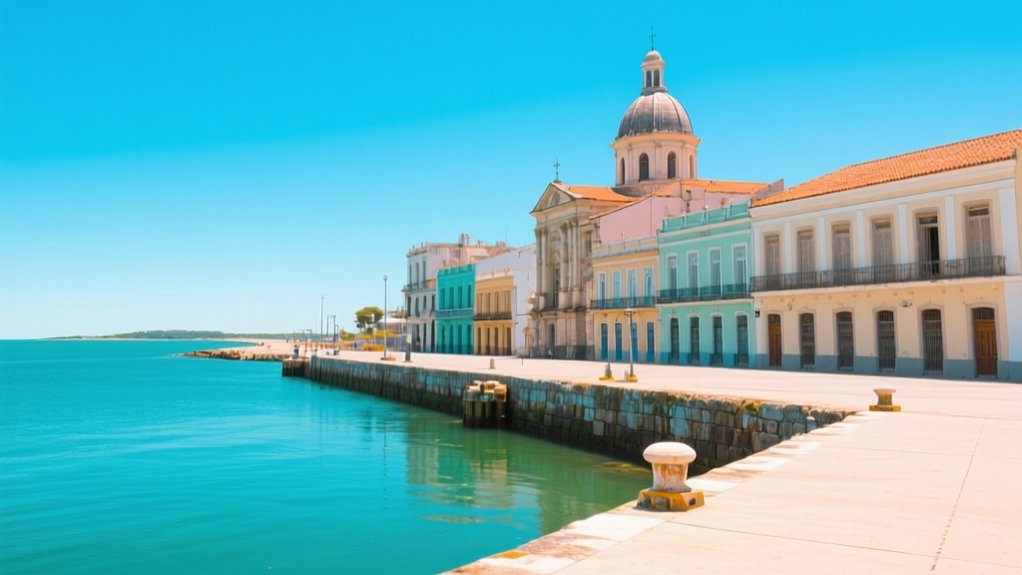
Montevideo Cruise Port Guide
Discover Montevideo beyond crowded tourist traps—local neighborhoods, authentic dining, and hidden cultural gems await those who venture inland from the cruise terminal.
In this guide
Try one free personalised day plan — built around your ship’s actual arrival and departure times. Then get every port on your cruise done the same way from £7.99 (about $10).
Cruise Port Overview: What to Expect
Montevideo’s port sits close enough to the Old City that you can walk there without needing transport, which sounds convenient until you realise the flat terrain makes distances deceptive and you’ll spend your day wandering aimlessly without a plan. Unofficial guides and taxi drivers swarm the terminal offering expensive rides, but legitimate taxis and ride-sharing apps operate a few steps away at reasonable rates, and the city centre is accessible on foot if you’re willing to navigate independently.
Most cruise passengers head straight to the Old City plazas, which become overcrowded and expensive during peak hours. The actual Montevideo where local people spend their time exists in neighbourhoods like Palermo and Pocitos, beyond the tourist corridors. You have enough time to see both areas if you’re deliberate about your route, but attempting to cover everything means rushed decisions and wasted money.
The city rewards taking your time more than it rewards efficiency. Montevideo has no dramatic landmarks or essential experiences that justify hurrying from one spot to the next, so decide early whether you want to understand how the city actually functions or simply check off a list of things you’ve done, then stick to that choice throughout your day.
Getting From the Port to Town
The taxi drivers clustering outside your terminal are counting on you to be uncertain, which is precisely why walking past them to an official cab rank or using a ride-sharing app will cost you less and take roughly the same time. Your phone works reliably here and the apps function without issue, while legitimate drivers actually know the city layout rather than the routes these opportunists favour near the cruise gates. If you want the straightforward approach, the official rank operates with transparent, fixed rates posted visibly—you pay what’s listed without negotiation or hidden charges.
Walking into town is technically possible, though only if you’re genuinely comfortable with no particular destination in mind. The flat terrain deceives you about distance, so a walk that appears manageable stretches out longer than expected, and you’ll arrive fatigued before your day has properly begun. Save walking for late in your visit when tiredness matters less; use your arrival energy for actual exploration instead.
Most independent tours work on a port pick-up system from nearby hotels, which removes navigation entirely from your responsibility. The better walking tours fill quickly with cruise passengers, so booking online in advance ensures you get a spot rather than finding yourself without options on the day. A guided walk through Palermo or Pocitos costs marginally more than going alone, but you’ll actually understand what you’re looking at and meet someone who can direct you toward places locals actually eat rather than the restaurants that operate in English and charge accordingly.
The Must-Do Experience: Start Here
Montevideo’s character exists in its neighbourhoods, not in its landmarks, which means your opening hours are better spent in places where residents actually go than in spots built for cruise passengers. The Ciudad Vieja waterfront will be crowded with people from your ship, but the real working city spreads across residential streets where coffee costs less and the architecture won’t match any postcard you’ve seen.
Book a guided walking tour through La Palermo or Pocitos before you arrive, since these tours fill up with cruise passengers quickly and cost far less than hiring a private guide.
🗺️ Tours & Experiences at This Port
Skip the ship’s overpriced excursions — browse top-rated independent tours trusted by thousands of cruise passengers.
If guided tours don’t suit you, walk away from the port along the Rambla toward the residential areas rather than toward the centre. Stop for coffee or food at a café you pass; prices drop noticeably once you’re off the terminal zone, and you’ll get a sense of whether you want to keep exploring or return to specific spots you’ve identified. Either choice means your arrival energy goes into something substantive rather than into finding your bearings.
History Culture and the Top Sights
Montevideo’s museums warrant your time, but the standard cruise circuit—three major institutions in one morning—leaves you drained and retaining almost nothing. The Museo Nacional de Artes Visuales and Museo Histórico Nacional offer better value than the famous landmarks because they’re smaller, less packed than European counterparts, and you can actually move through them at your own pace instead of shuffling in group formations.
Book an independent guide for either museum before you arrive, as these slots fill quickly and cost significantly less than ship excursions offering identical experiences. A local guide who knows the work transforms a rushed visit into real comprehension of Uruguayan artistic and political history rather than passive gawping at objects behind glass.
Barrio Reus and Palermo contain the actual cultural conversation happening in the city right now—street art, independent galleries, and working studios reveal how contemporary artists and designers operate without the institutional formality of major museums. Walking these neighbourhoods with someone local gives you access to spaces tourist maps omit and means you’ll actually remember what you saw because you’ve engaged with active creative work rather than catalogued pieces in climate-controlled rooms.
Skip the Teatro Solís queues and book a museum guide instead, or explore the galleries and street art independently. Either choice respects both the limited hours you have and what Montevideo actually is rather than what the cruise desk wants to sell you.
Beyond the Centre: Day Trips and Alternatives
Most cruise excursions sell escape while delivering the opposite—a coach, a restaurant owned by the cruise line, a schedule so tight it wastes your morning without letting you actually experience anything. Beyond central Montevideo, the maths changes entirely. You have perhaps six or seven hours, which means the standard tour model breaks down because the towns worth visiting sit too far away to fit neatly into a rigid morning slot with travel time included.
Colonia del Sacramento gets nearly every cruise passenger, which should make you sceptical rather than eager. The town itself rewards genuine wandering—the riverside cobblestone quarter is genuinely pleasant to walk through—but the standard ship tour compresses it into two hours that forces you past everything worth stopping for. Hire an independent guide before you board or book a local walking tour operator directly; both cost substantially less than what the ship charges and actually let you spend time in the Portuguese colonial streets instead of shuffling past them in a group.
The road journey to Colonia takes well over two hours each way, but the ship’s transport isn’t your only option. Intercity buses run frequently from the Tres Cruces terminal and cost a fraction of what the cruise line charges, though you’ll need to find your way through the terminal yourself—entirely straightforward if you leave the port early enough. If day trips feel too compressed, stay in Montevideo instead and explore Barrio Reus or the coastal areas eastward where locals actually go rather than chasing sights designed around your limited time ashore.
Shore Excursion or Going It Alone
The ship’s shore excursion desk profits from your uncertainty, which means their pricing rarely reflects the actual cost of what you’re booking. When you buy through the cruise line, you’re paying a markup that funds their commission structure, not better access or superior guides. The real choice isn’t whether to book ahead—it is—but whether you do so through independent local operators or through your ship.
Independent tour companies operating in Montevideo typically charge considerably less for walking tours, cultural experiences, and transport than cruise line equivalents, and they’re motivated to give you a genuinely good experience because their reputation depends on it rather than your captive audience status. Book these directly online before you sail; the best operators fill quickly during cruise season and popular time slots vanish, especially for morning departures when you have the most daylight. Going completely alone works well if you’re comfortable maneuvering through the port terminal and using local transport, but it requires you to leave the ship early and accept that you won’t have a curated route—you’ll be exploring based on neighbourhood recommendations and what catches your eye.
The practical middle ground is hiring a private or small-group guide through a local booking platform rather than the cruise desk. You get expertise and local knowledge without the tour bus markup, and a good guide will adjust the pace to what actually interests you rather than shepherding you through a predetermined itinerary. Whichever route you choose, commit to it before boarding; last-minute decisions on the pier always cost more and leave you with whatever remains available, which is rarely the best option.
🗺️ Tours & Experiences at This Port
Skip the ship’s overpriced excursions — browse top-rated independent tours trusted by thousands of cruise passengers.
What the Cruise Desk Leaves Out About Montevideo
Montevideo’s port terminal sits close enough to the city centre that you can walk or use local buses instead of paying the ship’s transfer markup. The actual expense trap isn’t getting into town—it’s the waterfront restaurants and cafés built entirely around cruise passengers, where prices reflect captive clientele rather than actual value.
Head inland to Barrio Sur or Ciudad Vieja where local people actually eat and drink. You’ll pay less and eat better, and the neighbourhoods have actual character rather than the sanitised cruise terminal environment. Independent guides booked through local platforms will take you to places locals frequent instead of the tour-approved establishments your cruise director would recommend, and many of them effectively function as local fixers who can sort out the bus system for you when your port time is limited.
Montevideo’s museums, particularly those covering art and history, operate free or cheap entry hours during the day, yet the cruise desk won’t mention this because they don’t take a cut. Spending twenty minutes online before you arrive to check opening hours lets you build genuine cultural experiences into your day at minimal cost. You leave with actual understanding of the place rather than a collection of scheduled photo locations.
🗺️ Tours & Experiences at This Port
Skip the ship’s overpriced excursions — browse top-rated independent tours trusted by thousands of cruise passengers.
Your Port Day: A Sample Itinerary
Most port days in Montevideo fail because passengers waste the first hour deciding where to go, then rush through whatever they find nearest the ship. You have roughly six hours ashore, and that time evaporates quickly without a plan.
Walk inland from the terminal toward Ciudad Vieja instead of staying at the waterfront. The colonial architecture guides you naturally through the neighbourhood, and within twenty minutes you’ll find actual cafés where locals eat breakfast and coffee costs a fraction of ship prices. Stop for something here and sit briefly—you’ll be oriented while most cruise passengers are still working out their options.
By mid-morning, visit one of the free or low-cost museums if you have any interest in Uruguayan art or history. These are quieter during weekday mornings when cruise passengers are doing the obvious photo rounds, so you can move through the collections without crowds. An hour here gives you something substantive rather than surface impressions.
For the afternoon, either walk deeper into Barrio Sur to see how the city functions beyond the tourist corridor, or arrange an independent guide in advance to take you somewhere specific—a local market, a neighbourhood you couldn’t navigate alone, or genuinely good food in a place that isn’t expecting cruise passengers. Head back to the terminal with forty minutes to spare since local buses are reliable but unexpected delays happen and you cannot miss your ship.
🗺️ Tours & Experiences at This Port
Skip the ship’s overpriced excursions — browse top-rated independent tours trusted by thousands of cruise passengers.
Book your Montevideo day
Tours for this port, compare before you book
Getting around in port
✈️ Before you sail: eSIM, insurance, luggage, flight delays
Ships In Montevideo
Upcoming calls from our sailings tracker, updated regularly.
Celebrity Equinox
Celebrity CruisesFri 4 Dec
⚓ 08:00–17:00
Majestic Princess
Princess CruisesSat 5 Dec
⚓ 07:00–18:00
Celebrity Equinox
Celebrity CruisesSun 6 Dec
⚓ 08:00–17:00
MSC Seaview
MSC CruisesWed 9 Dec
⚓ 09:00–18:00
Majestic Princess
Princess CruisesWed 9 Dec
⚓ 07:00–16:00
ms Oosterdam
Holland AmericaThu 17 Dec
⚓ 08:00–18:00