Glacier Bay Cruise Port Guide
Glacier Bay isn’t your typical cruise port—discover why tender boats, elusive bears, and dramatic glaciers make it unforgettable.
In this guide
Try one free personalised day plan — built around your ship’s actual arrival and departure times. Then get every port on your cruise done the same way from £7.99 (about $10).
Cruise Port Overview: What to Expect
Glacier Bay differs fundamentally from typical cruise ports. Your ship will not dock at a terminal or pier; instead, it anchors within the bay itself, and you experience the destination entirely from your vessel. This is pure scenic cruising in a protected marine environment, and the point of coming here is straightforward: to watch tidewater glaciers calving into the sea, observe brown bears fishing for salmon, and witness wildlife in a landscape so remote that development has barely touched it.
National Park Service rangers board your ship to provide interpretation and context about what you’re seeing. They conduct presentations in the lounge, staff an information desk, and help you understand the geology, ecology, and wildlife of this UNESCO World Heritage Site. Many ships have rangers present throughout your time in the bay, which transforms a simple scenic cruise into an educational experience grounded in genuine expertise rather than generic cruise ship commentary.
The ship itself serves as your viewing platform. Most vessels navigate close enough to tidewater glaciers for you to hear calving ice breaking into the water—a sound that carries across the bay with unexpected force. You’ll spot wildlife from deck: bald eagles perched on rocky shores, sea otters in the water, brown bears along beaches, and occasionally humpback whales breaching in the distance.
Weather here changes rapidly. The bay creates its own weather patterns, and sudden rain appears regularly regardless of forecasts. Pack proper waterproof layers rather than light jackets. Bring binoculars—they make the difference between noticing distant eagles and actually seeing them clearly. Dress for temperatures around 10–15°C even if the sun is shining.
Your Day On Board
Your ship spends approximately 9 to 10 hours in Glacier Bay, with timing that lets you watch both daylight glacier viewing and the quality of light as afternoon approaches. Most of your morning will position the ship to approach a tidewater glacier, with rangers providing commentary about what you’re observing: how glaciers form, why the ice appears blue, what icebergs might do, and why the water colour shifts as glacial meltwater flows into the bay.
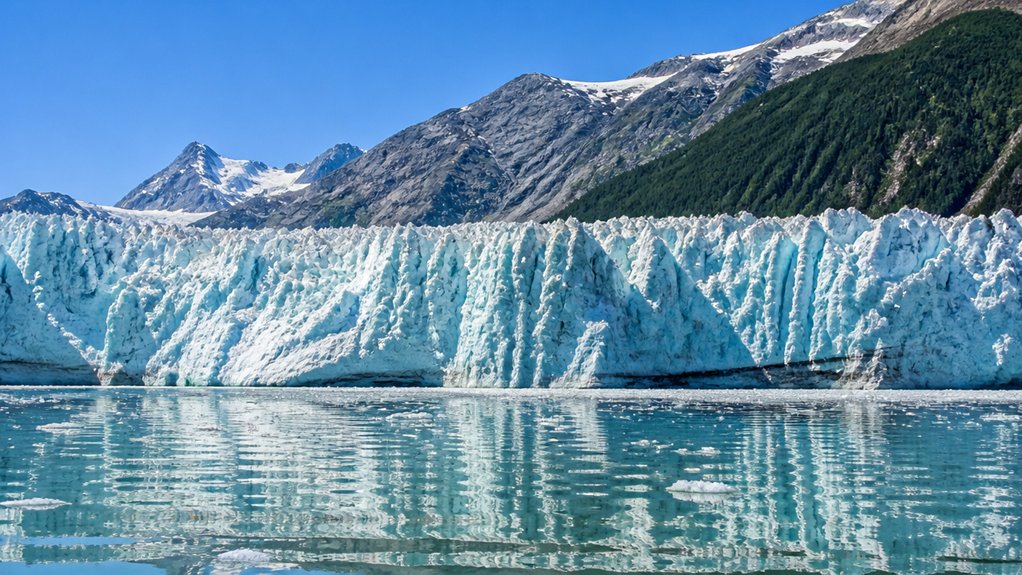
Key viewing moments happen during approach to glaciers. John Hopkins Glacier, one of Alaska’s most impressive tidewater glaciers, often appears on itineraries; it’s distinctive for its mile-wide face and visible striations. McBride Glacier anchors the East Arm and remains actively calving despite ongoing retreat. You’ll typically position near one major glacier for an extended period, giving you time to watch chunks of ice break free rather than simply passing by.
Wildlife watching requires patience and attention. Brown bears congregate along certain beaches where salmon runs concentrate; spotting them depends on timing, season, and positioning luck. Sea otters work the shallows regularly. Bald eagles perch on virtually every prominent rock, and the longer you spend watching, the more activity you’ll notice. Binoculars reveal details invisible to the naked eye—a bear moving along a distant shoreline, an eagle launching from a perch, seals hauled out on ice floes.
Spend your morning on deck rather than in your cabin. Conditions change rapidly, and missing clear skies because you were resting becomes regrettable. Bring a camera if you want it, but don’t let photography distract you from simply watching—the actual moment of a glacier calving or an eagle diving is more memorable than a photograph of it.
Peak midday light can make glacier photography challenging due to harsh shadows and glare off ice. Early morning and late afternoon offer better conditions, though ship positioning might not favour photography at those hours. Accept that some moments won’t photograph well and enjoy them anyway.
What You’ll See
Glacier Bay National Park spans 3.3 million acres, with over 1,000 glaciers covering nearly 30 percent of its area. The park represents a landscape in dramatic flux: glaciers that covered the entire bay two centuries ago have retreated up their valleys, leaving behind forests and meadows where ice once stood. You’re witnessing geological change in real time, though the pace appears frozen from a single viewing.
Tidewater glaciers—those that terminate in ocean water—are increasingly rare in Alaska. Watching one calve, with blocks of ice breaking away and splashing into the sea, connects you directly to processes that shape coastlines and influence global sea levels. The sound arrives seconds after the visual event, a deep crack audible across the water.
Marine wildlife appears throughout the day. Humpback whales pass through Glacier Bay during certain seasons, and breaches happen often enough that keeping watch is worthwhile. Sea otters dive for food in the shallows. Brown bears fish for salmon along certain river mouths at particular times of year. Seals rest on ice floes. Bald eagles are essentially guaranteed—they’re impossible to miss once you start looking.
The landscape itself—granite cliffs, snow-covered peaks, dense temperate rainforest descending to the waterline—provides the backdrop. The fjords cut deeply into mountains, creating narrow passages and dramatic vertical terrain that photographs well but cannot capture the actual scale of what you’re observing in person.
History and Context
Glacier Bay holds special significance as traditional homeland of the Huna and Yakutat Lingít peoples. The landscape you’re observing has profound cultural meaning for these communities, and understanding Glacier Bay without recognising its indigenous context misses essential history.
The park itself represents geological drama: rapid glacial retreat over the past 200 years has exposed terrain that was under ice within recent centuries. Forest succession is visible in zones where vegetation at different ages colonises land freed from ice at different times. Geology rangers explain this process in detail, transforming what appears as scenery into evidence of active geological change.
The bay’s ecosystem remains exceptionally productive despite—or perhaps because of—its remoteness. The influx of glacial meltwater, rich in nutrients from ground rock, supports marine food chains that draw whales, eagles, and bears. This concentration of wildlife in a compact area is partly why scenic cruising here works so effectively: you’re not searching vast wilderness for scattered animals; rather, they’re concentrated where conditions favour them.
Practical Tips
Dress in layers and bring multiple waterproof options. Weather changes rapidly, and what feels pleasant on deck becomes uncomfortable once wind picks up or rain arrives. Waterproof jacket, warm fleece, and water-resistant trousers are essentials.
Bring binoculars or borrow them from the ship. They transform a distant speck into a recognisable eagle, a brown shape on the shoreline into a visible bear. The investment pays immediate dividends.
Position yourself early for major glacier approaches. Railings near the bow often fill quickly once the ship begins final positioning. If your cabin is amidships, wake early and secure a decent spot rather than trying to photograph from the stern later.
Listen to ranger presentations, even if some seem technical. They provide context that turns landscape observation into understanding. Ship naturalists are typically excellent, and their commentary enhances everything you’re seeing.
The café prices and availability may vary, so eat breakfast aboard before spending extended time on deck. Morning hours are prime for viewing, and leaving deck to find food results in missed moments.
Book your Glacier Bay day
Tours for this port, compare before you book
Getting around in port
✈️ Before you sail: eSIM, insurance, luggage, flight delays
Ships In Glacier Bay
Upcoming calls from our sailings tracker, updated regularly.
Norwegian Encore
Norwegian Cruise LineThu 8 Oct
ms Koningsdam
Holland AmericaWed 28 Apr
⚓ 06:15–15:15
Norwegian Encore
Norwegian Cruise LineThu 29 Apr
Star Princess
Princess CruisesMon 3 May
⚓ 06:00–18:00
Emerald Princess
Princess CruisesTue 4 May
⚓ 07:00–16:00
Royal Princess
Princess CruisesWed 5 May
⚓ 06:00–14:30