Tracy Arm Fjord Cruise Port Guide
Navigate Tracy Arm Fjord’s glaciers and wildlife like a pro—but here’s what cruise lines won’t tell you.
In this guide
Try one free personalised day plan — built around your ship’s actual arrival and departure times. Then get every port on your cruise done the same way from £7.99 (about $10).
Cruise Port Overview: What to Expect
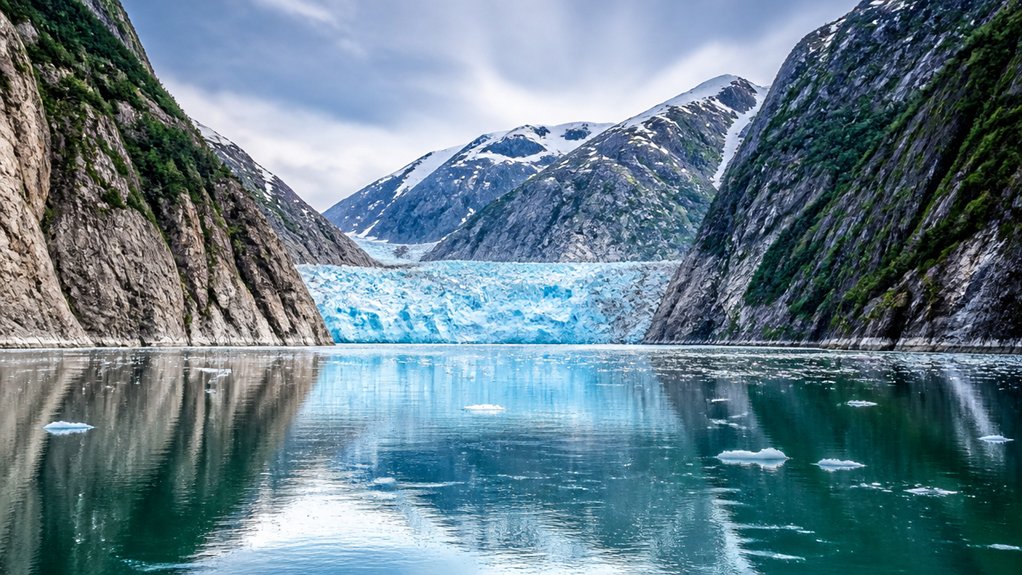
Tracy Arm Fjord offers pure scenic cruising: your ship anchors offshore and navigates through a narrow, 30-mile-long fjord lined with granite cliffs, cascading waterfalls, and tidewater glaciers. You remain on board throughout, experiencing the landscape from deck as your vessel inches through ice-filled waters toward the fjord’s terminus. There are no towns, no docking facilities, and no shore excursions—simply an extraordinary passage through genuine wilderness accessible only by sea.
What justifies the time spent here is the landscape itself. Twin Sawyer Glaciers—South and North Sawyer—fill the fjord’s head with brilliant blue ice formations calving regularly into the water. The fjord walls rise steeply, with waterfalls dropping from snowmelt high above and wildlife visible on ledges and in the water. This is one of Southeast Alaska’s most dramatic scenic routes, and experiencing it from your ship’s deck is the entire point.
The narrow inlet constrains what your ship can do. Larger vessels often cannot navigate as far into the fjord as smaller or mid-sized ships, which affects how close you’ll get to glacier faces. Your vessel will position itself at a vantage point that balances navigational safety with viewing quality—close enough that glaciers dominate your view, but far enough back that the ship can manoeuvre and retreat safely if conditions warrant.
Weather and ice conditions determine the exact route and how far your ship penetrates. Early-season visits risk ice blocking passage to the glacier terminus; mid-to-late summer offers better navigation and slightly warmer temperatures, though conditions remain cool. Pack waterproof layers and warm clothing regardless of season or forecasts. Fog appears suddenly and transforms the fjord into grey void when it does—not dangerous, but it renders viewing and wildlife spotting less rewarding.
Your Day On Board
Your ship will spend several hours in or approaching Tracy Arm, depending on ice conditions and tide. Early-morning positioning optimises viewing: light conditions favour both observation and photography, and wildlife tends to be more active before the volume of vessel traffic increases. You’ll spend most of your time on deck, watching the fjord unfold as your ship navigates deeper into increasingly narrow waters.
The approach to the Sawyer Glaciers constitutes the focal point of your day. South Sawyer Glacier is the larger, more active of the two and extends deep underwater; North Sawyer stretches further up its valley. Both calve regularly enough that you’ll likely witness ice chunks breaking away and splashing into the water. Hear the crack across the water seconds after seeing the ice fall. Each calving event, no matter how common, remains visually arresting.
Position yourself on deck early to secure good sightlines. Railings and viewing areas near the bow fill as the ship approaches glaciers. Many passengers congregate at the same spots, so arriving first ensures you’re not photographing over someone’s shoulder.
The experience differs fundamentally from land-based glacier viewing. Your ship positions at a distance that lets you observe the entire glacier face rather than looming directly above it. You can see the glacier’s movement over time—ice flows down valleys, meltwater streams run down cliffs, and calving events happen at intervals you can observe rather than as isolated incidents. This vantage point reveals how dynamic these landscapes actually are.
What You’ll See
Tracy Arm Fjord exemplifies Southeast Alaska’s dramatic geography. Granite walls rise vertically from the water for thousands of metres, with vegetation clinging to impossible angles. Waterfalls cascade from snowmelt high above, some substantial enough to generate visible plumes of mist as they strike lower elevations. The fjord narrows as you penetrate deeper, intensifying the sense of enclosed dramatic space.
The Sawyer Glaciers themselves dominate the visual experience. Blue ice—coloured by ancient compressed snow—fills the fjord head. Icebergs and ice floes drift in the water, ranging from car-sized chunks to massive bergs that dwarf your ship. Watching the glacier face, you’ll notice a cascade of water as meltwater pours from beneath the ice; this outflow creates the milky blue water characteristic of glacial fjords, as fine silt suspended in the meltwater reflects light.
Wildlife appears throughout the fjord. Harbour seals rest on ice floes, often in groups. Black bears inhabit the shorelines, particularly near streams and river mouths where salmon concentrate. Bald eagles perch on rock outcrops or work the water. Mountain goats occupy seemingly impossible cliff ledges. Humpback whales and orcas enter the fjord seasonally, though sightings depend on timing and luck.
Light quality changes throughout the day. Early morning delivers clarity and shadow definition useful for photography. Midday light can be harsh, creating contrast that challenges cameras. Late afternoon provides warm, diffuse light that suits landscape observation if your schedule permits lingering.
History and Context
Tracy Arm Fjord exemplifies glacial geography: the entire landscape exists because glaciers carved this valley thousands of years ago and remain active in shaping it today. Watching a tidewater glacier reveals how ice does this work—carving, grinding, transporting enormous quantities of rock, and discharging it as fine sediment into the fjord’s waters.
The Twin Sawyer Glaciers are retreating, as most Alaska glaciers are. The physical layout shifts measurably from year to year: the glacier faces retreat further up their valleys, newly exposed terrain becomes colonised by vegetation, and water bodies shift shape as ice volumes decrease. You’re observing evidence of climate processes literally reshaping the landscape in real time.
The fjord remains largely undeveloped. No towns, no infrastructure, no permanent human habitation disturbs the landscape. This remoteness means that the wildlife you observe exists in habitat relatively unmodified by human presence. Bears, eagles, and seals navigate this fjord much as they did centuries ago, though human-driven climate change now influences their world profoundly.
Practical Tips
Bring binoculars. Wildlife distances can deceive you—what appears as a speck on a distant cliff resolves into a mountain goat with magnification. Eagles perched on rocks become clearly visible. Seals on ice floes reveal their forms rather than remaining ambiguous shapes.
Layer your clothing aggressively. Temperatures on deck drop noticeably once the ship moves through the water, and wind across the water bites regardless of clear skies or sunshine. Waterproof jacket, warm fleece, gloves, and wool socks keep you comfortable during extended deck time.
Position yourself early for glacier approaches. Premium viewing spots near the bow fill quickly once word spreads that the ship is approaching the glacier face. If your cabin is amidships, arrive on deck before the ship begins final positioning rather than trying to secure space once viewing is already underway.
Bring a camera if photography interests you, but accept that some conditions challenge cameras—glare off ice and water requires exposure compensation. Enjoy moments you don’t photograph; the actual experience of watching a glacier calve is more memorable than any image you’ll capture.
Eat breakfast aboard ship before positioning for glacier viewing. Café availability and prices may vary, and leaving deck during prime viewing hours to find food results in missed moments. Bring a light snack and water to sustain yourself during extended time on deck.
Book your Tracy Arm Fjord day
Tours for this port, compare before you book
Getting around in port
✈️ Before you sail: eSIM, insurance, luggage, flight delays
Ships In Tracy Arm Fjord
Upcoming calls from our sailings tracker, updated regularly.
Carnival Legend
CarnivalThu 22 Apr
Carnival Legend
CarnivalThu 29 Apr
Carnival Spirit
CarnivalSat 1 May
Crown Princess
Princess CruisesMon 3 May
⚓ 14:00–20:00
ms Koningsdam
Holland AmericaWed 5 May
⚓ 08:00–14:30
ms Noordam
Holland AmericaWed 5 May
⚓ 08:00–14:30