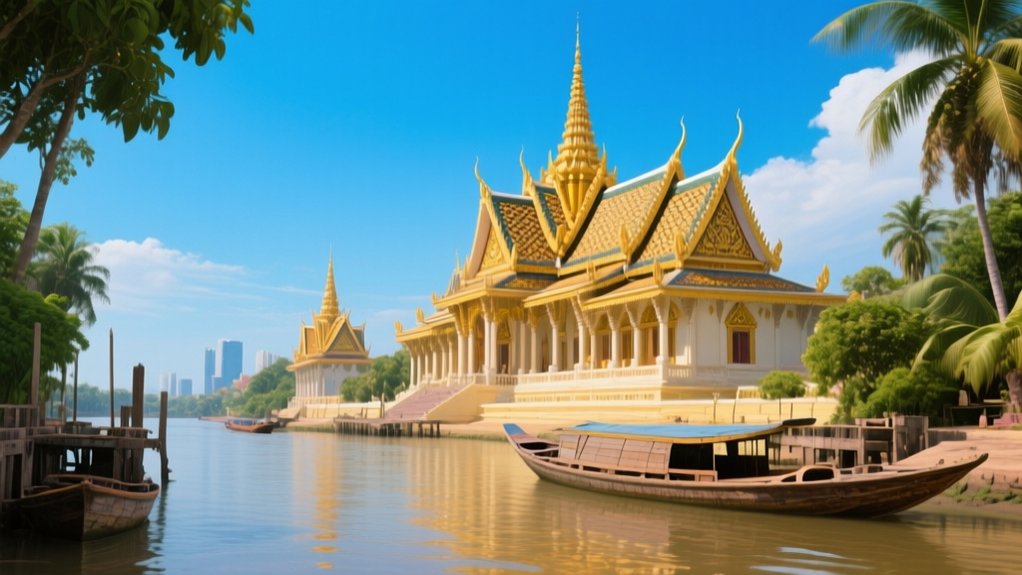
Phnom Penh Cruise Port Guide
Phnom Penh’s cruise port holds hidden gems beyond the tourist traps—discover why independent tours beat ship excursions.
In this guide
Try one free personalised day plan — built around your ship’s actual arrival and departure times. Then get every port on your cruise done the same way from £7.99 (about $10).
Cruise Port Overview: What to Expect
Phnom Penh’s cruise dock sits uncomfortably close to the city’s heaviest traffic, which means your first decision—whether to venture beyond the immediate port area—will determine whether you waste half your day in a tuk-tuk or actually see something worthwhile. The port itself offers little beyond souvenir stalls and overpriced café tables, so staying put is genuinely not an option if you want a meaningful visit.
Most cruise passengers either book the ship’s excursion or hail a tuk-tuk at random outside the gates, both of which come with predictable problems. Ship tours operate on fixed schedules that eat time, and unbooked tuk-tuk drivers will take you to gem shops and overpriced restaurants where they earn commission. The better approach is to book an independent guided tour in advance—the best ones fill quickly for cruise passengers and cost considerably less than what the ship charges.
Your real advantage here is time spent actually exploring, not travelling. A good independent tour gets you to the Royal Palace, a working temple, and the riverside markets without the herd mentality of larger groups. You’ll move at a pace that lets you absorb something genuine about the city rather than simply ticking boxes. Booking shore excursions strategically helps maximize your limited port time and ensures you experience the most meaningful attractions. This is not a port where winging it tends to work well, so booking ahead is genuinely worth the small effort.
Getting From the Port to Town
The real problem with Phnom Penh’s port location isn’t distance—it’s that tuk-tuk drivers know exactly how much confusion a cruise passenger can tolerate before handing over money. The dock sits a manageable distance from the city centre, which sounds straightforward until you’re sitting in gridlock while your driver insists the Royal Palace is closed today but he knows a better temple that happens to sell silk. This is a negotiation tactic, not a genuine suggestion.
Your best move is to arrange transport as part of an independent guided tour booked before you arrive. This solves three concrete problems: a reliable driver who actually takes you where you’ve paid to go, no time wasted on negotiation or navigation, and a guide who sets the pace rather than working commission angles. The cost is moderate and considerably less than what the ship charges for the same experience.
If you prefer moving solo, hire a tuk-tuk driver through your hotel or a booking app rather than flagging one randomly outside the gates. Negotiate the fare clearly before getting in—ask other cruise passengers what they’ve paid for similar routes to establish a realistic baseline. Budget-friendly private drivers also work through guesthouses and can often be arranged with a photo and message the evening before your arrival.
Avoid taxis entirely unless you speak Khmer; they’re not cheaper and the meter system confuses most foreign passengers. Whatever you choose, confirm the return route and pickup time explicitly with your driver before leaving the port area. Port queues can back up unexpectedly, and your driver needs to know you’re not simply abandoning them for a later ship deadline.
The Must-Do Experience: Start Here
Most cruise passengers squander their best hours waiting for group tours to assemble when Phnom Penh’s actual advantage is straightforward: you can see what matters in a single focused morning if you move with purpose. The Royal Palace and Silver Pagoda sit close enough together that independent exploration works better than the herding efficiency of ship excursions, though the heat and crowds require a specific sequence rather than random wandering.
Arrange your driver the evening before arrival and head directly to the Royal Palace when the gates open. Arriving early means managing tourists rather than fighting local school groups and midday heat simultaneously, which is a meaningful difference. Respectful dress matters here—covered shoulders and knees—so sort this before leaving the port; enforcement varies but being turned away costs time you cannot recover.
Spend roughly ninety minutes at the palace rather than the two hours tour operators typically allocate, then move immediately to the adjacent Silver Pagoda, which feels less overwhelming and contains genuine detail if you’re not already exhausted. The sequence matters more than lingering anywhere too long, since fatigue and heat work against you by midday.
🗺️ Tours & Experiences at This Port
Skip the ship’s overpriced excursions — browse top-rated independent tours trusted by thousands of cruise passengers.
History Culture and the Top Sights
The National Museum matters more to most cruise passengers than they expect, partly because it contextualises what you’ve just seen at the Royal Palace rather than repeating the same gilded narrative. You should plan to spend forty-five minutes here after the Silver Pagoda, which means arriving by mid-morning before fatigue sets in and before tour groups clog the galleries. The collection spans Cambodian sculpture and royal regalia across manageable rooms, and the quieter atmosphere works in your favour when you’re already hot and pressed for time.
Tuol Sleng Genocide Museum presents a different challenge: it matters deeply, it’s historically essential, but it’s emotionally demanding and requires genuine focus rather than rushed viewing. Skip it entirely if your energy or time has evaporated, rather than treating it as a checkbox. If you do visit, go early in your day and allocate substantial time; rushing through reduces it to grim spectacle rather than meaningful understanding.
Many independent tour operators include Tuol Sleng alongside the Killing Fields as a half-day excursion, which works better than piecemeal self-navigation since context and timing matter considerably. Book any Killing Fields tour the evening before through a reputable local operator rather than relying on ship excursions, since popular independent tours fill quickly for cruise passengers. The journey sits further from port than central sights, making independent travel less efficient, so organised transport actually saves time and costs less than expected.
Beyond the Centre: Day Trips and Alternatives
The port’s location near Phnom Penh creates a practical problem for independent travellers: the palace and riverfront are close to the moorings, but the Killing Fields and other sights further out lie far enough away that getting there becomes expensive and time-consuming. Tuk-tuk costs mount quickly, your hours aboard ship are limited, and unofficial drivers at the dock exploit cruise passengers with inflated fares. This is where booking a tour in advance actually saves you money rather than costing extra.
The Killing Fields and Tuol Sleng Genocide Museum are the obvious draws, but reaching them independently turns into a logistics puzzle that undermines the experience itself. A reputable tour operator offering this circuit costs significantly less than what your ship charges, includes reliable transport and proper historical context, and books out well before your arrival. Arranging this the evening before through an online platform guarantees your place and removes the scramble at port.
If you stay central, the National Museum and Royal Palace are genuinely worth visiting and manageable on foot if you navigate confidently, or with a single hired tuk-tuk for an afternoon. Attempting the Killing Fields on your own risks reducing a historically important visit to rushed logistics, which wastes the point entirely. The difference between a frustrated, hurried experience and one that actually matters comes down to whether you’ve sorted reliable transport beforehand. Book your Killing Fields tour early because the better operators fill their slots long before your ship docks.
Shore Excursion or Going It Alone
The ship’s excursion desk charges substantially more than independent operators, and the convenience factor doesn’t actually justify the cost difference. Your ship’s tours run on fixed schedules that push you through sites at a pace designed for efficiency rather than understanding, which becomes problematic when you’re confronting difficult history that requires actual reflection. Booking an independent operator online before you arrive costs considerably less and gives you control over how long you spend at each location.
The Royal Palace and National Museum are manageable on your own if you’re confident navigating the city or willing to hire a tuk-tuk driver for a few hours. The Killing Fields and Tuol Sleng present a different challenge entirely—you need reliable transport, historical context that a guidebook won’t provide, and enough flexibility to process what you’re seeing without watching the clock. An independent tour operator handles the logistics, brings genuine knowledge to bear, and guarantees you won’t waste precious port time dealing with transport problems or getting lost.
The practical truth is that cruise lines sell certainty rather than quality, and you pay extra for that reassurance. If you’re actually interested in understanding what happened in Cambodia rather than simply checking off sites, arrange your own transport beforehand. You’ll spend less, stay longer where it matters, and leave with real comprehension instead of vague impressions.
🗺️ Tours & Experiences at This Port
Skip the ship’s overpriced excursions — browse top-rated independent tours trusted by thousands of cruise passengers.
The Mistakes Cruise Passengers Make in Phnom Penh
Phnom Penh’s riverside location means your ship arrives at a functioning commercial port, not a dedicated cruise terminal, which creates both opportunity and friction. Touts, taxi drivers, and informal guides descend immediately after disembarkation, and while most are harmless, the aggressive pricing is deliberate—they’re banking on your unfamiliarity and time pressure. Ignore offers shouted at you on the dock and instead walk inland to a main road where you can hail a regular tuk-tuk at fair rates, or better still, arrange your driver through your accommodation the night before.
The Royal Palace enforces a strict dress code that catches many cruise passengers by surprise—covered shoulders and knees are mandatory, not suggested. Tourist shops near the entrance sell sarongs at inflated prices if you’ve miscalculated your outfit. Wear appropriate clothing from the ship rather than planning to buy on arrival, which wastes time you don’t have.
Most independent tour operators working Phnom Penh handle bookings through standard online platforms or social media, not through formal websites. Booking a few days ahead guarantees availability and better communication than trying to arrange anything on the morning you arrive. The best guides specialise in either the Killing Fields or the palace and museums—not both in one day—so choose your priority beforehand rather than attempting an exhausting hybrid tour.
🗺️ Tours & Experiences at This Port
Skip the ship’s overpriced excursions — browse top-rated independent tours trusted by thousands of cruise passengers.
Your Port Day: A Sample Itinerary
Your port day works backwards from your ship’s departure time. You need to be back onboard at least ninety minutes before the all-aboard, which leaves you roughly five to six hours ashore on a full day.
Walk inland from the dock to find a regular tuk-tuk rather than taking offers at the gangway. Fair rates are roughly half what touts will quote you. Head directly to the Royal Palace and Museums complex early, before the midday heat builds and tour groups arrive in force.
Spend a couple of hours at the palace. This gives you enough time to see the main buildings and courtyards without rushing through them. Remember that your dress code—covered shoulders and knees—must be maintained throughout your visit, as the rules are enforced.
The palace closes for a long break in the middle of the day, so this is genuinely your only priority for the morning. Attempting the Killing Fields on the same visit stretches most cruise passengers too thin and means you’ll experience both sites poorly. Choose one and do it properly rather than racing through both.
By midday, grab lunch at a restaurant away from the tourist corridor near the palace entrance. Riverside spots a short walk away offer better value and authenticity without the marked-up pricing you’ll find near the main gates. Use your final hours to explore the National Museum or simply wander the riverfront, which costs nothing and gives you a genuine sense of how the city actually functions.
Leave yourself breathing room to return to the dock without panic. Resist the temptation to venture further afield, as Phnom Penh rewards a focused, unhurried approach far more than an overcrowded checklist.
🗺️ Tours & Experiences at This Port
Skip the ship’s overpriced excursions — browse top-rated independent tours trusted by thousands of cruise passengers.
Book your Phnom Penh day
Tours for this port, compare before you book
Getting around in port