Cartagena Colombia Cruise Port Guide
Cruise to Cartagena and discover hidden gems beyond the walled city—but first, learn where tourists waste their money.
In this guide
- Cruise Port Overview: What to Expect
- Getting From the Port to Town
- The Must-Do Experience: Start Here
- History Culture and the Top Sights
- Beyond the Centre: Day Trips and Alternatives
- Shore Excursion or Going It Alone
- The Practical Details That Change Your Day in Cartagena Colombia
- Your Port Day: A Sample Itinerary
Try one free personalised day plan — built around your ship’s actual arrival and departure times. Then get every port on your cruise done the same way from £7.99 (about $10).
Cruise Port Overview: What to Expect
Ships dock at the cruise terminal in Manga, an industrial district a few kilometres from the old walled city, and a taxi gets you there in around fifteen to twenty minutes. Step out of the car and you’re into crowds of souvenir sellers, tour operators and other cruise passengers, all working with the same four or five hours before heading back. The short ride is worth it, because once you’re through the walls the colonial streets are right there waiting.
The walled old town operates as two distinct economies. Streets around the main gate and busiest plazas charge cruise-passenger prices with restaurants and shops calibrated for visitors with disposable income. If you walk further into the residential neighbourhoods, your money stretches further, though you’ll lose the prime seafront position and the comfort of the busy central squares.
Independent walking tours depart regularly from around the terminal and cost significantly less than the ship’s organised excursions while offering more control over where you go and what you see. These tours fill up during peak cruise seasons, so arranging one beforehand online gives you better options. Solo wandering through the streets works fine, but a guided route through the backstreets and smaller plazas gives you actual context rather than just pleasant aimlessness.
Getting From the Port to Town
The terminal gates open onto the port area in Manga, not the pedestrian streets of the walled city. Walking to the old town is possible but takes the best part of an hour along busy, unshaded roads, so a taxi is the sensible choice and doesn’t waste money: agree the fare first and you’re inside the walls in minutes. You’ll pass a cluster of souvenir stalls and tour hawkers at the terminal and again at the gates of the old city, but these thin out quickly once you’re a few streets in.
The walled city is flat and compact, so navigation is straightforward once you’re inside, and the walls themselves keep you oriented. Once you’re past the initial tourist density, the colonial architecture starts to read as an actual neighbourhood rather than a stage set for visitors.
If you do take a taxi, settle on a fare before getting in the car rather than trusting the meter. Drivers are aware that cruise passengers are time-pressured, and they price accordingly. Walking gives you a genuine sense of the place from the moment you step off the ship. Consider booking guided excursions in advance to enhance your exploration of Cartagena’s rich history and culture.
Rain in the Caribbean often arrives suddenly and just as quickly disappears within the hour. Rather than rushing back to your ship, duck into a café or museum and let it pass—you’ve lost nothing except some comfort. The old town’s narrow streets provide reasonable shelter, and wandering them in light rain feels far less crowded than doing the same in full sun surrounded by dozens of other cruise passengers.
The Must-Do Experience: Start Here
Most cruise passengers never leave the walled city, which means they miss Cartagena entirely. The old town has its appeal, but the actual city exists beyond those gates—where people work, eat, and live without performing for tourists.
Walk the ramparts early when other visitors are still leaving their ships. You’ll see where the Caribbean sits against the colonial grid, and more usefully, where the postcard section ends and the real city begins. This gives you a mental map for everything that follows.
From the walls, drop into the side streets toward the harbour and find a café where local office workers are sitting. The difference between a tourist spot and an actual neighbourhood café is immediate—laminated menus, English signage, and inflated prices cluster in one category; worn chairs, handwritten specials, and people conducting actual business cluster in another. The coffee tastes different when it’s not made for people in sunburnt t-shirts.
Book a walking tour with a local guide before your ship arrives rather than buying one from the excursion desk. Ship tours fill quickly and cost more; independent operators have better availability and better prices if you arrange ahead. A guide who actually lives here turns those colonial buildings from Instagram backdrops into accounts of trade networks, slavery, rebellion, and survival—the actual forces that built this place.
🗺️ Tours & Experiences at This Port
Skip the ship’s overpriced excursions — browse top-rated independent tours trusted by thousands of cruise passengers.
History Culture and the Top Sights
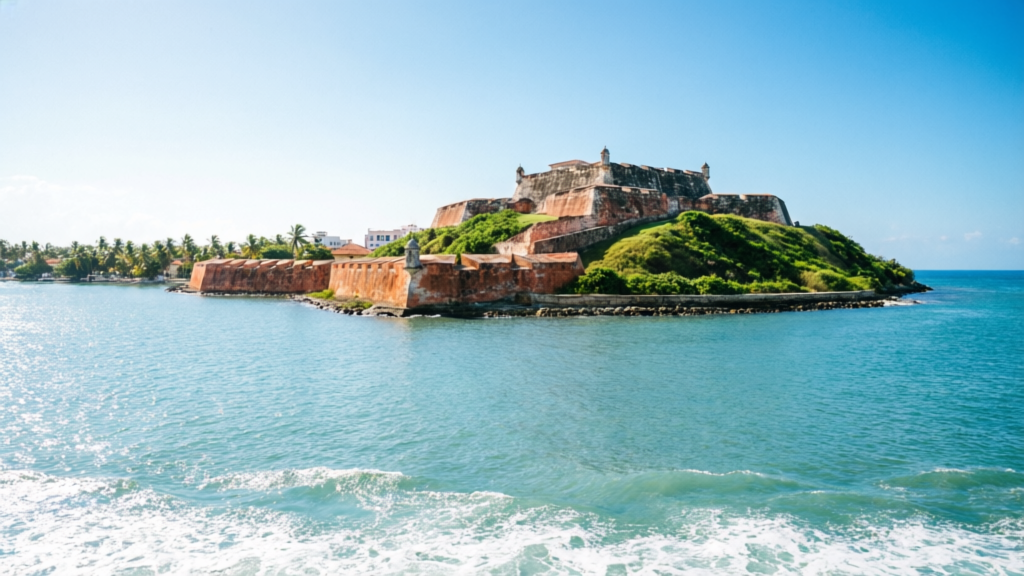
The San Felipe fortress functions as a straightforward lesson in colonial military design, except the lesson is uncomfortable—it was built to defend the slave trade, not European settlement, which reframes what those seaward-pointing cannons actually represent. Spending a couple of hours here makes sense: the ramparts offer a practical three-part view that shows you the Caribbean, the old town’s terracotta roofs, and crucially, the modern city sprawling beyond, which corrects the false impression that Cartagena exists as a preserved artifact rather than a place where half a million people actually live and work. The dungeons are worth touring not because they’re pleasant but because their genuine claustrophobia conveys something architectural descriptions cannot.
The Cathedral occupies the main plaza, which means it’s tourist-packed by mid-morning and staffed by people trained to extract money from cruise passengers rather than accommodate worshippers. Entering makes practical sense only if you’ve arranged a guide beforehand who can explain the architectural choices and the power structures they embodied; otherwise you’ll join a queue of identically-equipped tourists moving through without context. You’ll gain more from simply wandering the narrow streets where actual residents are restoring properties and living ordinary lives rather than performing for cameras.
The Palace of the Inquisition functions now as a commercial museum with entrance fees and merchandise to match. The streets surrounding it, where restoration work actually happens and local families maintain their homes, will teach you more about how Cartagena works than any ticketed attraction. Booking a guided history tour before you arrive ensures you receive an account of the colonial period that acknowledges its full historical reality rather than a sanitised version.
Ship-organised excursions cost substantially more and pace themselves for the slowest participants aboard, which determines what you’ll see and how rushed you’ll feel. Independent tour operators book their slots quickly during cruise season, so arranging your spot online in advance guarantees you’ll get the guide and timing you actually want rather than whatever remains available when you disembark.
Beyond the Centre: Day Trips and Alternatives
Most cruise passengers book the ship’s excursion to Rosario Islands without realising they’ve just paid triple what independent operators charge for the same boat, the same snorkelling spots, and considerably fewer fellow tourists wedged onto the deck. The islands themselves are worth your time—the water is genuinely clear, the coral remains intact because visitor numbers are managed, and you’ll actually swim rather than queue. What changes everything is booking directly with a local operator beforehand instead of handing your money to the cruise line’s commission-hungry middleman.
Popular independent tours fill quickly during peak season, so securing your spot online in advance means you get departure times that suit you rather than the ship’s schedule, and you’ll save enough to cover lunch afterwards without guilt. The booking process is straightforward once you’re online, and most operators will confirm within hours. This guarantees you a place rather than gambling on availability from the tender desk.
Playa Blanca is an alternative worth considering—a proper working beach where locals actually go rather than a designated tourist strip. It requires slightly more effort to arrange transport and involves genuine navigation, but you’ll pay less, eat better seafood at sensible prices, and spend your afternoon among people who live there rather than people who photograph there. The trade-off is straightforward: less structure, more authenticity, and the satisfaction of having figured something out yourself.
The key is booking your independent tour or transport the evening before you arrive, when you still have internet access and the popular operators haven’t sold out their best time slots. Waiting until you’re ashore checking your phone frantically costs you both money and choice. Plan this detail before you leave the ship and you’ll spend your day on your own terms.
Shore Excursion or Going It Alone
The cruise desk will tell you that you need a guide to navigate Cartagena’s old city. They’re wrong, and they’re banking on your anxiety to justify their markup.
You can walk the walled centre alone with confidence. The streets form a logical grid once you’re inside the gates, the locals are genuinely welcoming rather than predatory, and you’ll stumble onto cafés and galleries that never make it into the ship’s printed materials. The layout doesn’t require interpretation—it rewards exploration.
What actually matters is timing. Head into the old city early, before the ship excursions deploy their groups in matching lanyards around mid-morning. You’ll recognise the difference immediately: manageable crowds, reasonable restaurant prices, and space to actually look at architecture rather than dodge elbows. By midday, when the guided groups clog the main plazas, you’ll already have had breakfast at a proper neighbourhood spot and seen the places worth seeing without queueing.
The real insider information is about getting back to the port. Taxis from inside the walled city cost considerably less than those from the tourist stands, and the drivers know the traffic patterns better than any ship staff member ever will. Agree on the fare beforehand—this is standard practice and perfectly safe. Locals do it daily.
Bring cash. Many independent restaurants and smaller shops don’t process card payments reliably, and you’ll eat far better when you can pay cash than when you’re limited to the establishments with card terminals. This single detail transforms your day from manageable to genuinely excellent.
🗺️ Tours & Experiences at This Port
Skip the ship’s overpriced excursions — browse top-rated independent tours trusted by thousands of cruise passengers.
The Practical Details That Change Your Day in Cartagena Colombia
The port area sits far enough from the old city that most passengers skip walking it, which means the establishments there charge accordingly. Your money goes further if you ignore the port entirely and head straight into the walled centre by taxi. It’s a short ride, and you’ll arrive with your budget and your energy intact rather than depleted by overpriced refreshments.
The old city itself is genuinely walkable, but only within certain boundaries. The walled centre and the seafront promenade work well for exploration, whereas the outer residential neighbourhoods will disorient you and waste your time without offering anything worthwhile. Before you start, establish where these boundaries are so you don’t drift into dead ends.
Most cruise passengers congregate in Plaza Santo Domingo and Plaza San Pedro Claver during midday hours, which makes those places precisely where you shouldn’t be if you want an actual experience. Plaza Bolívar draws fewer tourists and shows you how locals actually use their city rather than how it performs for visitors. The difference between these spaces is substantial, yet most people never venture to the quieter one because it doesn’t appear on cabin maps.
Bring more cash than feels necessary because the old city operates on a two-tier system depending on payment method. Tourist establishments with card readers charge one way; local spots with cash-only registers charge considerably less. The difference between good and mediocre often comes down to which payment method you’re holding.
🗺️ Tours & Experiences at This Port
Skip the ship’s overpriced excursions — browse top-rated independent tours trusted by thousands of cruise passengers.
Your Port Day: A Sample Itinerary
Most people waste their first hour queuing for overpriced taxis from the port when they could already be in the old city. Take a taxi straight from the terminal to the walled centre, agreeing the fare first, and you’ll arrive with energy and money left, while others are still haggling over fares.
Get to Plaza Bolívar early, before the midday crush arrives. The square shows you how locals actually use the space, and the streets branching off—Calle Santo Domingo, Calle Estanco—contain real colonial buildings without the tourist performance. Grab coffee and breakfast at a cash-only café here rather than near the port, where a simple meal costs three times what it should.
Head toward the seafront promenade as late morning approaches and let it pull you east along the harbour. You’ll pass neighbourhood chapels, street vendors, and residents going about their day rather than people working the tourist trade. Stop where something catches your attention rather than following a map.
Lunch is worth planning for in Cartagena, and independent food tours that you book online beforehand give you far better value than ship excursions or the restaurants aimed at tourists. These tours fill quickly when cruise ships are in port, and they’ll take you to places where your money actually covers a proper meal. If you’d rather eat alone, find a local spot away from Plaza Santo Domingo and order what the other customers are eating.
The light in the afternoon changes how the walled city looks, throwing the stone walls and doorways into different relief. Wander back through the narrower streets toward San Pedro Claver church and then drift toward smaller plazas on your own terms. Spend your remaining energy looking at craft workshops run by actual makers rather than curio shops, where prices stay reasonable if you actually talk to the person selling rather than just browsing.
Booking ahead gives you a choice of trips rather than whatever is left on the day. the tours running in Cartagena Colombia is a good place to start.
🗺️ Tours & Experiences at This Port
Skip the ship’s overpriced excursions — browse top-rated independent tours trusted by thousands of cruise passengers.
Book your Cartagena Colombia day
Tours for this port, compare before you book
Getting around in port
✈️ Before you sail: eSIM, insurance, luggage, flight delays
Ships In Cartagena Colombia
Upcoming calls from our sailings tracker, updated regularly.
Carnival Miracle
CarnivalThu 8 Oct
⚓ 09:00–17:00
Grandeur Of The Seas
Royal CaribbeanSun 11 Oct
⚓ 09:00–18:00
Celebrity Summit
Celebrity CruisesMon 12 Oct
⚓ 11:30–19:00
MSC Poesia
MSC CruisesWed 14 Oct
⚓ 11:00–18:00
ms Nieuw Amsterdam
Holland AmericaWed 14 Oct
⚓ 12:00–18:00
Grandeur Of The Seas
Royal CaribbeanSun 18 Oct
⚓ 09:00–18:00