Turku Cruise Port Guide
Forget crowded cruise ports—discover Turku’s authentic charm, hidden gems, and insider tips that transform your port day into an unforgettable adventure.
In this guide
Try one free personalised day plan — built around your ship’s actual arrival and departure times. Then get every port on your cruise done the same way from £7.99 (about $10).
Cruise Port Overview: What To Expect
Turku’s cruise terminal is close enough to the city centre that walking into town is straightforward and sensible. The harbour layout is efficient, so navigation isn’t a puzzle—you’ll know where you need to go without confusion.
The immediate waterfront and main shopping streets fill with cruise passengers within hours of arrival, and restaurant prices along the water reflect this predictable demand surge. Eating a street or two back from the harbour means you’ll pay what locals pay and encounter places where the food is actually chosen for quality rather than location.
Turku Castle and the cathedral are the two substantial sights worth your time, but they’re separated enough that casual wandering between them won’t work. Book an independent walking tour before you arrive rather than buying the ship’s version—independent operators charge less, keep a reasonable pace, and actually know their subject. These tours fill up quickly when multiple ships are in port, so this matters more than it might seem.
Weather shifts fast here, so carry something layered even if the forecast looks settled. The city rewards passengers who come with a basic plan and don’t rush through it.
Getting From the Port To Town
Walking from the cruise terminal to central Turku takes longer than a taxi but costs nothing, and the route is straightforward enough that you won’t get lost. Head toward the water when you leave the terminal, then follow the river northward with the cathedral spire visible ahead of you as a constant reference point. The streets shift gradually from industrial to residential as you progress, and you’ll pass cafés and shops that break up the journey.
Taxis wait outside the terminal if you want to avoid walking, though the fare will surprise you given the short distance. The ship may run shuttle buses during busy disembarkation periods, but they tend to fill quickly and leave you standing around when you could already be exploring on foot. The local bus network exists if you insist on using it, but figuring out routes and schedules eats into time you’d rather spend actually seeing the city.
Coffee from the terminal cafés costs less than what you’ll pay once you’re near the main waterfront, so grab some before you leave if that matters to you. Walking gets you into town without needing tickets or timetables, and you arrive with a sense of where things are rather than having just stepped off a shuttle bus confused about your location. The walk is neither particularly scenic nor arduous, just a straightforward way to move from point A to point B.
The Must-Do Experience: Start Here
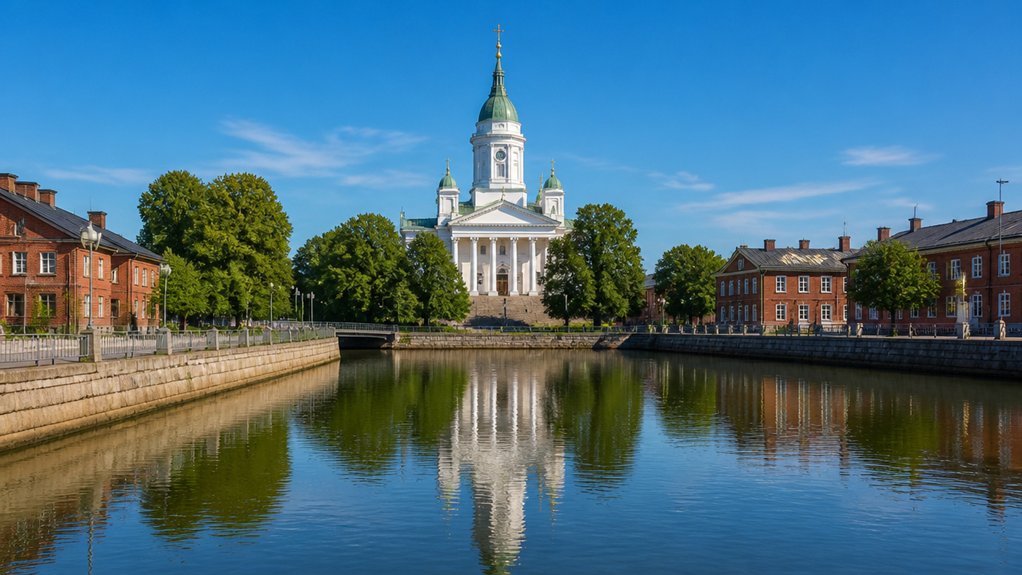
Turku’s riverfront is quieter than you’d expect for a former capital, which works in your favour—you won’t battle crowds, but you’ll need to plan ahead rather than rely on wandering to find things worth your time.
Start with the Aura River itself. The waterfront promenade on both banks gives you an immediate sense of how the city is laid out without requiring much navigation. A coffee from one of the riverside cafés and twenty minutes watching the light shift across the water will reset you after being on the ship.
From there, aim toward the cathedral, which you’ll spot dominating the skyline and can use as your anchor point while you explore the old town area around it. Most of the old wooden town was lost in a great fire and the centre was rebuilt on a straight grid, so once you’ve got the river and the cathedral fixed in your head, finding your way is easy.
Book a guided walking tour in advance rather than hoping to find one spontaneously. Popular local guides fill during cruise season, and independent operators offer better value and smaller groups than anything the ship arranges. A knowledgeable guide turns the old town from somewhere pleasant to walk through into something that actually explains why Turku mattered historically and why it still functions as more than just a tourist stop. Consider exploring shore excursions and experiences specifically curated for Turku’s cultural heritage to deepen your understanding of the destination.
History Culture and the Top Sights
Turku’s cathedral exists for a reason—the old town grew around it, and grasping that changes how you read the streets. It is the city’s great medieval landmark and a key part of Finnish history, but it has been closed to the public for a major renovation lasting several years, so check whether it has reopened before you plan to go inside. The outside and the square in front are still worth the walk.
The streets around the cathedral lead toward the river and contain antique shops, small galleries, and cafés where local people actually eat rather than spaces designed purely for ship passengers. You’ll pay less here than in the obvious tourist spots near the harbour. Walking these streets without a particular destination works well enough if you simply want the sensation of moving through an old place.
Aboa Vetus & Ars Nova combines medieval excavation with modern art inside a single building on the riverbank. It clarifies what you’ve just seen walking through the streets, though skipping it to spend more time outside is entirely reasonable. An hour here or an hour wandering—either choice serves you fine depending on how you prefer to learn about a place.
Book a walking tour operator in advance rather than buying whatever your ship offers. Independent guides know the material better and charge less, and the popular operators fill quickly during cruise season. The difference between a guide and simply walking is the difference between facts you’ll remember and pleasant wandering you’ll forget.
Beyond the Centre: Day Trips and Alternatives
Most cruise passengers stay in the old town, so anywhere beyond it actually feels quiet. The archipelago islands off the coast beyond Turku exist, but getting there requires advance planning—ferry schedules don’t match cruise port days, and you need to book rather than arrive hoping for space.
Naantali sits a reasonable distance away by local transport and has medieval streets without the volume of people you’ll encounter in Turku’s centre. The harbour there functions as an actual working space rather than a tourism-focused area, and the cafés charge realistic prices for actual food. You can walk the entire old town, eat lunch, and return to your ship without rushing.
If you want to visit islands, book an independent tour operator before you arrive. The popular operators fill during cruise season, and private guides typically charge less than your ship’s equivalent offering. These operators handle the ferry logistics, so you simply show up rather than navigating schedules yourself.
Turku Castle stands at the mouth of the river, a short walk from the cruise berths, and you can reach it by walking or taking local transport without paying for an organised excursion. It warrants half a day of your time if you have it available. Going independently rather than booking through your ship saves money and means you set your own pace.
Shore Excursion or Going It Alone
Your ship’s excursion desk will charge you significantly more than the actual cost to visit Turku Castle, and you’ll spend half your time waiting in a queue with dozens of other passengers wearing matching lanyards. The independent approach—using local transport to reach the castle, moving through the rooms at your own pace, stopping for coffee in the courtyard without a guide’s commentary—costs a fraction of what the ship charges and gives you genuine control over your afternoon.
The economics are simple. Ship excursions bundle transport, a guide, and their profit margin into a single package price. You end up paying for convenience you don’t actually require. Reaching Turku Castle on your own demands no special knowledge, and the signage is perfectly adequate. You’re not navigating unmarked forest tracks; you’re walking to a medieval fortress more than seven hundred years old that’s difficult to miss.
Organised tours only make genuine sense for the archipelago islands, where ferry schedules are genuinely complicated and local operators have already worked out the logistics. Book an independent tour operator through their website before you arrive, since the reliable ones fill up quickly during cruise season and cost less than your ship’s equivalent offering. You arrive at the departure point, they manage the rest, and you experience the islands properly rather than rushing through a compressed version squeezed between other organised activities.
For everything else in Turku—the cathedral, the market, the riverside walk, Naantali’s old town—you’re better served staying independent. Your day becomes yours rather than following someone else’s timetable.
Local Knowledge Worth Having Before You Dock
The riverfront market operates year-round, but weekdays are genuinely better than weekends because local shoppers actually outnumber cruise passengers and vendors haven’t yet been worn down by the breakfast rush. Weekends and cruise days turn it into something else entirely—still functional, but the prices shift upward and what you’re buying feels pre-arranged for tourist consumption. If you want to see how locals actually shop here, come on a weekday.
Eating near the cathedral will cost more than seems reasonable, so either arrive early or walk inland away from the immediate tourist area. The neighbourhood streets a few minutes in from the waterfront have proper local restaurants where your money works harder and the food isn’t designed for speed. You’ll notice the difference immediately once you step away from the cathedral’s shadow.
Turku’s museums charge entry fees but stay relatively quiet even when the port is busy, which means you can actually look at things without being pressed from behind by other people. The medieval cathedral would normally be the obvious place to linger, but it has been closed for a renovation lasting several years, so check whether it has reopened before you plan around it. Turku Castle is the better place to spend a slow afternoon, and no one is trying to move you along.
The harbour walk itself is free and often proves more absorbing than passengers anticipate. Follow the river downstream from the cathedral towards the castle and you’ll see why Turku functioned as a port city historically, and why locals consider it superior to the more polished towns nearby.
Turku avoids the crushing density that defines other cruise ports even when several ships are docked simultaneously. Your afternoon won’t involve queuing or competing for a clear photograph, which fundamentally changes how the experience feels compared to ports where you’re one of several thousand passengers cycling through the same streets.
Your Port Day: A Sample Itinerary
Turku works better if you get ashore early and have a plan, rather than wandering between the places everyone else visits. The riverfront stays relatively uncrowded during the first couple of hours, which actually lets you move without feeling herded.
Start at the riverfront market before mid-morning. The local shoppers still outnumber cruise passengers at this hour, and the vendors haven’t shifted into tourist pricing yet. Buy coffee and food from someone selling to neighbourhood people, then browse the stalls without rushing—this approach sets up a day that feels like actual exploring rather than ticking boxes.
Head inland toward the cathedral, but skip eating anywhere near it. Walk several minutes further into the surrounding streets where restaurants serve locals predominantly and price accordingly. A meal in these places costs less and tastes like food chosen for flavour rather than produced in bulk.
Spend your afternoon at Turku Castle, committing real time instead of the standard quick visit. The light shifts noticeably as the day progresses, and you’ll actually be able to look at things without people crowding past you. Museums stay quieter than the main attractions even when the port fills with passengers, so you can see what’s actually there.
If you have energy left, walk downstream along the river from the cathedral towards the harbour. This route shows you why Turku functioned as a proper working port rather than a polished tourist destination. Return to the ship with time to spare rather than rushing—this port doesn’t demand split-second timing to feel worthwhile.
Book your Turku day
Tours for this port, compare before you book
Getting around in port