St Petersburg Cruise Port Guide
Insider secrets to maximizing your St Petersburg cruise port visit—discover why most passengers miss the best experiences…
In this guide
- Cruise Port Overview: What To Expect
- Getting From the Port To Town
- The Must-Do Experience: Start Here
- History Culture and the Top Sights
- Beyond the Centre: Day Trips and Alternatives
- Shore Excursion or Going It Alone
- St Petersburg: The Details Nobody Mentions at the Port Talk
- Your Port Day: A Sample Itinerary
Try one free personalised day plan — built around your ship’s actual arrival and departure times. Then get every port on your cruise done the same way from £7.99 (about $10).
Cruise Port Overview: What To Expect
St Petersburg’s cruise terminal sits in the northwest of the city, so getting anywhere worth visiting requires actual travel rather than a casual walk. This distance works in your favour though—the streets stay relatively clear of cruise passengers, which means you can move around without the shoulder-to-shoulder crowds you’d encounter in places like Barcelona or Venice.
Without a Russian visa you can only go ashore on a tour booked with a licensed Russian tour operator, which covers you visa-free for up to 72 hours. If you have your own visa, getting into the city requires a choice. Walking is technically possible but tedious and slow. A local taxi or ride-sharing app will get you to the centre in reasonable time without breaking the budget. The ship’s organised transfers are expensive and trap you into their timetable, so skip them entirely and travel on your own terms instead.
The terminal itself is basic and cramped when multiple ships dock simultaneously. There’s a small café and standard facilities, nothing more useful than that. Currency exchange here works against you, so withdraw money from ATMs in town or change before you leave the port.
How you spend your port day matters far more than which sights you chase. St Petersburg rewards time spent looking closely—the Hermitage could easily take your whole day, the canals repay wandering, and the buildings respond to genuine attention. Most cruise passengers fail by attempting too much, racing through five separate things without seeing any of them properly. You’ll have a better day by picking two or three things and actually looking at them than by ticking off a longer list. Book any independent tours beforehand because the popular ones fill with cruise passengers quickly, and booking online in advance costs substantially less than negotiating rates at the terminal on the day.
Getting From the Port To Town
Taxi ranks at cruise terminals exploit the time pressure of disembarking passengers by quoting fares that bear no relation to actual journey costs. Download a ride-sharing app before you arrive and you’ll see the exact price upfront, which typically undercuts terminal taxis substantially.
The industrial sprawl between port and city centre means walking wastes hours without reward. Your only practical option is motorised transport, so decide your method before you clear the terminal and start moving immediately rather than lingering in the crowded facilities.
Ride-sharing works best if you’re travelling alone or as a pair, since the savings justify relying on a data connection. Groups of four often find a standard taxi becomes comparable in price and removes the need for internet reliability just after you’ve left the ship.
The real benefit of arranging your own transport is controlling your schedule completely. For a hassle-free experience, consider booking airport and port transfers with professional drivers who handle all logistics while you relax after your cruise. You leave when you choose, return when you choose, and aren’t bound by organised transfer timings or group tour schedules that delay departure because other passengers are still shopping.
The Must-Do Experience: Start Here
Most first-time cruise visitors to St Petersburg spend their shore time standing in queues outside the Hermitage, then leave feeling they’ve seen almost nothing. The city actually reveals itself more efficiently through the waterfront—the Neva River and its palaces tell the real story and draw far fewer people than the museum entrances.
Go to Palace Square and the Winter Palace first. You’ll see the building itself without fighting through interior crowds, and the square has genuine architectural presence. Walk along the Neva embankment toward the Peter and Paul Fortress, where the cathedral spire across the water is the city’s actual visual anchor, and the walk matters more than photos of it.
Booking an independent guided walking tour in advance gives you better value and avoids the terminal operator markup. Tour guides take you through inner neighbourhoods where the city actually functions—grand avenues and colonnaded buildings without the stream of cruise groups. These tours fill quickly during peak season, so arranging one before you arrive costs considerably less. Many shore excursions can be pre-booked through cruise port operators to secure your spot during busy travel periods.
If museums appeal to you, the smaller palaces like the Yusupov Palace or the Russian Museum work better than the Hermitage. Both hold substantial collections, function comfortably without overwhelming crowds, and give you the palace experience without consuming your entire shore time in queues. You’ll actually see something rather than spend your day waiting.
History Culture and the Top Sights
St Petersburg’s cultural reputation rests almost entirely on the Hermitage, which is precisely why you should spend your time elsewhere if you value actually seeing things rather than queuing for them. The city’s real history lives in its palaces, streets and the character of neighbourhoods where locals still navigate daily life without a cruise terminal in sight.
The Winter Palace exterior tells you more about imperial power than hours inside ever could. Walk the Neva embankment toward the Peter and Paul Fortress—the cathedral’s golden spire across the water is the visual spine of the entire city, and the journey along the river embankment shows you how St Petersburg was built as a statement rather than a town that simply grew. The Yusupov Palace or Russian Museum offer substantial art collections in manageable spaces where you’ll actually absorb what you’re seeing rather than shuffle through crowded galleries shoulder-to-shoulder with every other cruise passenger.
Palace Square itself deserves a proper look. The architecture communicates more than any guidebook, and you can see the scale and ambition of the place without fighting interior crowds. If Russian imperial history genuinely interests you, consider booking an independent guided walking tour focused on 18th-century palaces and the Neva embankment rather than museum interiors—these tours fill quickly during peak season and cost considerably less when arranged in advance online.
You’ll move through the city with a proper guide instead of following a uniformed group through predetermined stops, and you’ll understand why this city mattered rather than simply collect sights to photograph.
Beyond the Centre: Day Trips and Alternatives
Most cruise passengers stay within the scheduled tour radius, which means the actual St Petersburg exists beyond the coach routes where your ship company takes its cut. The suburban palaces—Peterhof and Tsarskoye Selo in the town of Pushkin—occupy an odd position where they’re well-known enough to appear on every excursion brochure yet far enough out that independent travellers can move through them without the crowds that swamp the ship tours.
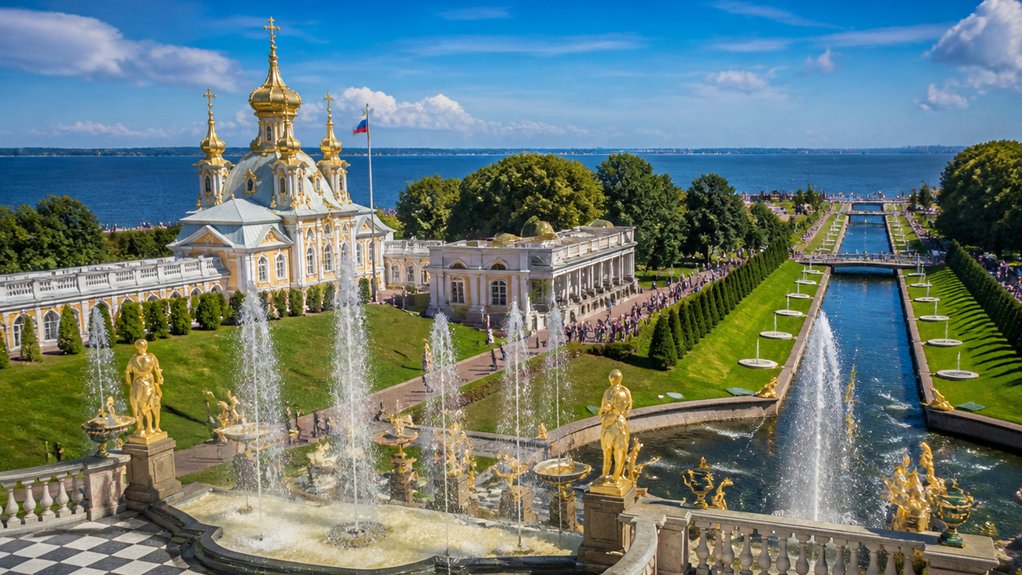
Peterhof sits on the Gulf of Finland and needs proper time to function as more than just a viewing exercise. The cascade fountains and golden statuary matter less than the gardens themselves and the basic experience of standing in a place where imperial leisure operated entirely differently from how court life worked in Moscow. The journey out takes you through neighbourhoods where people actually live rather than the sanitised route your ship’s excursion follows, and you see how the city works beyond its centre.
Tsarskoye Selo requires more effort but delivers accordingly. Catherine Palace’s interiors are substantial, but what stays with you is the sheer scale of the imperial estate—this was a functioning town built entirely for one family’s comfort. The park alone justifies the half-day journey, particularly if you book an independent guide who knows which paths locals use and which rooms tourists typically bypass.
Arrange these tours well in advance through established platforms that specialise in St Petersburg day trips. The better guides fill up quickly during peak season, and booking independently costs considerably less than ship-organised versions while giving you genuine control over your pace and where you actually spend time. Your flexibility increases substantially when you’re not tied to a group schedule dictated by a single ship’s timeline.
Shore Excursion or Going It Alone
The cruise line’s excursion desk will tell you that independent travel in St Petersburg demands fluent Russian, extensive research, and nerves of steel to handle Soviet bureaucracy. Much of that is marketing fiction designed to protect their commission, but the visa rule is real: without your own Russian visa you can only go ashore on a tour with a licensed Russian operator, and booking one directly usually costs less than the ship’s version.
The financial and practical difference is straightforward. A ship excursion means paying a premium for a coach full of other passengers, a fixed schedule that won’t bend to your interests, and a guide running through their thirteenth identical speech of the week. You’ll spend half your port time moving between locations and half sitting in traffic, which becomes frustrating when you have eight or ten hours total. Going independently costs substantially less and gives you actual time to inhabit the city rather than tick off a list.
Book your tours through platforms that specifically handle St Petersburg trips for cruise passengers, and do this before you leave home. The experienced guides and smaller groups book out during busy seasons, and waiting until you’re at the port means competing for whatever’s left or scrambling with a poor internet connection while the ship’s departure horn sounds. A good independent guide will speak English properly, know which museums have manageable crowds at specific times, and actually listen if you want to spend an extra hour somewhere rather than follow a rigid programme.
The real benefit extends beyond spending less money, though that counts. You’ll move through the city at an actual human pace instead of a tourist schedule, and you’ll feel the difference the moment you stand in a room where someone lived a real life, rather than simply passing through it as one of thirty people in matching lanyards.
St Petersburg: The Details Nobody Mentions at the Port Talk
The cruise terminal sits well away from the city centre, which means the ship’s transfer service costs substantially more than simply taking a taxi or ride-share from the rank outside the port building. More importantly, the first couple of hours after your ship docks are when the major museums see their lightest crowds, and you’ll squander both of those hours if you wait for a coach to fill up with other passengers before departing.
If you’re travelling on your own Russian visa, the metro is the fastest way around the city, and you can navigate it without speaking Russian. Download the Yandex Metro app before you arrive, buy a contactless card at any station, and the system does the rest. The network runs with mechanical efficiency, the stations function as architectural attractions in themselves, and fares cost a fraction of what the cruise line charges for a shuttle service.
Weather here is unpredictable and shapes what you can actually accomplish. Even in relatively mild months, the city turns cold and damp without warning, so pack layers and waterproof shoes that genuinely keep water out. The crowds at the Hermitage and Church of the Saviour on Spilled Blood reach substantial numbers during cruise season, and arriving before mid-morning makes a tangible difference to how long you’ll spend queuing.
The city centre operates on a different schedule than most European ports. Lunch happens noticeably late, restaurants don’t fill properly until evening, and wandering into a café at midday expecting a full meal often means finding the kitchen isn’t actually ready to serve. Timing your eating around this rhythm makes your day run far more smoothly.
Your Port Day: A Sample Itinerary
Most cruise passengers spend their morning stuck in queues, which means early arrivals actually get to move through St Petersburg without fighting crowds. The advantage is real and immediate—you can see things rather than just wait to see them.
If you’re on your own visa, take a taxi from the terminal into the centre or to the nearest metro station, then spend your first two hours at the Hermitage before the visitor numbers make navigation difficult. The building’s rooms themselves are as important as what’s displayed—the interiors function as art in their own right, so choose one wing and look properly rather than rush through everything. If you’re going ashore visa-free, you’ll need to stay with your licensed tour for the whole visit, so follow its itinerary instead.
By early afternoon, find a café in a neighbourhood away from the tourist areas around Palace Square. You’ll eat better food for less money, and these places are actually operating unlike the restaurants near the terminal that always seem to be closed. Walk off lunch by exploring the streets between the Neva and Nevsky Prospekt, where you encounter the city’s architecture without the surrounding merchandise.
Spend your final hours at the Church of the Saviour on Spilled Blood, which sits on the Griboyedov Canal and tends to have fewer visitors in late afternoon. The interior mosaics don’t work well in photographs but they’re worth seeing in person, and the area around it contains actual residents instead of just tour groups. Return to the metro in early evening so you have enough time to get back to the ship without rushing.
Book your St Petersburg day
Tours for this port, compare before you book
Getting around in port