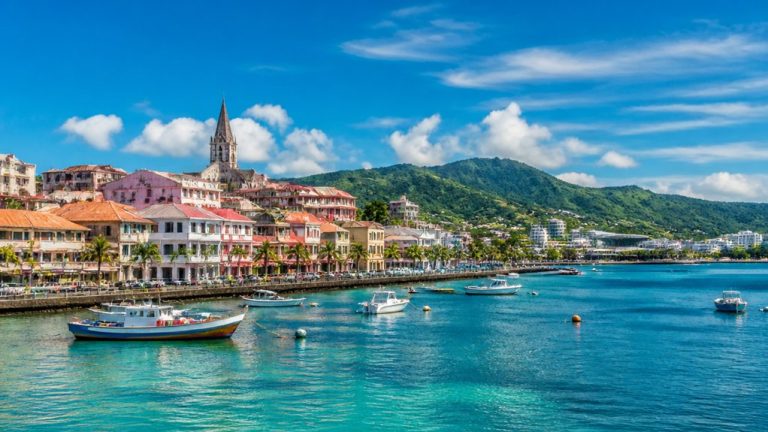
St Maarten Cruise Port Guide
Two Caribbean countries in one port day—discover hidden gems, authentic dining, and why independent travel beats cruise-line tours.
In this guide
Try one free personalised day plan — built around your ship’s actual arrival and departure times. Then get every port on your cruise done the same way from £7.99 (about $10).
Cruise Port Overview: What to Expect
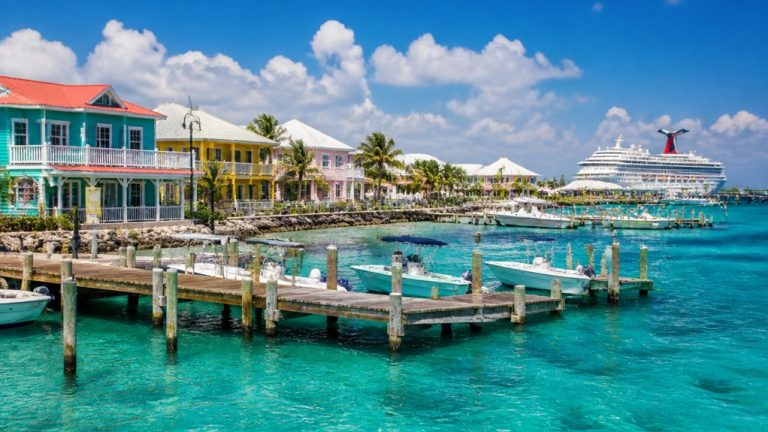
Ships calling here berth at the Dr A. C. Wathey Cruise and Cargo Facility at Point Blanche, on the eastern arm of Great Bay. That is not the town centre, whatever the morning announcement implies. The pier gate stands roughly 1.2 km from the eastern end of Front Street and about 2 km from its western end, so reaching Philipsburg means a walk of 15 to 20 minutes, a water taxi hop, or a road taxi from the rank.
The facility works two piers. Pier 2 measures 445 m and can take two ships of more than 220,000 gross tons at once, which is why four large vessels alongside is a routine morning rather than a record. Port St Maarten handles well over a million cruise passengers a year. On a four-ship day you share a town of fewer than 2,000 residents with well over 10,000 visitors.
Harbour Point Village sits at the pier head with duty-free units, bars, market stalls, the water taxi desk and a rank working more than 100 taxis and tour vans. It is tidy, well policed and far less pushy than most Caribbean pier villages, but the prices are pier prices. Everything is cheaper 1.2 km up the road.
One structural fact governs the whole day: Sint Maarten and Saint-Martin are two separate jurisdictions on one 87 km island. The Dutch south covers about 34 km2 and is a constituent country of the Kingdom of the Netherlands. The French north covers about 53 km2 and is a French overseas collectivity. Different currencies, different phone networks, different emergency numbers, one open road between them. Independent operators listed on the Philipsburg excursion pages and the wider range of tours and activities generally cross that line without fuss; plan your own day around it and it costs you nothing but minutes.
Getting From the Port to Town
Three options leave the pier, and only three. There is no shuttle bus and no public bus service inside the port gates.
On foot. Turn right out of Harbour Point Village and follow Juancho Yrausquin Boulevard with the water on your left. It is 1.2 km of continuous pavement to Captain Hodge Wharf at the eastern end of Front Street, 15 to 20 minutes at a normal pace, flat the whole way apart from one short rise near the port exit. Carry on and the western end of Front Street is another 800 m. There is no shade for the first 600 m.
Water taxi. Boats run continuously from the pier to three landings on the Philipsburg waterfront: Captain Hodge Wharf, Walter Plantz Square and Bobby’s Marina. The crossing takes a few minutes. A ticket is a pass rather than a single, so you can shuttle back and forth all day, and it is the only sensible choice if anyone in the group is unsteady on their feet. Queues are worst in the first hour after all ships are cleared and again in the last two hours before all aboard.
Road taxi. Fares are government-set by destination and quoted in US dollars for two passengers, with a supplement per extra head. Agree the destination and the number of people before you get in. A bus runs straight through to Marigot, but taxis are the only way to reach the rest of the French side without a change of bus.
The public buses are the thing most guides get wrong here. They are privately run minivans, identified by a licence plate beginning with the letter B and a destination card in the windscreen, and they are not permitted to work inside the cruise facility. The Dutch-side terminus is Emmaplein, at the western end of Philipsburg beside the Great Salt Pond, about 2 km from the ship. From there buses run to Marigot via Bush Road, Cole Bay and the border monument; to Maho and Cupecoy via Simpson Bay and the airport; up Bush Road into Cul de Sac for Rainforest Adventures; and across into French Quarter. You flag them down anywhere along the route and tell the driver where you want off. Service thins out badly on Sundays and after dark.
The Must-Do Experience: Start Here
The one thing this island does that nowhere else in the Caribbean does is put two European jurisdictions on one small landmass with a completely open border between them. The Treaty of Concordia of 23 March 1648 divided the island; the line was finally fixed in 1817 and has run 16 km across the hills ever since. There is no immigration post, no barrier and no passport check on any road crossing. The only marker is the border monument on the Philipsburg to Marigot road at Bellevue, above Cole Bay, roughly 7 km from the pier. You cannot walk to it from the ship; you take the Marigot bus, a taxi or a hire car.
Do the crossing deliberately rather than as part of a coach loop. Take the Marigot bus or a taxi from Philipsburg over Cole Bay Hill, watch the road signs switch from Dutch and English to French, notice the speed limits change from miles to kilometres per hour, and arrive in Marigot about 13 km and 30 to 45 minutes from where you started, traffic through Cole Bay being the variable.
Marigot’s covered waterfront market on Boulevard de France runs every day except Sunday, mornings only in practice, and the fish, lobster and conch are at their best on Wednesday and Saturday. Above it, Fort Louis was built in 1789 under Chevalier Durat and named for Louis XVI, months before the Revolution removed him. A stone stair beside the West Indies Mall climbs to the car park, then more steps reach the ruins, which have been stabilised and left open. The view takes in Marigot Bay, Simpson Bay Lagoon, the airport control tower and, out to the north across the channel, Anguilla.
Bring your passport because your ship will ask you to, but the crossing itself demands nothing. What it does demand is time: budget three hours minimum for Marigot and back if you are on public transport.
🗺️ Tours & Experiences at This Port
Skip the ship’s overpriced excursions — browse top-rated independent tours trusted by thousands of cruise passengers.
History Culture and the Top Sights
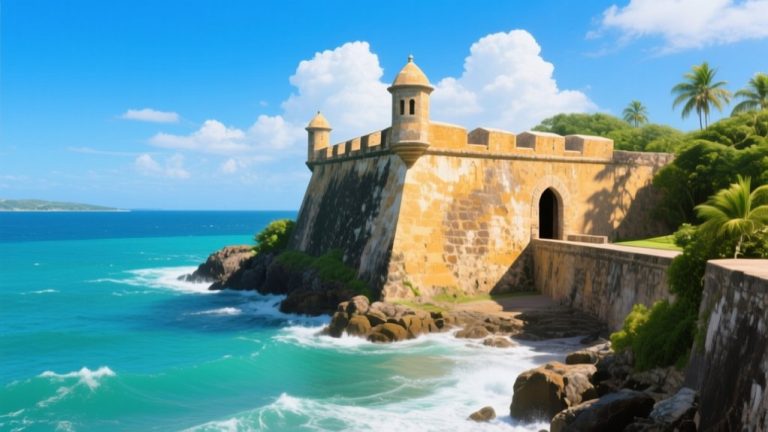
Fort Amsterdam is the oldest thing on the island and the one most guides place in the wrong spot. The Dutch built the triangular stone fort in 1631, making it the first Dutch fort in the Caribbean, and it stands on the headland between Great Bay and Little Bay, about 2.5 km west of Wathey Square. It does not overlook Front Street and you cannot see the French side from it. You reach it on foot through the grounds of the Divi Little Bay Beach Resort and then up a rough track. Several 19th-century cannon are still in position, with interpretive boards, and the headland carries a brown pelican breeding colony important enough to be designated an Important Bird Area.
Philipsburg itself is far younger than the partition. John Philips, a Scot from Arbroath serving the Dutch, founded the town in 1733, 85 years after the island was divided. He laid it out along a sandbar barely 300 m wide between Great Bay and the Great Salt Pond, which is why there are only two streets running its length: Front Street on the sea side and Back Street behind it, joined by short alleys called steegjes.
The Courthouse on Wathey Square is the set piece. It went up in 1793 to plans by John Handleigh, commissioned by Commander Rink, and took over from Fort Amsterdam as the seat of government. A 1966 restoration gave it the shape it has now. It still houses the court of Sint Maarten, and it is one of very few buildings anywhere to appear on a national flag.
Great Bay Beach runs directly behind Front Street with the boardwalk along its length, which makes Philipsburg one of the few capital cities in the world with a usable swimming beach in the middle of it. The eastern end is the closest sand to the ship at about 1.2 km. Sun loungers, showers and toilets are along the boardwalk. Also on the sandbar: St Martin of Tours church and the ruins of the Foga salt works, a reminder that the Great Salt Pond, not tourism, was the reason the town existed at all.
Beyond the Centre: Day Trips and Alternatives
Maho Beach is the day trip most people actually come for. It lies about 11 km west of Philipsburg, 20 to 30 minutes by road depending on the Cole Bay and Simpson Bay queues, and the Maho bus from Emmaplein runs past it. The beach sits directly under the approach to Princess Juliana International Airport, whose single runway 10/28 measures 2,300 m by 45 m and was renumbered from 09/27 in late 2008. The prevailing easterly trade wind means runway 10 is in use most days, so arriving aircraft cross the sand at under 30 m above the ground and departing aircraft point their jet blast straight back over it. Both spectacles happen on the same stretch. Aircraft movements are heaviest at the weekend, when the long-haul widebodies arrive.
Treat the jet blast warnings as literal. On 12 July 2017 a 57-year-old visitor from New Zealand was killed by blast from a departing aircraft while holding the perimeter fence, and a second fence has since been installed behind the runway 10 threshold. Stand on the sand, not on the fence.
Orient Bay is about 12 km from Philipsburg on the French side’s Atlantic coast, 25 to 35 minutes by road, and there is no through bus: the bus to Marigot, then a French-side bus from the station beside the football stadium. The bay runs roughly 2 km, the beach clubs cluster in the middle, and Ilet Pinel and the Reserve Naturelle Nationale sit offshore. Because it faces the trade wind it is choppier than anything on the Dutch coast, which suits windsurfers and disappoints anyone expecting mirror-flat water.
Rainforest Adventures at Rockland Estate is the nearest adventure attraction and stays on the Dutch side, so no border crossing: a 10 to 15 minute drive up Bush Road into Cul de Sac, with the Cul de Sac bus passing the entrance. The Sky Explorer chairlift climbs Sentry Hill and the Flying Dutchman zipline runs off the summit. Loterie Farm, which many guides name as the rainforest option, is on the French side at Rambaud on the flank of Pic Paradis, the island’s high point at 424 m, and it is a 40-minute drive with a border crossing in it. Both work; they are not interchangeable. Independent operators covering all of these are listed among the day trips running from Philipsburg, and the popular boat trips fill weeks ahead in season.
Shore Excursion or Going It Alone
The honest answer here depends on one variable: how far you are going and how many borders and bus changes are involved.
Independent works well for Philipsburg, Great Bay Beach, Fort Amsterdam and Maho. All four sit on the Dutch side, all four are reachable on foot, by water taxi or on a single bus line, and none of them requires a booking. Maho in particular is a direct bus ride from Emmaplein with no change.
Independent works less well for Orient Bay, Pinel, Loterie Farm and Grand Case. Those need a border crossing and, on public transport, a change at Marigot bus station. Add the 13 km each way and the Cole Bay bottleneck and you are committing a large slice of a port day to the journey. A booked transfer or a small-group tour removes the change and the waiting, which is the real saving rather than the fare.
Boat trips to Ilet Pinel, Creole Rock and Tintamarre have to be booked whatever you decide, because they run from jetties on the north-east coast rather than from Philipsburg. Book them before you sail; the good operators sell out in season and the alternative is whatever is left on the pier.
Two practical cautions when you go it alone. First, the return leg is the risk, not the outward one: French-side buses are less frequent than Dutch-side ones and the last useful connection back over Cole Bay is earlier than people expect. Second, nothing about the border is enforced on the road, but your mobile phone will switch networks and may switch country, so download your map before you leave the ship rather than relying on data on the French side.
Screenshot any booking confirmation. Meeting points for independent operators are usually at Walter Plantz Square or Captain Hodge Wharf in town, not at the pier gate, and the water taxi is how you get to them.
🗺️ Tours & Experiences at This Port
Skip the ship’s overpriced excursions — browse top-rated independent tours trusted by thousands of cruise passengers.
Things Worth Knowing Before You Step Off in St Maarten
The currency situation is not what older guides describe. The Dutch side has replaced the Netherlands Antillean guilder with the Caribbean guilder, code XCG, shared with Curacao, and the old notes are no longer in circulation. It is pegged to the US dollar. In practice none of this affects you, because the US dollar is quoted and accepted everywhere on the Dutch side, from the pier to Front Street to the taxi rank. You do not need guilders and you should not buy any.
The French side is a euro country. Most Marigot businesses will take dollars, but at a rate they set themselves, and it is rarely in your favour. Use a card in Marigot and Grand Case.
There are two places called Cul de Sac. The Dutch one is the inland valley off Bush Road where Rainforest Adventures sits. The French one is the north-east coastal village where the Pinel Island ferry leaves. They are on opposite sides of the island. Drivers know the difference; booking sites sometimes do not.
Hurricane Irma is still visible if you know where to look. The Category 5 storm crossed on 6 September 2017. The airport lost its terminal roof and reopened with temporary structures that October; the full terminal was only rebuilt in stages over the years that followed. Club Orient at the southern end of Orient Bay was destroyed and has never been rebuilt, so guides describing it as a working resort are years out of date, although the naturist tradition on that stretch of sand continues and a beach bar operates there.
Front Street is one-way and narrow, the boardwalk behind it is not, and the pavements on Juancho Yrausquin Boulevard are the busiest thing in town on a four-ship morning. Professional drivers who work the island daily will get you across Cole Bay Hill faster than a bus and know which road the traffic is on.
Your Port Day: A Sample Itinerary
Two plans work here, and mixing them is how people run out of day.
Plan A, the Dutch side on foot. Walk the 1.2 km into town early while the pavement is empty. Do Front Street and Wathey Square first, look at the 1793 Courthouse, then cut through a steegje to the boardwalk and swim off Great Bay Beach before the loungers fill. Continue west 2.5 km, or take a taxi, to Fort Amsterdam through the Divi Little Bay grounds for the 1631 fort, the cannon and the pelicans. Return by water taxi from Bobby’s Marina. Total walking, about 6 km, and you are back aboard with time to spare.
Plan B, the aircraft and the French side. Water taxi to Walter Plantz Square, walk to Emmaplein, take the Maho bus the 11 km and give the beach at least 90 minutes, because aircraft arrive in clusters rather than evenly. Then either return the way you came, or take the Marigot bus from Cole Bay onward to Marigot for the market and the climb to Fort Louis. Plan B with both halves is tight on buses and comfortable with a driver.
Whichever you choose, fix three things before you leave the ship. Know where the water taxi landing is for your return, because walking back along the boulevard in the afternoon is the hottest and least pleasant part of the day. Carry small US dollar notes, since bus drivers and market stalls are not card operations. And set your own all-aboard 45 minutes earlier than the ship’s, because the single road through Cole Bay is the only route back from anywhere west or north, and it is where every late passenger on this island gets caught.
🗺️ Tours & Experiences at This Port
Skip the ship’s overpriced excursions — browse top-rated independent tours trusted by thousands of cruise passengers.
Book your St Maarten day
Tours for this port, compare before you book
Getting around in port