Fort-de-France Cruise Port Guide
Skip the overpriced waterfront vendors and discover authentic Creole cuisine, colonial architecture, and hidden local experiences that most cruise passengers never find.
In this guide
Try one free personalised day plan — built around your ship’s actual arrival and departure times. Then get every port on your cruise done the same way from £7.99 (about $10).
Cruise Port Overview: What to Expect
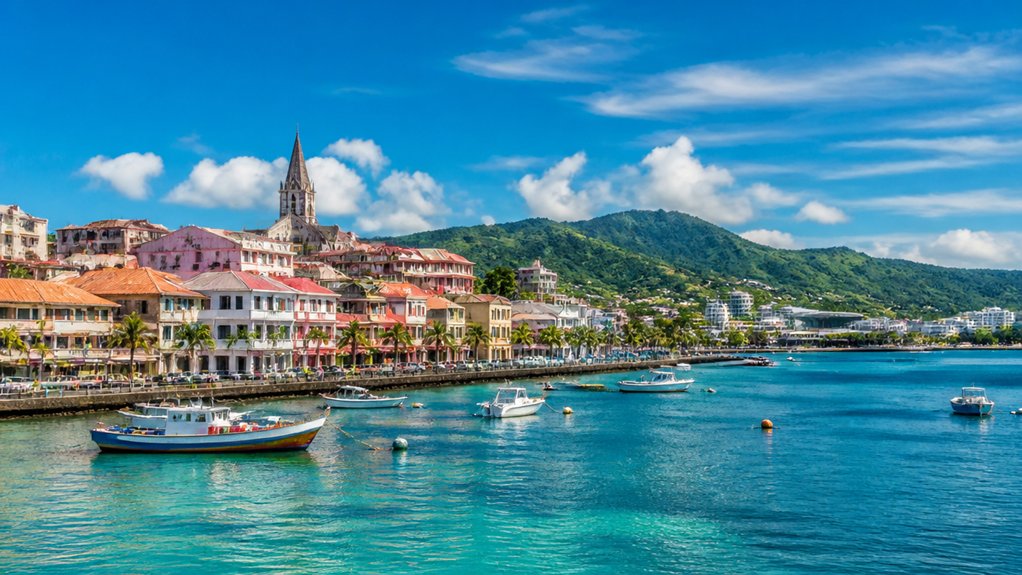
Fort-de-France is smaller and more straightforward than most Caribbean ports you’ll encounter, which generally works in your favour if you dislike queuing or fighting through crowds. The main berth at Pointe Simon sits on the edge of the city centre, so you walk straight into town with no tenders. When a second ship is in, one may berth at Tourelles, about two kilometres out in the commercial port, where shuttle buses or a taxi can be needed. This proximity means you can leave the cruise-ship atmosphere behind within a few minutes if you’re willing to walk away from the vendors clustering around the gangway.
The waterfront near the terminal fills with tour operators and merchants who price everything assuming you’ve just arrived without prior research. Ignore their initial quotes and walk past without engaging—you’ll find better value elsewhere. The real Fort-de-France exists beyond this immediate zone, in the interior markets, the colonial streets, and local Creole restaurants where your money stretches considerably further.
Planning ahead makes the difference between a useful port day and a frustrating one. The Bibliothèque Schoelcher and the cathedral are genuinely interesting and cost little or nothing to enter. If you want to visit nearby islands or hike into the rainforest, book independent operators online before you arrive, as better guides fill up quickly and ship excursions cost substantially more for a slower, more regimented experience.
Getting From the Port to Town
Getting from the terminal to town is a straightforward walk that takes longer than you’d expect but reveals the layout of the place without any fuss. The inland streets are safe enough, clearly marked, and busy with other people heading the same way, so navigation isn’t a concern. You move at your own speed and decide what to do with your time ashore rather than being pushed through a predetermined schedule.
Taxis wait by the gangway, and their opening prices for short trips are deliberately high. Flagging one down a block inland costs considerably less, though walking remains your better option since Fort-de-France is compact and the air clears your head after hours below deck. If you need a ride for distance or have physical limitations, agree on the fare beforehand because meters aren’t consistently accurate.
The bus network functions well and won’t drain your wallet, though midday congestion makes them crowded. For anything beyond the city centre—rainforest walks or island trips—arrange your tour operator online before you arrive at the port. Touts at the terminal offer convenience, but independent operators with the best guides and smaller groups book full weeks in advance, and their direct rates undercut what the cruise line charges.
The Must-Do Experience: Start Here
Fort-de-France itself isn’t the reason to stop here—the rainforest and nearby islands are what make the port worthwhile. The city centre has shops and a waterfront, but neither justifies spending your day there rather than doing something that actually interests you.
Book a rainforest walk or island tour before you arrive, ideally with an independent operator rather than through the cruise line. Established tour companies book up weeks ahead during busy seasons, and arranging directly online costs a fraction of what you’ll pay at the terminal. You’ll see actual wildlife, avoid standing in coach queues for hours, and travel with a guide who knows the territory instead of reading from a script to hundreds of people.
If you’re staying near the port, the Savane gardens provide real shade and a decent view across the bay without the crush of the shopping streets. Eating anywhere inland from the waterfront means better food at lower prices than the obvious tourist restaurants. The Bibliothèque Schoelcher is worth thirty minutes if you care about architecture, but it won’t occupy your morning. Consider booking guided excursions in advance to maximize your time at this Caribbean destination.
Decide now whether you’re going into the rainforest or out to the islands, then book that experience today. Arrive early and structure the rest of your hours around what actually interests you rather than ticking off conventional tourist stops.
History Culture and the Top Sights
Fort-de-France’s colonial architecture contains actual information about the island’s past, though you’ll have to look actively for it since cruise operators don’t prioritise these locations. The cathedral near the waterfront warrants a brief stop—the iron structure is genuinely unusual and the interior functions as a space rather than a performance for tourists. Beyond it, the Savane gardens give way to the Palais du Gouverneur and administrative buildings that governed the island under French control, and because they remain operational rather than preserved as museum pieces, they’re far more revealing than enclosed exhibits.
The Bibliothèque Schoelcher borders the gardens and photographs well from outside, and entry is free, though going inside only really rewards you if you care about rare manuscripts and archival material. Most cruise passengers take a picture and leave, which is a perfectly valid choice. What genuinely matters is spending your port time on the streets rather than indoors shopping or standing in queues—walk the neighbourhoods between the cathedral and governor’s palace, eat lunch somewhere the crew from your ship isn’t already seated, and let what you observe in the architecture and street patterns teach you how the city operates. The history lives in these spaces themselves rather than behind barriers and admission desks, and you’ll learn more this way than from any organised tour hitting the same five standardised stops as everyone else aboard.
Beyond the Centre: Day Trips and Alternatives
Most cruise passengers remain at the waterfront, leaving the actual substance of Martinique untouched. The interior—hills, active farms, coastal settlements—warrants your attention if you’re prepared to move past the shops and organized facilities surrounding the terminal.
You face a straightforward decision between packaged tours leaving directly from the port and independent travel using island transport. Ship-organized excursions charge substantially more than warranted for what typically amounts to a minibus journey followed by a scheduled stop at a rum facility or beach establishment where the operator receives a cut. Independent guides and operators booked ahead of time deliver better value and genuine freedom to move as you choose, though advance booking matters during cruise season when slots fill quickly.
Balata Botanical Garden occupies elevated terrain above the city and operates as functioning horticulture rather than tourist performance, though you’ll require transport to reach it. Case-Pilote fishing village serves lunch at rates well below terminal prices, with grilled fish available at establishments where locals conduct business in Créole rather than catering to outsiders. The southern route toward Les Trois-Îlets traverses residential areas, banana fields, and coastline that reflects how people actually inhabit the island rather than the version tourism has constructed.
Shore Excursion or Going It Alone
The ship excursion desk sells convenience by packaging tours into neat, standardised experiences—rum distillery visits, beach stops, mountain drives—all bundled at prices two or three times higher than what independent operators charge for identical outings. They market this as hassle-free, which it is, but only because you’re paying substantially for someone else to handle the logistics whilst you sit alongside forty other passengers on a minibus following a predetermined route designed around retail stops.
Independent operators deliver the same experiences at significantly lower cost, but only if you’ve arranged things before leaving port. The reliable local tour guides book solid during cruise season, particularly those running botanical garden visits or fishing village lunch experiences, so arriving at the terminal hoping to find something decent guarantees frustration and leaves you paying the ship’s inflated rates by default.
Your actual advantage lies in preparation. Search for local operators online, contact them directly, and book your transport or guide before you sail. Most speak English fluently and will customise an itinerary to match what interests you rather than stick to the standardised circuit designed for maximum time at souvenir shops.
The financial reality is uncomplicated: independent travel costs roughly half the cruise line’s prices whilst giving you complete control over where you go and how long you stay. You’ll work with guides who actually know the region rather than someone trained to steer you toward expensive trinkets between scheduled photograph moments. The sole requirement is doing the research during the weeks before departure instead of hoping something reliable materialises once you’ve disembarked.
What Most Fort-de-France Guides Get Wrong
Fort-de-France’s waterfront turns into a controlled chaos the moment your ship docks, with vendors and unofficial guides working the terminal with practiced intensity—this is entirely normal and not dangerous, but it does mean the first hour ashore will feel overwhelming if you haven’t mentally prepared for it. The noise and activity level drop noticeably once you move past the immediate dock area, which happens quickly enough that you won’t need to tolerate the mayhem for long.
The Savane is where most cruise passengers end up, and it’s also where you’ll pay the most for the least. Cafés overlooking the park charge substantially more than places a single street inland, and what you’re paying for is primarily the view and the convenience of staying put rather than actually exploring. Head toward the Cathedral or the library district instead, and you’ll find where locals eat lunch—proper Creole food at reasonable cost, prepared the way people actually cook it rather than how restaurants think tourists want it served.
The Bibliothèque Schoelcher sits just inland from the harbour and genuinely rewards thirty minutes of your attention if you care about architecture or simply want a quiet space. Most cruise passengers skip it because it requires a bit more walking than they’re willing to undertake, which means the interior stays peaceful even when the port is jammed. The admission is free, making it straightforward to assess whether it’s worth your time once you’re ashore.
Any independent guide or botanical garden tour worth having books up weeks ahead during cruise season, so arrange these before your ship leaves port. Attempting to hire someone reliable on arrival day means either accepting whatever remains available or paying the inflated rates the ship itself charges. The difference in cost and quality between advance booking and last-minute arrangement is substantial enough that it’s worth handling from home.
Your Port Day: A Sample Itinerary
Fort-de-France works best when you plan rather than drift—the port’s geography means your first decision shapes whether you’ll spend the day in queues with thousands or actually see the place. The Bibliothèque Schoelcher opens immediately after you leave the dock and stays relatively quiet regardless of how packed the waterfront gets; you’ll complete the architecture visit before the afternoon rush arrives. Entry is free, so you can leave early without feeling you’ve wasted money.
Walk from there toward the Cathedral and into the surrounding library quarter for lunch. The restaurants here serve what locals actually eat rather than tourist versions of Creole food, and the prices stay reasonable compared to what you’ll pay for the same dishes at the Savane waterfront cafés. Eat without rushing and let the streets show you what’s there without you forcing the experience.
Your afternoon hinges on what you’ve arranged beforehand. If you’ve hired an independent guide or booked a botanical garden tour in advance, meet them during these hours—the reliable operators book weeks out and charge significantly less than the ship’s excursion desk. If nothing’s planned, walk the residential streets that branch off from the harbour, stop for coffee where you see other people doing the same, then head back to the ship without feeling you’ve missed anything.
Book your Fort-de-France day
Tours for this port, compare before you book
Getting around in port
✈️ Before you sail: eSIM, insurance, luggage, flight delays
Ships In Fort-de-France
Upcoming calls from our sailings tracker, updated regularly.
Coral Princess
Princess CruisesTue 20 Oct
⚓ 08:00–18:00
Carnival Venezia
CarnivalFri 23 Oct
⚓ 08:00–17:00
Vision Of The Seas
Royal CaribbeanThu 29 Oct
⚓ 08:00–17:00
Valiant Lady
Virgin VoyagesThu 5 Nov
⚓ 09:00–19:00
ms Zuiderdam
Holland AmericaThu 5 Nov
⚓ 08:00–21:00
Arvia
P&O CruisesMon 9 Nov