Seoul Cruise Port Guide
Navigate beyond tourist traps at Seoul’s Incheon port—discover authentic experiences and insider secrets that cruise lines don’t want you knowing.
In this guide
Try one free personalised day plan — built around your ship’s actual arrival and departure times. Then get every port on your cruise done the same way from £7.99 (about $10).
Cruise Port Overview: What To Expect
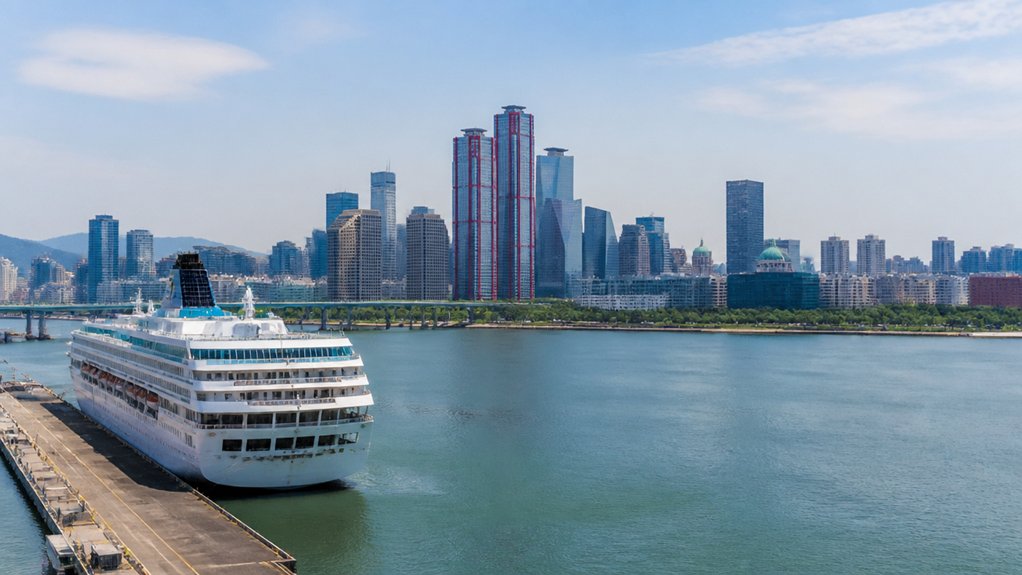
The cruise terminal sits in Incheon, not Seoul itself. Getting to downtown takes a considerable journey, and many passengers underestimate how much of their port time this consumes. The terminal building is clean and functional, with basic shops, cafés and information desks, but these facilities won’t change your day significantly.
Taxis wait outside the terminal, but there is no railway at the port itself: the nearest subway station is a shuttle or short taxi ride away in Songdo, and central Seoul is 35 to 50 km off. The arithmetic works against casual exploration: if you have eight hours ashore, the commute to Seoul and back can claim three hours or more of it, leaving far less time for actually seeing anything.
Your decision matters before you step off the ship. If you genuinely want to see Seoul’s palaces, markets and street life, arrange a guided tours through an independent operator before boarding. These tours fill quickly with cruise passengers, so early booking secures better rates than ship excursions and guarantees a space on popular routes. The operator handles all transport, which means you actually get to spend your time looking around rather than navigating.
The other choice is to ignore central Seoul entirely. Incheon has its own appeal: traditional temples, seafood restaurants that serve what locals actually eat, and walking paths that show you how ordinary South Koreans go about their lives. Both approaches work perfectly well if you commit to one deliberately instead of improvising once you’ve docked.
Getting From the Port To Town
By public transport you take the port shuttle or a taxi to International Business District station on Incheon Line 1, then change onto the Seoul subway. It costs far less than a taxi, and signs are in English as well as Korean, but allow well over an hour each way. Taxis work fine if you don’t speak Korean (show the driver a written address or photo), though you’ll pay much more and can sit in traffic during busy periods.
Your actual constraint is time. Even the fastest route eats substantially into your port day. If Seoul justifies the effort, book an independent guided tour before your cruise leaves, since operators collect you from the terminal and remove the navigation burden and the stress of timing your return. Established tour operators fill their seats quickly with cruise passengers, so booking ahead costs less than last-minute ship excursions and guarantees a place on the itinerary you want.
Staying near the port makes more sense if your time is limited. Incheon has Chinatown and Wolmido Island nearby, reachable by local transport without advance booking. On many cruise days the port runs a free shuttle, usually to the nearest Incheon Line 1 station, so check at the terminal information desk when you arrive. Consider purchasing a local eSIM data plan to stay connected while navigating the district.
The Must-Do Experience: Start Here
Most cruise passengers waste half their port day travelling to Seoul and back, then rush through whatever they see in the remaining hours. Staying in Incheon itself gives you actual time to eat and look around, plus the seafood here is genuinely good and costs less than what Seoul charges.
Start at the waterfront near your terminal and walk inland asking locals for the nearest seafood restaurant area. The fish is caught locally, prepared simply, and costs a fraction of Seoul prices—sit at the counter, point at what appeals to you, and eat standing like the regulars do. This alone makes staying put worthwhile.
From there, head to one of the Buddhist temples in the Incheon neighbourhoods. These receive far fewer tourists than Seoul’s major temples but are architecturally the same and noticeably quieter. Independent tour operators offer half-day temple visits paired with local cultural experiences if you want guided context, and booking online before your cruise departs guarantees both better rates and availability since these tours fill quickly with cruise passengers.
History Culture and the Top Sights
Incheon’s history turns on its function as Korea’s entry point, which means the city’s cultural sites carry both Korean tradition and the foreign influence that actually shaped how it developed. The Buddhist temples here operate as actual places of worship rather than photo stops—you’ll encounter people praying instead of queuing visitors. This differs fundamentally from Seoul’s temple experience, where the sheer volume of tourists transforms spiritual spaces into logistics problems.
Start your morning at a neighbourhood temple in Incheon rather than heading for Jogyesa and the other big temples in central Seoul. The architecture and spiritual atmosphere match Seoul’s famous sites exactly, but you move through them without being pushed aside by cruise groups. If you want actual information rather than just looking at things, independent tour operators combine temple visits with stops at local cultural centres, which gives you context instead of the rushed ship excursion that sends you back to the terminal dehydrated and frustrated.
By midday, move toward Chinatown, a neighbourhood that reflects Incheon’s past as a treaty port. The streets contain real character—actual food vendors, traditional shopfronts, narrow alleys. Lunch at a local noodle shop or grab buns from bakeries that have been operating here for decades.
Your afternoon works either as another temple visit if you skipped morning, or a wander through the local museum if weather becomes difficult. Book an independent guide through online tour platforms before you leave your home port, since the reliable ones fill weeks ahead and cost considerably less than what the cruise line charges for the same service.
Beyond the Centre: Day Trips and Alternatives
Organised ship excursions prioritise convenience over actual value, but Incheon’s metro system opens up neighbourhoods that cost significantly less and operate on your schedule rather than the ship’s. Once the port shuttle or a short taxi ride has taken you to the nearest station, you move around without the markup and rigid timing that tour operators impose.
Booking an independent guide through established platforms before you depart makes financial sense—the reliable ones have limited availability for cruise passengers and charge roughly half what the ship charges while actually knowing the area rather than reading from notes. Quality guides found on reputable sites speak fluent English and adjust to what interests you, whether that’s local food, building styles, or temples.
For a proper excursion beyond central Incheon, the metro gets you to Suwon, where Hwaseong Fortress contains genuine historical substance rather than the generic heritage attractions clustered near cruise terminals. An independent guide for this journey becomes worthwhile because the fortress involves real military engineering and political context—you understand why it was built rather than simply walking past old walls. The overall cost stays low, and you escape the compression of an eight-hour ship tour where half the time disappears waiting for coaches.
If you prefer moving independently, the metro requires no language ability and charges only a small fare per journey. Download an offline map before leaving the ship and travel until something pulls your attention. You’ll encounter far better food and actual neighbourhood life than any pre-planned itinerary delivers.
Shore Excursion or Going It Alone
The ship’s excursion desk profits from telling you that independent exploration is complicated. What they omit is that you’ll spend roughly double the money for half the autonomy, queuing behind forty other passengers while your guide recites information available online.
Your decision comes down to language confidence and how much control matters to you. If you speak no Korean and prefer structured guidance, a ship excursion removes friction—you board, listen, return. The cost markup, inflexibility, and obligatory gift shop visit are the price you pay.
Independent travel demands more planning but rewards you with the ability to linger somewhere unexpected or skip what bores you entirely. Book a private guide through established tour platforms well before arrival—the reliable English-speaking guides fill their cruise slots weeks ahead and charge considerably less than the cruise desk. You still get expert commentary and problem-solving without rigid bus schedules, and your money goes to someone who actually knows Incheon. Guided excursions at major cruise ports often include skip-the-line access to popular attractions, though this convenience typically comes at a premium price.
Going completely solo works if train delays and occasional wrong turns don’t stress you. Download offline maps and buy a transit card at the terminal; the metro system requires no Korean language skills and costs a fraction of what a guide charges. You’ll eat better meals, find actual neighbourhood cafés, and move at your own pace.
The practical approach suits most cruise passengers: book an independent guide in advance. It secures your best experience at lower cost than deciding on the dock, and you avoid the trade-offs of both extremes.
What Experienced Cruisers Know About Seoul
Incheon’s cruise terminal is further from central Seoul than cruise marketing lets on, and don’t expect a welcoming arrival experience since it sits on reclaimed land next to the container traffic of Incheon New Port, giving everything an industrial feel rather than anything designed for passengers. Factor the utilitarian surroundings into your first impression and move past the port area quickly if you want to see anything of actual interest.
Buy a transit card at the terminal convenience store rather than fumbling with individual tickets, since you’ll save money across metro journeys, buses, and some cafés throughout the day. Metro staff manage enough English to point you toward the right platforms, and station signs are in English as well as Korean, so navigation is straightforward once you leave the port.
Every restaurant within view of the terminal inflates prices simply because they can, so wait until you are away from the port area before you eat anything. Local restaurants away from the port area charge a fraction of what terminal-zone establishments ask and serve considerably better food because they actually depend on repeat customers rather than captive cruise passengers.
Terminal gift shops markup standard Korean souvenirs by substantial margins, making them poor value compared to neighbourhood shops or Namdaemun market where locals shop. Spend your money on actual experiences instead of overpriced ceramics, cosmetics, or silk scarves you’d find cheaper online anyway.
Your Port Day: A Sample Itinerary
Most cruise passengers spend their morning in the terminal gift shop queue when they could already be in the city. Leave the moment you’re cleared and head straight for the shuttle or a taxi to the metro, buying your transit card for central Seoul on the way.
Your first stop should be Gyeongbokgung Palace, one of Korea’s five grand palaces. Arriving before midday means you’ll navigate the grounds without the crush of organised tour groups, and the palace is genuinely worth the time spent there rather than fighting crowds at the Incheon waterfront.
Find lunch around noon at any local restaurant five minutes away from the palace. Walk into a neighbourhood street and you’ll eat proper Korean food—bibimbap, kimchi jjigae, or a simple rice bowl—for a fraction of what tourist-zone restaurants charge, and the staff won’t factor you into their pricing.
Spend your afternoon at Namdaemun Market, where locals shop rather than tourists. The market’s chaotic layout requires navigation, but that’s what makes it genuine—you’re watching how Seoul functions rather than how it performs for visitors.
Book a private guide in advance through online platforms, as the best independent guides get booked quickly by cruise passengers and you’ll learn substantially more than exploring alone. Time your metro return to the ship with a buffer so you’re not caught in the rush of other cruise passengers heading back.
Book your Seoul day
Tours for this port, compare before you book
Getting around in port