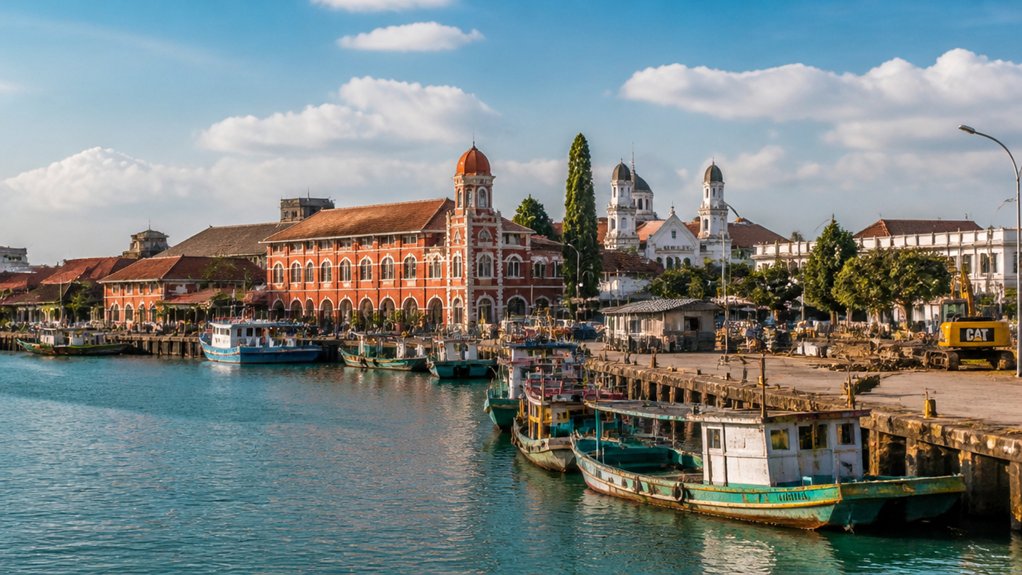
Semarang Cruise Port Guide
Cruise passengers arriving in Semarang face transport challenges and tourist traps—discover how locals navigate the port’s hidden gems.
In this guide
Try one free personalised day plan — built around your ship’s actual arrival and departure times. Then get every port on your cruise done the same way from £7.99 (about $10).
Cruise Port Overview: What To Expect
The port terminal sits around 5 km from Semarang’s city centre, too far to walk, so you’re looking at transport as your main expense and time sink rather than a spontaneous wander around town. Getting into the city requires both money and planning, which means treating this as a half-day port rather than trying to squeeze in a full exploration makes more sense logistically. The terminal itself has modern facilities and cafés, but everything costs more than it would elsewhere, and the taxis outside will charge you substantially more than what locals pay.
Sorting out transport beforehand through an independent operator usually saves money and spares you from haggling at the rank. Tour operators who handle temple visits or Old Town walks get booked solid by cruise passengers, so reserving online before you dock prevents the common scenario of finding everything already sold out. You’re better off either going with an organized tour that manages the logistics for you, or accepting that significant chunks of your time will go to getting around rather than actually seeing things.
The practical approach is to commit to one neighbourhood instead of trying to cover multiple scattered spots. Semarang’s Old Town colonial district is the obvious choice and gives you enough to occupy a focused few hours without rushing. Doing one area properly beats spreading yourself thin across three rushed half-visits that leave you frustrated and exhausted.
Getting From the Port To Town
The port sits on the coast north of the city centre, far enough that your transport decision matters more than you’d think. Spend it badly and half your day vanishes in a vehicle. Ride-hailing apps cost less than the taxis at the rank, but you need mobile data and a payment method working properly.
Book a driver or tour through an independent operator before you dock if you want the simpler approach. This removes the scramble for transport, locks in a rate you’ve already agreed to, and lets you focus on actually doing something once you’re ashore. It’s the option that works best when your time is limited.
Organised tours including transport handle the logistics entirely—you board at a set time, someone who knows where they’re going drives you, and you’re back before the ship leaves. These fill up fast with cruise passengers, so booking online in advance actually matters rather than being optional. Independent operators run Old Town walks and temple visits at considerably less than what the ship charges, usually with smaller groups and more room to adjust plans.
You can also explore shore excursions tailored to Semarang’s attractions, which often bundle transport with curated experiences designed specifically for cruise passengers. If you’re sorting transport on your own, skip the first couple of hours after docking when prices climb and desperation works against you. Mid-morning tends to be calmer and cheaper. Agree on a firm return time with your driver and confirm you both understand it the same way, because miscommunication here means missing your ship.
The Must-Do Experience: Start Here
Semarang works best for cruise passengers willing to ignore the standard itinerary and move independently. The Old Town draws most ship passengers, and this instinct is sound, but arriving alongside multiple coach groups means spending your morning in queues rather than actually seeing anything.
The advantage lies in what the cruise lines don’t sell. A guided walk through the colonial quarter with a local operator costs significantly less than the ship’s offerings and provides genuine conversation instead of scripted talking points. These tours book out quickly when ships arrive, so arranging one online before docking isn’t merely convenient—it’s how you guarantee a spot at reasonable rates.
If you dock early enough to reach the waterfront before the midday rush, do it. The old harbour has character and authenticity in the early hours that vanishes as tour groups accumulate. From there, walk inland through the Dutch colonial streets where the actual urban design shows you how the city developed, rather than presenting a simplified tourist narrative.
Avoid restaurants positioned near the main attractions. They charge substantially more for inferior food compared to what you’ll find a few blocks away where locals eat. Ask your guide or driver where they take their own family—that’s your reliable answer.
Coordinate your return to port with the same attention you gave your departure. Missing your ship because transport delayed you is entirely preventable through a clear agreement with your driver and deliberate buffer time.
History Culture and the Top Sights
Semarang’s colonial heritage is genuine, but what cruise lines package for passengers removes the substance. The Dutch built more than decorative facades—they imposed an entire urban system that still determines how the city functions, and understanding this changes what you actually see when you walk the streets.
The Old Town contains architecture that repays close attention rather than snapshot collection. The Blenduk Church, constructed in the eighteenth century, anchors this quarter and demonstrates the scale of colonial ambition. The surrounding streets reveal European planning overlaid onto Indonesian geography—not romantic, but instructive about how power reorganises space.
Lawang Sewu, built as the head office of the Dutch East Indies railway company, now operates as a museum. It draws fewer visitors than the Old Town and shows more clearly how colonial infrastructure functioned in practice. The building itself communicates more about the mechanics of power and commerce than explanatory texts manage.
Avoid the ship’s organised walking tours of these sites. Independent local guides, arranged online before you arrive, cost significantly less and will discuss colonial legacy in its complexity rather than offer sanitised versions. Guides book out quickly when multiple ships dock, so confirming your booking before departure ensures you secure a genuinely substantive morning ashore.
Beyond the Centre: Day Trips and Alternatives
Most cruise passengers stay in the harbour precinct, meaning the actual Semarang—where people live and work rather than perform for tourists—stays invisible to them.
Ship-organised day trips follow the same circuit to tea plantations or temples built partly to absorb visitor numbers. You travel for hours and experience very little. Independent local tours cost far less and reach places cruise lines skip because infrastructure for large groups doesn’t exist there.
Book through local operators who know the port’s daily patterns and can schedule your activities between the waves of passengers flooding off other vessels. Visiting Lawang Sewu in the morning before tour coaches arrive, then eating lunch in a neighbourhood restaurant where you’re the only foreign face, shows you the difference between passing through Semarang and actually being there. Popular tours fill early in high season, so confirm your booking before you sail to guarantee your place and let the operator prepare a proper route.
If you’d rather move on your own terms, arrange a local guide through online platforms before arriving. This gives you freedom without the discomfort of navigating entirely alone. They handle the public transport system, explain what you’re seeing rather than reading from a script, and take you to restaurants locals actually use instead of places designed for cruise passengers in a rush. This costs substantially less than the ship’s excursions and gives you far more genuine experience in whatever hours you have on land.
Shore Excursion or Going It Alone
The ship’s excursion desk quotes prices built on the assumption that you can’t arrange anything independently—and that’s exactly what they’re counting on. Your choice isn’t really between their tour and doing nothing; it’s between paying significantly more for a standardised itinerary and booking a local operator online before you sail. You’ll save money and get something closer to what you actually want to do.
Going it alone requires comfort with genuine uncertainty. You’ll navigate Semarang’s public transport, which works reliably but demands patience and repeated requests for directions. Most cruise passengers find this exhausting when they’re managing a six-hour window and a ship departure, so a local guide eliminates that particular stress by knowing which minibuses go where, which restaurants won’t inflate prices on sight, and crucially, how to get you back to the harbour with time remaining.
The ship’s tours move slowly because they accommodate forty people moving at different speeds with multiple stops built in. You pay for that inefficiency. Independent operators fill quickly during peak season—the decent ones sell out weeks in advance—so book before departure. This guarantees your place, locks in better rates than port-day booking, and means the operator can plan a route matching your actual interests rather than fitting you into a standard schedule.
The real question isn’t whether to book ahead. It’s whether you’d rather spend your morning queuing with hundreds of other cruise passengers or standing alone in a neighbourhood where the day genuinely belongs to you.
Semarang Notes the Excursion Desk Skips
Semarang’s harbour looks straightforward from your ship, but the walk inland crosses industrial areas and a street grid that confuses most visitors once you leave the main roads. Going alone works if you’re comfortable with getting lost; a local guide eliminates the detours and gets you somewhere worth the effort.
Rupiah matters here more than at other Indonesian ports because card payments are inconsistent and charged with processing fees that make cash substantially cheaper. Withdraw money from the ATM near the harbour before heading into town—the rates are fair and you’ll avoid the frustration of hunting for a working machine when you’re already behind schedule.
The restaurants and stalls immediately inland from the port cater to cruise traffic with dual pricing: one menu price for tourists, another for locals eating nearby. Walk past this first cluster entirely. Better food at reasonable rates exists just beyond where most cruise passengers venture, though you’ll need either a local guide or genuine willingness to ask for directions.
Bring sensible shoes because the pavements are uneven and the heat and humidity are genuine concerns. Street vendors are persistent but not aggressive, and you’ll want water and sunscreen for the length of your day. Carry small notes for informal purchases; large denominations create unnecessary complications with vendors who can’t make change.
Your Port Day: A Sample Itinerary
Most cruise passengers gravitate toward the same commercial strip near the port, where stalls and restaurants charge tourist rates and offer nothing you couldn’t find elsewhere. A better approach is to move inland while you have energy, then work back toward easier terrain as the afternoon heat worsens.
Hit the harbour ATM when you disembark, then head directly to Kota Lama rather than spending time in the port precinct. The Dutch colonial buildings here are authentic and relatively free of cruise crowds during your first hour ashore—you’ll photograph old warehouses and trading houses before the next wave of passengers arrives. A local warung tucked among the streets serves proper Indonesian coffee at normal prices, not inflated tourist versions.
By midday the heat becomes serious enough to shift your approach. Head toward Tugu Muda or the restaurants around Jalan Pemuda, where you’ll eat what local workers eat at the rates they pay. This distinction matters because it tells you whether a place operates on tourist margins or actual economics.
Your afternoon works better with either a guided visit to Kelenteng Sam Poo Kong or time in one of the batik workshops in surrounding areas. Book an independent local guide beforehand through online platforms rather than booking through your ship—the competent guides attract demand and cost substantially less than cruise desk equivalents.
Book your Semarang day
Tours for this port, compare before you book
Getting around in port