Singapore Cruise Port Guide
Learn how to escape overpriced cruise excursions and discover Singapore’s authentic hawker centres, hidden islands, and local neighborhoods—but first.
In this guide
Try one free personalised day plan — built around your ship’s actual arrival and departure times. Then get every port on your cruise done the same way from £7.99 (about $10).
Cruise Port Overview: What to Expect
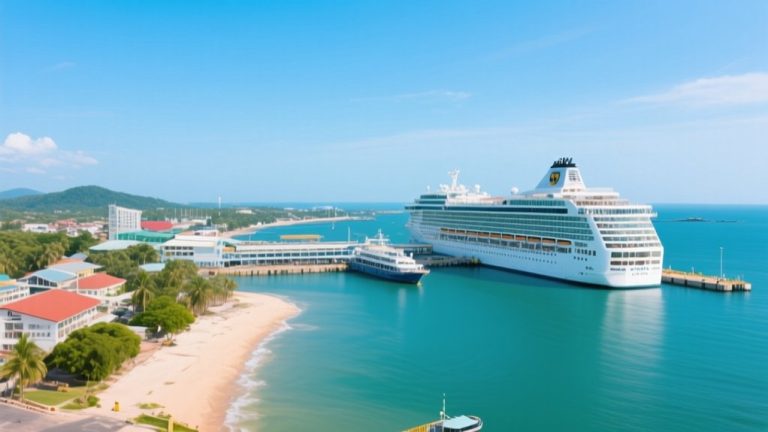
Singapore’s cruise terminal sits roughly fifteen minutes from the city centre, which sounds convenient until you realise the port itself feels like an airport designed by someone who’d never seen actual humans before. You emerge into a cavernous, climate-controlled void where signage is excellent but humanity is thin on the ground.
The terminal is orderly to the point of sterility. Taxis queue outside with mechanical precision, and the MRT station is either inside the complex (HarbourFront) or a short walk away (Marina Bay)—straightforward, efficient, and proof that you needn’t rely on port operators or expensive ship excursions to reach anywhere worth visiting. A metro card will get you across the entire island more cheaply and faster than any organised tour.
What catches most visitors off guard is how immediately you leave the tourist infrastructure behind. Walk a few minutes from the terminal and you’re in ordinary Singapore—hawker centres where locals actually eat, neighbourhoods with genuine character, and streets where English is one language among several. The port doesn’t try to sell you a sanitised version of the city, which is invigorating, though it does mean you need a plan before you disembark. Consider purchasing a local eSIM data plan to stay connected throughout your exploration without incurring roaming fees.
Weather matters. Singapore sits near the equator, so heat is intense and humidity clings to you like a second skin. Early morning exploration suits your comfort far better than midday wandering. The city is safe, English-speaking, and navigable even for first-time visitors, but it rewards those who book independent activities in advance—popular experiences fill quickly with cruise passengers, and pre-booking saves both money and stress during your limited time ashore.
Getting From the Port to Town
The MRT is genuinely your best option, which is precisely why the port doesn’t advertise it heavily. A metro card costs a small fee and grants you access to the entire network—faster, cheaper, and infinitely less crowded than taxis or the ship’s organised transfers. You’ll reach the city centre quickly, and more importantly, you’ll avoid the premium markup that comes with port-operated services.
Taxis queue outside the terminal with predictable efficiency, but they’re a blunt instrument for cruise passengers. The driver may not know where you actually want to go, the route isn’t always direct, and the fare will cost considerably more than the metro. It’s the practical choice only if you’re travelling with luggage or a group who’d rather not navigate independently—reasonable in those circumstances, but worth reconsidering if you’re travelling light.
Grab a metro card at the nearest MRT station. The process is straightforward, the staff speak English, and you’re then free to move through Singapore at your own pace. Most worthwhile experiences lie on the metro network—hawker centres, neighbourhoods, markets—and independent travel lets you spend your time in actual Singapore rather than in a coach full of cruise passengers. Consider booking guided tours and shore excursions in advance to maximize your port time once you’ve arrived in the city centre.
The port is walkable if your ship docks at Marina Bay, but don’t assume all cruise ships use the same terminal. Confirm your specific berth before disembarking. Once you’ve got your bearings and a metro card in hand, the city opens up quickly.
The Must-Do Experience: Start Here
Most cruise passengers waste their first hour in Singapore hunting for authenticity when they should be eating breakfast at a hawker centre. The gap between what tourists expect and how the city actually works is significant—this isn’t a place where expensive restaurants or tour guides reveal anything real.
Go directly to Chinatown Complex or Maxwell Food Centre after you’ve collected your metro card. These spaces announce themselves immediately: crowded, slightly messy, staffed and populated entirely by people who live here. Order something unfamiliar, eat standing at a counter, and pay a fraction of what hotel restaurants cost. You’re not performing tourism. You’re eating where Singaporeans eat, which is the most straightforward introduction to the city available.
From there, take the metro to Clarke Quay or Boat Quay depending on what appeals to you. Boat Quay offers restored shophouses and a quieter riverside without heavy commercialisation. Clarke Quay has more bars and foot traffic, louder and pricier, but genuinely active. Both are walkable, neither needs an organised tour, and both show you how the city actually operates.
The real point is understanding Singapore’s logic: efficient, multicultural, practical about eating and time. Start at the hawker centre and the rest of the city becomes legible much faster. That understanding matters more than any guided experience could provide.
The Must-Do Experience: Start Here
🗺️ Tours & Experiences at This Port
Skip the ship’s overpriced excursions — browse top-rated independent tours trusted by thousands of cruise passengers.
History Culture and the Top Sights
Singapore’s museums actually explain things rather than simply displaying objects behind glass, which separates them from the standard port-city offerings. The National Museum tells the city’s story through its transformation from colonial trading post to modern city-state with genuine clarity. You’ll understand how the place came to be rather than feeling you’ve completed an obligation.
The Asian Civilisations Museum at Empress Place rewards a visit if you have time and care about Southeast Asian trade routes and cultural exchange. You’ll actually see the objects rather than standing behind other cruise passengers.
Skip the Peranakan Museum unless you have a specific interest in Peranakan culture. It’s small, rather niche, and costs more than the value it offers. Your port time is finite—spend it on the National Museum instead.
Book timed tickets online before you arrive, as popular slots fill quickly with cruise passengers and queuing on a port day wastes hours you can’t recover. The metro gets you to each museum directly without needing a tour.
Beyond the Centre: Day Trips and Alternatives
The ship excursion desk will push guided tours at inflated prices when you could arrange the same thing independently for less money and with actual control over your schedule. Your port time here is long enough that you don’t need to panic, but the better independent operators get booked up quickly once cruise passengers arrive, so booking before you get off the ship means you’ll have options that last-minute decisions won’t provide.
Gardens by the Bay works as a half-day outing if you skip the ship’s package. The metro takes you directly there, the entry fee is reasonable, and you can move through at your own speed instead of standing around waiting for slower members of a tour group. The Supertrees are photogenic, but the real point is spending time in the glasshouses—the Cloud Forest and Flower Dome—which give you actual relief from the heat and actual plants rather than just Instagram moments.
Pulau Ubin island takes slightly more effort to reach but shows you how Singapore actually functions rather than how it’s packaged for tourists. Kayaking through the mangroves or cycling the island paths costs far less than what your ship charges, and small-group operators book up quickly with cruise passengers, so arrange this before arrival to get a morning slot ahead of the afternoon crowds.
Wildlife parks are worth skipping unless children are involved. They’re spread out across large areas, expensive, and eat up most of your day to see animals in enclosures you could visit anywhere else. Consider booking tours independently to maximize your port experience and avoid the markup charges of onboard excursion packages.
Shore Excursion or Going It Alone
The metro card system works better if you buy it at the station (or simply tap a contactless bank card) rather than trying to pay at the barrier, as the gates don’t take cash. This single choice saves you more time and frustration than almost any other decision you’ll make moving around the city, yet most cruise passengers skip it entirely and end up stuck behind tourists fumbling at the gates while locals pass through quickly.
The MRT gets you into the city faster than any organized ship excursion, which seems odd until you factor in that the ship’s route involves waiting for stragglers and following a fixed schedule. Independent travel lets you spend your morning at the National Museum and lunch in Tiong Bahru instead of being moved through a scripted heritage walk, without paying the premium markup the cruise line adds to every activity.
Book small-group tours directly with local operators before you arrive, particularly for kayaking trips or food walks through older neighbourhoods. These fill up within hours of cruise ships docking, and independent operators charge substantially less than the ship while actually knowing what they’re doing. Search online for reputable local companies before departure and secure a morning slot, since afternoon tours compete with hundreds of other cruise passengers all arriving simultaneously.
🗺️ Tours & Experiences at This Port
Skip the ship’s overpriced excursions — browse top-rated independent tours trusted by thousands of cruise passengers.
What Experienced Cruisers Know About Singapore
Singapore’s cruise terminal sits inside the city itself, which means your biggest advantage is also your biggest trap: you’re genuinely close to everything, so cruise staff will happily sell you a half-day excursion to places you could reach alone in minutes. The problem isn’t distance—it’s that proximity makes overpriced packages look reasonable when they aren’t.
The Botanic Gardens are free and actually peaceful during morning hours while everyone else queues for the ship’s heritage tours. You can walk straight from the metro and spend a few hours wandering orchid sections and lakeside paths without seeing another cruise passenger. Most people skip this because it sounds too simple, but that’s exactly why it works.
Hawker centres operate on a system that confuses first-time visitors: you grab a table, then order and pay at each stall separately, and dishes arrive at different times or you carry them back yourself. Skip the tourist-oriented food walk packages and learn this rhythm yourself by sitting at a table in Tiong Bahru or Maxwell Centre, ordering laksa from one stall and satay from another, watching people eat lunch the way they actually do here. It costs a fraction of what the cruise line charges for their version, and it actually is authentic.
Duty-free shopping draws cruise passengers like nothing else, and the main shopping districts fill up by mid-morning. If shopping matters to you, get there early or skip it entirely and spend your time somewhere with actual substance instead.
🗺️ Tours & Experiences at This Port
Skip the ship’s overpriced excursions — browse top-rated independent tours trusted by thousands of cruise passengers.
Your Port Day: A Sample Itinerary
The cruise terminal will push you toward air-conditioned shopping malls the moment you arrive, but stepping outside reveals a city that actually functions better than its reputation suggests. Ignore the herding instinct and you’ll find yourself in a place where things work the way they’re supposed to, rather than how they’re packaged for visitors.
Start early at the Botanic Gardens before the heat becomes unbearable. The metro takes you directly from the terminal, and you need no tour bus or guide—just walk from the station and spend your first hours moving through the orchid sections and around the lake. The quiet is genuinely rare here, and the space lets your mind settle.
By late morning, take the metro to Tiong Bahru or Maxwell Centre and eat lunch the way locals actually do. Order laksa from one stall and satay from another, sit down, and take your time over it—this takes close to an hour but it’s where you learn what Singapore actually is rather than what it performs as for cruise passengers. The cost runs considerably lower than anything the terminal area offers.
Your afternoon depends on what you’re willing to do. If you want substance, use the metro to reach the National Museum or walk through Chinatown’s backstreets, where shophouses and temple courtyards show actual life rather than staged versions of it. If you prefer something more structured, independent walking tours of heritage neighbourhoods exist and cost less than ship excursions, though you’ll need to book these online in advance because good guides fill quickly.
Leave enough time before departure to avoid the scramble of last-minute returns. By then you’ll have actually experienced the place rather than consumed a performance of it.
🗺️ Tours & Experiences at This Port
Skip the ship’s overpriced excursions — browse top-rated independent tours trusted by thousands of cruise passengers.
Book your Singapore day
Tours for this port, compare before you book
Getting around in port
✈️ Before you sail: eSIM, insurance, luggage, flight delays
Ships In Singapore
Upcoming calls from our sailings tracker, updated regularly.
Disney Adventure
DisneyThu 8 Oct
⚓ 07:00–16:00
Disney Adventure
DisneyMon 12 Oct
⚓ 07:00–16:00
Disney Adventure
DisneyThu 15 Oct
⚓ 07:00–16:00
Royal Princess
Princess CruisesFri 16 Oct
⚓ arrives 05:00
Disney Adventure
DisneyMon 19 Oct
⚓ 07:00–16:00
Disney Adventure
DisneyThu 22 Oct
⚓ 07:00–16:00