La Coruna Cruise Port Guide
Bypass touristy traps and discover La Coruña’s authentic medieval charm, local bars, and hidden gems that cruise passengers rarely find.
In this guide
Try one free personalised day plan — built around your ship’s actual arrival and departure times. Then get every port on your cruise done the same way from £7.99 (about $10).
Cruise Port Overview: What to Expect
La Coruña’s cruise terminal sits right beside the city centre, so the old town and Plaza de María Pita are only a few minutes’ walk away. The terminal itself is modern with the usual facilities, though you’ll pay port-area prices at the café. Getting into town needs no planning: you walk off the quay past the modern streets of the waterfront and the medieval core is just behind them, so there’s no need for a taxi or bus unless you’re heading further out to the Tower of Hercules.
The city itself justifies spending time here rather than treating it as a quick shopping stop. The seafood offers genuine value, the Torre de Hércules lighthouse provides actual views rather than tourist theatre, and you won’t navigate streets clogged with souvenir shops or restaurants with menus in five languages. This is an Atlantic coast location in Galicia, so weather shifts unpredictably regardless of season—bring layers as a basic precaution.
The scale works in your favour since the best areas are compact enough to explore without constant rushing, something many cruise ports don’t allow. Book any specific tours independently beforehand, as the better guides fill quickly with cruise passengers. Start early and you’ll have a genuinely useful day ashore rather than a compressed shopping expedition.
Getting From the Port to Town
Walking into La Coruña from the port takes only a few minutes, and it’s the best way to see how the city actually works rather than how it’s packaged for visitors. You’ll pass along the waterfront and into residential streets where people live and shop, which gives you better spatial awareness than any taxi ride would provide. The medieval architecture of the old town starts just behind the harbour, so you’ll arrive already oriented instead of confused at a taxi rank.
The walk is short, so you’ll be into the older streets almost straight away. Locals navigate these streets daily, and watching how they move through their own city teaches you more than any guidebook. Once the medieval quarter appears, the shift in architecture is impossible to miss and serves as a natural landmark for future navigation.
The old town is close enough that you won’t need the bus for it, but buses do run from near the terminal out to the Tower of Hercules, about 2 km away, and they cost less than a taxi. Taxis queue near the terminal and make sense if you’re arriving as a group, but you’ll pay more here than in other Spanish cities. Bad weather or time constraints make the bus worth considering instead of walking out to the tower.
Book any organised tours or lighthouse visits before your ship docks, since cruise passengers fill spaces quickly and advance booking usually costs less than paying on arrival. Independent providers often have better options than whatever the cruise desk offers, and securing your spot beforehand removes the stress of availability once you’re ashore.
The Must-Do Experience: Start Here
La Coruña’s actual appeal lies in seeing Spain’s Atlantic coast as it functioned before cruise tourism reshaped it. Most passengers chase the postcard version and miss the point: ordinary neighbourhoods, food that costs normal money, and a working waterfront that hasn’t been dressed up for visitors.
Walk to the old town first thing. The medieval quarter is small enough to cover properly in a couple of hours, and going early means you’ll move through before the afternoon crush hits when the ship empties out. The narrow streets work best without a plan—you’ll find quiet plazas and actual local bars where people eat rather than perform for cameras.
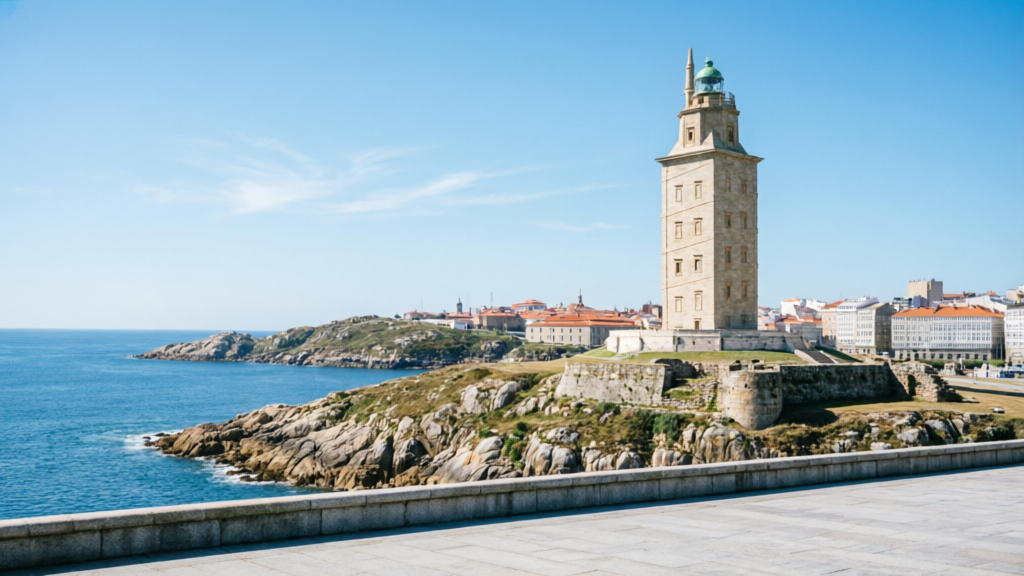
The Tower of Hercules matters if the weather cooperates. It’s well-known because the view justifies the attention, and you can book independent guides who cost less than the ship’s tour and guarantee you a slot before the crowds peak. The climb up gives you the coastline in proper perspective instead of standing packed on an observation deck.
The waterfront rewards a late-afternoon visit when the light improves and groups have moved elsewhere. Walk the harbour at your own speed, eat seafood somewhere the locals eat rather than near the terminal, and leave with actual understanding of why people who live here take pride in the place.
🗺️ Tours & Experiences at This Port
Skip the ship’s overpriced excursions — browse top-rated independent tours trusted by thousands of cruise passengers.
History Culture and the Top Sights
La Coruña’s history is military history—invasion, siege, naval disaster—which means the actual sights often matter more than their official narratives.
The Tower of Hercules works as a functioning lighthouse rather than a preserved museum piece. The Romans built it and an eighteenth-century restoration gave it the outer shell you see today, making it functional architecture rather than a relic. Climbing it gives you proper Atlantic views instead of the cramped perspective from a ship-based tour, and arranging an independent guide beforehand costs less than organised excursions while letting you control your schedule.
The old town reveals its real character once you move past the obvious attractions. Medieval plazas like Plaza de María Pita function as actual public spaces where locals gather rather than performance spaces designed for photographs. The narrow streets follow logic once you stop treating them as a maze, and local bars serve proper food at reasonable prices instead of the inflated menus you’ll find nearby.
The city walls and fortifications tell the story better than any museum display could. Walking the perimeter, especially near the waterfront, shows you how La Coruña defended itself—which matters more than memorising dates. You’re reading architecture rather than absorbing narrative, which is how history actually works in places where people live.
Beyond the Centre: Day Trips and Alternatives
The ship’s excursion to Santiago de Compostela costs significantly more than booking independently, and you’ll spend half your time on a coach instead of exploring the cathedral city. Train connections to Santiago are reliable and frequent, delivering you directly to the city centre rather than a coach park on the outskirts. Booking your own ticket costs a fraction of what the ship charges, and you gain several extra hours ashore—which matters when your port time is limited.
If Santiago feels too ambitious for your schedule, Betanzos is a smaller medieval town inland that draws fewer cruise passengers. The old quarter functions as an actual neighbourhood rather than a performance for tourists, and a local guide can explain Galician architecture without competing with pilgrimage crowds. Independent guides for either destination should be arranged online beforehand, as the best ones book quickly and cost less than last-minute arrangements. You can book tours and activities through dedicated port tour platforms to compare options and read reviews from other cruisers before committing.
Alternatively, stay in La Coruña and explore properly. The beaches at Riazor and Orzán lie within walking distance of the port and offer something entirely different from the centre. The local Galician food improves dramatically once you venture beyond the tourist strip, you’ll spend considerably less, and eating better becomes straightforward. Your ship’s excursions run on fixed schedules designed for maximum passenger numbers rather than maximum experience—going independently means your day actually belongs to you.
Shore Excursion or Going It Alone
La Coruña’s tourist information office shuts down earlier on cruise ship days, which initially seems like poor planning until you understand that staff are overwhelmed assisting lost passengers. The actual information worth having circulates among locals in bars and cafés rather than appearing in official brochures, so your best strategy is asking residents where they eat lunch instead of following colour-coded walking maps.
The church of Santo Domingo costs nothing to enter and draws far fewer people than the Tower of Hercules, yet cruise passengers routinely miss it because the ship’s excursion schedule ignores it entirely. The baroque interior contains genuine artistic quality without the tour-group atmosphere that surrounds more famous locations. You’ll spend your time better walking through the space than standing in a queue for views.
Cruise passengers frequently stumble over currency assumptions—La Coruña adopted the Euro long ago, yet people still arrive expecting to haggle or find bargains through currency conversion games that don’t exist. The Calle Real and its immediate vicinity charge cruise-passenger rates, but walk two blocks into residential streets and the same coffee costs substantially less while tasting better because you’re paying for the actual product rather than the location. Learning which streets serve locals instead of tourists matters far more than any currency calculation.
Book any independent guide before you arrive, since the reliable ones maintain waiting lists weeks in advance during cruise season and last-minute requests leave you with whoever happens to be available. Email a recommended guide the week before you dock, confirm your time ashore, and you’ll get someone who actually knows the city instead of someone on their first assignment.
🗺️ Tours & Experiences at This Port
Skip the ship’s overpriced excursions — browse top-rated independent tours trusted by thousands of cruise passengers.
Small Things That Make a Difference in La Coruna
The cruise terminal’s WiFi functions perfectly until your ship leaves, then stops working—a problem because you’ll need it to verify your independent guide’s final details before going ashore. The terminal building has a small café with reasonable prices that you should use before departure rather than searching for coffee once you’re wandering the old town.
La Coruña follows its own schedule regardless of cruise ship arrivals. Shops shut during midday breaks, restaurants don’t serve dinner until late, and the city operates on rules that seem designed to complicate a seven-hour port day. Accept this reality and plan your day around local rhythms instead of fighting against them.
The Paseo Marítimo seafront walk rewards your time, but go early before other cruise passengers fill it with shopping bags and cameras. Behind the harbour sits the fishermen’s neighbourhood where actual work happens—boats being fixed, locals buying fish—rather than the packaged version tour companies describe.
Taxis from the terminal rank are reliable and cost less than you’d expect, provided you use the official rank beside the terminal building and avoid drivers waiting near arrivals. Confirm your destination before getting in and ensure the driver understands where you’re heading, then you’ll pay fairly. Local buses run frequently but require cash and familiarity with their system, so unless you’re genuinely confident navigating unfamiliar transport, the taxi remains your practical choice.
🗺️ Tours & Experiences at This Port
Skip the ship’s overpriced excursions — browse top-rated independent tours trusted by thousands of cruise passengers.
Your Port Day: A Sample Itinerary
La Coruña gives you roughly seven hours ashore, which sounds generous until you realise half the old town closes for lunch and nothing moves quickly. Start by taking a taxi directly to the Tower of Hercules rather than wandering the terminal area—this Roman lighthouse actually works as a lighthouse and the views across the headland are worth seeing when you’re fresh and the light is good. Spend an hour and a half there, then head back into the city centre on foot or by taxi.
By midday, avoid eating in the neighbourhood near the harbour—restaurants there charge cruise passenger rates. Instead, walk into the residential streets behind the Paseo Marítimo where locals eat lunch. You’ll find proper cafés serving regional food at normal cost, though you’ll need to eat earlier than Spaniards typically do if you want to return to your ship on time.
Spend your afternoon on the Paseo Marítimo itself, the seafront promenade that justifies the time you’ve allocated. Browse the covered market if it’s open and watch real work happening in the fishing neighbourhood, then position yourself at one of the cafés for coffee as the afternoon light improves. You’ll be back at the terminal with time to spare, having seen the city properly rather than its souvenir-shop face.
Tours with limited places can sell out before the ship arrives in La Coruna. Check what runs in La Coruna ahead of time.
🗺️ Tours & Experiences at This Port
Skip the ship’s overpriced excursions — browse top-rated independent tours trusted by thousands of cruise passengers.
Book your La Coruna day
Tours for this port, compare before you book
Getting around in port
✈️ Before you sail: eSIM, insurance, luggage, flight delays
Ships In La Coruna
Upcoming calls from our sailings tracker, updated regularly.
Arvia
P&O CruisesMon 12 Oct
⚓ 09:00–16:30
Queen Victoria
CunardWed 14 Oct
⚓ 08:00–17:00
Iona
P&O CruisesThu 15 Oct
Ventura
P&O CruisesMon 19 Oct
⚓ 09:00–17:00
Iona
P&O CruisesWed 21 Oct
⚓ 09:00–17:00
Iona
P&O CruisesTue 27 Oct
⚓ 09:00–17:30