Santander Cruise Port Guide
Booking your Santander cruise excursion? Discover insider tips to avoid tourist traps and maximize your port day.
In this guide
Try one free personalised day plan — built around your ship’s actual arrival and departure times. Then get every port on your cruise done the same way from £7.99 (about $10).
Cruise Port Overview: What to Expect
Santander’s terminal sits close enough to the old town that you won’t need transport, but this proximity works both ways — the centre fills with cruise passengers quickly after ships dock. The crowds disperse once you move past the cathedral quarter, and the city shows itself as genuinely useful to visit rather than simply another port checkbox.
The terminal itself is purely functional. Cafés and shops exist here, though prices run higher than they should. The tourist information desk actually staffs English speakers who hand out maps and give competent directions, which sets this port apart from many Spanish alternatives.
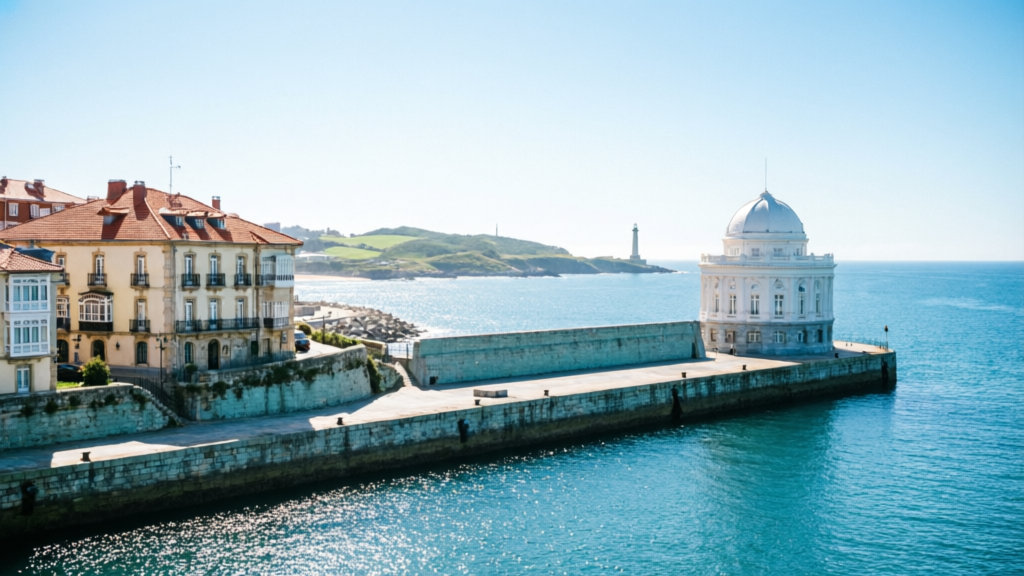
The harbour front has clean lines without pretension. A promenade runs along the water with decent views, and Playa del Camello is a real beach, not a concrete afterthought. Bring shoes for the beach — Spanish sand and shingle don’t play well with bare feet.
Santander rewards slow exploration over quick tourism. Independent walking tours of the old town and Pereda neighbourhood sell out fast with cruise groups, so book online before you arrive. Arranging this yourself costs considerably less than the marked-up ship versions and leaves you money for the decent restaurants in quieter areas where tour groups don’t reach.
Getting From the Port to Town
Santander’s terminal sits close enough to the old town that you can walk there without any transport whatsoever. Most cruise ports funnel you toward taxis or shuttle buses as though those are your only options, but here the route is straightforward and takes you through normal Santander—residential streets, local shops, ordinary people—rather than industrial sprawl or areas you’d want to avoid.
If walking isn’t practical because of mobility issues or young children in tow, local buses run regularly and cost significantly less than what the ship’s excursion desk charges. The terminal staff can actually point you toward the right stop without the usual vagueness that plagues other ports. A taxi works as a backup option, though walking has the advantage of orienting you to how the city is actually laid out.
Your timing matters more than you might expect. If you leave the terminal straight away rather than lingering, you’ll reach the old town before the organised tour groups arrive and clog the Cathedral and cafés. Consider purchasing a local eSIM data plan before arrival to navigate independently and avoid roaming charges while exploring at your own pace. Those early hours give you genuine space to move around without the usual crush of bodies. By the time you reach the main restaurants and squares, you’ll already know which quieter routes can get you back to the ship efficiently.
The Must-Do Experience: Start Here
Most cruise passengers file through the Cathedral because it’s obvious and central, then assume they’ve seen Santander’s architecture. The Palacio de la Magdalena, a short bus or taxi ride away, is actually the better reason to be here—a Belle Époque palace with views across the bay and practically no queue regardless of how many ships are in port.
Start at the Cathedral if you need to check it off, since it’s embedded in the old town and won’t trap you for hours. Walk straight from there toward the Paseo de Pereda, the harborside promenade where locals actually move through rather than congregate for photos. This route gives you proper orientation and lets you move through town before the organised groups fan out.
The Palacio is where your day stops being obligatory. The palace opens its rooms and grounds, and from the gardens you see the whole coastline without obstruction—the view substantially outweighs what you get staring at the Cathedral’s interior. Book an independent guided tour online before you sail, as slots fill quickly once cruise passengers start booking, and you’ll hear actual history rather than the truncated version ship tour operators compress into their schedule.
🗺️ Tours & Experiences at This Port
Skip the ship’s overpriced excursions — browse top-rated independent tours trusted by thousands of cruise passengers.
History Culture and the Top Sights
Santander’s history is understated because most of what mattered burned in 1941—what you see now is either pre-fire or rebuilt, which means the city won’t assault you with grand monuments but what does remain carries actual substance. You won’t find ornamental recreations here; instead you’re moving through a functional port that rebuilt itself as a working city rather than a heritage performance. This honest approach to what survived makes the place considerably more interesting than the obvious stops suggest.
The Cathedral and its surrounding quarter warrant an hour if you want the historical framing, though you’re fundamentally walking through reconstruction rather than streets that predate the fire. The real historical evidence sits in the Palacio de la Magdalena and the Museum of Prehistory, where material culture from thousands of years of coastal settlement is actually preserved and displayed. The Palacio itself demonstrates why this port city developed architectural ambitions beyond what you’d normally expect—it was built during Santander’s turn as a beach resort for Madrid’s wealthy in the early twentieth century, a function that shaped everything that came after.
Independent walking tours focused on maritime heritage and the 1941 reconstruction offer substantially more context than standard tourist routes provide. Book these online before you arrive because they fill quickly during cruise season. Understanding how locals approached rebuilding—choosing to restore an active port over a museum-piece—explains why people here move through their streets like residents rather than performers.
Beyond the Centre: Day Trips and Alternatives
Most cruise passengers spend their port day in Santander’s centre when the actual reason to visit lies beyond it. The Cantabrian coast and mountains exist because of where the city sits geographically—use that access rather than treating the port as your destination. The ship excursions to beaches and the Picos de Europa work competently enough, but they cost considerably more than independent travel for roughly the same experience.
The coastal villages along the bay require minimal effort to reach by local transport and function as actual working communities rather than tourism infrastructure. Laredo and Noja each offer proper beaches where locals eat, not zones built specifically for cruise passengers passing through. Food costs less and tastes better at a neighbourhood chiringuito because the people who live there set prices, not tourism operators calculating what visitors will pay.
If mountains appeal to you more than beaches, the Picos de Europa National Park operates as a genuinely separate world from the port. Independent tours depart from the city centre with transport included, leaving you to walk among proper peaks without paying the ship-excursion markup that gets added to everything. These tours fill quickly during cruise season, so book online before you arrive rather than hoping for availability on the day. Consider purchasing a local eSIM data plan to access tour booking sites and navigation apps without expensive roaming charges during your visit.
Santander itself warrants three or four hours of careful exploration, but your port day only works when you commit to getting beyond it. Staying aboard because the city centre feels ordinary would be a genuine mistake given what lies within reasonable reach. The geography here gives you options most Mediterranean ports cannot offer—take advantage of that instead of treating it as incidental.
Shore Excursion or Going It Alone
The ship excursion desk relies on your unfamiliarity with Santander’s public transport, which actually works well if you bother to use it. Local buses run frequently to both coastal settlements and mountain trailheads, costing substantially less than cruise line equivalents that bundle in waiting time and a guide you never wanted. Independent travel‘s real benefit here is control—you leave when suits you, stay as long as you want, and eat lunch wherever appeals rather than where the schedule dictates.
Ship excursions run on the vessel’s timetable, not yours. If you’re enjoying yourself, that becomes irrelevant because you board when they call, not when you’re finished. The mountains present a different problem altogether. Picos de Europa requires proper route knowledge and navigation skills that you can’t reliably improvise on the morning you arrive in port. Several tour operators run small groups from the city with transport sorted, and these fill during cruise season, so booking online before you sail guarantees access and undercuts what your ship desk charges for the same service. You can explore guided excursions through dedicated tour booking platforms to compare options and pricing before your voyage. Beaches and coastal villages work perfectly if you navigate them yourself; serious mountain work needs a competent guide without the cruise markup, which means reserving your independent operator before departure.
Santander: Practical Details Worth Reading Twice
Santander’s cruise terminal sits right in the city centre, yet the port’s real advantage isn’t the city itself but what lies beyond it, and most passengers never work that out. You can walk into town in a few minutes without any shuttle bus, but you’ll be wandering streets that feel like every other Spanish port: chain restaurants, souvenir shops, the Cathedral, and crowds. What actually matters is that you’re positioned well for either the Picos de Europa mountains or the Cantabrian coast, both reachable independently if you plan ahead.
The cruise desk will quote you high prices for mountain tours because they’re bundling transport, waiting time, and their commission. Book a small-group operator before you sail and you’ll pay considerably less for exactly the same experience—and importantly, you’ll have a guide who knows the terrain rather than someone reading from a laminated card. Popular operators fill quickly during cruise season, so early booking isn’t optional; it’s the difference between a proper mountain experience and missing out entirely.
The coastal alternative requires less advance planning. Catch a local bus toward the beaches at Somo or Loredo and you’ll find yourself surrounded by actual Spanish families rather than cruise passengers. The seafood restaurants here aren’t cheap, but they’re honestly priced and the food justifies it.
Skip the terminal area entirely and head for either the mountains with a booked guide or the coast with a bus ticket. Both beat whatever the ship desk is selling you. This isn’t about avoiding crowds; it’s about getting genuine value for your time ashore.
🗺️ Tours & Experiences at This Port
Skip the ship’s overpriced excursions — browse top-rated independent tours trusted by thousands of cruise passengers.
Your Port Day: A Sample Itinerary
Getting out of the port within the first hour makes a genuine difference to how your day unfolds. Lingering near the terminal locks you into expensive chain restaurants and crowds of other passengers doing the same thing. Book transport in advance or know where the shuttle buses depart from so you can move quickly.
If you’ve arranged a small-group mountain guide beforehand, meet them early and commit your morning to the Picos de Europa. The drive alone justifies the trip—the landscape shifts from coast to proper limestone terrain with actual gorges and villages where locals live ordinary lives rather than cater to tourists. The guide will take you into the mountains and stop at a restaurant where the food costs a fraction of what you’d pay near the cathedral back in town.
Alternatively, take a local bus mid-morning toward Somo or Loredo if you want a beach day. The early afternoon works best for swimming or walking through the neighbourhoods above the sand, where you’ll see Spanish families at bars and cafes rather than tour groups. Order whatever seafood is fresh at lunch and you’ll understand why people choose to stay in Cantabria instead of leaving.
Regardless of which direction you go, leave yourself enough time to return to the port without rushing. A buffer of thirty minutes between your last activity and departure prevents the panic of reboarding with hundreds of other passengers all moving at once.
A decent port day comes down to leaving early and properly experiencing one thing rather than rushing through three thin approximations near the terminal.
🗺️ Tours & Experiences at This Port
Skip the ship’s overpriced excursions — browse top-rated independent tours trusted by thousands of cruise passengers.
Book your Santander day
Tours for this port, compare before you book
Getting around in port
✈️ Before you sail: eSIM, insurance, luggage, flight delays
Ships In Santander
Upcoming calls from our sailings tracker, updated regularly.
Ventura
P&O CruisesWed 21 Oct
⚓ 08:00–17:00
Queen Anne
CunardWed 28 Oct
⚓ 08:00–18:00
Ambition
Ambassador Cruise LineFri 6 Nov
⚓ 08:00–14:00
Ambience
Ambassador Cruise LineTue 23 Feb
⚓ 08:00–18:00
Queen Elizabeth
CunardThu 1 Apr
⚓ 08:00–18:00
Ambition
Ambassador Cruise LineSat 1 May
⚓ 13:00–20:00