Husavik Cruise Port Guide
Learn why Húsavík’s whale watching tours are worth skipping your ship excursion—but there’s a catch.
In this guide
Try one free personalised day plan — built around your ship’s actual arrival and departure times. Then get every port on your cruise done the same way from £7.99 (about $10).
Cruise Port Overview: What To Expect
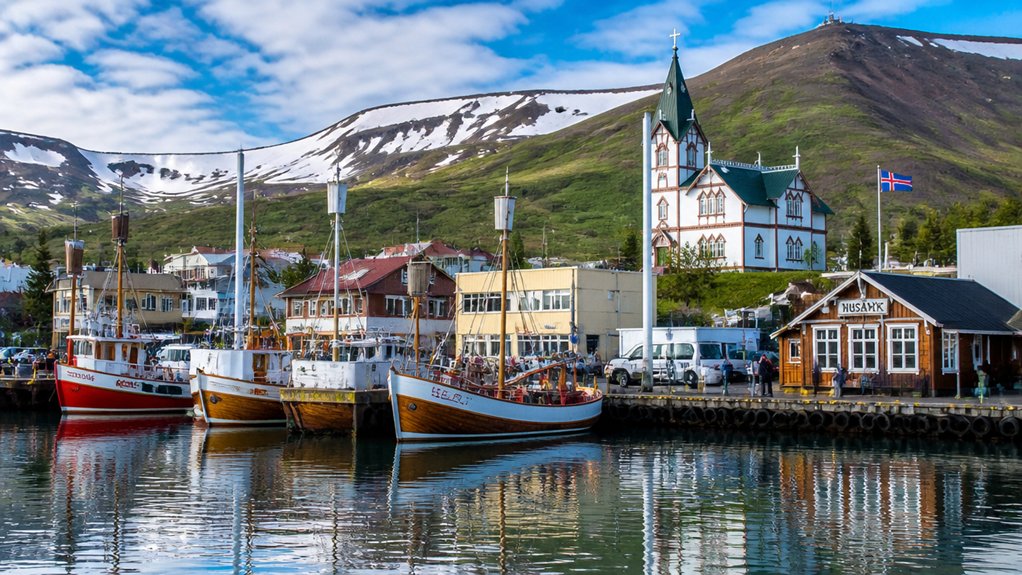
Húsavík is small enough that you can walk the working harbour and town centre in under an hour, which means your shore time won’t disappear into crowd navigation or wandering lost streets. What exists here is a functional Icelandic fishing village where the rhythm follows whale watching boats rather than tour groups moving between shops. The port is straightforward—your ship docks or tenders in at the main harbour and the town rises uphill in a grid of coloured houses and local restaurants, without the processing-line feel of busier ports.
Don’t confuse the quiet with emptiness. Húsavík is Iceland’s whale watching centre, and decent weather will bring humpback whales, minke whales, and white-beaked dolphins within sight of the harbour itself. The absence of aggressive sales tactics or manufactured atmosphere means you’re looking at something genuine rather than packaged for cruise passengers.
Your actual choice is not whether to leave the ship but how to use your time. Ship-organised tours tend to involve queue time, whereas independent whale watching operators book ahead online and run departures regularly throughout the day—these are cheaper than ship packages and book out during cruise season so arrange this before arrival. You can also book guided tours directly with local operators to customise your experience beyond standard shore excursion offerings. Even grey weather delivers an authentic Icelandic experience rather than a cleaned-up version designed for tourists.
Everything practical sits within walking distance and English is standard here. Bring realistic expectations about Icelandic weather and a proper waterproof jacket, and your day will run without friction.
Getting From the Port To Town
Húsavík spreads uphill more than you’d guess from the water, so the walk into town takes longer than expected, though it still costs nothing and remains straightforward. Whether you dock or tender, you land at the main quay with the town centre directly above—no separate port area or shuttle nonsense required, which actually works in your favour.
You only need transport if your whale watching tour departs elsewhere, and the operator will tell you exactly where to meet when you book. Taxis exist but charge by demand rather than running set routes, making them poor value for a five-minute uphill walk. Most independent whale watching companies operate from the main harbour or a secondary dock close enough to reach on foot, and their confirmations specify the exact meeting point.
Walking is the only sensible approach anyway because you’ll pass the fishing boats, see where locals actually eat, and avoid the pointless speed of being shuttled past everything. The streets are narrow but straightforward once you’ve climbed the initial slope, and the place is small enough that getting lost requires genuine effort. Wear proper footwear because Icelandic pavements turn treacherous when wet, and while the hill isn’t steep enough to justify a vehicle, it’s steep enough to matter if your shoes lack grip.
The Must-Do Experience: Start Here
Whale watching in Húsavík is why your ship docked here instead of anywhere else on Iceland’s north coast. The waters hold minke whales, humpbacks, and other species, and you have a genuine chance of seeing something substantial rather than spending hours watching empty water.
Book with an independent operator weeks ahead of your port day because the reputable companies fill their boats through advance reservations and charge less than the ship’s excursion desk for the same trip. Your confirmation email will tell you the exact meeting point—either the main harbour or a secondary dock closer to town—and most tours last between two and three hours on the water.
Wear a waterproof jacket over warm layers and bring shoes with grip, because you’ll be exposed on the North Atlantic and the weather won’t care what season it is. Roughly half of passengers experience seasickness, so eat a proper breakfast and take medication beforehand if you’re prone to it rather than enduring misery on the water. Consider purchasing a local eSIM data plan before your tour so you can stay connected and share photos of whale sightings with friends and family in real-time.
The actual experience demands patience more than spectacle. You’ll move slowly through the bay while guides watch the horizon and hydrophones monitor below the surface, then wait for whales to surface—they will appear, but timing remains entirely unpredictable. This is wild animal observation with real uncertainty involved, which is exactly why people come to Húsavík for this and why it works so much better than controlled attractions. Local tour operators offer better value and flexibility than cruise line packages, and booking in advance reserves your spot on boats with solid reviews.
History Culture and the Top Sights
Húsavík’s museum offerings give you actual information about life on Iceland’s north coast, but they’re presented with restraint—less polished than you might expect from a cruise port. The Whale Museum documents the bay’s cetaceans and the whaling industry that built the town, though an hour covers what’s on display, which is straightforward without flourishes.
Walking the town itself teaches you more than any museum visit. The fishing boats and coloured houses show you how a working harbour actually functions rather than perform for tourists. This beats the ship’s packaged excursion where you sit on a coach and end up in a gift shop.
The church overlooks the town centre and gives views across the bay toward mountains. Access depends on seasonal services, so treat it as a bonus rather than something you can rely on during your port day.
Book a local walking tour in advance instead of spending hours indoors. A guide familiar with the fishing trade and current town life will explain more than wall plaques ever could, and most tours finish within a couple of hours. These fill quickly during busy months, so arrange it when you book your whale watching trip. Walking afterwards on your own terms means you’ll actually understand the place rather than carry away vague impressions.
Beyond the Centre: Day Trips and Alternatives
Most cruise passengers stick to the harbour and its immediate surroundings, which means walking inland puts you ahead of the crowds. The landscape changes noticeably within a short walk—farmland and open moorland replace the fishing boats and coloured houses of the port, and you’ll see how people actually live here rather than just the tourist zones.
Independent walking guides who know the farms and fishing practices of the area will take you further than the cruise line’s standard whale-watching package and cost less. These local tours explain how the landscape functions in north coast life and fill quickly during peak season, so book ahead if you want that option.
Cycling gives you more control over where you go and how long you spend there. Rent a bike locally and follow quieter roads along the harbour’s edge toward smaller settlements, or head inland toward the hills where the coastline opens into view. You’ll return with actual knowledge of the region instead of the same photographs everyone else has taken from identical spots.
Shore Excursion or Going It Alone
The cruise line’s excursion desk will charge you substantially more than what you’d pay booking independently, and they’ll quote those prices with absolute certainty that you won’t bother checking alternatives. The actual choice isn’t whether to book through the ship—it’s whether arranging things yourself beforehand makes better sense.
Ship excursions do offer real protections: they guarantee your return before departure, the operator understands the cruise schedule, and you have a complaint channel if things fall apart. You’re essentially paying for that insurance, and the markup is significant compared to booking the same tour through a local operator. A whale-watching trip booked through the cruise line will feel like processing cattle compared to a smaller boat run by locals, where observation actually happens instead of constant passenger shuffling.
Timing creates the real problem. The best independent tours get fully booked fast during high season, particularly whale-watching expeditions with actual naturalist guides rather than cruise staff reading prepared commentary. If you book online before you leave home, you’ll get a cheaper spot on a smaller tour run by people who know the region. In Husavik specifically, whale season is unpredictable, and local captains understand these waters far better than anyone contracted by a cruise company. You can explore tours and activities at global ports through independent booking platforms to find the best options.
Arrange your own tours if you can handle basic logistics and want genuine control over your schedule. Book an independent operator in advance if you want quality at a reasonable cost. Use the ship’s excursion only if timing concerns you or you genuinely need that safety assurance.
The Practical Details That Change Your Day in Husavik
Husavik’s harbour sits in the town centre, which means your ship docks where locals actually live rather than in some distant industrial zone. This proximity sounds convenient until several hundred passengers flood the same few streets within minutes of disembarkation, and the café owners have already adjusted their pricing accordingly. Your actual advantage lies in the time you save elsewhere.
Most cruise passengers waste two hours on their ship’s whale-watching excursion simply managing logistics and waiting on crowded decks. If you’ve booked with an independent operator beforehand, you’re already on the water while they’re still sorting cabin keys. The practical differences matter: smaller boats give you actual sightlines to animals rather than viewing them from packed railings, your guide will know whale behaviour rather than reciting a script, and you’ll spend your time usefully instead of standing around.
Book your whale tour online through a local operator at least a week before arrival, not through the cruise line. Confirm your exact pickup location with them before you disembark—harbour operators often collect passengers directly from the pier rather than requiring a walk into town. Ask whether your guide is a trained naturalist; this distinction actually affects what you’ll learn and see rather than just hear commentary designed for a general audience.
Once your tour finishes, head away from the harbour immediately. By late morning the town centre becomes congested with cruise groups, which makes even basic lunch considerably less pleasant than eating somewhere a short walk away. Spend your remaining time exploring rather than queuing while watching how much shore time you have left.
Your Port Day: A Sample Itinerary
Husavik’s harbour sits directly in town, which means crowds arrive the moment you step off the ship. The practical response is to work against this by leaving the tourist zone rather than entering it.
Start your morning with the whale tour you’ve already booked before your ship arrived. Meet your operator at the harbour pickup point and get onto the water before other passengers finish their breakfasts. You’ll secure better viewing positions, benefit from a guide who actually knows what they’re talking about, and avoid standing on a packed deck for hours while someone processes names on a clipboard.
The tour runs long enough to consume most of your early hours ashore. When you return to land around midday, walk away from the harbour towards the residential streets where locals actually eat lunch. The food costs less, the restaurants aren’t designed around cruise ship markups, and you’ll encounter far fewer other passengers.
Your afternoon improves if you venture past the main shopping streets. The Húsavík Whale Museum sits by the harbour and provides actual context about the bay’s whales and the sea life that shapes Husavik. Alternatively, simply explore the residential neighbourhood and observe how the town operates when cruise passengers aren’t flooding it.
Book your Husavik day
Tours for this port, compare before you book
Getting around in port
✈️ Before you sail: eSIM, insurance, luggage, flight delays
Ships In Husavik
Upcoming calls from our sailings tracker, updated regularly.
ms Zuiderdam
Holland AmericaFri 20 Aug
⚓ 08:00–17:00