Alesund Cruise Port Guide
Plan your perfect Ålesund shore day: discover hidden Art Nouveau gems, stunning fjord views, and insider tips that cruise lines won’t tell you.
In this guide
Try one free personalised day plan — built around your ship’s actual arrival and departure times. Then get every port on your cruise done the same way from £7.99 (about $10).
Cruise Port Overview: What to Expect
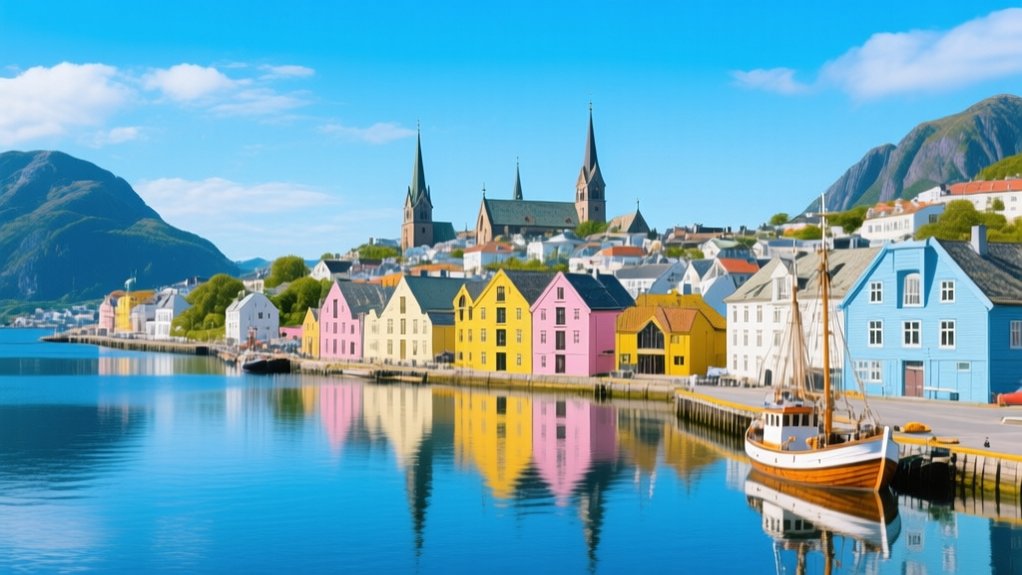
Your ship docks at a cruise quay right in Ålesund’s town centre, on the doorstep of the Art Nouveau buildings. There is nothing to arrange before you go ashore. You don’t need a local taxi or a shuttle bus to get into town; you simply walk off the ship and you are there.
The walk into the streets is short and easy, so most passengers simply set off on foot. Ålesund’s actual centre is compact—you can walk from one end to the other in about fifteen minutes. The three peaks that rise around the harbour are prominent and define the town’s appearance, but reaching them requires proper shoes and deliberate effort rather than casual strolling.
Your real choice isn’t about finding your way around but deciding what to do with your time. The cruise line’s organised excursions exist and work adequately, though independent fjord and island tours typically offer better value and smaller groups. If you venture beyond the town streets—which you should, given how short most port stops are—book a fjord tour or kayaking trip before you arrive, as these fill quickly with cruise passengers. Consider purchasing a local eSIM data plan to stay connected while researching and booking tours independently. Spending your entire day in town means you’ll see the architecture but miss what actually makes this part of Norway worth the visit.
Getting From the Port to Town
You won’t need a shuttle bus here, and a taxi costs more than walking for no gain. Most passengers rush ashore within minutes of arrival, which only creates queues at the gangway when you could have stayed for coffee and gone ashore with fewer people around you. The real advantage isn’t speed; it’s knowing that lingering makes sense.
From the quay the whole town centre around the harbour is walkable, though the three peaks dominating Ålesund’s skyline will pull you further afield if you have time. The route is straightforward enough that you won’t get lost finding your way from the ship.
A taxi works if you want to go further out, or to be driven up to the Aksla viewpoint rather than climb, and splitting the fare with others keeps the cost down. You gain the flexibility to ask the driver for a different route—along the water, perhaps, or to a neighbourhood away from where other cruise passengers congregate. This matters if you want to avoid the standard tourist corridor.
Walking from the port is the obvious choice. The quay sits at the edge of the Art Nouveau streets, so you are sightseeing from the moment you step ashore rather than passing through unremarkable industrial areas. Your hours off the ship are finite, and none of them need to go on transfers.
What matters more than how you arrive is what you do once you’re there. Come ashore with plans already made—whether that’s a fjord tour, kayaking, or a route through specific neighbourhoods on foot. Arriving with purpose transforms a port stop from idle wandering into something that justifies the journey.
The Must-Do Experience: Start Here
Most visitors arrive expecting Art Nouveau architecture and end up talking about the Aksla Viewpoint instead. A steep wooden staircase carved into the hillside takes you there, it costs nothing, and the view across the three islands and surrounding fjords actually justifies the climb—the town layout below makes sense from up there in a way it never will from street level.
The climb takes less than an hour and works best if you start before the cruise passengers emerge. You’ll have the stairs largely to yourself, and the physical effort clears your mind better than any amount of wandering through the shops near the harbour will manage.
If stairs trouble your knees or heights make you anxious, the town rewards walking at whatever pace suits you. The Art Nouveau buildings are genuine—this place was rebuilt after a fire in 1904, and the architects committed to the style properly. You’ll notice the ornamental brickwork and curved facades naturally as you move through the streets, so a guided tour is unnecessary.
Book your fjord kayaking or guided boat excursion through an independent operator rather than through your ship’s shore excursion desk. Direct booking saves money and gives you better availability during cruise season, and these are genuinely where your time is best spent—on the water or in the hills rather than near the shops where cruise passengers concentrate.
🗺️ Tours & Experiences at This Port
Skip the ship’s overpriced excursions — browse top-rated independent tours trusted by thousands of cruise passengers.
History Culture and the Top Sights
Alesund’s Art Nouveau architecture draws cruise passengers, but only if you engage with it as a functioning city rather than a static museum. After the 1904 fire destroyed the town, architects chose to rebuild thoughtfully instead of simply restoring what existed before. The result is one of Europe’s largest concentrations of Art Nouveau buildings, though the real value lies in understanding this was practical modernism applied citywide, not aesthetic indulgence.
The curved facades, ornamental ironwork, and the way buildings relate to each other rather than compete reveal this pragmatism. Walking without a guide works better than a structured tour because you’ll notice the authentic details—ceramic tiles, corner turrets, ground-floor shopfronts updated while upper floors remain original. The Jugendstilsenteret offers useful context if you want background, though it’s modest and better saved for poor weather.
Start at the harbour and move inland through residential neighbourhoods where the architecture feels less performed and more real. You’re observing a place where people actually live and work, not a recreation designed for visitors. This distinction between genuine experience and checklist tourism changes what you actually see.
Beyond the Centre: Day Trips and Alternatives
The ship’s Geirangerfjord excursion charges substantially more than independent alternatives because cruise lines operate on high margins. What you’re paying for is convenience that mostly consists of boarding a coach with several hundred other passengers and returning at a fixed time that allows no deviation from the schedule.
The fjord itself warrants the effort—the sheer scale of rock and water, the waterfalls, the absence of engine noise once you leave the ship—but you’ll experience it better alone. Book an independent operator well in advance because the competent ones fill with cruise passengers quickly, and they typically charge a fraction of what the ship does while keeping groups genuinely small. You’ll have time to actually look at things rather than photograph them from a marked stopping point.
If that feels like too much, the coastal road toward Trollstigen offers something different. Rent a car or hire a local driver who knows how the mountain switchbacks behave and how fast the weather can turn. Stop whenever you want, eat at places locals use, abandon your plan if the light suddenly improves. This tells you whether Alesund’s austere architecture is purely a city phenomenon or part of something broader across the region.
Staying within walking distance and exploring streets you bypassed earlier is equally reasonable. You’ve already seen the postcard views from the harbour. Spend your afternoon on a residential street where you’re not expected, where buildings serve the people living in them rather than existing as a display for visitors.
Shore Excursion or Going It Alone
Most cruise passengers book the ship’s excursion to Geirangerfjord because they assume it’s the only option, which is exactly why it costs more than independent alternatives. You’re paying for the convenience of not deciding anything yourself, plus a coach full of several hundred people locked into the same schedule regardless of whether the light suits photography or the moment calls for stopping longer.
The fjord rewards actual attention. The geology is worth studying, the waterfalls are substantial, and the quiet once you leave the harbour becomes noticeable. You’ll engage with it more thoroughly alone than you will from a designated stopping point.
Book an independent operator weeks in advance if you can manage it, as the reliable ones fill quickly with cruise passengers and typically cost considerably less than the ship while maintaining small enough groups to move at your own pace. You’ll actually observe things rather than photograph them from a fixed spot.
If Geirangerfjord feels like too much commitment, the coastal drive toward Trollstigen offers a different kind of value. Rent a car or hire a local driver who understands how these mountain roads function and how rapidly weather deteriorates, then stop when the light improves, eat where locals do, and change your destination if you want to. This approach reveals whether Alesund’s architectural austerity belongs only to the city or extends through the wider region.
Staying near the harbour and exploring streets away from the postcard angles works just as well. You’ve already seen the views from the water, so spend your afternoon on a residential street where buildings serve residents instead of tourists and where your presence actually registers as unusual.
🗺️ Tours & Experiences at This Port
Skip the ship’s overpriced excursions — browse top-rated independent tours trusted by thousands of cruise passengers.
Alesund: The Details Nobody Mentions at the Port Talk
The cruise terminal sits right in the centre, so there is no reason to overpay for taxis or waste energy on buses when walking straight into the city centre works perfectly well. Restaurants clustered near the harbour charge accordingly for their location; the actual food happens two streets inland where locals eat and prices reflect reality.
Art Nouveau here isn’t decoration applied to finished buildings—it’s woven into the structure itself, which means the postcard angles actually show you less than you need to see. Walk through residential streets and you’ll notice the detail extends to service entrances and forgotten corners because the style was applied as a genuine principle, not a marketing exercise. This approach to seeing the place shifts everything.
Norwegian coastal weather changes without much warning, so check conditions before you commit to a half-day plan. Alesund in clear light operates completely differently from Alesund under cloud cover, and sometimes the cloud genuinely makes for a better experience. This isn’t romantic exaggeration—it’s simply how the weather works here.
Independent guides for Geirangerfjord or Trollstigen need booking well ahead if those places interest you. The ship’s excursion programme does fill available spots, but independent operators typically charge less and work at a sensible pace rather than according to a schedule. Popular small-group operators fill their slots quickly during cruise season, so securing your place weeks in advance actually matters.
The city functions on foot. Your ship won’t leave for several hours, so fighting the urge to optimise every minute matters more than you’d think. Alesund responds to slow walking and genuine attention far better than it does to rushing through a checklist.
🗺️ Tours & Experiences at This Port
Skip the ship’s overpriced excursions — browse top-rated independent tours trusted by thousands of cruise passengers.
Your Port Day: A Sample Itinerary
Most port days in Alesund fail because passengers photograph the place rather than inhabit it. Your success depends entirely on how you pace yourself through the hours available.
Start with coffee at one of the cafés along Kongens gate where local office workers actually queue, not the harbourside places charging inflated rates. This matters because it establishes your rhythm and positions you as someone moving through the city rather than observing it from outside. Spend your first hour walking the residential streets behind the main shopping area, where the Art Nouveau architecture appears on ordinary buildings rather than in postcard compositions.
By midday, if weather cooperates, climb Aksla for the aerial view over the city. The climb is genuinely steep, but the perspective shows you how the fjord-facing orientation shapes the street layout and building placement. If cloud cover has moved in, explore the neighbourhood around Molovigen instead, where smaller streets reveal how the city actually functions at human scale.
Your afternoon splits into two realistic options: book independent tours well ahead if Geirangerfjord or Trollstigen genuinely appeal to you, or stay in the city itself. The Museum of Art and Design warrants genuine attention rather than a rushed circuit through the galleries. Alternatively, claim a waterfront bench with something to eat and watch how light moves across the surrounding hills over several hours.
The substance of your day isn’t what you do but how you resist the urge to fill every moment. This counterintuitive approach is actually how you absorb what Alesund offers.
Booking ahead gives you a choice of trips rather than whatever is left on the day. the tours running in Alesund is a good place to start.
🗺️ Tours & Experiences at This Port
Skip the ship’s overpriced excursions — browse top-rated independent tours trusted by thousands of cruise passengers.
Book your Alesund day
Tours for this port, compare before you book
Getting around in port
✈️ Before you sail: eSIM, insurance, luggage, flight delays
Ships In Alesund
Upcoming calls from our sailings tracker, updated regularly.
Britannia
P&O CruisesThu 8 Oct
Aurora
P&O CruisesThu 15 Oct
⚓ 08:00–17:00
Queen Anne
CunardFri 16 Oct
⚓ 08:00–18:00
ms Nieuw Statendam
Holland AmericaMon 19 Oct
⚓ 10:00–21:00
Ambition
Ambassador Cruise LineTue 20 Oct
⚓ 08:00–19:00
Sky Princess
Princess CruisesWed 21 Oct
⚓ 08:00–17:00