Easter Island Cruise Port Guide
Avoid tourist traps and discover Easter Island’s hidden moai sites—but first, learn which secret booking hack changes everything.
In this guide
Try one free personalised day plan — built around your ship’s actual arrival and departure times. Then get every port on your cruise done the same way from £7.99 (about $10).
Cruise Port Overview: What To Expect
Hanga Roa is a basic operation — a few shops, a visitor centre, and an anchorage offshore where your ship will sit while tenders ferry passengers ashore. The tendering process moves slower than you’d anticipate when thousands of people need moving to the pier, so expect delays rather than efficiency. Once ashore, facilities are genuinely limited compared to what you’re used to at established cruise destinations.
Easter Island hasn’t been developed for mass tourism, which means the port never generates the crush of bodies you’d encounter elsewhere. The moai sites and ceremonial locations do get busy when multiple ships are in port simultaneously, but this is manageable rather than chaotic. The real problem isn’t crowds but getting meaningful access to what matters — and that requires planning.
Transport is constrained. Taxis and hire cars exist for getting around Hanga Roa, but to visit the moai sites you’ll need an accredited guide. Most people get better value and better experiences through a full-day tour, which covers the significant sites in logical order and provides context that stops the monuments feeling like random scattered rocks. Booking tours before arrival is essential; the competent operators sell out to cruise passengers quickly, leaving latecomers with poor alternatives or nothing at all.
Getting From the Port To Town
Easter Island operates on a completely different scale from most cruise ports. Hanga Roa isn’t a town in any conventional sense—it’s a scattered coastal neighbourhood, and the sites worth seeing (the moai) sit inland across the island. The tendering pier leaves you close enough to walk to the visitor centre and basic shops if that’s all you need, but those facilities won’t show you what you actually came for.
Trying to see the island by taxi or hire car won’t work. The moai sites sit inside Rapa Nui National Park, and every visitor needs a park ticket and a guide accredited by the park authority, Ma’u Henua, to enter them.
An organised full-day tour booked before arrival remains the practical solution. Shore excursions collected from the port move efficiently through the major sites in logical order, and provide context that actually explains what the archaeology means. Ship-run excursions exist but typically cost more and follow rigid schedules that leave you feeling hurried.
The organised tour approach isn’t about convenience—it’s about seeing Easter Island within the real constraints of a cruise day. Without it, you’ll either stay near the port or waste hours arranging your own transport.
The Must-Do Experience: Start Here
Most cruise passengers arrive expecting Easter Island to be a museum you walk around; instead, you’re standing on a volcanic island where the archaeology is scattered across kilometres of landscape, and understanding it requires context you won’t find by wandering alone.
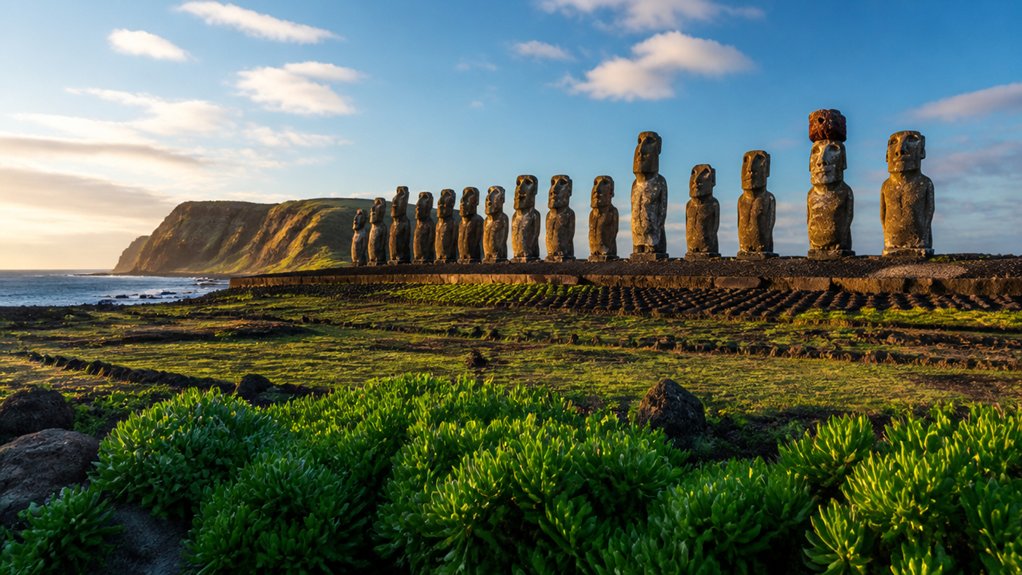
Start your day at Ahu Tongariki on the island’s eastern coast. This is the largest ceremonial platform Easter Island ever built, restored and lined with moai that face inland with their backs to the ocean—seeing them in morning light, before tour groups arrive, changes how you understand the entire culture. Your guide will explain the astronomy, the social hierarchy encoded in their placement, and why these statues meant something entirely different from what casual visitors assume.
From there, move inland to Rano Raraku, the volcanic crater where the moai were actually carved from stone. Walking among hundreds of half-finished statues in various stages of completion shows you the sheer scale of the project and, honestly, how abruptly it stopped. The archaeological story becomes clear in ways no photograph prepares you for.
Finish at Anakena Beach on the north coast, where the first Polynesian settlers are believed to have landed. By afternoon the crowds have thinned and you’ll have a genuine stretch of sand to yourself. A guided tour through these three sites in sequence costs considerably less than ship excursions and moves at a pace that actually lets things sink in rather than just tick boxes.
Book an independent full-day tour online well before your cruise. The best operators fill quickly with cruise passengers, and booking ahead secures your spot and often saves money compared to booking onboard.
History Culture and the Top Sights
The archaeological record extends well beyond the three main sites into terrain that cruise groups typically skip, which means quieter spaces and actual room to process what you’re looking at. Ahu Akivi sits inland near the island’s centre and lines up seven moai facing towards the sea, the only ahu where they do—archaeologists think this served an astronomical function, and the setup feels less reconstructed than the coastal restoration work. The light is different inland, and the sense of mystery hasn’t been flattened by visitor infrastructure.
Puna Pau reveals where the red stone topknots were carved before transport, showing you a separate production system entirely. The half-finished pieces here differ from those at Rano Raraku: they’re smaller and more refined, forcing you to recognise how specialised the labour actually became. This site alone demonstrates that moai production wasn’t chaotic—it was methodical and divided.
Te Pito Te Kura on the north coast holds the largest moai ever successfully transported, now lying face down at around ten metres long. Seeing a statue horizontal gives your sense of scale a jolt that no standing figure can deliver. The physical reality of moving something this size across the landscape becomes tangible when you’re standing beside it.
Independent operators typically include these secondary sites because their itineraries aren’t constrained by cruise ship logistics. Book your full-day tour online in advance; the better operators fill quickly and visiting beyond the main three sites genuinely rewires your understanding of what the island’s builders actually achieved.
Beyond the Centre: Day Trips and Alternatives
The ship’s organised tour to Rano Kau and Anakena Beach operates on a schedule built around the slowest walkers in the group, charges more than equivalent independent alternatives, and still leaves you back at the pier with hours remaining. Book a full-day tour through an independent operator before you arrive instead—you’ll pay less, your guide actually pauses when you ask questions, and you’ll see secondary sites that change how you understand the island’s archaeology.
Most reputable operators collect passengers from the pier mid-morning and start at Rano Raraku, where partially carved moai remain embedded in the crater walls as they were abandoned. You then move inland to Ahu Akivi, a line of seven statues that lacks the polished interpretation of the major sites, so the layout feels genuinely puzzling rather than explained away. The afternoon covers Puna Pau, where the red stone topknots were shaped in isolation before transport, and finishes at Te Pito Te Kura on the north coast—a horizontal giant that forces you to recalibrate what these statues actually weighed.
Lunch happens at a working restaurant used by locals rather than tour operators, you traverse the island as functional landscape rather than curated viewpoints, and you return with actual information instead of images identical to other visitors’ phones. Contact established independent operators at least a week before your ship arrives, since the worthwhile tours book their capacity quickly and offer better rates than the cruise line’s desk.
Shore Excursion or Going It Alone
The ship’s excursion desk presents this as a binary choice: book their tour or navigate Hanga Roa alone with a paper map. In reality, you have a third option that costs less, gives you actual control, and sends money to local operators rather than a Miami corporation. Hiring an independent driver and guide through established local businesses works better than either extreme.
The cruise line’s fixed itinerary accommodates forty mixed-ability passengers, which means standing around while stragglers catch up at each ahu while your guide repeats the same script. A private accredited guide works at your pace, spends time on what actually interests you, and can focus on specific questions—the archaeological detail around Rano Raraku or how those red stone topknots were actually moved from Puna Pau. You’re not herded through a predetermined sequence at predetermined intervals.
Book an accredited guide directly before your ship arrives. The best ones limit their daily numbers and fill weeks ahead in busy seasons. Confirm your pier pickup before sailing, and have your park ticket sorted too, as you’ll need it at the first site.
What Most Easter Island Guides Get Wrong
Tenders land at the small harbour in Hanga Roa, but the main sites are spread across the island, so your choice between paying for the ship’s tours or arranging your own transport genuinely shapes both your budget and what you can actually do during your day ashore. Tender runs work on ship time and swell can delay or cancel landings, which means you’re working within a tight window from when you step off to when you need to be back. Book an accredited guide as soon as your travel dates are confirmed, because the operators who know the island properly and keep their groups small get fully booked weeks in advance during busy periods.
Bring cash in Chilean pesos (US dollars are also taken) because card readers outside the main commercial area of Hanga Roa simply don’t exist or don’t work reliably. The sun burns aggressively here regardless of cloud cover, so sunscreen isn’t optional—you’ll damage your skin in under an hour without it. The archaeological sites contain sacred spaces that deserve respect beyond just taking photos; the protection rules are in place because tourists have genuinely broken irreplaceable stone structures.
Shops right by the landing pier charge inflated prices for water and basics, so buy supplies further into Hanga Roa before you head toward the archaeological sites. Your phone signal works in town but drops off significantly once you travel inland toward Rano Raraku or the northern coast, so download offline maps beforehand. If you want a specialist tour led by someone with genuine training in Rapa Nui prehistory, book well ahead because the competent guides are few and genuinely worth what they charge.
Your Port Day: A Sample Itinerary
Most cruise passengers spend their first hour queuing for the tenders instead of actually seeing anything on the island. Arrange an accredited guide with transport well before you arrive, so you can leave the pier as soon as you’re ashore rather than waiting for the ship’s schedule. You’ll get to the sites while the light is good and before the organised tour groups arrive.
Start at Rano Raraku on the eastern side where the moai were actually carved from the volcanic rock. Seeing hundreds of unfinished statues still embedded in the slope gives you a proper sense of the scale and labour involved—this isn’t a polished tourist attraction but an active archaeological site. Spend enough time here to walk through the crater before the midday crowds, then eat lunch at a local spot in Hanga Roa town rather than right by the landing pier.
After eating, drive to Ahu Tongariki on the southern coast, which is the largest ceremonial platform on the island with restored moai standing against the ocean. Your phone signal will disappear once you head inland, so download offline maps before you leave the ship. Spend your remaining daylight hours here rather than rushing back early—the light shifts considerably through the afternoon and you need time to actually look at what you’re standing in front of rather than just photograph it.
Book a local guide well before your cruise arrives because they’ll explain what you’re looking at in terms that make the archaeology legible instead of just impressive. The difference between walking these sites with someone who knows the evidence and walking them alone is substantial.
Book your Easter Island day
Tours for this port, compare before you book
Getting around in port
✈️ Before you sail: eSIM, insurance, luggage, flight delays
Ships In Easter Island
Upcoming calls from our sailings tracker, updated regularly.
Costa Serena
Costa CruisesWed 2 Dec
⚓ 08:00–19:00