Galapagos Cruise Port Guide
Secure your Galápagos adventure with insider tips on wildlife tours, local guides, and hidden gems—but there’s one critical mistake most cruisers make.
In this guide
Try one free personalised day plan — built around your ship’s actual arrival and departure times. Then get every port on your cruise done the same way from £7.99 (about $10).
Cruise Port Overview: What to Expect
The Galápagos Islands operate under conservation rules fundamentally different from conventional cruise ports. You’ll arrive on a small expedition vessel, typically carrying 50 to 100 passengers maximum, and the Galápagos National Park enforces strict limits on how visitors move ashore, which wildlife you can approach, and how many people visit each site daily. This is not a mass-market destination.
Your ship will either start from or end at Baltra or San Cristóbal, which have airports connected to mainland Ecuador. Getting to the Galápagos means flying from Quito or Guayaquil first, then boarding your expedition vessel. Cruises usually last 5 to 10 days, and your time ashore is spent on small, designated visitor sites under strict environmental protection. There are no city ports, no dock shopping districts, and no casual wandering.
Every visitor site within the Galápagos National Park requires an authorised naturalist guide. These guides are certified by the park authority and most speak English. They know where wildlife congregates, understand the regulations, and prevent visitors from causing disturbance. A good guide transforms your experience from seeing animals on a trail into understanding how they behave and why the islands matter to evolutionary science.
Costs are high. Food, accommodation, and tours cost significantly more than mainland Ecuador because nearly all goods are imported. Most expedition cruises include meals and guided tours in their package price, which makes budgeting easier than arranging everything independently.
Getting Ashore: Pangas, Zodiacs and Landings
You won’t dock at a pier. Your expedition ship anchors offshore and uses small inflatable boats, called pangas or Zodiacs, to transport passengers ashore. Each panga holds roughly 10 to 12 people and is crewed by two operators. This is how the park limits impact on the islands—no large infrastructure, no permanent docks, just temporary, minimal contact.
Landings come in two types. A dry landing means you step directly from the panga onto rocks or a sandy beach. A wet landing requires you to wade through shallow water, sometimes knee-deep, to reach shore. Your guide will brief you beforehand on which type to expect at each site, so you can dress accordingly. Wear water shoes or sandals designed for wet terrain, because sharp volcanic rock and corals cut through soft soles easily.
The panga ride itself is part of the experience. Seas between islands can be rough, which is why bringing a waterproof dry bag for cameras and valuables matters. Most vessels issue these beforehand, but checking beforehand with your cruise line prevents regrets.
Once ashore, you walk marked trails under your guide’s direction. Distances are modest—rarely more than a couple of kilometres—but the terrain is volcanic and uneven. Bring proper hiking shoes, not casual trainers, and allow your guide to set the pace. The physical demands are low to moderate depending on the site, but preparation reduces frustration.
What You’ll See
The Galápagos wildlife exists nowhere else on Earth. About 97 percent of the reptiles and land mammals are found only here, as are roughly 80 percent of the land birds you’ll encounter. This uniqueness is what Darwin observed during his 1835 voyage and what makes the islands scientifically irreplaceable.
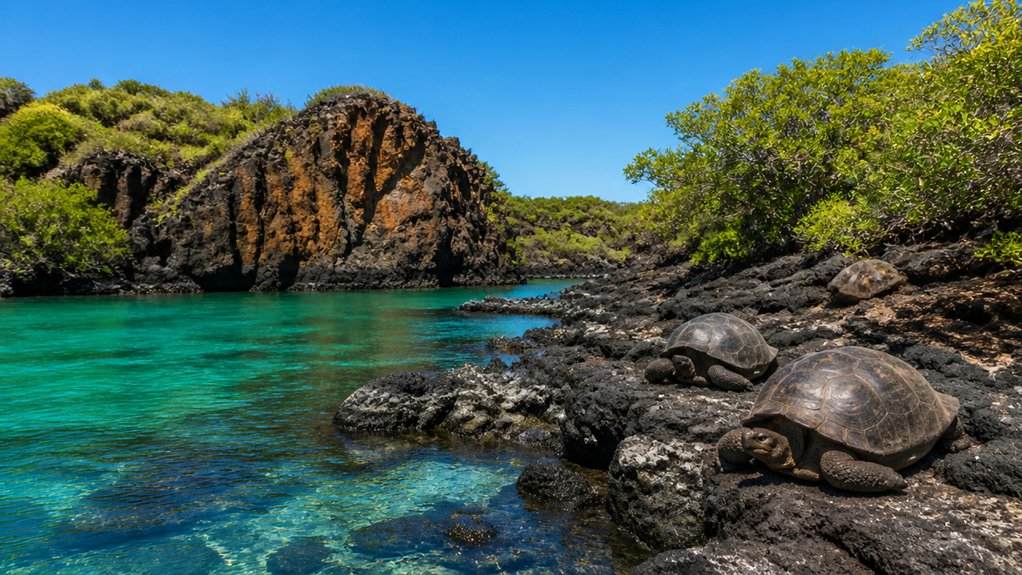
Giant Galápagos tortoises are the iconic species—some live more than 100 years and weigh hundreds of kilograms. You’ll see them on islands like Santa Cruz and Isabela, moving slowly through vegetation or sheltering in shade. Marine iguanas, which appear nowhere else, dive for algae and rest on rocks to warm their bodies. They look prehistoric and feel oddly alien, which is exactly the point.
Flightless cormorants are another endemic marvel. They’ve evolved without wings for flight, instead using stubby appendages for underwater propulsion while diving for fish. The Galápagos penguin, the world’s northernmost penguin species, shelters in the cooler western islands. Darwin’s finches, the famous species that inspired evolutionary theory, are small and easy to miss unless your guide points out their different beak shapes and feeding behaviours.
Seabirds dominate the skyline. Frigatebirds with inflatable red pouches, blue-footed boobies with bright blue feet, and Galápagos hawks circle above or rest on rocks. The boobies are curious and unafraid of humans, which is why you’ll see them closely—but maintain at least two metres distance as instructed by your guide.
Marine life is equally remarkable. Snorkelling trips reveal hammerhead sharks, Galápagos sea lions, octopi, and tropical fish. The convergence of three ocean currents creates unique conditions where cold-water species meet warm-water species in the same ecosystem, which is why biodiversity feels concentrated and intense.
Visitor Sites and the Main Islands
Most expedition cruises visit between five and eight visitor sites spread across different islands. Santa Cruz, the most populated island, hosts Puerto Ayora and the Charles Darwin Research Station. San Cristóbal has Puerto Baquerizo Moreno, the provincial capital. Isabela offers beaches, mangrove lagoons, and penguin habitats. Genovesa, a more remote option, provides outstanding seabird viewing with less crowding.
Floreana, Española, and several other islands offer specialized wildlife viewing opportunities. Your itinerary depends on your cruise length and the operator’s schedule. Most 7 to 10-day cruises cover more ground than shorter voyages and include more isolated sites with better wildlife encounters.
The vegetation changes dramatically between islands and by altitude. Coastal zones feature salt-tolerant mangroves. The arid zones inland contain drought-adapted cacti and low scrub. Higher elevations on larger islands support dense misty forests with lush vegetation—you might ascend from desert to forest in a single day.
The Guide Rules and Conservation
Your guide sets the rules on shore. Keep to marked trails, stay at least two metres from all wildlife, and never touch animals or plants. These rules protect the ecosystem and prevent habituation that could harm wildlife. Your guide will also prevent you from approaching nesting birds or sea turtles during sensitive periods. Photography is allowed, but not at the expense of animal welfare.
You cannot bring certain items into the islands—invasive plant seeds, fresh produce from mainland Ecuador, and certain animals are all prohibited. Quarantine officials inspect luggage on arrival to prevent introducing pests and diseases. This feels inconvenient but is essential to keeping the islands functional.
Group sizes at visitor sites are typically limited to around 15 to 20 people per guide, which prevents overwhelming wildlife and keeps the experience intimate. This is why small expedition ships are the only option—mega-ships with 3,000 passengers couldn’t comply with park regulations.
What to Pack
Bring good quality binoculars—bird and marine life viewing depends on them. Pack water shoes or sandals that grip wet rocks. Sun protection is essential—the equator, reflective volcanic rock, and no shade combine into serious sunburn conditions within hours. Bring sunscreen, a wide-brimmed hat, and lightweight long-sleeved clothing that dries quickly.
A waterproof dry bag for cameras is vital during panga rides and wet landings. Snorkelling gear is sometimes provided but check with your cruise line. If you bring your own fins, mask and snorkel, you’ll have familiar equipment. Lightweight, packable rain gear is useful, though showers are quick and often warm.
Comfortable walking shoes with good ankle support matter for uneven terrain. Avoid white clothing that sticks out and disturbs wildlife in photographs. Layers work best because temperatures vary with time of day and which zone you’re in—mornings can feel cool on the boat, but midday ashore is hot.
A notebook or waterproof journal is optional but worthwhile for recording guide commentary and species observations. The information you’ll absorb is substantial and easy to forget without notes.
A Day on the Water and Shore
Most days follow a similar rhythm. You wake early on the ship for coffee or tea, then board a panga around first light to reach your visitor site. The morning landing involves a guided walk lasting 1 to 2 hours at a moderate pace, with frequent stops for wildlife viewing and photography. You return to the panga by mid-morning and head back to the ship for a proper breakfast.
The afternoon brings snorkelling, relaxation on deck, onboard lectures from naturalists, or a second site visit. Evenings involve dinner, evening entertainment (often presentations about the next day’s sites), and early rest. Seasickness is a real risk between islands—bring medication if prone to motion sickness, as no amount of scenery compensates for feeling unwell.
Your guide determines what you see and how much time you spend at each location. A skilled guide balances photography time with movement between sites and ensures everyone in the group remains safe and respectful of park regulations. Budget roughly 20 to 30 percent of your time photographing, 50 percent walking and viewing, and 20 percent listening to guide commentary.
Practical Essentials Before You Depart
Confirm your flight connections to Ecuador well in advance—delays cascade into missed cruise departures. Most cruise itineraries include flights as part of the package, but verify timing. You’ll need a Transit Control Card issued by Ecuador to enter the islands—your cruise line typically handles this, but check with them weeks before departure.
The Galápagos National Park entrance fee is paid on arrival and is mandatory. Budget for this separately from your cruise cost. Carry cash in Ecuadorian currency because not everywhere accepts credit cards, particularly for park fees.
Travel insurance that covers trip cancellation and evacuation is sensible because you’re far from major medical facilities. Pre-existing medical conditions should be disclosed to your cruise operator so they can prepare appropriate care.
Finally, bring realistic expectations. The Galápagos is stunning and scientifically important, but it’s not a luxury destination. The focus is wildlife and conservation, not comfort. Your ship will be functional and often quite small, which intensifies the adventure but also limits amenities compared to Caribbean or Mediterranean cruises. This trade-off is exactly why people come.
Book your Galapagos day
Tours for this port, compare before you book
Getting around in port