Roatan Cruise Port Guide
Snorkel the Mesoamerican Barrier Reef, explore pirate history, and discover why independent tours beat cruise ship packages—but timing is everything.
In this guide
- Roatan Has Two Cruise Ports, Five Kilometres Apart
- Getting From Your Berth Into Coxen Hole and Beyond
- The Reef Is the Reason: Snorkelling and Diving
- History, Garifuna Culture and the Sights Worth the Drive
- Day Trips: West Bay, West End, Sandy Bay and the East End
- Ship Excursion or Independent Operator
- Things Worth Knowing Before You Step Off in Roatan
- Two Realistic Port Days, One for Each Terminal
Try one free personalised day plan — built around your ship’s actual arrival and departure times. Then get every port on your cruise done the same way from £7.99 (about $10).
Roatan Has Two Cruise Ports, Five Kilometres Apart
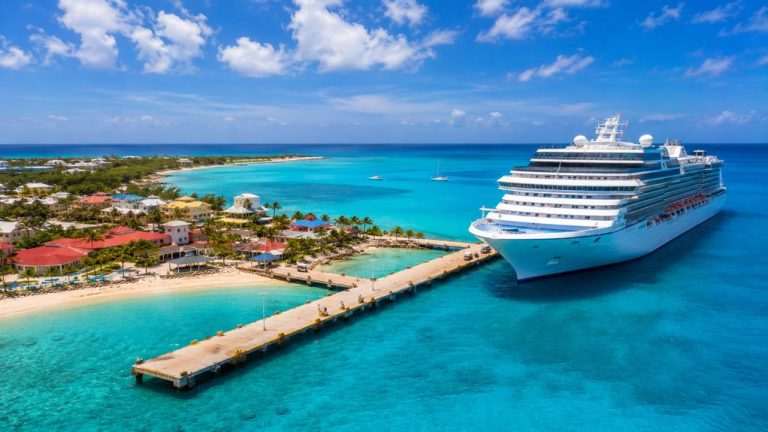
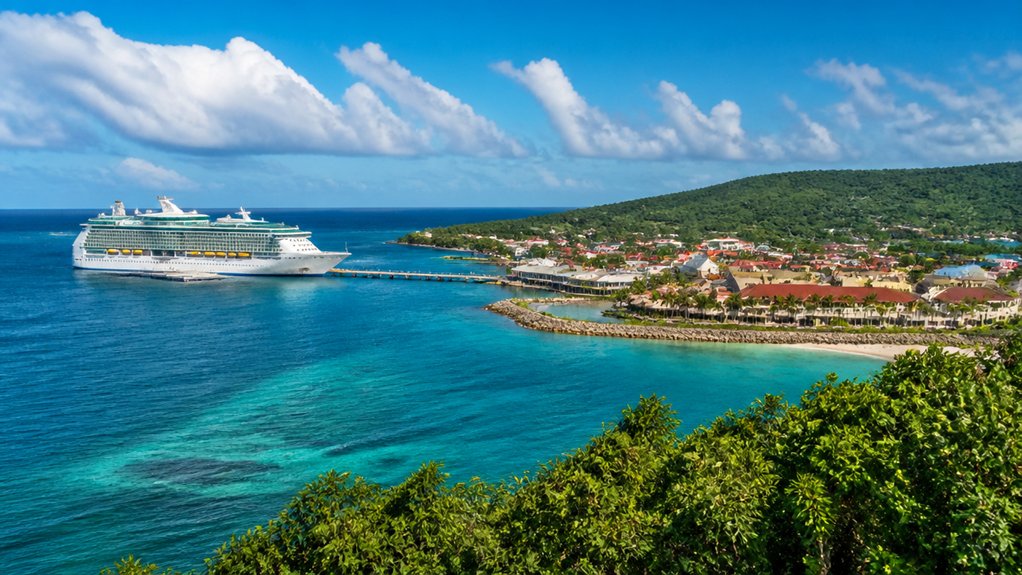
Roatan is the largest of the Bay Islands, 59 km long, under 8 km wide at its widest point and sitting about 65 km off the northern coast of Honduras. The single fact that decides your whole day is this: the island has two entirely separate cruise terminals, roughly 5 km apart on the south coast, and they are not interchangeable. Mahogany Bay Cruise Center sits at Dixon Cove and is owned and run by Carnival Corporation, so it takes Carnival, Princess and Holland America ships. Port of Roatan (Town Center) sits in Coxen Hole itself, the island capital, and handles Royal Caribbean, Norwegian, MSC and Celebrity. Check your ticket or the ship’s daily programme for the terminal name first, because almost every distance in this guide changes depending on which one you are standing in.
Neither port tenders. Both berth ships alongside and you walk off down a gangway. Mahogany Bay has two piers, the south one about 145 m long and the north one about 164 m, handling two large ships and up to 8,000 passengers at once; it opened in 2009 on a 24-acre site, and you may also see it called Isla Tropicale. Port of Roatan has two alongside berths and puts you straight into a walled Town Center complex of shops, bars and a pool, with Coxen Hole’s main road a 3-4 minute walk past the gate. If you have read elsewhere that Roatan is a tender port, that is wrong and has been for years.
Plan on roughly seven to nine hours ashore. From Mahogany Bay the drive to West Bay Beach is about 19 km and takes 30-35 minutes each way; from Port of Roatan the same beach is 15-20 minutes. That one-hour swing in round-trip transfer time is the difference between a relaxed beach morning and a rushed one, so decide before you dock. Booking a reef trip or transfer in advance also fixes your pick-up time, which matters when two or three ships are in. You can compare Roatan tours and reef trips by terminal before you sail and skip the dockside queue entirely.
Getting From Your Berth Into Coxen Hole and Beyond
If you dock at Port of Roatan, you are already in town. Walk out of the Town Center gate, turn onto Coxen Hole’s main street and you are among the pharmacies, supermarkets, ATMs and the straw market within 3-4 minutes on the flat. Taxis, water taxis and tour operators stage immediately outside the gate. Fares here are negotiated, so agree the number and whether it is per person or per cab before the doors close. Typical runs: 15 minutes to West End, 15-20 minutes to West Bay, about 10 minutes to Sandy Bay and 20-25 minutes to French Harbour.
If you dock at Mahogany Bay, you cannot walk anywhere useful. The site is a gated private facility on a peninsula at Dixon Cove and the nearest town, Coxen Hole, is 5 km west along the main island road, a 10-15 minute taxi ride. Mahogany Bay’s taxi association runs a published zone system with fixed fares and no haggling: one zone covers Coxen Hole and French Harbour, another covers West End and West Bay. Ask the dispatcher which zone you want, take the printed card, and keep it for the return leg.
Roatan has one main road running the length of the island, and shared colectivo taxis work it like a bus route, stopping to pick up and drop other passengers along the way. They are far cheaper than a private hire and perfectly usable, but they add stops and you will not control the timing. A private taxi is exclusive to your group and goes direct. Say which one you want before you get in, because the driver will assume private at a cruise gate. There is no public bus into either terminal and no free shuttle from Mahogany Bay into Coxen Hole.
The currency is the Honduran lempira, not the US dollar. US dollars are accepted almost everywhere within a few kilometres of the ports, but your change will frequently come back in lempira, so carry small notes and expect mixed change. Mahogany Bay has two ATMs, one dispensing lempira and one dispensing dollars; Port of Roatan has one in the terminal and several more in Coxen Hole town. Card acceptance is normal in the terminals and patchy once you are out on the main road. To avoid unexpected roaming charges during your shore excursion, consider purchasing a local eSIM data plan before arrival so you can communicate freely and access maps without worrying about expensive international fees.
The Reef Is the Reason: Snorkelling and Diving
Roatan sits on the southern edge of the Mesoamerican Barrier Reef, the second-largest barrier reef system in the world, and that reef is the single thing the island does better than almost any other Caribbean cruise call. At the southern end of West Bay Beach the reef edge lies roughly 90-180 m from where you put your towel down. The sand flat in front of it is around 3 m deep and the wall drops to about 9 m, which means a competent swimmer with a mask reaches proper reef in five minutes from the beach with no boat involved. Very few cruise ports offer that.
The water is warm year-round and visibility is generally best in the drier stretch from April to May. October to December are the wettest months, and from December to February northern swells push onto the north and west shores, which is the stretch of the year when West Bay and West End can be choppy or stirred up. Boat sites on the sheltered south side hold up better, so if the wind is up on a winter call, ask your operator to move you rather than cancel.
Two hazards are worth knowing. North of the jetty at West Bay is an active boat lane with constant dive-boat and water-taxi traffic, so stay south of it and inside the marked area. At Half Moon Bay in West End, dive boats use the marked channels continuously; stay out of them. The Roatan Marine Park, a community non-profit based in West End, maintains the channel markers and more than 329 dive and snorkel moorings, funded by a voluntary user-fee bracelet that most dive shops will ask you to buy. The wider Bay Islands National Marine Park covers roughly 650,000 hectares and is the largest marine protected area in Honduras.
Be realistic about reef condition. Stony coral tissue loss disease reached Roatan some years ago and has since been recorded at most monitored sites, and recent marine heatwaves have caused record heat stress to the large reef-building corals. Fish life remains good and the topography is still dramatic, but the hard coral is visibly damaged compared with photographs taken a decade ago. Anyone selling you a pristine reef is selling you an old brochure. Booking ahead still matters on busy days, so secure guided excursions in advance to lock in a morning slot before the ship’s own groups fill the boats.
History, Garifuna Culture and the Sights Worth the Drive
Columbus reached the Bay Islands on his fourth voyage in 1502, making landfall at neighbouring Guanaja. The English and Spanish then fought over the islands for two centuries, and between roughly 1550 and 1700 English buccaneers used Roatan’s deep southern coves as a base; Port Royal at the east end was the best known of them. Coxen Hole takes its name from the English buccaneer John Coxon. That period is why the island’s first language is English rather than Spanish, unlike mainland Honduras.
The Garifuna arrived in 1797, deported by the British from St Vincent and landed on Roatan before spreading along the Central American coast. Punta Gorda, on the north shore about 30 km east of Coxen Hole, is the oldest Garifuna settlement in Central America and remains a working village rather than a staged attraction. It is a 45-50 minute drive each way from either port on the main road, which makes it a genuine commitment on a port day, but it is the only place on the island where Garifuna drumming, language and food are part of daily life rather than a terminal performance.
Closer in, Carambola Botanical Gardens sits in Sandy Bay, about 10 minutes from Port of Roatan and 20-25 minutes from Mahogany Bay. It is a hillside garden with signed trails and a climb to a ridge lookout over Sandy Bay, and it closes on Sundays, which catches out passengers on weekend calls. Daniel Johnson’s Monkey and Sloth Hangout is about 25 minutes from both ports and is open year-round, with capuchin monkeys, sloths and macaws in a hands-on setting; it is the sanctuary most ship excursions use and it books out early on multi-ship days. Gumbalimba Park, on the West Bay side, combines a similar animal enclosure with a zip line and a beach.
Coxen Hole itself is the island’s administrative centre. It is a working town of municipal offices, fish landings and supermarkets, not a colonial showpiece. Juan Manuel Galvez International Airport sits on its eastern edge, which is why the road between Coxen Hole and Mahogany Bay carries the island’s heaviest traffic.
Day Trips: West Bay, West End, Sandy Bay and the East End
West Bay Beach is the postcard: about 2 km of white sand at the island’s western tip with the reef directly offshore. It is 15-20 minutes from Port of Roatan and 30-35 minutes from Mahogany Bay, and on a two-ship day it fills. Beach clubs occupy most of the frontage; the public sand at the southern end, directly in front of the reef, is the part worth aiming for.
West End is the village 2-3 km north of West Bay, a single street running along the water with dive shops, cafes and the Roatan Marine Park office. A water taxi connects West End and West Bay in about 10 minutes and runs throughout the day; the beach path between them takes roughly 20 minutes on foot. That water taxi is the most useful piece of local transport on the island, because it lets you take one taxi from the ship to West End and then move between the two without a second road fare.
Sandy Bay, 10 minutes from Port of Roatan, is the quieter alternative: Carambola Gardens, the Roatan Institute for Marine Sciences at Anthony’s Key, and Spooky Channel, a dramatic cut in the reef that is a dive site rather than a casual snorkel because it opens to open-water current.
East of the ports the island empties out. French Harbour is 10 minutes from Mahogany Bay and 20-25 minutes from Port of Roatan, and is the island’s fishing and boatyard town. Beyond it, the drive to the East End takes over an hour each way on a road that narrows and deteriorates, so East End beaches and Pigeon Cay are only realistic on a long call and with a driver who has agreed a return time in writing. The single main road is the only way along the island and has no diversion, so keep any eastbound plan inside a 90-minute round trip unless your ship is in unusually late. If you want the transfer and the timing handled for you, Roatan day trips and beach transfers are worth comparing against a negotiated taxi.
Ship Excursion or Independent Operator
The honest split on Roatan depends almost entirely on which terminal you are in. From Port of Roatan, independent is straightforward: you walk out of the gate into Coxen Hole, taxis are immediately available, the main road is right there, and West End is 15 minutes away. Doing it yourself costs less and takes no special planning.
From Mahogany Bay the calculation shifts. You are 5 km from anywhere, the taxi zone fares are fixed so there is no bargaining advantage, and the round trip to West Bay eats 60-70 minutes of your day before you have done anything. Independent still works, but the margin is narrower and the timing risk is real.
The ship excursion buys one genuine thing: if the tour runs late, the ship waits. An independent operator carries no such guarantee, and Roatan’s single main road means one blocked junction between West Bay and Dixon Cove holds you up with no alternative route. Book independently and you should build in an hour of slack and give your driver your all-aboard time at the start.
Independent dive operators cluster in West End and Sandy Bay, run cruise-timed morning trips, and will collect from either port if you arrange it beforehand. Certified divers should bring their card. Non-divers can take a resort course, but it consumes the whole morning, so do not try to pair it with a beach afternoon at the far end of the island.
Things Worth Knowing Before You Step Off in Roatan
Confirm your terminal the night before. Passengers routinely arrive with a plan built around Mahogany Bay’s chairlift and then dock at Coxen Hole, or the reverse. The chairlift, the private beach and the zone taxi system belong to Mahogany Bay only; the walk-out-into-town convenience belongs to Port of Roatan only.
At Mahogany Bay, the Magical Flying Beach Chair chairlift is a paid ride of about 250 m from the shopping village to Mahogany Beach. There is a free alternative: a shaded nature trail and elevated walkway that reaches the same beach in 10-15 minutes on foot. Nobody at the dock will point this out.
The US State Department has rated Honduras at Level 3, Reconsider Travel, citing crime and terrorism, so check the current advisory before you travel. There is no separate carve-out or lower rating for the Bay Islands, so the country-level rating applies to Roatan on paper. The only Do Not Travel designation is for Gracias a Dios department, which is on the mainland roughly 400 km away and is not reachable on a port day. In practice the cruise corridor between Coxen Hole, Sandy Bay, West End and West Bay is heavily policed and tourism-dependent. Take the same precautions you would in any unfamiliar port: agree fares first, use marked taxis from the port ranks, leave valuables on the ship, and do not walk unlit side streets in Coxen Hole once the ships have sailed.
Bring water shoes: reef entry at West Bay and West End is over rock and dead coral rubble in places. Bring reef-safe sunscreen, too; several dive operators will not board you with oxybenzone products, and the Marine Park discourages them.
Do not assume a dollar figure quoted on a sign means change in dollars. Small US notes are the practical solution for taxis, water taxis and beach vendors.
Two Realistic Port Days, One for Each Terminal
If you dock at Port of Roatan (Coxen Hole). Walk off the ship, through the Town Center and out of the gate within 20 minutes of the gangway opening. Take a taxi to West End, 15 minutes, and agree the fare before you set off. Spend the first part of the morning on a dive or snorkel boat booked in advance from one of the West End shops, then take the water taxi to West Bay, 10 minutes, for reef swimming from the beach at the southern end. Eat on the West End strip, then take a single taxi back to the ship. Total road time: about 30 minutes for the day. If the sea is rough on a December to February call, swap the boat trip for Carambola Gardens in Sandy Bay, 10 minutes from the port, remembering it closes on Sundays.
If you dock at Mahogany Bay (Dixon Cove). You have two workable shapes. The low-effort version stays on site: walk the nature trail or take the chairlift to Mahogany Beach, snorkel off the beach, and keep your day inside the 24-acre complex with zero transfer risk. The better version leaves: take a zone taxi west, 30-35 minutes, and commit the whole middle of the day to West Bay and West End, using the water taxi to move between them, then return in one hop with at least 90 minutes of margin before all-aboard. The version that does not work is trying to do both, because the round trip alone is over an hour.
For either terminal, the animal sanctuaries are the sensible wet-weather or rough-sea fallback. Daniel Johnson’s Monkey and Sloth Hangout is about 25 minutes from both ports and open year-round, and it pairs with a short beach stop rather than a full excursion. French Harbour, 10 minutes from Mahogany Bay, is the low-risk option on a short call.
Whatever you choose, pick one end of the island and stay there. Roatan is 59 km long with one road, and the passengers who have the worst day are the ones who try to see the reef, a sanctuary and the East End on the same seven-hour call.
Book your Roatan day
Tours for this port, compare before you book
Getting around in port
✈️ Before you sail: eSIM, insurance, luggage, flight delays
Ships In Roatan
Upcoming calls from our sailings tracker, updated regularly.
MSC Seascape
MSC CruisesThu 8 Oct
⚓ 08:00–16:00
MSC World America
MSC CruisesMon 12 Oct
⚓ 09:00–18:00
Carnival Jubilee
CarnivalWed 14 Oct
⚓ 09:00–18:00
Enchantment Of The Seas
Royal CaribbeanWed 14 Oct
⚓ 07:00–16:00
Star Of The Seas
Royal CaribbeanThu 15 Oct
⚓ 08:00–17:00
MSC Seascape
MSC CruisesThu 15 Oct
⚓ 08:00–16:00