Bonifacio Cruise Port Guide
A guide to navigating Bonifacio’s clifftop port reveals insider secrets that cruise passengers typically miss—but what’s the one trick?
In this guide
Try one free personalised day plan — built around your ship’s actual arrival and departure times. Then get every port on your cruise done the same way from £7.99 (about $10).
Cruise Port Overview: What to Expect
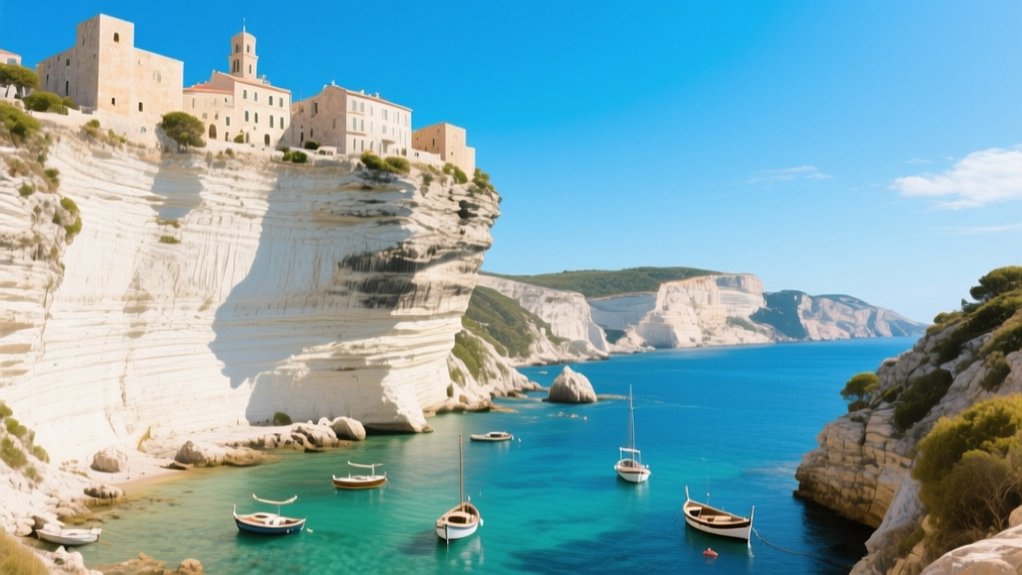
Bonifacio looks smaller than it actually is, mainly because the town spreads vertically up dramatic limestone cliffs rather than horizontally across flat ground. Your sense of space and time here depends entirely on your willingness to navigate uphill, not on how many kilometres you can cover. Most ships anchor offshore, so you’ll spend time in tender queues at both ends of your visit, which eats into your actual hours ashore.
The real shock for most cruise passengers is how empty the town becomes once you leave the harbour area. The crowds around the ferry terminal evaporate within a few minutes of walking, and you’ll find yourself alone on medieval staircases and quiet terraces looking toward Sardinia. The immediate port area has the predictable tourist markup on food and drinks, but moving just a few streets back brings prices down to something closer to normal. Consider booking shore excursions in advance to maximize your limited time ashore and avoid missing key attractions.
Walking uphill takes effort but is entirely manageable without assistance. Taking a shuttle or taxi might feel appealing, but climbing at your own pace means you arrive at the top without the gasping, overwhelmed sensation that rushed transport creates. The narrow cobbled streets reveal themselves gradually as you move through them, which rewards taking your time over speed-walking through everything.
Getting From the Port to Town
The tender queue itself is your first decision point—and it’s genuinely worth planning around rather than ignoring. Tenders run continuously throughout the day, but the rush immediately after arrival creates unnecessary waiting, so arriving at the port later in your visit often means a shorter queue on the return journey if you time it deliberately.
Once ashore, resist the urge to take a shuttle or taxi up the slope. The cobbled streets are genuinely walkable at a steady pace, and climbing yourself means you control how winded you arrive at the top, rather than scrambling out of a vehicle gasping. The walk requires manageable effort without demanding particular fitness, though wearing appropriate shoes matters considerably—slippery soles on wet stone create the only real hazard here.
Head directly away from the harbour cluster of cafés and souvenir stalls. Within a few minutes of walking uphill, prices normalise and you’ll find yourself in the actual town rather than the tourist performance of it. The restaurants and bars tucked into side streets a few blocks back offer considerably better value than anything with a harbour view, and the food quality rarely differs despite the price gap.
Skip any transport option that prioritises speed. Your advantage here isn’t covering distance quickly—it’s having time to wander the quiet terraces and medieval passages without feeling rushed. Independent walking costs nothing beyond your own effort and reveals far more of what actually matters about coming ashore in the first place.
The Must-Do Experience: Start Here
The old town’s real character emerges when you stop treating it as a destination and start noticing how the medieval layout actually works—the narrow streets cluster so tightly that they channel foot traffic in specific directions, and the fortifications still dictate which routes feel natural and which feel forced. Spend your first hour walking the upper terraces without a fixed plan, letting the passages and sudden viewpoints reveal themselves as you move deeper in rather than rushing through with a guidebook or group.
The warren of residential courtyards and narrow lanes shows you how locals genuinely navigate the space, and that observation matters more than ticking off landmarks. You’ll notice which areas tourists haven’t yet crowded, which passages feel genuinely lived-in, and which viewpoints draw your eye back repeatedly—this is the information that shapes a useful visit.
Find a small café in one of the quieter squares and sit where residents actually sit rather than at somewhere overlooking the harbour. A coffee or pastry costs less, tastes better, and gives you a proper pause to orient yourself, identify which passages interest you, and plan your route without feeling rushed or obligated to follow someone else’s itinerary.
🗺️ Tours & Experiences at This Port
Skip the ship’s overpriced excursions — browse top-rated independent tours trusted by thousands of cruise passengers.
History Culture and the Top Sights
Bonifacio’s medieval layout exists for a practical reason: the narrow, deliberately confusing streets were built to exhaust and disorient attackers, which means they’ll do the same to you if you’re moving too quickly between spots. Understanding this defensive logic actually helps you navigate far more effectively than any map would, because you stop fighting the layout and instead move through it purposefully. The solution is to treat the streets as a reason to slow down and pay attention to what’s actually around you rather than rushing to predetermined viewpoints.
The church of Sainte-Marie-Majeure and the Bastion of the Flag give you the essential views and historical context without requiring a formal tour—you can reach both by moving through the upper passages on your own. A local guide genuinely improves the experience here; they’ll point out details in stonework, explain why certain streets terminate where they do, and show you which corners open onto sudden views across the straits. Independent walking tours cost considerably less than ship excursions and give you the flexibility to stop whenever something interests you, though the best guides fill up during cruise season, so you need to book online before you arrive rather than hoping to find something the day you land.
The expensive viewpoint cafés near the main lookouts rely entirely on foot traffic. Instead, find a café on a residential terrace, order coffee or a panini, and you’ll pay a fraction of the price while sitting alongside locals rather than other tourists, and your view over the harbour is equally good. This matters because you’re spending time in a place that actually functions as a town rather than existing primarily for visitors to photograph.
Beyond the Centre: Day Trips and Alternatives
Most cruise passengers confine themselves to the upper town, leaving the beaches, walking routes, and smaller villages unexplored. These areas exist and are accessible enough that you don’t need a formal tour operator, but you do need to know where to start and how the local transport system actually functions—something ship excursions bundle together as justification for their substantial markup.
The southern beaches, particularly Plage de Paraguan, sit downhill from the port and are walkable or reachable by local minibus for a fraction of what cruise packages charge for a few hours in one spot. The Lavezzi Islands warrant a boat trip if you want to swim and snorkel, and independent operators cost considerably less than cruise packages while putting you on boats with actual locals rather than fifty other passengers. Book boat trips online before you arrive, as popular operators fill during cruise season and morning slots disappear first.
The inland wine region is technically reachable by local transport, though the landscape matters more than the wine itself—quiet villages and agricultural areas provide genuine mental relief from the medieval town’s intensity. If you have five hours ashore, spending it in the upper town with a local café meal gives better value than rushing between three separate activities. Beyond eight hours ashore, add either a beach swim or an island boat trip, but attempting both creates needless logistical stress for minimal additional benefit.
Shore Excursion or Going It Alone
The cruise desk’s excursion pricing works because you’re uncertain about the port, pressed for time, and willing to pay for convenience and a guaranteed return to the ship. Bonifacio undermines this logic entirely because the upper town is genuinely compact enough that independent exploration costs significantly less than organised tours while delivering the experience most passengers actually want.
A guided tour of the old town will cost considerably more than walking it yourself with a map or an audio guide app downloaded beforehand. You’ll see the same narrow streets, cliff-top views, and historical sites without the group pace or the obligation to eat lunch at the tour operator’s preferred restaurant. The real advantage of a cruise excursion here is psychological reassurance rather than practical necessity—understandable, but expensive reassurance.
Independent booking genuinely matters for activities requiring coordination: boat trips to the Lavezzi Islands or beach visits by minibus. Popular independent operators fill quickly during cruise season, and booking online before you arrive secures better pricing and morning slots when the water is calmest and beaches are least crowded. You’ll share the boat with actual locals and other independent travellers rather than a predetermined cruise group, which often means smaller groups and a more relaxed atmosphere.
Taking a ship excursion for peace of mind on your first cruise visit is reasonable if time-zone fatigue or unfamiliar languages genuinely stress you. Beyond that initial visit, the independence option nearly always delivers better value and a more authentic port experience.
🗺️ Tours & Experiences at This Port
Skip the ship’s overpriced excursions — browse top-rated independent tours trusted by thousands of cruise passengers.
The Practical Details That Change Your Day in Bonifacio
Bonifacio’s upper town works in your favour precisely because the cruise industry hasn’t flattened it into predictability. The narrow streets still function as a neighbourhood rather than a theme park, restaurants charge what locals pay, and you’ll photograph the cliff views without dodging tour groups in matching polo shirts.
Timing matters more than anything else. Most organised excursions leave mid-morning, which leaves the old town genuinely quiet in early daylight—you’ll see people actually living there rather than performing for cameras. The afternoon brings everyone at once, which pushes up café prices and makes decent photography nearly impossible. Going early and heading uphill straight away gives you space to move and think.
Water-based activities require advance booking before you arrive. Operators running boats to the Lavezzi Islands and offshore caves reserve their best slots weeks ahead during cruise season. Book directly with local operators online beforehand and you’ll get morning departures when seas run calmest and rates stay lower than walk-up prices. The cruise desk’s standard excursion costs noticeably more, puts you on a larger boat, and groups you only with other cruise passengers.
Your most efficient route is uphill first to the citadelle, then back through the old town, then down to waterfront restaurants for lunch. This timing keeps you ahead of the afternoon surge entirely.
🗺️ Tours & Experiences at This Port
Skip the ship’s overpriced excursions — browse top-rated independent tours trusted by thousands of cruise passengers.
Your Port Day: A Sample Itinerary
The walk from the tender landing to Bonifacio’s old town is short and free, with the little tourist train as an option if you’d rather not climb, so there’s no need to pay the ship’s excursion desk. You’ll arrive on your own schedule rather than moving through the streets as part of a larger group. Head straight up the main street to the citadelle as soon as you’ve climbed from the waterfront, because the narrow passages thin out earlier in the day and your photographs of the limestone cliffs and harbour improve with fewer people in frame.
Spend your first hour exploring the ramparts and interior streets at whatever pace suits you, stopping for coffee at a local café rather than somewhere on the waterfront where prices shift upward once the tour groups arrive. By late morning, work your way back downhill through the residential quarters and browse the small shops and galleries that serve locals rather than tourists. This is when you’ll find reasonable lunch prices at neighbourhood restaurants tucked away from the main tourist thoroughfare.
Eat while you still have good light and energy rather than rushing back to the ship. Boat tours to the Lavezzi Islands or offshore caves fill their morning slots well in advance during cruise season, so book online ahead of time if water-based activities appeal to you. Independent booking costs considerably less than ship excursions and typically offers smaller groups and better conditions.
Spend your afternoon on the water or simply relax at the waterfront café, knowing you’ve already covered the old town’s genuine character before the afternoon rush arrives. You’ll return to the ship having seen what actually exists here rather than what’s been packaged for visitors.
🗺️ Tours & Experiences at This Port
Skip the ship’s overpriced excursions — browse top-rated independent tours trusted by thousands of cruise passengers.
Book your Bonifacio day
Tours for this port, compare before you book
Getting around in port
✈️ Before you sail: eSIM, insurance, luggage, flight delays
Ships In Bonifacio
Upcoming calls from our sailings tracker, updated regularly.
Le Ponant
MSC CruisesSat 4 Sep
Le Ponant
MSC CruisesSat 11 Sep
Le Ponant
MSC CruisesSat 18 Sep
Le Ponant
MSC CruisesSat 25 Sep