Bahrain Cruise Port Guide
Make the most of your Bahrain cruise stop: discover hidden souqs, pearl banks, and local secrets that ship excursions won’t reveal.
In this guide
Try one free personalised day plan — built around your ship’s actual arrival and departure times. Then get every port on your cruise done the same way from £7.99 (about $10).
Cruise Port Overview: What To Expect
Bahrain’s cruise terminal is at Khalifa bin Salman Port in Hidd, about half an hour or more by road from the city centre of Manama, so you’ll need a taxi, shuttle or tour to reach anything worth seeing. The port is compact and efficiently laid out, but this works against you during peak season when every other passenger has the same immediate destinations in mind.
The old souq is a taxi ride from the port, but once you’re in central Manama it’s within easy walking distance of the modern waterfront district. You’ll encounter the expected chain outlets and international retailers first, then reach older neighbourhoods where the commercial character actually changes. If you bypass the obvious retail zones, the souq and surrounding streets remain genuinely walkable and aren’t off-limits to independent travellers. Consider booking guided tours at cruise ports in advance to gain deeper insights into the local culture and merchant traditions.
Narrow lanes in the souq become congested when tour groups congregate, particularly around the spice and textile stalls. The heat can be punishing depending on your travel dates, so adequate footwear and water are practical necessities rather than optional extras. Dressing modestly will smooth your interactions considerably, as Bahrain remains socially conservative despite its cosmopolitan port infrastructure.
Skip the official ship excursions in favour of independent walking tours or private guides, which typically offer better value and more candid perspectives on local commerce and daily life. The worthwhile tours book out among cruise passengers, so arrange these before your port day rather than hoping for availability at the last moment.
Getting From the Port To Town
The cruise terminal is too far from central Manama to walk, so take a taxi or shuttle into town, where walking beats waiting for transport. The old souq and surrounding neighbourhoods are genuinely reachable on foot once you’re there, though you’ll need to time your arrival to avoid the crush when organised tour groups turn up en masse. The extra effort gets you past the touristy waterfront and into older commercial streets where prices actually reflect local rates rather than cruise-passenger markups.
If you do take a taxi, settle on a fare before getting in the car. Drivers frequently quote inflated rates to cruise passengers, and the meter may not run fairly regardless. Negotiating upfront saves money and eliminates the awkward haggling that happens at your destination.
The walk itself moves through generic modern retail first, then transitions into older commercial districts where the atmosphere shifts noticeably. These streets contain actual shops serving actual residents rather than souvenir stalls, and spending an extra twenty minutes on foot to reach them is worth the detour. You’ll see how prices drop once you leave the waterfront zone entirely.
Independent walking tours led by local operators outperform the official ship excursions for both value and practical knowledge. Book your guide through a reputable local operator before your port day rather than waiting until you’re ashore, since the good ones fill quickly during peak cruise seasons. Your hotel concierge or a straightforward search for locally-run Manama walking tours will surface the better options well ahead of your arrival.
The Must-Do Experience: Start Here
Bahrain’s real advantage is speed—a taxi from the cruise terminal gets you somewhere genuinely local without much fuss, yet most passengers stay in the waterfront retail zone where coffee costs double the normal price. The old souq in central Manama is where your day actually begins, and arriving early means you’ll see merchants setting up rather than defending their stalls against tour groups.
Once your taxi drops you in Manama, head straight into the neighbourhood streets instead of lingering at the waterfront shops. You’ll pass through newer commercial areas first, but keep going—the older quarters have spice traders, textile sellers, and food stalls where locals actually eat. The transition happens gradually, and by the time you reach the souq proper, you’re surrounded by people buying everyday goods rather than things designed for visitors.
Walking the souq slowly works better than rushing. Gold traders occupy one section, spices another, and textile dealers sit where they’ve always sat. This is commerce that exists independently of cruise ships, which means prices reflect what locals pay and haggling happens naturally without the performance.
Book a local guide through an independent operator before arriving ashore. These walks move at a sensible pace, include actual stories about merchant families and trading history, and cost considerably less than the ship’s excursions. The better guides fill during peak seasons, so booking online in advance guarantees you won’t waste your port day waiting around or following a group of forty other passengers.
History Culture and the Top Sights
Bahrain’s museums draw far fewer cruise passengers than the souq does, which means you’ll actually look at the exhibits without queuing behind dozens of other visitors. The National Museum houses genuine Dilmun pottery, seals, and jewellery from when this island functioned as a serious trading power, and the building itself overlooks the harbour from the water’s edge. A couple of hours here makes sense if history interests you, and you won’t experience the crowding that defines better-known gulf museums.
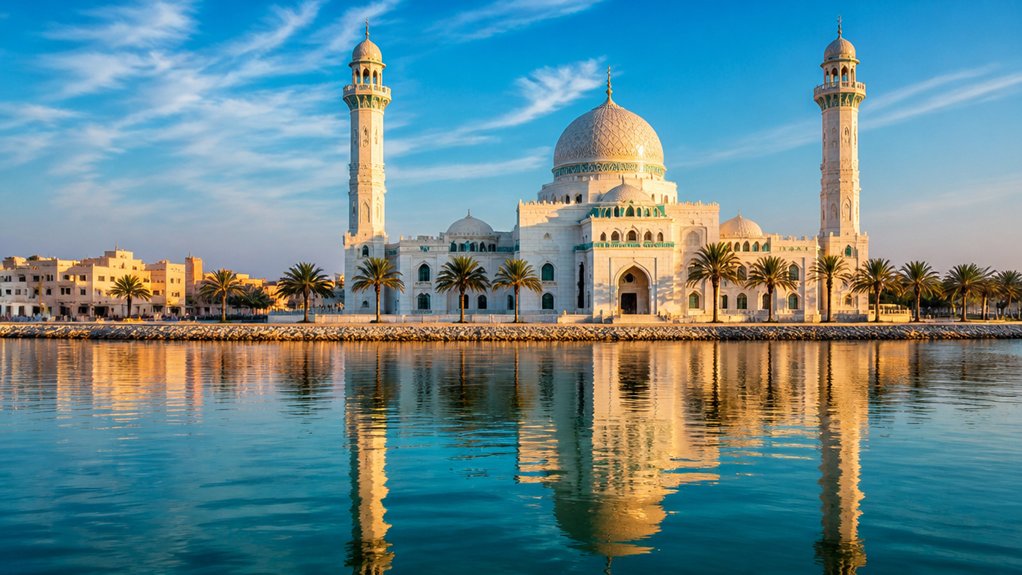
The Al Fateh Grand Mosque welcomes respectful visitors outside prayer times, and the interior scale genuinely strikes you—marble floors, massive chandeliers, and space that explains why locals regard it as important. You’ll need modest dress and must remove your shoes, both straightforward requirements. Photography restrictions apply, so ask before you take pictures.
Bahrain Fort occupies an elevated position overlooking the old harbour and feels less sanitised than museum reconstructions elsewhere in the gulf. The fort you see was built by the Portuguese in the sixteenth century on a mound settled since Dilmun times, and walking the restored sections gives you actual sense of why the island mattered strategically rather than reading about it on signage. The views across Manama from the upper walls justify the modest climb.
Independent guides who combine the museum and fort into a half-day itinerary cost considerably less than ship excursions and work at your pace rather than a group timetable. Book these in advance online because the reliable operators fill quickly on cruise days, and waiting until you’re ashore means missing out on the better guides entirely.
Beyond the Centre: Day Trips and Alternatives
Most cruise passengers stick to Manama’s waterfront, leaving the quieter neighbourhoods and pearl-diving sites largely empty. Bahrain’s compact enough that you can reach worthwhile places without losing your entire day to travel, and the less touristed areas actually reward the effort of getting there.
The pearl banks that sustained Bahrain for centuries sit just offshore, and boat operators run trips combining swimming, snorkelling, and stops at abandoned diving sites. You’ll work out why pearling mattered to the island rather than just watching from the sidelines, and these tours cost less than ship excursions with smaller groups. Book ahead online because the decent operators fill quickly on cruise days, and you’ll get better rates and group sizes than if you book at the last minute.
The Tree of Life, a lone tree surviving in the desert, draws visitors but nothing approaching the crowds at similar places nearby. It’s worth including if you’re taking a taxi or joining a guide, though the actual journey beats what you’ll find when you get there—the tree itself is nothing special, but driving through real Bahraini neighbourhoods rather than tourist areas gives you actual context. The route matters more than the destination. Many cruise passengers book guided excursions through their ship to explore these destinations, though independent arrangements often provide better flexibility and savings.
Independent guides assembling full-day itineraries around the pearl banks, quieter forts, and neighbourhood walks offer better value than package tours. You’ll move at your own pace rather than getting rushed through set stops, and booking ahead with established local operators ensures availability. This approach works better than anything a cruise ship desk will sell you.
Shore Excursion or Going It Alone
The ship’s excursion desk prices assume captive customers with limited options. Booking independently saves money, gives you control over your schedule, and spares you from being shepherded through attractions with dozens of other passengers on a fixed route.
Organised ship tours work if you value certainty over cost, but you’ll pay significantly more for the same activities than booking directly with a local operator beforehand. The ship desk removes logistical uncertainty, which matters if you’re uncomfortable arranging things yourself, though the savings from handling it independently are substantial if you’re willing to do the work.
Independent operators offering custom itineraries tailored to your interests provide the best value. You set your own pace, skip what doesn’t appeal to you, and speak to someone with actual knowledge instead of someone reading from a script. During cruise season, popular operators book up days ahead, so reserving online before arrival isn’t a luxury—it’s how you get availability and better rates.
Your decision hinges on whether you’re comfortable self-organising or prefer paying for convenience. Booking ahead with established local operators and navigating yourself costs less and gives you a better day. If you want everything arranged and guaranteed to work, the ship charges a premium, but you know exactly what you’re buying.
Before You Leave the Ship: Bahrain Practicalities
Bahrain’s size works against the cruise desk’s interests, which is why they’ll push you toward full-day excursions padded with lunch stops and shops. The port is a drive from Manama, taxis are cheap and easy to arrange, and the best experiences don’t require shepherding. Your independence here is the actual advantage.
The old souq in Manama operates as a working market where locals actually trade, not a stage set for tourists. You’ll negotiate decent prices on spices, textiles, and jewellery without a tour group pushing you through on schedule. Getting there from the terminal costs far less than what the cruise line charges for the same journey.
Al Fateh Grand Mosque is open to visitors outside prayer times and genuinely impressive in person—the photos don’t convey the scale. Book a small independent tour beforehand rather than accepting the ship’s version, which tends to herd people past quickly without allowing proper questions. Reputable operators fill their slots well before your ship arrives, so booking online before departure matters if you want actual access rather than a controlled shuffle.
Pearl diving demonstration tours are theatrical, expensive, and historically dodgy. Your money works harder spent anywhere else.
Your Port Day: A Sample Itinerary
Bahrain’s size works in your favour if you ignore the cruise desk’s packaged tours and navigate the place yourself. Start by walking into Manama’s old souq rather than paying for an excursion—the narrow lanes are where locals actually trade spices and textiles, and the prices shift dramatically once you move past the tourist-facing front stalls. Haggling here is expected rather than rude, and you’ll pay what things cost rather than what cruise passengers typically overpay.
By midday, take a local taxi to Al Fateh Grand Mosque and book an independent guided tour online before your ship arrives. The established operators tend to fill up quickly and they’ll actually let you into the prayer hall instead of keeping you on the perimeter like the ship’s version does. The scale of the interior and its acoustics deserve proper time, not a rushed thirty-minute stop.
Your afternoon works well at the Bahrain National Museum, which covers pearl diving, Islamic art, and local archaeology in a compact space that’s walkable from the mosque. The collection is substantial enough to justify a proper visit, and the admission cost is a fraction of what your cruise line charges for the same route. Eat lunch at a neighbourhood café away from the tourist areas where your money stretches further and the food is what locals actually order rather than what’s been adapted for cruise passengers.
Book your Bahrain day
Tours for this port, compare before you book
Getting around in port