Antwerp Cruise Port Guide
Insider secrets to maximizing your Antwerp port day: skip overpriced cruise excursions and discover hidden gems like
In this guide
Try one free personalised day plan — built around your ship’s actual arrival and departure times. Then get every port on your cruise done the same way from £7.99 (about $10).
Cruise Port Overview: What to Expect
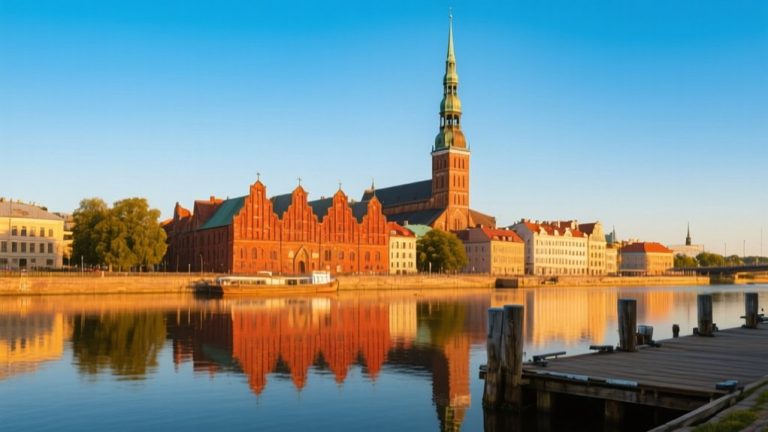
Antwerp is one of the very few ports in Europe where the ship ties up in the middle of the medieval city. There is no dock estate, no shuttle and no transfer to buy — the berth is a pontoon on the Scheldt directly beneath Het Steen, the castle gatehouse built between 1200 and 1225, which now serves as the city’s visitor centre.
The pontoon is 360 metres long and takes either one sea-going cruise ship or four river cruisers, with a maximum length of 265 metres and a maximum draft of 8 metres. Tenders are not permitted here, so if your ship calls at Antwerp you are berthing alongside.
The city centre begins 100 metres from the gangway. The Grote Markt and the cathedral are a five to ten minute walk. That is the whole of the transport problem at this port, and it makes Antwerp one of the best value calls on any northern European itinerary — everything you came to see is free to reach.
One thing to know before you plan the day: the Rubens House is closed for a long restoration. Its garden, library and the Rubens Experience remain open, but the house itself is shut. The Rubens paintings to see in Antwerp are in the cathedral.
Getting From the Port to Town
You walk. That is genuinely all there is to it — step off the pontoon onto the Scheldt quay at Het Steen and the old city is in front of you, 0.1 km away.
The Grote Markt, with its guild houses and the sixteenth-century city hall, is five to ten minutes on foot. The Cathedral of Our Lady is the same. No bus transfer is needed to reach the historic centre and nobody should sell you one.
For anything beyond the old town, the tram network starts at Groenplaats, the premetro station on the edge of the historic centre, served by several tram lines that run along the Meir shopping street.
For the MAS museum in the Eilandje docklands north of the centre, take a tram to the stop called MAS, right by the museum, or a tram to Londen and walk ten minutes. Buses also run out to Felixarchief. From Antwerpen-Centraal station, trams towards Havenhuis leave from Koningin Astridplein.
Validate your ticket when you board — it is not optional and it is checked.
A waterbus also runs on the Scheldt, which is a pleasant way to see the city from the water if the weather is behaving.
The Must-Do Experience: Start Here
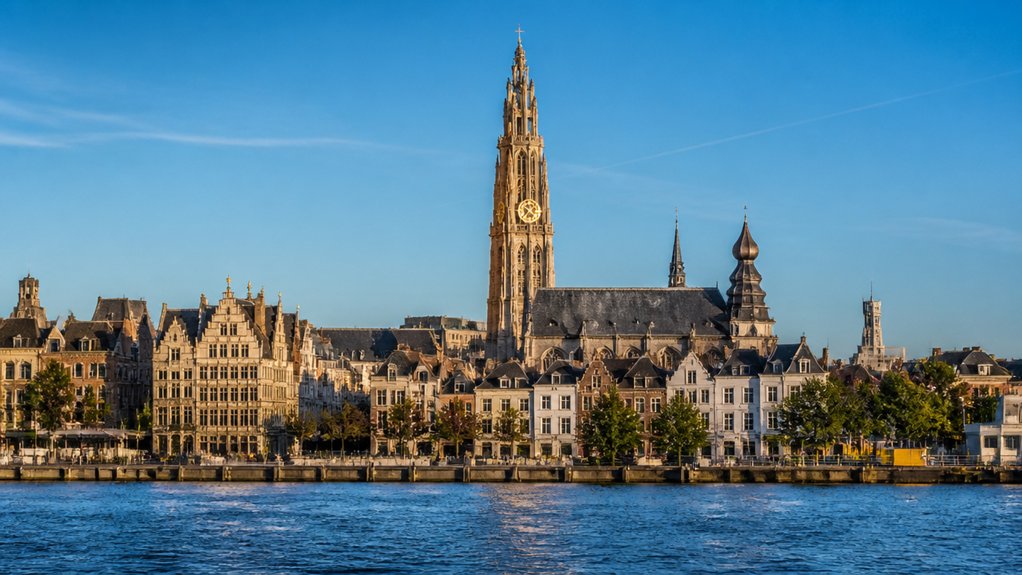
The Cathedral of Our Lady is the largest Gothic church in Belgium and it holds four Rubens altarpieces, including The Raising of the Cross and The Descent from the Cross. They hang in a working church, lit by its own windows, rather than on a gallery wall, and that is a different experience entirely.
The north tower stands 123 metres and the belfry is a UNESCO World Heritage Site as part of the belfries of Belgium and France. Construction ran for most of two centuries and the south tower was never finished, which is why the building looks lopsided from the square.
It is a five to ten minute walk from your ship. Allow an hour inside.
With the Rubens House shut for restoration, this is where Antwerp’s Rubens collection actually is, and anyone who came for him should start here rather than walking to a closed front door.
History Culture and the Top Sights
Het Steen, at the top of your gangway, is the oldest surviving building in Antwerp, put up between 1200 and 1225 as the river gate of the medieval castle. It is now the visitor centre for the city’s visitor centre, so it is both the first thing you see and the place to pick up a map.
The Grote Markt is ringed by sixteenth-century guild houses with gilded figures on their gables, and in the middle stands the Brabo fountain. The legend it depicts explains the city’s name: a giant named Druon Antigoon levied a toll on river traffic and cut off the hand of anyone who refused, until a Roman soldier, Silvius Brabo, cut off the giant’s hand and threw it into the Scheldt. Hand werpen — hand throwing — Antwerpen.
The Museum Plantin-Moretus on Vrijdagmarkt is the sixteenth-century printing house of Christophe Plantin, preserved complete with its presses, type and business archive. It was the first museum ever put on the UNESCO World Heritage List.
The MAS, in the Eilandje docklands, is a tower of red sandstone and glass with a free spiral escalator to a rooftop terrace giving the best view over the city and the port. The museum is closed on Mondays, along with 1 January, 1 May and 25 December, though it opens on Easter Monday and Whit Monday.
Two things in Antwerp are free, odd and almost entirely missed by passengers. The first is the Sint-Annatunnel, the pedestrian tunnel under the Scheldt, opened in 1933 and still fitted with its original wooden escalators — you ride them down, walk under the river, and come up on the far bank for the classic postcard view of the Antwerp skyline with your own ship in it. The entrance is on the quay a short walk south of Het Steen.
The second is the statue of Nello and Patrasche, curled up asleep under a blanket of paving stones outside the west front of the cathedral. It commemorates A Dog of Flanders, a Victorian novel barely read in Britain but enormously famous in Japan and Korea, which is why you will often find Japanese visitors photographing a pavement that means nothing to anyone else.
Antwerp is also the world’s diamond capital, and the diamond district sits beside Antwerpen-Centraal station — itself an extravagant 1905 railway cathedral that is worth walking into whether or not you are catching a train.
Antwerp is also a serious fashion city, which surprises people. The Antwerp Six — Dries Van Noten, Ann Demeulemeester, Walter Van Beirendonck and the rest — came out of the Royal Academy here in the 1980s and put the city on the map, and MoMu, the fashion museum on Nationalestraat, is the result. The streets around it are where the independent shops are, and they are a better hour than the Meir chains if clothes interest you at all.
Beyond the Centre: Day Trips and Alternatives
Antwerp is well placed for a day out, and both of the obvious ones leave from Antwerpen-Centraal.
Brussels is 41 km, with frequent direct trains to Brussels Central, the fastest taking 40 minutes and the average 48 minutes. The Grand Place, the Royal Museums and the Atomium are all reachable on a port day.
Bruges is 84 km, with regular direct trains, the fastest in 1 hour 25 minutes and the average 1 hour 33 minutes. It is the prettier town and the longer day; on a short call it is a stretch.
Honestly though, the case for leaving Antwerp is weak. You are berthed in the middle of a UNESCO-listed medieval city with Rubens on the walls and a printing house from 1555 ten minutes away. Brussels and Bruges will still be there on another trip.
Shore Excursion or Going It Alone
This is one of the easiest ports in Europe to do alone, and the reason is the 0.1 km between your ship and the city.
A walking tour of the Grote Markt, the cathedral and the Vrijdagmarkt needs no transfer, no timing and no booking. You walk off, you walk round, you walk back. Anyone selling you a coach transfer into the centre of Antwerp is selling you a journey you could do in five minutes on foot.
Where a guide earns their money is context rather than transport — the guild system, the Plantin printing house, why Rubens mattered to this city specifically. That is worth paying for if you care about it, and it is worth nothing if you do not.
If you would rather have the context provided, guided walks and day trips from Antwerp can be booked direct and are generally better value than the ship’s desk for the same ground.
The ship’s excursion is the sensible choice only for Bruges or Brussels, where the travel time is real and the return is on someone else’s timetable, and for anyone who would find the cobbles hard going.
Practical Tips: Money, Weather and Timing
Belgium uses the euro and cards work everywhere. The language is Dutch — Flemish, locally — and English is very widely spoken, but a dank u wel goes down well.
The cobbles are the thing nobody warns you about. The Grote Markt, the Vrijdagmarkt and the quay approaches are all laid in setts, and they are unforgiving of thin soles and wheeled suitcases alike. Wear something with a bit of sole on it.
The weather is oceanic and unremarkable: average temperatures swing between about 4°C and 19°C across the year, with roughly 853 mm of rain spread fairly evenly through every month. There is no dry season. Rain is possible on any call in any month, so bring a jacket whatever the forecast says.
Check what is shut before you set off. MAS closes on Mondays. The Rubens House is shut for restoration. Both catch people out, and the second one catches almost everybody.
Eat Antwerpse handjes — hand-shaped biscuits of butter, sugar, egg, flour and flaked almonds, invented in 1934 by the pastry chef Jos Hakker for a competition, and named after the same severed hand that named the city. The chocolate versions, filled with marzipan or praline, have been made since 1982. To drink, ask for a Bolleke: De Koninck’s 5.2% Spéciale Belge, brewed here since 1952 and named after the round glass it comes in.
One last thing worth knowing about the berth itself: the Scheldt here has a tidal range of 5.44 metres, which is why the pontoon floats rather than sits on piles, and why the gangway angle changes noticeably between morning and evening. If you are unsteady on your feet, come back aboard on the flatter side of the tide rather than at the extremes.
Your Port Day: A Sample Itinerary
Ship alongside at Het Steen. You have no transport to arrange, which means you can start slowly.
Walk up into the old city and give the first hour to the Grote Markt and the Brabo fountain, then into the Cathedral of Our Lady for the Rubens altarpieces. An hour there is not too much.
Mid-morning, cut south through the lanes to the Museum Plantin-Moretus on Vrijdagmarkt for the presses and the type room — another hour, and the quietest good thing in the city.
Lunch off the main squares rather than on them, then either a tram out to MAS for the rooftop view over the city and the port, or a walk out to Antwerpen-Centraal and the diamond district, which is twenty minutes on foot through the Meir.
Back along the Scheldt quay to the ship with time in hand. Being able to see your own funnel from the cathedral square is a luxury most ports do not offer, and it means you can stay out later here than almost anywhere else.
On a short call, do the Grote Markt, the cathedral and a Bolleke, and leave it at that. That is Antwerp done honestly in three hours.
Book your Antwerp day
Tours for this port, compare before you book
Getting around in port
✈️ Before you sail: eSIM, insurance, luggage, flight delays
Ships In Antwerp
Upcoming calls from our sailings tracker, updated regularly.
Fred Olsen Balmoral
Fred OlsenSat 27 Mar
Ambition
Ambassador Cruise LineTue 14 Dec
⚓ 12:45–23:00
Ambition
Ambassador Cruise LineSun 4 Jun
⚓ 08:00–17:00
Ambition
Ambassador Cruise LineWed 26 Jul
⚓ 08:00–18:00
Ambition
Ambassador Cruise LineSat 2 Dec
⚓ 13:00–16:30