Rotterdam Cruise Port Guide
Get insider tips for exploring Rotterdam’s authentic neighborhoods, museums, and windmills—discover why skipping ship tours changes everything.
In this guide
Try one free personalised day plan — built around your ship’s actual arrival and departure times. Then get every port on your cruise done the same way from £7.99 (about $10).
Cruise Port Overview: What to Expect
Rotterdam’s cruise terminal sits close enough to the city centre that you can walk to genuinely useful places without needing a shuttle, which puts it ahead of ports designed to trap you at the dock. The port moves quickly—you’ll process through faster than most airports—so you actually gain time instead of losing it to bureaucracy. What catches people off guard is how Rotterdam doesn’t feel like a postcard version of Europe; it’s a working city with modern architecture and genuine urban logic rather than quaint theatrics.
The waterfront directly around your terminal caters to cruise passengers and prices itself accordingly, stocked with chains and designed for people with two hours and credit cards. Walk inland ten minutes and you enter actual neighbourhoods where locals eat and prices drop sharply—your money stretches further and the food reflects how people actually live rather than how they think tourists want them to live. Fewer cruise passengers bother going this far, so you avoid the worst of the queues and tourist markups if you’re willing to move away from the obvious routes.
Trams are frequent and cheap if you want them, but most worthwhile destinations sit within walking distance if you’re comfortable maintaining a decent pace. The real mistake is drifting between the terminal shops and the waterfront—that’s where your time evaporates. Pick a direction and commit to it; your hours ashore are limited enough that aimless wandering costs more than you can afford.
Getting From the Port to Town
Rotterdam’s port sits close enough to the city that you have genuine options for getting around, though this proximity also means transport companies charge inflated rates because they know you’re in a hurry. Walking works across most of Rotterdam if you navigate with purpose rather than wander aimlessly, costs nothing, and actually shows you how the city operates rather than just moving you through it.
Trams run frequently and cheaply if your legs give out or you want to cover distance without effort—buy a single journey ticket unless you’re planning to move back and forth repeatedly throughout the day. The taxi queue at the terminal operates as organised chaos, with drivers charging well above reasonable rates because they’re banking on your time pressure and unfamiliarity with local fares. A rideshare app undercuts taxis substantially and locks your price in before you even get in the car, which removes any anxiety about being overcharged. For a more reliable experience, consider booking professional driver transfers in advance to avoid the hassle of negotiating fares upon arrival.
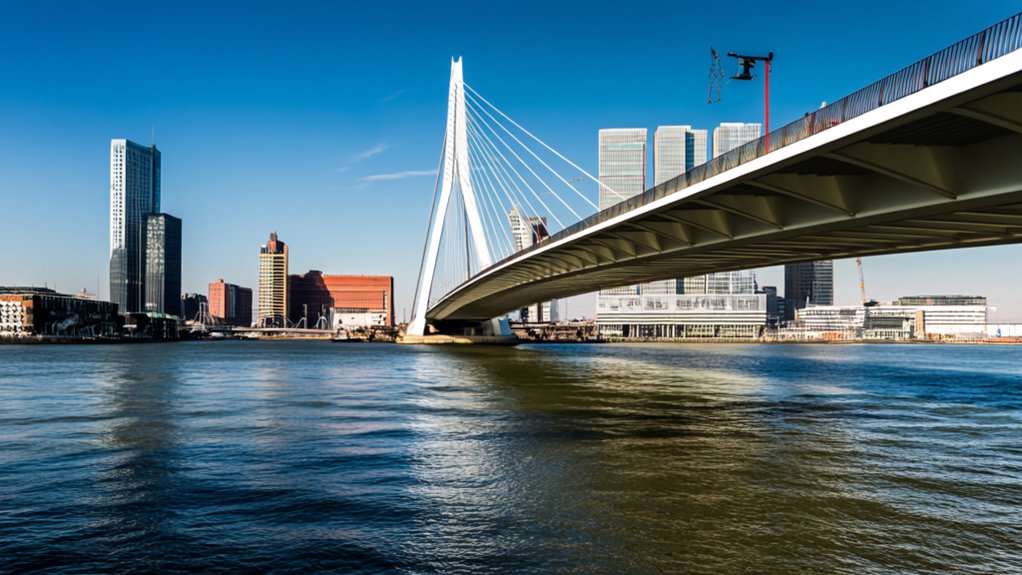
Walking into town takes somewhere between a quarter hour and twenty minutes depending on how fast you move and your exact destination. The route stays straightforward with clear signposting—you walk along the Wilhelminapier, cross the Erasmus Bridge and carry on into the centre. This genuinely becomes your best option if you have a full day ashore, since you save money, see real Rotterdam, and can change direction whenever something interests you without managing return times or transport schedules.
The Must-Do Experience: Start Here
Rotterdam’s character lives in its markets and waterfront, not in any single building you’d recognise from a postcard. The Markthal wraps a working market inside a residential building with a ceiling covered in painted vegetables and flowers—it functions as both an actual market and a tourist draw, but the real activity happens in the morning when locals are shopping rather than later when cruise passengers queue at overpriced food stalls. Go early, treat it as a place to browse rather than eat, and buy something from a produce vendor instead of joining the crowds at the prepared-food counters.
Your actual priority should be the Cube Houses, which require minimal time and genuinely register with most visitors because Rotterdam rebuilt itself so completely after World War II that even the housing looks experimental. These tilted yellow cubes photograph well and sit close enough to walk through without worrying about directions. From there, the waterfront promenade runs alongside the Meuse River and connects different neighbourhoods naturally—this is where you see how Rotterdam actually operates as a working port rather than as a space preserved for visitors. Consider booking guided port excursions to maximize your time exploring these distinctive areas during your cruise visit.
History Culture and the Top Sights
Rotterdam’s museums demand more time than most cruise passengers can spare. The Kunsthal and Depot Boijmans are genuinely worthwhile if you’re serious about art, but they’ll consume your entire port day and leave you tired rather than informed about what actually distinguishes this city. What matters instead is understanding Rotterdam as a working response to total destruction.
The Maritime Museum sits on the waterfront and explains how the city functions as a port in practical terms. It’s considerably less crowded than the art museums, and you can move through it without rushing. The perspective it offers on container shipping, river traffic, and Rotterdam’s role in European trade actually explains the city’s layout and character, which tells you more than any art collection could.
The Kinderdijk windmills lie outside the city centre but represent the engineering that shaped Dutch society. If you book an independent tour in advance—these fill quickly with cruise passengers—you’ll avoid the standard shuttle bus queues and get a guide who explains how the mills actually functioned. The boat ride between them matters as much as the structures themselves, and seeing them from the water rather than from a path fundamentally changes your understanding of the landscape.
The city’s real history exists in its streets and rebuilt neighbourhoods rather than confined to any single building. Walking through them tells you far more about Rotterdam than any museum visit can.
Beyond the Centre: Day Trips and Alternatives
Most cruise passengers pay for Rotterdam excursions without checking whether they can manage the city alone, which they can, at a fraction of the cost and with considerably more flexibility. Ship excursions push you toward the same museums and windmill viewpoints as hundreds of other passengers on the same schedule, which means you’re seeing what the cruise line profits from rather than what actually interests you. The port sits close enough to walk to the city centre, so you don’t need shuttle services or group handlers to reach the neighbourhoods worth your time.
If windmills genuinely appeal to you, book an independent boat tour before you sail rather than accepting what the ship offers. These tours fill up with cruise passengers but deliver better value and smaller groups than any package the cruise desk will sell you. Searching online before departure matters because the decent operators sell out during peak season, and locking in your place early means you avoid the scramble for last-minute slots.
Rotterdam’s rebuilt districts reward aimless walking far more than following a set itinerary. You’ll encounter the Cube Houses without needing someone to announce them, and the waterfront paths connect naturally enough that you can move between the Maritime Museum and other sights without feeling rushed or managed. The only reason to book a ship excursion is if exploring unfamiliar cities alone genuinely unsettles you, but Rotterdam’s flat layout, clear signage, and compact centre make it one of the easiest ports to navigate independently.
Allocating your money toward a solid independent windmill tour instead of a generic ship package means your port day actually reflects your preferences rather than the cruise line’s margins. This approach works because you control your own pace and skip whatever doesn’t interest you.
Shore Excursion or Going It Alone
Going solo beats the organised tour formula because you control when you leave and where you spend your time. The ship’s rigid schedule means missing neighbourhoods you’d actually like to explore, since you’re already being herded back to the coach the moment the predetermined route ends. You can grab proper coffee at a local café instead of the museum version, and you’ll actually talk to people working in shops rather than moving through as part of a labelled group.
Walking the city alone costs nothing beyond standard entry fees, and Rotterdam’s flat terrain removes the navigational fear that keeps most cruise passengers from trying independent exploration. The Maritime Museum genuinely rewards an hour of your attention if naval history appeals to you, but you visit on your schedule rather than whenever the tour operator books it—which usually means either poor light or peak crowds.
Real flexibility matters when conditions shift with tides and weather. If windmill tours suit the conditions, booking an independent operator in advance gets you a better rate and fewer people than any ship package offers. Bad weather means you can spend longer in museums, explore the Cube Houses at your own pace, or simply return to the ship without that hollow feeling of wasted money on a package you didn’t choose.
🗺️ Tours & Experiences at This Port
Skip the ship’s overpriced excursions — browse top-rated independent tours trusted by thousands of cruise passengers.
The Practical Details That Change Your Day in Rotterdam
The tourist information centre outside the terminal operates on commission, which means staff recommend attractions based on kickback rates rather than what actually suits you. Walking past it and heading directly into the city gives you better value and fewer crowds the moment you step away from the immediate port area.
The Cube Houses attract cruise passengers in droves, partly because they photograph well and partly because tour operators mention them constantly. You can photograph the exterior in ten minutes, then wander the neighbourhood in late afternoon when locals outnumber tourists, which shows you how people actually live there rather than joining camera-wielding queues. The Depot Boijmans Van Beuningen charges a modest fee and deserves your time if you care about art, though its location makes it an easy detour rather than essential.
Rotterdam’s public transport system is logical and inexpensive, so you needn’t fear getting lost in unfamiliar streets. The tram network radiates outward in a way that makes serious disorientation difficult, and a day ticket costs considerably less than buying individual journeys. Staff at the transport office near the terminal speak English and won’t pressure you toward expensive ship packages.
Skip the harbour cruises marketed aggressively at the cruise terminal, as independent operators run identical routes for substantially less if you book online beforehand. Rotterdam’s real advantage lies in its manageable size—you can explore genuinely interesting neighbourhoods without spending your entire day travelling between locations.
Tours with limited places can sell out before the ship arrives in Rotterdam. Check what runs in Rotterdam ahead of time.
🗺️ Tours & Experiences at This Port
Skip the ship’s overpriced excursions — browse top-rated independent tours trusted by thousands of cruise passengers.
Your Port Day: A Sample Itinerary
Rotterdam rewards passengers who move quickly away from the terminal and use public transport as their compass rather than their brake pedal. Start your morning by heading straight to the transport office near the terminal and buying a day ticket. This single decision removes the friction from your itinerary—you’ll hop on trams without hesitation once you know unlimited travel costs a fraction of what ship excursions charge.
Take the tram into the city centre and spend your first hour simply walking the streets around Blaaktoren, where the Cube Houses sit. Photograph the exterior, notice the people living in them, then move on rather than queuing for the interior tour that adds nothing you couldn’t already see. By late morning, tram toward Depot Boijmans Van Beuningen if art genuinely interests you, or skip it entirely if you’re more interested in neighbourhoods and street life.
The museum costs a small fee but demands proper time, so commit fully or skip it. Instead, explore the waterfront developments and warehouse conversions around Kop van Zuid—these neighbourhoods show you how Rotterdam actually rebuilt itself and feel considerably less staged than the Cube Houses circuit. Break for an unhurried lunch at a local café rather than near the terminal, where costs climb steeply and crowds bunch up. If you’re travelling internationally, consider purchasing a local eSIM data plan to stay connected without incurring expensive roaming charges while navigating the city.
Use your afternoon to wander whichever neighbourhood caught your attention that morning, or take a tram to a different district altogether. The system’s logic means you’ll navigate confidently without anxiety, and you’ll see far more authentic Rotterdam than passengers confined to organised tours.
Book your Rotterdam day
Tours for this port, compare before you book
Getting around in port
✈️ Before you sail: eSIM, insurance, luggage, flight delays
Ships In Rotterdam
Upcoming calls from our sailings tracker, updated regularly.
Queen Anne
CunardSun 11 Oct
Britannia
P&O CruisesWed 14 Oct
⚓ 07:00–00:00
ms Nieuw Statendam
Holland AmericaSat 17 Oct
⚓ 07:00–15:00
MSC Preziosa
MSC CruisesTue 20 Oct
⚓ 07:00–17:00
MSC Virtuosa
MSC CruisesWed 21 Oct
⚓ 07:00–19:00
Arcadia
P&O CruisesFri 23 Oct
⚓ 07:00–00:00